
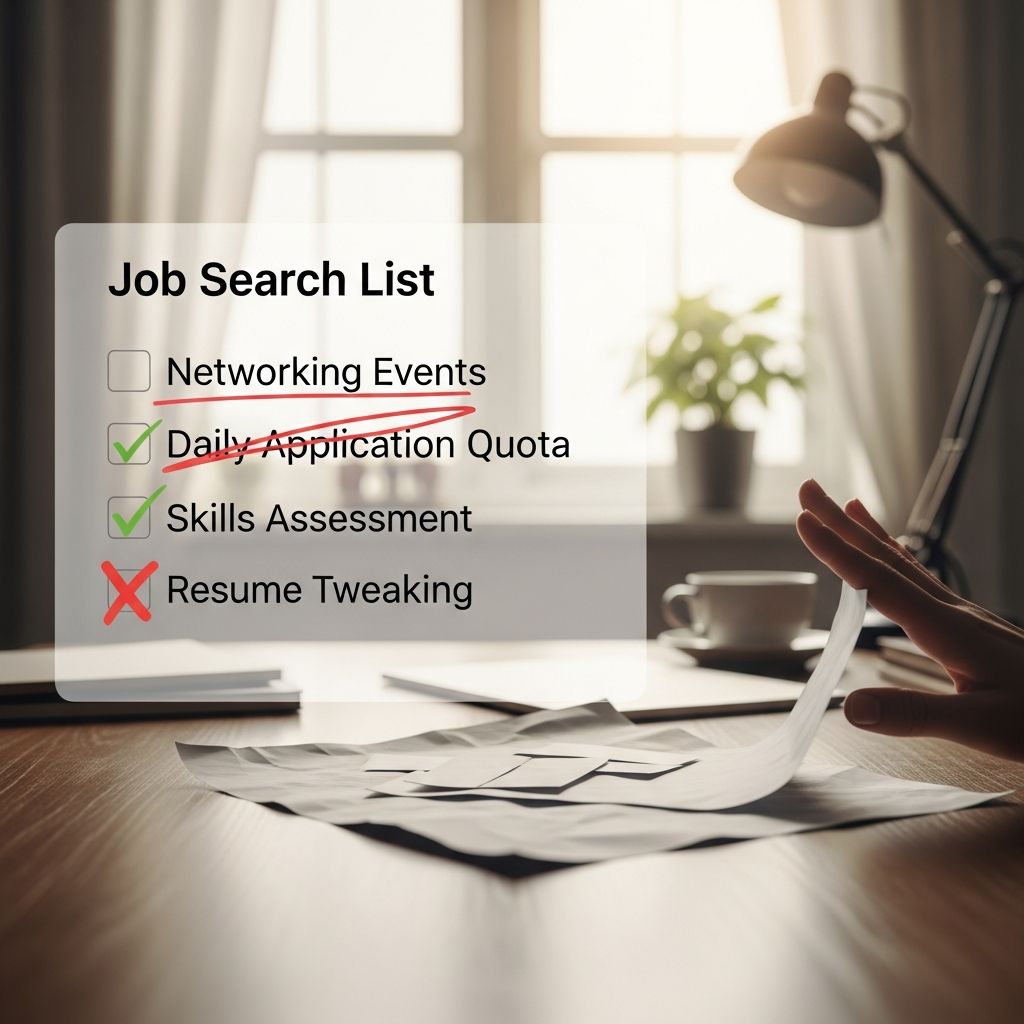
Unnecessary Pressure Points in Your Employment Journey
The job search represents one of life’s most anxiety-inducing experiences. Whether you’re transitioning between roles, re-entering the workforce, or seeking advancement, the process often feels like navigating an obstacle course while blindfolded. Many job seekers burden themselves with concerns that, upon closer examination, consume disproportionate mental energy while yielding minimal returns. Understanding which worries to release can fundamentally transform your search from an exhausting ordeal into a more manageable and ultimately successful endeavor.
The Myth of the Perfect Application Submission
One significant source of unnecessary anguish involves obsessing over application perfection. Countless candidates spend hours crafting the ideal cover letter, fine-tuning their resume formatting, or second-guessing every word choice. While presenting yourself professionally matters, the reality is that most hiring managers spend mere seconds reviewing initial submissions. They scan for relevant keywords, experience alignment, and basic qualifications—not poetic prose or flawless design.
The pressure to create an application that sparkles in every dimension often backfires. Job seekers can become so paralyzed by potential imperfections that they delay submissions or apply to fewer positions overall. This perfectionist approach actually reduces your chances of landing interviews simply through lower volume of applications. Research consistently shows that quantity matters significantly in job searching; the more positions you apply for, the higher your probability of securing interviews and ultimately receiving offers.
Rather than treating each application as a masterpiece requiring endless refinement, consider developing a solid template that showcases your qualifications and accomplishments. Customize this foundation for different positions, but don’t permit yourself to spend more than thirty minutes on any single application. This pragmatic approach allows you to apply to substantially more roles while maintaining professional quality.
Releasing the Need for Constant Visibility and Activity
Another anxiety-producing concern involves maintaining perpetual online presence and activity across professional networks. Social media and professional platforms create the illusion that you must be constantly posting, engaging, and demonstrating your industry knowledge. This expectation generates stress, particularly for those who find networking draining or who possess limited time for online engagement.
The truth contradicts this pressure. Employers and recruiters aren’t scrolling continuously through social feeds evaluating candidates’ daily musings. They’re searching for qualified people who match their positions. Your job search success depends far more on directly applying to relevant openings and responding promptly to recruiter outreach than on maintaining an elaborate social media presence. Occasional, thoughtful updates to your professional profiles suffice; constant streaming of content becomes counterproductive background noise.
This doesn’t mean ignoring professional networks entirely. Rather, it means approaching them strategically rather than obsessively. Update your LinkedIn profile with current experience, ensure your resume and professional materials are accessible, and respond professionally when contacted. These foundational elements serve you far better than daily posting or anxious monitoring of engagement metrics.
Reconsidering the Rejection Response Spiral
Perhaps the most emotionally taxing stress point involves ruminating excessively over rejected applications or unsuccessful interviews. When you don’t hear back from employers or receive explicit rejection emails, the tendency is to catastrophize—wondering endlessly about what went wrong, analyzing every response you gave, and questioning your overall qualifications and value.
This spiral consumes enormous mental resources while producing zero constructive results. The reality is that rejection rarely reflects your worth or capability. Organizations reject candidates for countless reasons having nothing to do with your qualifications: they may hire an internal candidate, discover budget constraints, decide the role parameters shifted, or receive submissions from someone with extremely specific expertise they unexpectedly prioritized. Many rejections represent misalignment rather than deficiency.
Additionally, dwelling excessively on individual rejections distracts you from forward momentum. Instead of analyzing one disappointing outcome for hours, your energy is far better invested in applying to additional positions, reaching out to your network, or preparing for upcoming interviews. Statistical reality suggests that most job searches involve numerous rejections before landing an offer. Treating each rejection as a temporary setback rather than a referendum on your capabilities keeps your emotional resources intact and your focus forward-directed.
The Comparison Trap and Timeline Obsession
Job searching inevitably involves exposure to others’ apparent success. You hear that a peer landed an offer in two weeks, or you see a former colleague celebrating a new position. This comparison naturally triggers anxiety about your own pace and progress. Job seekers frequently worry excessively about timelines, setting arbitrary expectations for how long the process “should” take and interpreting any slower pace as indication of personal failure.
Discharging this worry requires acknowledging several realities. First, job search timelines vary enormously based on industry, role level, geographic location, market conditions, and individual circumstances. Someone’s speedy success in their field tells you nothing about realistic timelines in yours. Second, visible progress on social media or in conversations often represents carefully curated highlights rather than complete pictures. You’re seeing the celebratory announcement but not the months of preceding effort or rejection.
Third, focusing intensely on timeline pressure actually impedes your search effectiveness. When you’re anxious about pace, you make compromised decisions—applying for roles that don’t genuinely fit, accepting offers that misalign with your goals, or withdrawing prematurely from promising opportunities. This pressure clouds judgment exactly when you need clarity.
Establishing Sustainable Job Search Practices
Once you consciously release these unproductive stress sources, you can redirect energy toward genuinely effective strategies. The following approaches align your effort with realistic outcomes:
Creating a Structured Yet Flexible Routine
Designate specific time blocks for job searching—perhaps two to three dedicated hours daily—rather than permitting it to consume your entire existence. Structure prevents burnout while ensuring consistent progress. Within these windows, focus on activities with clear value: researching organizations and positions, customizing applications for compelling matches, and reaching out to your professional network.
Building Your Support Infrastructure
Surround yourself with encouraging people who understand the emotional dimensions of job searching. Share your progress with friends, mentors, or family members who offer genuine support rather than judgment. Consider joining job search groups where you connect with others navigating similar challenges. These connections provide perspective, accountability, and emotional sustenance.
Prioritizing Your Wellbeing
Maintain the fundamental practices that stabilize your mental and physical health: consistent sleep schedules, regular exercise, nutritious eating, and activities you genuinely enjoy. These aren’t luxuries to postpone until after you secure employment; they’re essentials that directly enhance your resilience, mental clarity, and interview performance. When you’re well-rested and physically active, you demonstrate greater confidence, think more strategically, and recover more quickly from disappointment.
Setting Realistic Milestone Targets
Rather than fixating on landing an offer by an arbitrary date, celebrate progress through achievable stepping stones. Celebrate completing ten applications, scheduling an informational interview, updating your portfolio, or preparing interview answers to common questions. Acknowledging these accomplishments maintains motivation throughout a process that inherently involves waiting periods and uncertainty.
Distinguishing Between Productive Concern and Counterproductive Worry
Releasing unnecessary stress doesn’t mean becoming complacent or ignoring legitimate job search requirements. Certain concerns deserve attention:
| Productive Focus Areas | Counterproductive Worry Areas |
|---|---|
| Targeting positions that align with your skills and interests | Obsessing over making each application letter perfect |
| Maintaining professional LinkedIn and resume materials | Constantly monitoring social media engagement metrics |
| Following up appropriately on submitted applications | Ruminating endlessly about why you didn’t hear back |
| Networking and informational interviews | Comparing your timeline to others’ publicized successes |
| Preparing thoroughly for interviews you secure | Analyzing imagined reasons for rejections |
| Maintaining consistency and steady application flow | Obsessing about applying to an unrealistic number daily |
Reframing Your Mindset Around the Search Process
Shifting your perspective about job searching itself transforms your experience. Rather than viewing it as a test where you might fail, consider it a matching process where you’re also evaluating employers. You’re seeking an organization where your skills add genuine value and where you’ll find growth and satisfaction. This reciprocal view reduces the one-directional pressure of feeling like you must convince a distant authority figure of your worth.
Additionally, recognize that job searching is fundamentally a numbers game combined with persistence. Even highly qualified candidates face rejection. Even those with extensive experience encounter periods where opportunities feel scarce. This reality isn’t personal; it’s simply how employment markets function. Understanding this removes the sting from inevitable rejections and helps you maintain the emotional resilience the process requires.
When to Seek Additional Support
If job search anxiety becomes overwhelming—interfering with sleep, creating persistent negative thoughts, or triggering panic—professional support deserves consideration. Career coaches provide practical guidance for search strategy while offering perspective on your approach. Therapists or counselors can help you manage anxiety specifically and build coping skills for uncertainty. These resources aren’t signs of weakness; they’re strategic investments in your mental health and job search effectiveness.
Frequently Asked Questions
Q: How long should a typical job search take?
A: Job search duration varies widely based on industry, role level, and market conditions. Entry-level positions might take 2-4 months, while executive searches often extend 4-6 months or longer. Focus on consistent effort rather than arbitrary timelines.
Q: How many hours daily should I dedicate to job searching?
A: Two to three focused hours daily typically proves more effective than eight hours of scattered effort. Quality matters more than quantity. This allows time for other life responsibilities and prevents burnout.
Q: Should I customize every application, or can I use templates?
A: Use templates as your foundation, then customize for each position—highlighting relevant experience and addressing specific role requirements. This balances efficiency with personalization.
Q: How do I stop overthinking after interviews?
A: Set a defined time limit for post-interview analysis (perhaps 30 minutes), then consciously shift focus to other applications and opportunities. Rumination rarely produces insights and predominantly drains emotional energy.
Q: Is it normal to feel anxious during job searching?
A: Absolutely. Job searching involves uncertainty, potential rejection, and identity questions. Acknowledging these normal feelings prevents them from becoming overwhelming while validating your emotional experience.
References
- Reducing Job Search Stress: Strategies for a Healthier and More Effective Job Search — Frederick Works. 2025. https://www.frederickworks.com/everything-workforce/reducing-job-search-stress-strategies-for-a-healthier-and-a-more-effective-job-search
- Anxiety About Job Search: How to Manage the Stress and Survive Job Hunting — North Dakota State University Career Advising. 2025-01-30. https://career-advising.ndsu.edu/blog/2025/01/30/anxiety-about-job-search-how-to-manage-the-stress-and-survive-job-hunting/
- 4 Strategies to Stay Motivated During a Prolonged or Challenging Job Search — University of Virginia Darden School of Business Executive Education. 2025-03-03. https://blogs.darden.virginia.edu/executive-education/2025/03/03/4-strategies-to-stay-motivated-during-a-prolonged-or-challenging-job-search/
- How to Cope With the Stress of Looking for a New Job — PrairieCare. 2025. https://prairie-care.com/press-stress-of-looking-for-job/
- How to Manage Stress During Your Job Search — University of Missouri Career Center. 2025. https://career.missouri.edu/career-scoop/how-to-manage-stress-during-your-job-search/

Medha Deb is an editor with a master's degree in Applied Linguistics from the University of Hyderabad. She believes that her qualification has helped her develop a deep understanding of language and its application in various contexts. Medha specializes in the areas of beauty, health, sports, and wellness and is committed to ensuring that the content on the website is…