
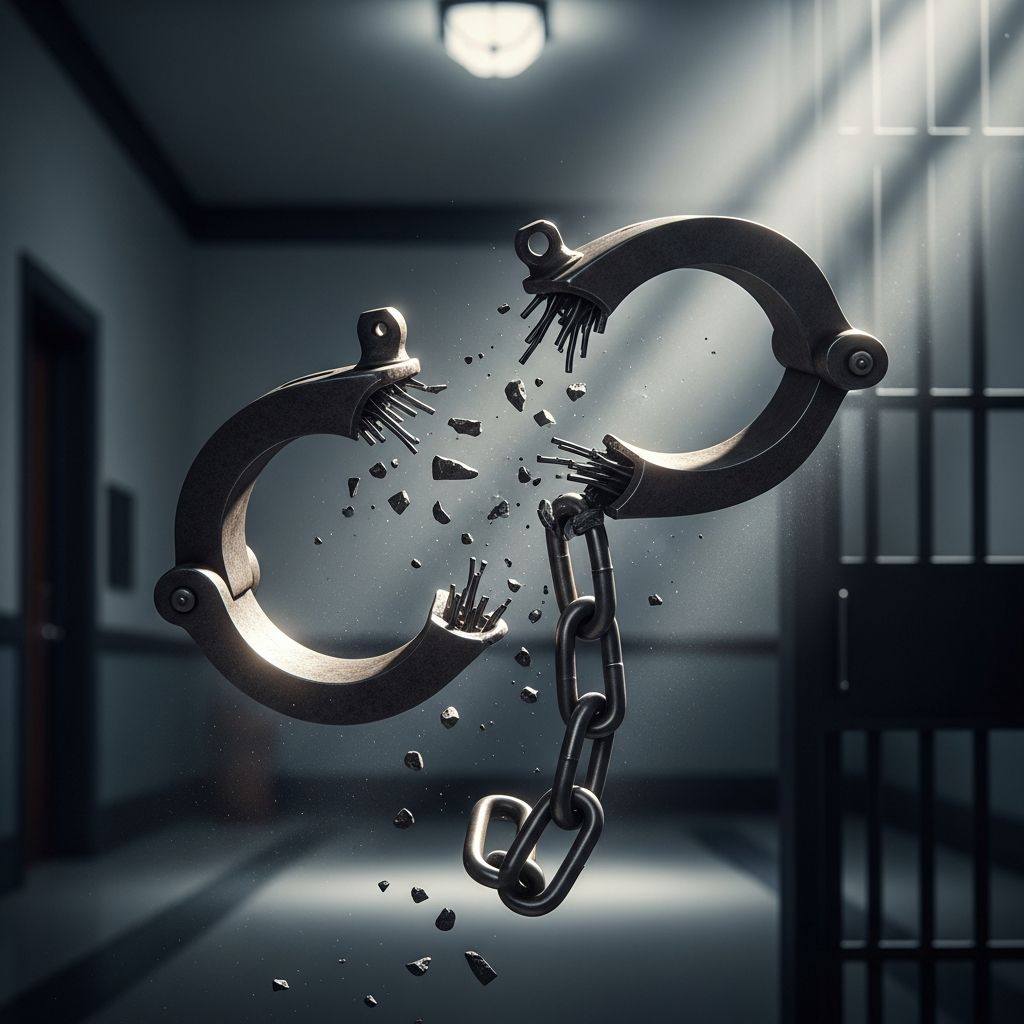
The United States incarcerates more of its residents than any other democracy, while failing to deliver true safety or justice for many of the people most affected by crime. This article explores how cruelty became a defining feature of the U.S. criminal legal system, why focusing only on nonviolent offenses cannot solve mass incarceration, and what reforms — including restorative justice, sentence reduction, and prosecutorial change — could move the system toward dignity, accountability, and genuine public safety.
1. How the U.S. Built an Exceptionally Punitive System
To understand how to reduce cruelty, it is necessary to see how it was built. Modern mass incarceration in the United States grew out of overlapping trends rather than a single coordinated plan.
- Rapid prison growth: From the 1970s to the 2000s, U.S. incarceration rates more than quadrupled, driven by harsher sentencing laws, expanded criminal codes, and aggressive policing.
- Racially unequal impact: Black Americans, particularly men from low-income communities, came to be incarcerated at several times the rate of white Americans, reflecting both current practices and a long history of racially biased law enforcement.
- Policy choices framed as crime control: Legislators increased mandatory minimums, three-strikes laws, and life sentences in response to public fears about crime, especially gun violence and drug markets.
Legal scholar James Forman Jr. has shown that many local officials — including some Black elected leaders — supported tough penalties in the 1970s–1990s as a way to respond to real violence and disorder, but without corresponding investment in schools, jobs, or housing. Over time, this punitive strategy hardened into a default policy that treated long prison terms as the primary tool of social control.
1.1 From criminal justice to a broader “criminal legal” system
Many advocates now prefer the term criminal legal system instead of criminal justice system, to highlight that legality does not always equal justice. The system includes:
- Police and other law enforcement agencies
- Prosecutors, public defenders, and courts
- Jails, prisons, probation, and parole agencies
- Collateral systems such as immigration enforcement and child welfare that are affected by criminal records
Cruelty can emerge at each stage — from aggressive stops and searches, to unaffordable bail, to extreme sentences, to harsh prison conditions and lifelong barriers after release.
2. Why Reducing Cruelty Requires Confronting Violence
A common narrative suggests that mass incarceration is mainly about nonviolent drug offenses. This is only partly true. Federal and state data show that people imprisoned solely for drug crimes account for less than one-fifth of the total incarcerated population, and many have other charges or prior records involving violence. In state prisons — where most incarcerated people are held — more than half are serving sentences for offenses categorized as violent.
That reality has two major implications:
- Focusing only on low-level, nonviolent cases cannot, by itself, end mass incarceration. Significant reductions require changing how the system handles crimes involving violence or weapons.
- Conversations about violence are politically and emotionally charged. High-profile crimes often push policymakers toward harsher penalties, even when evidence suggests long sentences provide limited additional public safety benefit.
Forman and other scholars argue that reformers must resist the temptation to draw a bright moral line between the “nonviolent” and the “violent.” People who have committed serious harm can change, and many aged, rehabilitated prisoners pose very low risk to public safety but remain incarcerated for decades.
2.1 Crime, fear, and community demands
In many cities during the late 20th century, residents in heavily policed Black neighborhoods faced a terrible dilemma. They wanted relief from open-air drug markets, shootings, and robberies, but they also experienced discrimination, brutality, and neglect from law enforcement.
Some community leaders therefore backed more police and stiffer penalties, hoping the state would finally protect them. Yet without simultaneous investment in economic opportunity, health care, and education, punitive policing and sentencing often deepened poverty and trauma, trapping families in cycles of surveillance and incarceration.
3. The Hidden Power of Prosecutors
Among the many actors in the system, prosecutors wield particularly far-reaching power. They decide whether to bring charges at all, which charges to file, what plea offers to make, and what sentences to recommend. In practice, the vast majority of criminal cases are resolved through plea bargains rather than jury trials, making prosecutorial decisions central to outcomes.
Forman and other scholars emphasize several features of prosecutorial power:
- Charging discretion: Prosecutors can choose between multiple possible charges arising from the same conduct, which can dramatically alter sentencing ranges.
- Leverage in plea bargaining: The threat of mandatory minimums or consecutive sentences can pressure defendants to plead guilty, even if they might have viable defenses.
- Influence on reform: In jurisdictions that elect prosecutors, reform-minded district attorneys can change office-wide practices related to bail, diversion, and sentence recommendations, with large aggregate effects.
Because of this influence, one path to reducing cruelty is to elect and support prosecutors who commit to shrinking prison populations, limiting use of mandatory minimums, and seeking alternatives to incarceration whenever possible.
4. Restorative Justice: A Different Way to Respond to Harm
Traditional criminal proceedings revolve around three questions: What law was broken? Who broke it? What punishment is deserved? Restorative justice offers an alternative framework centered on relationships and repair.
Restorative processes ask:
- Who was harmed?
- Who caused the harm?
- What obligations arise from that harm for the person responsible, the community, and the state?
Programs take many forms, including victim–offender dialogues, community conferences, and problem-solving courts. Research suggests that well-designed restorative initiatives can reduce repeat offending and increase victim satisfaction, especially in juvenile cases.
| Traditional Criminal Process | Restorative Justice Approach |
|---|---|
| Focus on lawbreaking and guilt | Focus on harm, needs, and obligations |
| State vs. defendant | Involves victim, responsible person, and community |
| Punishment is primary response | Repair, accountability, and reintegration are core goals |
| Little space for victim voice | Victim can describe impact and desired repair |
4.1 Limits and opportunities
Restorative justice is not a cure-all. Some victims may not want contact with the person who harmed them, and some harms may be too severe or complex for a facilitated dialogue. However, Forman and others argue that expanding restorative practices — especially for youth and for cases where victims are open to participation — can:
- Provide a more meaningful sense of accountability
- Reduce reliance on incarceration
- Support healing for victims, families, and communities
Jurisdictions that have integrated restorative practices into juvenile courts and school discipline have seen reductions in suspensions, arrests, and recidivism, while improving perceived fairness.
5. Rethinking Long Sentences and Second-Look Laws
One of the starkest forms of cruelty in the U.S. system is the routine imposition of extremely long sentences — including life without parole — often for conduct committed in youth or early adulthood. Criminological research shows that most people “age out” of criminal behavior as they reach their 30s and 40s, meaning decades-long terms often incapacitate individuals long after their risk has sharply declined.
In response, some jurisdictions have created second-look mechanisms that allow courts to revisit lengthy sentences after a substantial period of time. Washington, D.C., for example, enacted a law that permits people sentenced as young adults to petition for resentencing after 15 years, if they can demonstrate significant rehabilitation and readiness to return to the community.
Key features of robust second-look policies include:
- A meaningful opportunity for review after a fixed number of years, regardless of the original offense
- Consideration of the person’s growth, education, disciplinary record, and reentry plan
- Input from victims or surviving family members
- Judicial discretion to reduce the sentence, maintain it, or impose supervised release
Such policies recognize that people are more than the worst thing they have done and that a just system should allow room for transformation.
6. Beyond Punishment: Addressing Root Causes of Crime
Forman’s work emphasizes that communities most affected by both crime and punishment consistently ask for more than just police and prisons. They want safe housing, good schools, youth programs, mental health and addiction services, and fair employment opportunities. Yet for decades, policymakers have often chosen the quickest visible response — more arrests and harsher sentences — over long-term social investment.
Researchers have found that:
- Improving educational attainment and employment opportunities is associated with lower crime rates over time.
- Evidence-based treatment for substance use and mental health conditions reduces reoffending more effectively than incarceration alone.
- Stable housing and access to health care are important predictors of successful reentry after prison.
Reducing cruelty in the criminal legal system therefore requires a shift in public spending and political imagination — seeing safety as the product of strong communities, not just strict punishment.
7. Pathways for Individual and Collective Action
Transforming a vast, fragmented system can seem overwhelming. Forman argues that progress comes from many people working at different leverage points rather than from a single grand reform plan.
Individuals and organizations can contribute by:
- Supporting public defense: Advocating for adequately funded, high-quality defense services in every jurisdiction.
- Engaging in local elections: Learning about the platforms of district attorney, sheriff, and judicial candidates and voting for those committed to reducing unnecessary incarceration.
- Investing in community-based alternatives: Backing organizations that provide youth mentorship, restorative justice, housing support, and reentry services.
- Changing narratives about people who commit harm: Moving away from permanent labels like “violent offender” and recognizing the capacity for change.
Collectively, these efforts can push the system away from reflexive punishment and toward responses that prioritize accountability, safety, and human dignity.
Frequently Asked Questions (FAQs)
Q1: Is mass incarceration mainly caused by the War on Drugs?
Drug laws and enforcement unquestionably contributed to prison growth, but they are not the whole story. Nonviolent drug offenses account for less than one fifth of the total incarcerated population, and over half of people in state prisons are serving sentences for offenses categorized as violent. Substantial reductions in incarceration therefore require reconsidering how the system responds to violence, not just reforming drug policy.
Q2: Does reducing prison sentences endanger public safety?
Evidence from sentence reforms, parole expansions, and second-look policies suggests that carefully designed reductions need not increase crime. Many people serving very long sentences age into low-risk categories, and structured release processes that include supervision, services, and risk assessment can maintain or even improve public safety compared to continued incarceration.
Q3: Are restorative justice programs only appropriate for minor offenses?
Restorative justice is common in juvenile and lower-level cases, but some programs have been successfully used after serious violence when victims or survivors choose to participate. The key factors are consent, preparation, and skilled facilitation, not just the legal category of the offense. Restorative processes can operate alongside or in place of traditional prosecution, depending on the jurisdiction.
Q4: What role can lawyers play in reducing cruelty in the system?
Lawyers can make a difference in several roles: as public defenders safeguarding clients’ rights; as prosecutors who choose diversion, reduced charges, and alternatives to incarceration; as policy advocates who craft legislation on second-look review or bail reform; and as scholars who highlight the racial and historical dimensions of punishment.
Q5: How can non-lawyers contribute to criminal legal reform?
Non-lawyers can support community organizations, volunteer with reentry or restorative justice programs, participate in local elections, share accurate information about crime and punishment, and advocate for investments in housing, education, and health care that address the conditions underlying much criminalized behavior.
References
- Three Lessons for Criminal Law Reformers from Locking Up Our Own — Meghan J. Ryan, California Law Review. 2018-12-31. https://www.californialawreview.org/print/three-lessons-for-criminal-law-reformers-from-locking-up-our-own
- How to Dismantle the Mass Incarceration System — Mike Cummings, Yale News (interview with James Forman Jr.). 2024-09-25. https://news.yale.edu/2024/09/25/how-dismantle-mass-incarceration-system
- James Forman Jr on Reducing the Cruelty of the US Criminal Legal System — 80,000 Hours Podcast, episode page. 2023-10-03 (approx.). https://80000hours.org/podcast/episodes/james-forman-jr-cruelty-in-the-us-criminal-legal-system/
- Locking Up Our Own: Crime and Punishment in Black America — James Forman Jr., Farrar, Straus and Giroux. 2017-04-18 (Pulitzer Prize citation). https://www.pulitzer.org/winners/james-forman-jr
- Why Care About Mass Incarceration? — James Forman Jr., Michigan Law Review. 2010-03-01. https://scholarship.law.georgetown.edu/facpub/370/
- James Forman Jr., Rethinking Race and Criminal Justice Reform — Talks at GS, Goldman Sachs. 2018-03-20. https://www.goldmansachs.com/insights/talks-at-gs/james-forman-jr

- Integrated M.A. in Applied Linguistics, University of Hyderabad
- 5+ years in editorial, instructional, SEO, and research-based writing
Sneha is a relationships and lifestyle writer with a strong foundation in applied linguistics and certified training in relationship coaching. She brings over five years of writing experience to theskillvault, crafting thoughtful, research-driven content that empowers readers to build healthier relationships, boost emotional well-being, and embrace holistic living. Her writing and insights reflect the belief that beauty, happiness, and wellness…