
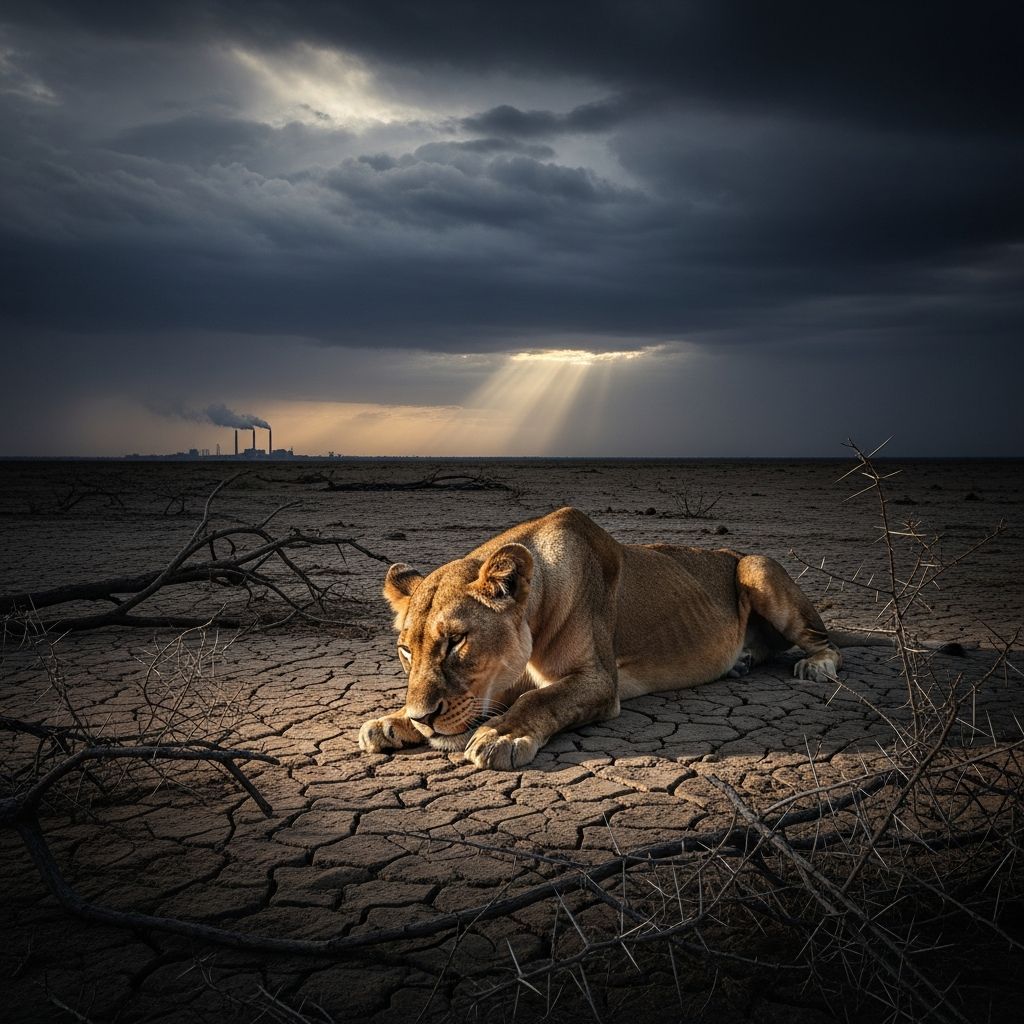
The Scale of Suffering Beyond Human Control
When we consider animal suffering, our attention typically gravitates toward the animals we directly control—livestock in farms, pets in homes, or wildlife in tourism venues. Yet a profound ethical challenge emerges when we examine the vast populations of wild animals experiencing suffering through entirely natural processes. The sheer magnitude of sentient beings existing in natural ecosystems, combined with the inherent hardships of survival in the wild, presents a moral question that has only recently begun to receive serious philosophical and scientific attention.
The number of individual wild animals inhabiting Earth is staggering and often incomprehensible. Current scientific estimates suggest approximately 1021 wild animals exist globally, encompassing trillions of fish, hundreds of billions of birds, and quintillions of arthropods. To contextualize this figure, the human population of approximately 8 billion represents an infinitesimal fraction of all sentient beings on the planet. This disparity becomes ethically significant when we recognize that each of these wild animals possesses the capacity to experience pain, fear, hunger, and other forms of suffering.
Primary Sources of Natural Suffering
Disease and Parasitism
Among the most pervasive causes of suffering in wild populations is disease. Parasitic infections represent a particularly cruel mechanism through which wild animals endure prolonged suffering. Internal parasites can slowly consume an animal from within, creating chronic pain and discomfort that may persist for extended periods. Infectious diseases spread rapidly through populations, particularly in dense concentrations of animals, creating epidemics that claim countless lives. The suffering associated with disease often combines with malnutrition and weakened immune systems, creating cascading health crises throughout wild populations.
Starvation and Malnutrition
Starvation represents one of the most distressing forms of natural suffering. Young animals, elderly individuals, and those weakened by injury or disease face particular vulnerability to food scarcity. The natural limitations on food availability create population dynamics where many individuals inevitably perish from hunger. This suffering is not quick; accounts from naturalists describe the anguish of animals slowly succumbing to starvation as their bodily functions shut down over extended periods. Fish larvae experience a particularly tragic form of starvation known as hydrodynamic starvation, where environmental fluid dynamics prevent effective feeding, resulting in mortality rates exceeding 99 percent in some populations.
Environmental and Climatic Threats
Natural disasters and adverse environmental conditions inflict catastrophic suffering on wild animal populations. Wildfires cause direct mortality through burning, injury from smoke inhalation, and displacement from familiar habitats. Severe weather events—including extreme cold, drought, and flooding—create conditions where animals freeze, dehydrate, or drown. Exposure to harsh environmental conditions is particularly devastating for young animals with limited survival capabilities and those living in ecosystems already stressed by resource scarcity.
Predation and Violence
The relationship between predator and prey is fundamentally characterized by violence and suffering. Young animals are particularly vulnerable, experiencing rapid predation immediately after birth. In some species, the majority of offspring perish within months of entering the world through violent predation. While predation serves ecological functions in population management, it generates immense suffering for individual prey animals experiencing fear, injury, and violent death.
The Ethical Challenge of Recognition
Acknowledging wild animal suffering creates a complex ethical landscape. Unlike animal cruelty perpetrated by humans, suffering in nature arises from evolutionary processes and ecological dynamics beyond intentional human causation. However, this distinction does not eliminate the moral significance of the suffering itself. If we accept that suffering matters morally regardless of its cause, then the suffering of wild animals demands ethical consideration simply because it occurs and because sentient beings experience it.
The principle of impartiality in ethics suggests that similar suffering should be weighted equally regardless of whether it originates from human action or natural processes. A wild animal experiencing severe pain from parasites suffers no less acutely than a farmed animal in comparable circumstances. The fact that the suffering occurs “naturally” does not alter the subjective experience of the suffering individual.
Philosophical Perspectives on Natural Suffering
The Welfare Perspective
Welfare economists and philosophers argue that evolutionary dynamics often produce outcomes that are unnecessarily detrimental to individual animal welfare. Natural selection operates on reproductive success and population-level outcomes rather than on individual well-being. Consequently, evolutionary pressures can produce organisms whose lives contain more suffering than happiness, with many individuals never experiencing conditions conducive to positive welfare states.
The Reproductive Strategy Factor
Many species employ r-selection strategies, producing enormous numbers of offspring with minimal investment in individual survival or care. This approach creates situations where the vast majority of offspring perish before reaching reproductive age. While this strategy may confer evolutionary advantages at the population level, it generates immense suffering for billions of individual organisms whose lives are brutally short and characterized by struggle from birth.
The Question of Natural Value
Some argue that natural processes possess intrinsic value and should be left undisturbed. However, this perspective faces challenges when confronted with the reality of suffering within natural systems. If natural ecosystems necessarily involve vast quantities of suffering, should we preserve these systems in their current state, or does ethical concern for sentient beings demand consideration of interventions?
Contrasts With Human-Caused Animal Suffering
| Aspect | Wild Animal Suffering | Human-Caused Animal Suffering |
|---|---|---|
| Scale | Estimated 1021 individual wild animals experiencing natural suffering | 80+ billion farmed animals annually, 10 million animals die from abuse yearly in U.S. alone |
| Causation | Natural processes, evolutionary dynamics, ecosystem requirements | Direct human choices, profit motives, deliberate exploitation |
| Duration | Often prolonged and natural to lifespan | Can be concentrated and intensified beyond natural conditions |
| Preventability | Requires technological and ecological interventions | Requires behavioral and systemic changes |
| Moral Clarity | Philosophically contested regarding responsibility | Widely recognized as morally problematic |
Contemporary Research and Academic Development
The formal study of wild animal suffering is remarkably recent in academic discourse. Early influential work by researchers examining the question of whether we have moral obligations to wild animals laid groundwork for expanding ethical consideration beyond human-animal relationships. This emerging field examines not only the mechanisms and scale of suffering but also explores potential evidence and methodological approaches to assessing welfare in wild populations.
Survey research attempting to measure public attitudes toward wild animal suffering reveals interesting patterns. Exposure to information about environmental suffering appears to shift public perception, though the effect size remains modest. This suggests that increased awareness and education about wild animal suffering may gradually influence how societies prioritize conservation and ecological intervention efforts.
Implications for Conservation and Environmental Policy
Recognition of wild animal suffering introduces new dimensions to conservation debates. Traditional conservation efforts focus on species preservation, habitat protection, and ecosystem health. These goals remain valid, but they may require supplementation with direct consideration of individual animal welfare within ecological frameworks. This creates potential tensions—protecting an ecosystem might require maintaining predator populations that cause suffering through predation, raising questions about how to balance different ethical values.
Technological development raises future possibilities for wild animal welfare interventions. Targeted vaccination programs, genetic approaches to reducing juvenile mortality, and habitat modifications designed to reduce suffering while maintaining ecological function represent theoretical possibilities, though their feasibility and desirability remain subjects of ongoing debate.
The Comparative Context of All Animal Suffering
Understanding wild animal suffering within the broader context of all animal suffering reveals the immense scale involved. Human agricultural systems create suffering for over 80 billion land animals annually, plus hundreds of billions of aquatic animals. Wildlife tourism generates suffering for approximately 550,000 wild animals in exploitative venues, with 110 million people annually visiting attractions involving animal abuse without awareness of the cruelty involved.
Yet even these staggering figures pale in comparison to the number of wild animals experiencing natural suffering. This realization challenges conventional prioritization of animal advocacy efforts and raises questions about resource allocation within the animal ethics movement.
Addressing Common Objections
The “Naturalness” Argument
Some argue that suffering in nature should be accepted as simply part of natural processes requiring no moral intervention. However, this position faces logical challenges—if natural occurrence precluded moral concern, we would have no obligations regarding human diseases or natural disasters affecting people, which most find intuitively unacceptable.
Uncertainty About Animal Consciousness
While some question whether all wild animals possess consciousness enabling suffering, evidence suggests that at minimum, vertebrates and many invertebrates possess neurological substrates supporting pain perception. The principle of precaution suggests taking suffering seriously even in cases of uncertainty regarding consciousness.
The Complexity of Ecological Intervention
Even those acknowledging wild animal suffering often resist proposing interventions due to ecological complexity. Interventions in natural systems can produce unintended consequences, potentially increasing suffering rather than alleviating it. This genuine concern should not eliminate consideration of wild animal welfare but rather encourage careful, scientifically-informed approaches to potential interventions.
Moving Forward: Research and Dialogue
Integrating wild animal suffering into ethical frameworks and policy discussions requires continued research into multiple dimensions: the actual distribution of welfare states among wild populations, the consequences of potential interventions, and public attitudes toward these issues. Interdisciplinary dialogue involving philosophers, biologists, ecologists, and policymakers will be essential for developing approaches that acknowledge wild animal suffering while respecting ecological complexity.
The challenge before contemporary ethics is to take seriously the moral status of wild animals while simultaneously acknowledging the profound limitations in our current knowledge and intervention capabilities. This balanced approach recognizes wild animal suffering as ethically significant without presupposing particular policy solutions that may prove counterproductive.
Frequently Asked Questions
Q: How many wild animals actually exist on Earth?
A: Current scientific estimates suggest approximately 1021 individual wild animals exist globally, including trillions of fish, hundreds of billions of birds, and quintillions of arthropods, making humans represent only an infinitesimal fraction of sentient beings.
Q: Is wild animal suffering a legitimate ethical concern?
A: While philosophically contested, many ethicists argue that if suffering matters morally, then the source of suffering—whether natural or human-caused—should not eliminate moral concern for experiencing individuals. The sheer scale of wild animal numbers makes this an increasingly serious ethical question.
Q: How does wild animal suffering compare to human-caused animal suffering?
A: While humans cause suffering for approximately 80+ billion farmed animals annually, wild animal suffering potentially affects 1021 individuals experiencing natural sources like disease, starvation, and predation. This scale difference raises questions about moral priorities.
Q: What are the main sources of suffering for wild animals?
A: Primary sources include disease and parasitism, starvation and malnutrition, adverse environmental conditions and natural disasters, and predation. Many wild animals experience multiple simultaneous suffering sources, particularly young and vulnerable individuals.
Q: Should humans intervene to reduce wild animal suffering?
A: This remains philosophically and practically contested. While suffering is morally relevant, ecosystem interventions are complex and may produce unintended consequences. Careful research and ethical deliberation should precede any potential interventions.
Q: How recent is academic study of wild animal suffering?
A: The formal academic attention to wild animal suffering is quite recent, with significant scholarly work only developing in the 21st century as philosophers and researchers have begun systematic examination of this ethical question.
References
- Animal Abuse Facts and Statistics 2024 — Shelter Animals Count. 2024. https://www.shelteranimalscount.org/animal-abuse-facts-and-statistics-2024/
- Wild Animal Suffering — Wikipedia. https://en.wikipedia.org/wiki/Wild_animal_suffering
- Global Study Reveals Widespread Cruelty in Wildlife Tourism — World Animal Protection. https://www.worldanimalprotection.org/latest/news/our-new-global-study-exposes-shameful-suffering-caused-irresponsible-wildlife-tourism/
- Animal Suffering is One of the Most Pressing Problems in the World — Animal Advocacy Careers. https://animaladvocacycareers.org/key-ideas/animal-suffering/
- Animal Welfare — Our World in Data. https://ourworldindata.org/animal-welfare
- Wild Animal Suffering: An Introduction — Animal Ethics. https://www.animal-ethics.org/introduction-to-wild-animal-suffering/

Medha Deb is an editor with a master's degree in Applied Linguistics from the University of Hyderabad. She believes that her qualification has helped her develop a deep understanding of language and its application in various contexts. Medha specializes in the areas of beauty, health, sports, and wellness and is committed to ensuring that the content on the website is…