
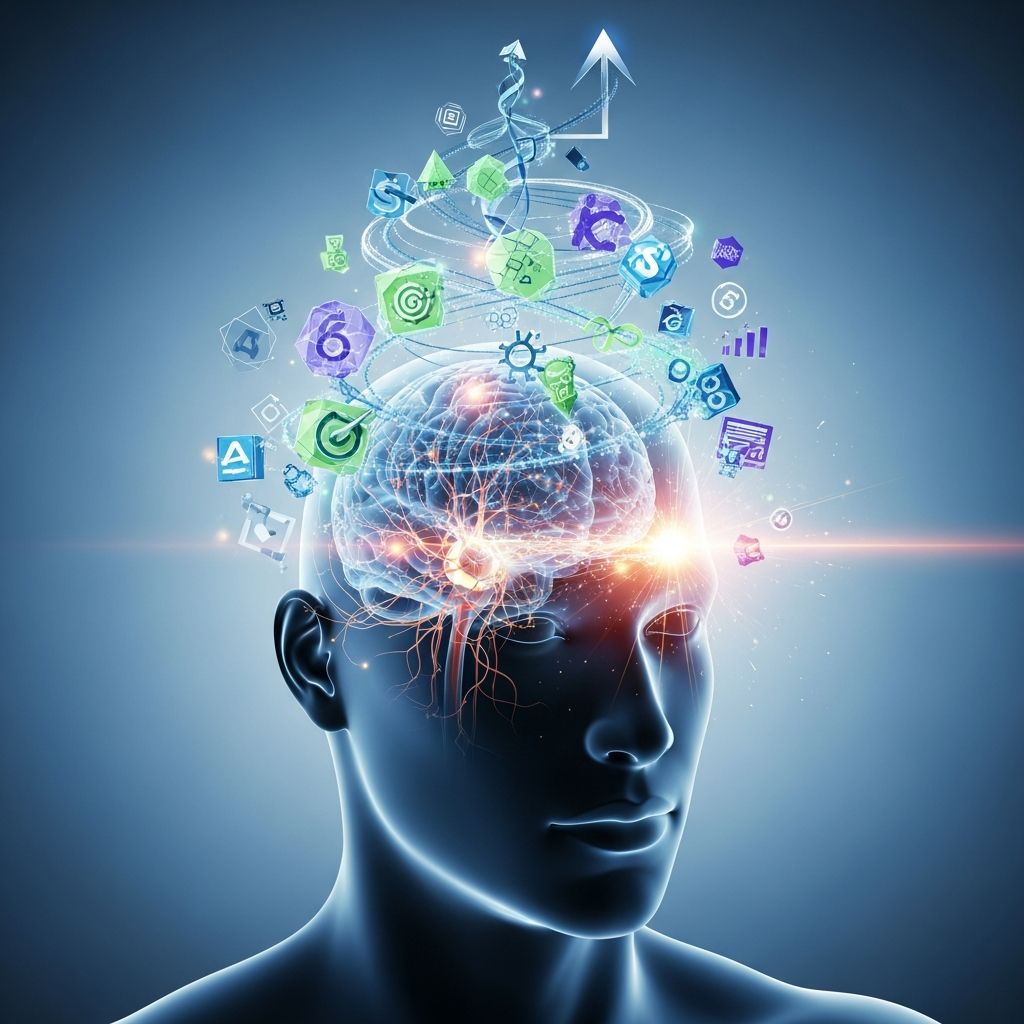
Modern science has transformed our understanding of the universe, yet our individual reasoning often remains error-prone, biased, and short-sighted. This tension raises a provocative question: if we managed one scientific revolution in how we study the world, could we launch another in how we think?
This article explores what a “new scientific revolution in rationality” might look like: not new physics or biology, but better habits of thought, improved institutions that reward accuracy, and technologies that upgrade our ability to reason together.
From Scientific Revolution to Rationality Revolution
The original scientific revolution reorganized how we investigate reality. Systematic observation, experiment, and peer scrutiny replaced tradition and authority as the main sources of knowledge. Yet most day-to-day decisions in politics, business, and personal life are still dominated by intuition, identity, and social pressure rather than rigorous reasoning.
A new revolution in rationality would focus on three broad aims:
- Improving individual judgment so people better separate signal from noise.
- Redesigning institutions so that accurate beliefs are rewarded instead of punished.
- Leveraging technology to extend our cognitive abilities rather than merely distract or polarize us.
Unlike past revolutions, this one would be less about dramatic inventions and more about incremental changes in norms, incentives, and tools for thinking.
Are Humans Getting Smarter—or Just Better Equipped?
There is ongoing debate about whether biological human intelligence is improving, declining, or simply changing form. Some geneticists have argued that living in complex, protective societies may reduce natural selection for raw intellectual ability, suggesting that our cognitive potential might even be drifting downward over long timescales. At the same time, cultural evolution—education, technology, and institutions—has massively amplified what individuals can accomplish.
Key contrasts:
| Dimension | Biological Intelligence | Cultural & Technological Intelligence |
|---|---|---|
| Timescale of change | Thousands of years via genetic evolution | Years to decades via learning and innovation |
| Transmission | Inheritance of genes | Education, media, institutions, and tools |
| Primary leverage | Brain structure and capacity | Shared knowledge, norms, and technologies |
From a practical perspective, the most leverage in the near term lies in cultural and technological upgrades to how we think—not in attempting to rewrite human biology.
The Limits of Untuned Intuition
Human reasoning is powerful but systematically flawed. Decades of research in cognitive psychology show that people are prone to predictable biases—shortcuts that often work well in everyday life but break down in complex, uncertain, or politicized settings.
Some widely studied biases include:
- Confirmation bias: Favoring information that supports our existing views while ignoring or attacking disconfirming evidence.
- Overconfidence: Assigning too much certainty to our judgments, especially in domains where feedback is noisy or delayed.
- Availability bias: Overweighting vivid, recent, or emotionally charged examples instead of representative data.
- Motivated reasoning: Treating reasoning as a way to defend a preferred conclusion rather than discover the truth.
These biases are often stronger when our identities, status, or group loyalties are at stake. In high-stakes policy debates or long-term planning, they can lead to large and persistent errors.
What Rationality Training Can—and Cannot—Do
Because systematic biases are predictable, it is natural to ask whether people can be trained to think more accurately. Research suggests that certain interventions can measurably improve reasoning, though effects can be modest and context-dependent.
Examples of promising approaches include:
- Structured analytic techniques used in intelligence analysis, such as constructing explicit alternative hypotheses and listing disconfirming evidence.
- Forecasting training, in which people practice making numerical probability estimates and receive feedback on calibration; some studies show large gains among dedicated “superforecasters.”
- Metacognitive prompts, such as encouraging people to slow down and consider reasons they might be wrong, which can reduce some reasoning errors in experiments.
However, the impact of rationality training depends heavily on motivation and environment. Skills learned in workshops can quickly erode if people are rewarded socially or professionally for being loyal advocates rather than accurate thinkers.
Rationality Is a Social Technology
Rationality is often framed as an individual virtue, but many of its biggest benefits arise in groups. Science itself is a collective process: individual scientists have biases, but peer review, replication, and open criticism help correct errors over time. Similarly, teams that cultivate norms of candor, error correction, and humility can outperform those that reward status or deference.
Important social ingredients of good reasoning include:
- Norms of disagreement that separate criticism of ideas from attacks on people.
- Epistemic humility, where changing one’s mind in response to evidence is seen as a strength, not a weakness.
- Transparent reasoning, such as documenting assumptions, evidence, and uncertainties so others can scrutinize and improve them.
- Diverse perspectives combined with mechanisms to aggregate information, not just amplify conflict.
When these norms are weak, organizations can slide into groupthink or factional battles. When they are strong, groups can reach more accurate and robust conclusions than any single member.
Designing Institutions That Reward Being Right
Even skillful thinkers will distort their beliefs if they are rewarded for loyalty, confidence, or conformity instead of accuracy. Changing the incentive landscape may therefore be more important than changing individual minds.
Possible institutional upgrades include:
- Prediction markets and forecasting systems that reward accurate, probabilistic predictions about future events.
- Decision audits that revisit major choices after outcomes are known, not to assign blame, but to update processes and models.
- Transparent metrics for evaluating forecasts, such as Brier scores, and public recognition for improved calibration over time.
- Role separation between those who generate proposals and those who independently evaluate evidence and risks.
In domains like public health or climate policy, where decisions affect millions of people, such mechanisms can help keep long-term accuracy from being overshadowed by short-term political advantage.
Technological Levers: From Cognitive Aids to Cognitive Partners
Emerging technologies offer powerful new ways to extend human cognition. Brain–machine interfaces, neurostimulation, and AI systems are already being used to restore or enhance specific cognitive functions in therapeutic contexts, such as helping people with paralysis move robotic limbs or partially restoring vision.
Looking ahead, researchers and ethicists discuss three broad technological paths for upgrading human capabilities:
- Biological engineering: Using genetic or molecular interventions to influence cognitive traits, made more plausible by technologies such as CRISPR, even if practical and ethical barriers remain high.
- Cyborg augmentation: Integrating digital devices directly with the nervous system to boost memory, attention, or processing speed, building on existing brain–computer interface research.
- Non-organic intelligence: Developing highly capable AI systems that perform many cognitive tasks better than humans and can serve as advisors, collaborators, or autonomous agents.
Some of these developments are speculative, but they illustrate how the boundary between natural and artificial intelligence is becoming more porous. Any rationality revolution will unfold in the shadow of accelerating AI, which can both support and undermine human judgment.
AI and the Cognitive Revolution
Artificial intelligence has already transformed how we process information. Advances in deep learning and neural networks—pioneered by researchers such as Geoffrey Hinton—have enabled machines to perform tasks like image recognition, language understanding, and strategic game play at or beyond human levels.
AI is increasingly central to scientific discovery. For example:
- Neural-network-based systems have achieved breakthroughs in predicting protein structures, reshaping research in biology and medicine by accelerating drug discovery and molecular design.
- AI tools are being used to sift huge datasets in physics, chemistry, and epidemiology, identifying patterns that would be invisible to unaided human analysis.
These advances suggest that part of “making humans smarter” will mean learning how to collaborate productively with non-human intelligences—treating AI as a powerful but fallible partner rather than an oracle.
Ethical and Social Risks of Engineering Smarter Minds
Efforts to enhance human intelligence—whether through biology, brain–machine interfaces, or AI tools—raise complex ethical and social questions. Surveys and analyses by research organizations highlight several recurrent concerns:
- Fairness and inequality: If cognitive enhancements are expensive or restricted, they could widen social and economic gaps.
- Consent and autonomy: Pressure from employers, schools, or governments might blur the line between voluntary enhancement and coercion.
- Identity and authenticity: Some worry that tech-enabled abilities could change our sense of self or what it means to achieve something “on one’s own.”
- Safety and unintended consequences: Altering brain function or genetics may affect mood, personality, or long-term health in ways we poorly understand.
These challenges suggest that any attempt to upgrade rationality through technology must be guided by robust ethical frameworks and broad public deliberation, not just technical feasibility.
Practical Habits for Smarter Everyday Decisions
Even without futuristic technologies, many people can improve their reasoning in concrete ways. A personal “mini-revolution” in rationality may involve adopting simple, repeatable habits rather than dramatically changing personality or politics.
Helpful practices include:
- Quantifying uncertainty: Instead of saying “X will happen,” assign a percentage like “I’m 70% confident X will happen in the next year,” then track how often such predictions come true.
- Actively searching for disconfirming evidence: For important beliefs, deliberately seek out the strongest arguments for the opposing view.
- Separating identity from ideas: Treat viewpoints as hypotheses to test, not as extensions of your moral worth or group membership.
- Keeping decision journals: Record key decisions, your reasoning, and expectations; revisit them later to see where you were right or wrong.
- Building diverse epistemic networks: Regularly talk with people who disagree with you in good faith and have different areas of expertise.
These habits are not a cure-all, but they can meaningfully improve calibration and reduce costly mistakes over time, especially in professional and policy contexts.
Frequently Asked Questions (FAQs)
Q: Can we meaningfully increase human intelligence without genetic engineering?
Yes. Cultural evolution, education, institutional reforms, and cognitive tools like AI assistants can significantly enhance what humans can collectively achieve, even if underlying biology changes slowly.
Q: Are brain–machine interfaces really enhancing cognition today?
Current brain–machine interfaces are primarily therapeutic—helping people with paralysis control devices or partially restoring senses. Researchers are exploring whether similar technologies could one day boost memory or learning in healthy individuals, but this remains at an early stage.
Q: Is there evidence that human intelligence is declining?
Some scientists have proposed that relaxed natural selection in modern societies could permit the accumulation of harmful mutations affecting cognitive abilities, but this view is controversial and not universally accepted. Meanwhile, gains from education and technology have clearly raised functional performance on many tasks.
Q: How does AI fit into a rationality revolution?
AI systems can amplify human reasoning by processing large datasets, generating hypotheses, and checking calculations. However, they can also spread misinformation or encode biases if not carefully designed and governed. Integrating AI into decision-making will require new norms for verification, accountability, and human oversight.
Q: What is the most realistic near-term path to making society smarter?
In the near term, the highest-impact steps likely involve improving incentives in key institutions (such as government, media, and science), expanding evidence-based reasoning training, and building technical systems—like forecasting platforms and transparent AI tools—that reward accurate beliefs and predictions.
References
- Geoffrey Hinton: The “James Watt” of the Cognitive Revolution — Zhang, J., McWilliams School of Biomedical Informatics at UTHealth Houston. 2024-01-16. https://sbmi.uth.edu/blog/2024/geoffrey-hinton.htm
- Human intelligence ‘peaked thousands of years ago’ and we’ve been on an intellectual and emotional decline ever since — The Independent / Steve Connor reporting on Gerald Crabtree. 2012-11-12. https://www.the-independent.com/news/science/human-intelligence-peaked-thousands-of-years-ago-and-we-ve-been-on-an-intellectual-and-emotional-decline-ever-since-8307101.html
- Human Enhancement: The Scientific and Ethical Dimensions of Striving for Perfection — Pew Research Center. 2016-07-26. https://www.pewresearch.org/religion/2016/07/26/human-enhancement-the-scientific-and-ethical-dimensions-of-striving-for-perfection/
- Evolution of Human Intelligence — Various authors, citing primary literature, Wikipedia entry. Last updated 2024 (accessed via secondary summary). https://en.wikipedia.org/wiki/Evolution_of_human_intelligence
- Here’s How Science and Technology are Upgrading Humanity — Michael Megarit. 2020-11-04. https://michaelmegarit.com/blog/heres-how-science-and-technology-are-upgrading-humanity/

Medha Deb is an editor with a master's degree in Applied Linguistics from the University of Hyderabad. She believes that her qualification has helped her develop a deep understanding of language and its application in various contexts. Medha specializes in the areas of beauty, health, sports, and wellness and is committed to ensuring that the content on the website is…