
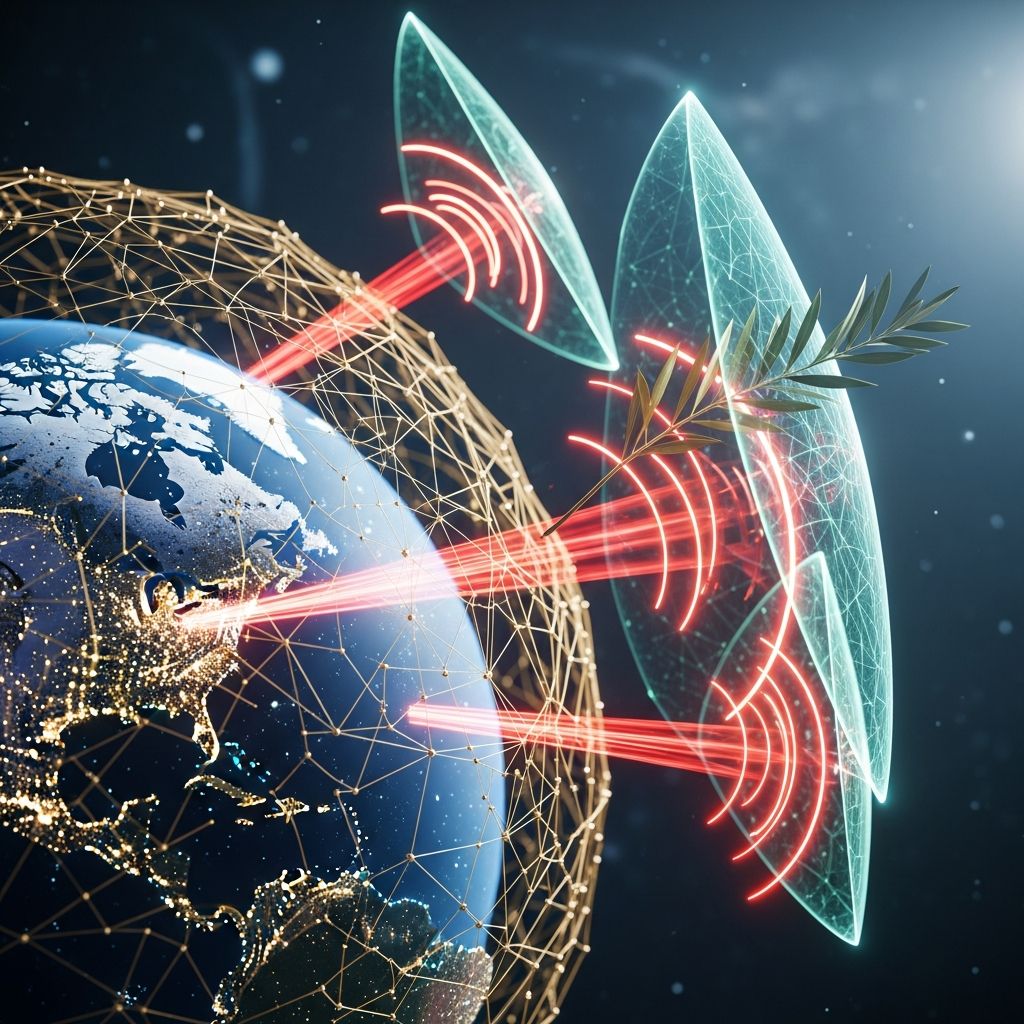
Why Nuclear Risk Is Rising, Not Fading
For decades after the Cold War, many assumed that the nuclear danger had receded. With the fall of the Berlin Wall and the dismantling of thousands of warheads, it seemed the world had turned a corner. But today, the risk of nuclear weapons being used in a catastrophic way is not decreasing—it is growing, and in ways that are more complex and harder to manage than during the bipolar standoff of the 20th century.
Modern nuclear risk is not just about the number of warheads, but about how they are used, how they are controlled, and how they interact with new technologies and geopolitical tensions. The possibility of a nuclear detonation—whether by accident, miscalculation, or deliberate escalation—is no longer a distant hypothetical. It is a real and urgent threat that demands a new approach to nuclear security.
What Makes Today’s Nuclear Threat Different
The Cold War was defined by a relatively stable, if terrifying, balance of terror between two superpowers. Deterrence was based on mutual assured destruction, and both sides had strong incentives to avoid direct conflict. Communication lines, while limited, existed. Crises were managed through established channels, and the risk of nuclear use was largely tied to a single, high-stakes scenario: all-out war between the United States and the Soviet Union.
Today’s nuclear landscape is far more fragmented and unpredictable:
- More nuclear-armed states: Nine countries now possess nuclear weapons, each with its own doctrine, command structures, and risk tolerance.
- Regional tensions: Crises in places like the Korean Peninsula, South Asia, and Eastern Europe involve nuclear-armed states and raise the risk of escalation.
- New technologies: Cyber capabilities, artificial intelligence, hypersonic missiles, and advanced surveillance systems are changing how nuclear forces are managed and how quickly decisions must be made.
- Lower thresholds for use: Some nuclear doctrines now include the possibility of limited nuclear use in a conventional conflict, increasing the chance that nuclear weapons could be used in a crisis.
- Accidents and miscalculation: The risk of a nuclear detonation due to technical failure, miscommunication, or misinterpretation of early-warning data remains real and is arguably higher than many assume.
These factors mean that the risk of nuclear use is no longer confined to a single, apocalyptic scenario. Instead, it is distributed across many potential pathways, each of which could lead to a global catastrophe.
The Hidden Dangers of Nuclear Systems
One of the most underappreciated aspects of nuclear risk is how much depends on complex, interconnected systems that are vulnerable to failure. Nuclear weapons are not just physical devices; they are embedded in a web of early-warning systems, communication networks, command-and-control structures, and decision-making processes that must all function correctly under extreme pressure.
Key vulnerabilities include:
- Early-warning systems: Satellites, radar, and other sensors can produce false alarms. In the past, false warnings have brought nuclear forces to the brink of launch. As systems become more automated and faster, the window for human judgment shrinks.
- Communication links: Secure, reliable communication between political leaders and military commanders is essential. If these links fail or are disrupted, the risk of unauthorized or mistaken use increases.
- Cyber threats: Nuclear command, control, and early-warning systems are increasingly connected to digital networks. Cyberattacks could potentially disrupt these systems, create false data, or even interfere with the ability to launch or recall weapons.
- Human factors: Decision-making in a crisis is subject to stress, fatigue, incomplete information, and cognitive biases. The pressure to act quickly can lead to catastrophic mistakes.
These vulnerabilities are not theoretical. Historical near-misses—such as the 1983 Soviet false alarm incident and various U.S. false warnings—show that the system has already come dangerously close to failure. In a more complex, multipolar world, the chances of such failures leading to actual nuclear use are higher than ever.
How to Reduce the Risk of Nuclear Catastrophe
Reducing the risk of nuclear catastrophe requires a multi-pronged strategy that addresses both the immediate dangers and the long-term structural problems. No single action can eliminate the risk, but a combination of practical, evidence-based measures can dramatically lower the probability of nuclear use.
1. Strengthen Crisis Communication and De-escalation Channels
One of the most effective ways to reduce nuclear risk is to ensure that leaders can communicate clearly and reliably during a crisis. This includes:
- Establishing and maintaining direct, secure communication links between nuclear-armed states, especially during periods of tension.
- Creating clear protocols for de-escalation, including agreed-upon steps to reduce forces, avoid provocative actions, and clarify intentions.
- Conducting regular crisis simulations and exercises to test communication systems and decision-making processes.
These measures do not require disarmament, but they do require political will and sustained diplomatic engagement. They are among the most cost-effective ways to reduce the risk of nuclear war.
2. Improve the Safety and Security of Nuclear Systems
Nuclear weapons and their supporting systems must be designed and operated to minimize the risk of accidents, unauthorized use, and cyber interference. This includes:
- Implementing robust safety features, such as permissive action links and other technical controls that prevent unauthorized launch.
- Regularly testing and updating early-warning and command-and-control systems to ensure reliability and resilience.
- Conducting thorough risk assessments of cyber vulnerabilities and taking steps to harden critical systems against attack.
- Ensuring that personnel are well-trained, well-rested, and operating under clear, well-understood procedures.
These measures are not just about technology; they are also about organizational culture, oversight, and accountability. A strong safety culture is as important as any technical safeguard.
3. Reduce the Role of Nuclear Weapons in Military Strategy
Many nuclear doctrines still treat nuclear weapons as usable instruments of war, not just as deterrents. This increases the risk that they will be used in a crisis. Steps to reduce this risk include:
- Adopting policies of no-first-use or sole-purpose doctrines, which state that nuclear weapons will only be used in response to a nuclear attack.
- Reducing the number of weapons on high alert, which decreases the pressure to launch quickly in a crisis.
- Limiting the development and deployment of new types of nuclear weapons that blur the line between conventional and nuclear conflict.
- Encouraging transparency about nuclear doctrines and capabilities to reduce uncertainty and miscalculation.
These changes do not eliminate nuclear weapons, but they make it less likely that they will be used in a conflict. They also create space for further arms control and disarmament measures.
4. Invest in Better Monitoring, Detection, and Verification
One of the biggest obstacles to nuclear risk reduction is the lack of trust between states. Better monitoring, detection, and verification technologies can help build that trust by providing more accurate, timely information about nuclear activities.
Key opportunities include:
- Using satellite imagery, open-source data, and machine learning to detect illicit nuclear trade and undeclared activities.
- Developing new verification technologies that can confirm compliance with arms control agreements without compromising sensitive information.
- Supporting international institutions and norms that promote transparency and accountability in nuclear programs.
These tools can help prevent proliferation, verify disarmament, and reduce the risk of miscalculation by providing a clearer picture of what other states are doing.
5. Build Political Will for Risk Reduction
Technical and policy solutions are necessary, but they are not sufficient. Ultimately, reducing nuclear risk requires sustained political will at the highest levels of government. This means:
- Ensuring that nuclear risk is treated as a top-tier national security priority, not a secondary concern.
- Engaging the public and civil society to raise awareness of the dangers and build support for risk-reducing policies.
- Encouraging leaders to take concrete, visible steps to reduce nuclear dangers, such as reducing alert levels, extending arms control agreements, and committing to no-first-use policies.
- Supporting international forums and initiatives that focus on nuclear risk reduction, such as the UN Security Council, the International Atomic Energy Agency, and multilateral dialogues on nuclear security.
Political will is not static; it can be built and sustained through education, advocacy, and leadership. The more that nuclear risk is seen as a shared, global problem, the more likely it is that states will cooperate to reduce it.
What Individuals and Organizations Can Do
While governments bear the primary responsibility for nuclear policy, individuals and organizations can play a crucial role in reducing nuclear risk. Ways to contribute include:
- Advocacy: Supporting organizations and campaigns that promote nuclear risk reduction, arms control, and disarmament.
- Research and analysis: Conducting and disseminating high-quality research on nuclear risks, doctrines, and policy options.
- Education: Teaching about nuclear issues in schools, universities, and public forums to build a more informed citizenry.
- Technical innovation: Developing and applying new technologies—such as AI, data analytics, and secure communications—to improve nuclear safety, security, and verification.
- Policy engagement: Working with governments, international organizations, and think tanks to shape nuclear policy and promote risk-reducing measures.
Every contribution, no matter how small, helps to build a global movement for nuclear risk reduction.
FAQs: Common Questions About Nuclear Risk
Isn’t the risk of nuclear war very low?
While the probability of nuclear war in any given year may be low, the consequences are so catastrophic that even a small annual risk adds up over time. Over decades, the cumulative risk becomes significant. Moreover, as geopolitical tensions rise and new technologies emerge, the risk is not decreasing—it may be increasing.
Can’t we just rely on deterrence to keep the peace?
Deterrence has played a role in preventing nuclear war, but it is not foolproof. Deterrence depends on rational actors, clear communication, and stable command structures—all of which can break down in a crisis. Relying solely on deterrence ignores the risks of accidents, miscalculation, and unauthorized use.
What’s the point of reducing risk if we can’t eliminate nuclear weapons?
Even if complete disarmament is not immediately achievable, reducing the risk of nuclear use is still essential. Every step that makes nuclear weapons less likely to be used—whether through better safety, clearer doctrines, or stronger communication—makes the world safer. Risk reduction is not a substitute for disarmament; it is a necessary complement to it.
How can we trust other countries to reduce their nuclear risks?
Trust is built through transparency, verification, and consistent behavior over time. By taking verifiable steps to reduce our own risks, we create incentives for others to do the same. International cooperation, confidence-building measures, and multilateral agreements can all help build the trust needed for deeper risk reduction.
Is nuclear risk more urgent than other global threats, like climate change or pandemics?
Nuclear risk, climate change, and pandemics are all existential threats that require urgent attention. They are not mutually exclusive; we must address all of them in parallel. Nuclear weapons pose a unique risk of sudden, catastrophic destruction, which makes reducing that risk a critical component of global security.
Conclusion: A Safer Future Is Possible
The risk of a catastrophic nuclear event is real, but it is not inevitable. By understanding the modern nuclear threat, addressing the vulnerabilities in nuclear systems, and taking concrete steps to reduce risk, we can make the world significantly safer.
The path forward requires a combination of technical expertise, sound policy, sustained diplomacy, and strong political will. It also requires a broader recognition that nuclear risk is not just a problem for a few nuclear-armed states—it is a shared global challenge that affects everyone.
With the right actions, we can reduce the chances of nuclear catastrophe and move toward a world where nuclear weapons are no longer a threat to humanity. That future is not guaranteed, but it is within our reach—if we choose to act.
References
- Nuclear Threat Initiative (NTI) – About Joan Rohlfing — Nuclear Threat Initiative. Accessed 2025. https://www.nti.org/about/people/joan-rohlfing/
- “FailSafe” Nuclear Security: A New Paradigm for the 21st Century — Center for International and Security Studies at Maryland (CISSM), University of Maryland. 2023. https://www.cissm.umd.edu/events/cissm-global-forum-joan-rohlfing-failsafe-nuclear-security-new-paradigm-21st-century
- AMA: Joan Rohlfing, President and COO of the Nuclear Threat Initiative — Effective Altruism Forum. 2022. https://forum.effectivealtruism.org/posts/rE5uGRhSXHkXoXuF2/ama-joan-rohlfing-president-and-coo-of-the-nuclear-threat
- National Academies Interim Report on Nuclear Proliferation and Arms Control Monitoring, Detection, and Verification — National Academies of Sciences, Engineering, and Medicine. 2023. https://nap.nationalacademies.org/catalog/27147/nuclear-proliferation-and-arms-control-monitoring-detection-and-verification
- NTI at 20: Joan Rohlfing on NTI’s Unique Impact Model, Rethinking Deterrence, and the Next Generation — Nuclear Threat Initiative. 2021. https://www.nti.org/risky-business/nti-at-20-joan-rohlfing-on-ntis-unique-impact-model-rethinking-deterrence-the-next-generation-and-more/

Medha Deb is an editor with a master's degree in Applied Linguistics from the University of Hyderabad. She believes that her qualification has helped her develop a deep understanding of language and its application in various contexts. Medha specializes in the areas of beauty, health, sports, and wellness and is committed to ensuring that the content on the website is…