
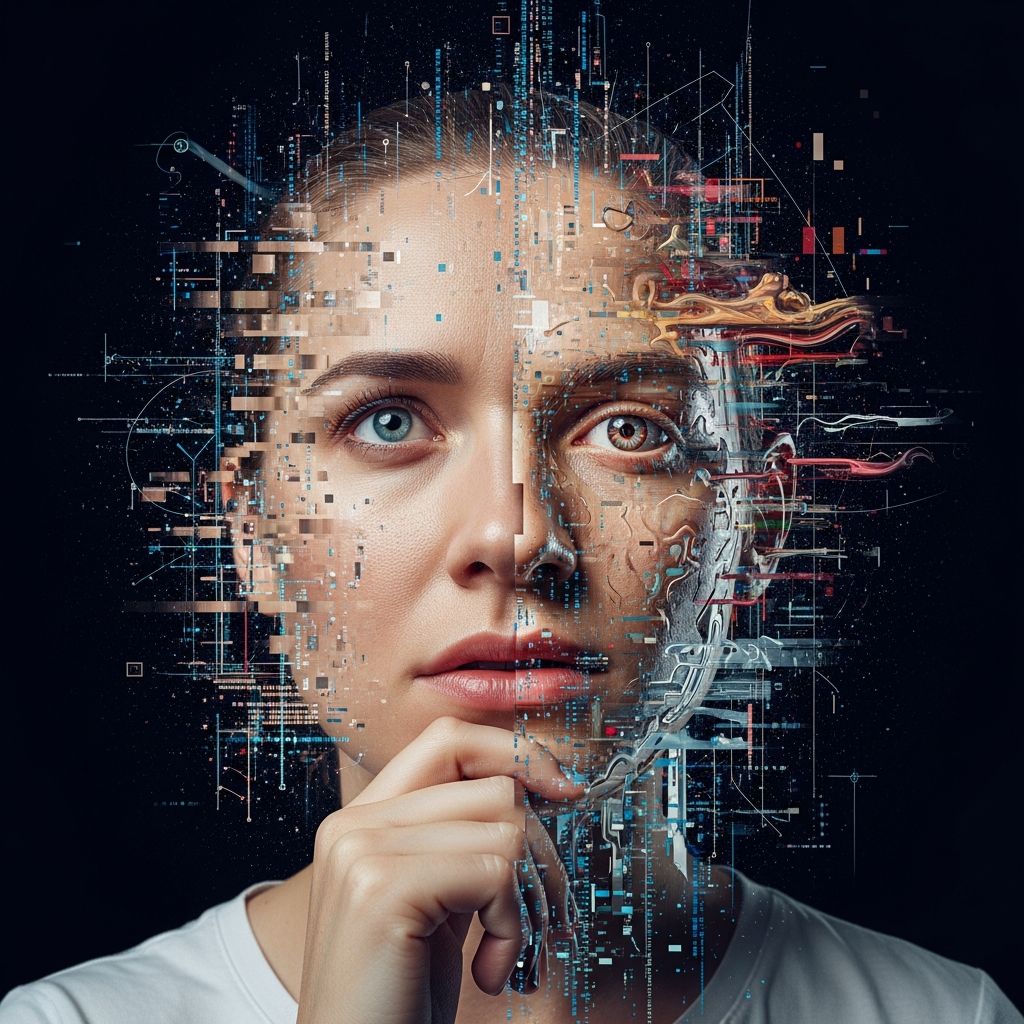
Advances in generative artificial intelligence have made it possible for anyone to create convincing images, videos, and audio that never actually existed. These new forms of synthetic media, often referred to as deepfakes when used to imitate real people, are colliding with an already fragile information ecosystem marked by mis- and disinformation. Understanding this convergence is essential for defending democratic institutions, personal privacy, and the basic idea of shared reality.
From Disinformation to Synthetic Media: A New Phase of the Information Crisis
False and misleading information are not new. What has changed in the past decade is the speed, scale, and precision with which they spread, driven by social platforms, algorithmic amplification, and political incentives. Synthetic media sits on top of this existing problem, acting as a powerful accelerator.
- Misinformation: Incorrect or misleading information shared without intent to deceive.
- Disinformation: False information deliberately created or spread to cause harm or achieve strategic goals.
- Malinformation: Genuine information used in a misleading context, such as doxxing or selective leaks.
Before AI-generated media became widespread, most harmful content relied on cheap fakes or shallow fakes: real photos or videos that were simply re-captioned, selectively edited, or slowed down to distort their meaning. Synthetic media dramatically expands what is possible, enabling realistic creations from scratch that can be tailored to specific individuals and contexts.
What Exactly Is Synthetic Media?
Synthetic media refers to any content—images, audio, video, or text—generated or heavily modified by AI models rather than captured directly from the real world. Recent progress in machine learning, especially generative models, has made these outputs increasingly indistinguishable from authentic recordings.
Key technologies behind synthetic media include:
- Generative Adversarial Networks (GANs), which pit two neural networks against each other to produce highly realistic images and videos.
- Diffusion models, used by many modern image generators, that progressively transform noise into detailed visual scenes.
- Neural text-to-speech and voice cloning, which can replicate a person’s voice from only a few seconds of audio.
- Large language models (LLMs), which generate fluent text that can be used to script videos, fake interviews, or automated propaganda.
The same underlying tools power both beneficial applications—like creative content, accessibility features, and education—and highly harmful ones, including targeted disinformation and non-consensual sexual imagery.
Deepfakes: When Synthetic Media Imitates Real People
Within synthetic media, deepfakes occupy a particularly sensitive niche: AI-generated or altered media that plausibly depicts a real individual doing or saying something they never did. These can include:
- Face swaps in video, placing someone’s likeness into another person’s body.
- Fully synthesized video of a public figure, driven by text or audio scripts.
- Voice clones that simulate someone speaking new sentences.
Academic researchers first demonstrated these capabilities in the mid-2010s, and by 2017 early tools for making deepfake videos began circulating online. The technology rapidly migrated from research labs to open-source communities and consumer apps, lowering the skills and resources needed to generate convincing content.
Current and Emerging Uses of Deepfakes
Deepfakes now show up across multiple domains:
- Non-consensual sexual imagery, overwhelmingly targeting women, remains the most prevalent harmful application.
- Political manipulation, including fabricated speeches or staged events, is increasingly being tested around elections and conflicts.
- Fraud and cybercrime, such as impersonating executives’ voices to authorize transfers or trick employees.
- Satire and entertainment, where creators mimic celebrities or historical figures for humor or art.
While many deepfakes today are still crude or detectable with close inspection, the trend is toward higher fidelity, shorter production cycles, and easier access to powerful tools.
The Information Ecosystem Was Already Fragile
Deepfakes did not arise in a vacuum. Even before generative AI became broadly available, multiple forces had undermined the stability of the information environment:
- Platform incentives favor emotional, controversial, or sensational content, making polarizing narratives more visible.
- State-sponsored information operations use social media to influence foreign and domestic audiences, as documented in the context of the 2016 US election and other campaigns.
- Fragmentation of media has weakened traditional gatekeepers, enabling niche ecosystems that may operate under entirely different factual assumptions.
- Economic pressures on journalism reduce resources for verification, investigative reporting, and fact-checking.
Synthetic media is being layered onto this already volatile context. The risk is less that a single perfect fake will fool everyone, and more that cumulative, pervasive doubt will make it harder for societies to agree on basic facts.
Why Deepfakes Matter: Beyond Simple Deception
The harms of synthetic media go far beyond individual hoaxes or pranks. Researchers and policymakers are increasingly concerned about a wide range of systemic effects.
| Impact Area | Risks from Synthetic Media & Deepfakes |
|---|---|
| Democracy & Elections | Manipulated speeches, fake scandals, and targeted influence campaigns can distort public debate and undermine trust in election results. |
| National Security | Fabricated videos of leaders or military events could be used for provocation, psychological operations, or diplomatic disruption. |
| Individual Rights | Non-consensual explicit deepfakes and defamation can cause severe emotional, reputational, and professional harm, with limited legal recourse in many jurisdictions. |
| Economic Fraud | Voice and video impersonation can facilitate scams, business email compromise schemes, and financial fraud. |
| Epistemic Trust | As fakes become more plausible, people may begin to dismiss authentic evidence as fabricated, a dynamic sometimes called the “liar’s dividend.” |
Detection, Authentication, and the Limits of Technical Fixes
Technical efforts to address deepfakes focus on two complementary strategies:
- Detection: Building algorithms to identify whether a piece of media has been AI-generated or manipulated.
- Authentication: Attaching secure metadata or cryptographic signatures at the point of capture, making it possible to verify that content is original and unaltered.
While these tools are improving, they face structural challenges:
- Detection systems can be evaded as generative models adapt, creating an ongoing arms race between creators and detectors.
- Detection alone rarely reaches the audiences who most need it; corrections typically spread slower and less widely than original false content.
- Authentication requires adoption across hardware makers, platforms, and publishers to be effective at scale, which is still in early stages.
Several industry initiatives are exploring standards for content provenance and authenticity. For example, the Coalition for Content Provenance and Authenticity (C2PA) is developing open technical specifications for embedding tamper-evident origin data into digital media files. These measures cannot eliminate synthetic media, but they can help create a layer of trustworthy content within an increasingly noisy environment.
Policy and Legal Responses Around the World
Governments are experimenting with different regulatory approaches to address synthetic media, balancing free expression, innovation, and protection from harm.
Common strategies include:
- Targeted bans or restrictions on certain uses, such as non-consensual sexual deepfakes or deception in elections.
- Transparency and labeling requirements for AI-generated content in political advertising or large-scale campaigns.
- Data protection and biometric privacy laws that limit the collection and use of facial or voice data.
- Platform obligations to remove clearly harmful synthetic content or provide users with tools for reporting and redress.
However, regulation faces multiple hurdles:
- Deepfakes can be produced and hosted across borders, complicating enforcement.
- Overly broad rules risk capturing satire, artistic expression, or benign experimentation.
- Many legal systems lack clear categories for harms created by synthetic impersonation, especially when no material financial loss is involved.
Policymakers increasingly recognize that synthetic media is not just a niche technical issue, but part of a broader agenda around digital governance, platform accountability, and the integrity of democratic processes.
Responsibility of Platforms and AI Companies
Major technology platforms and AI developers play a central role in both enabling and mitigating synthetic media harms. Platform design choices can either amplify malicious content or slow its spread.
Key responsibilities include:
- Content policies that clearly define unacceptable uses of synthetic media, such as impersonation or non-consensual sexual content, with meaningful enforcement.
- Detection and moderation tools that prioritize high-risk contexts like elections, public health communications, and conflict zones.
- User controls that help people understand when and how AI is used to generate or modify content.
- Research transparency about model capabilities, limitations, and potential abuse vectors.
Some AI companies are integrating safeguards directly into their generative models, such as filters that reject prompts requesting explicit content or impersonation of specific individuals. Such safeguards reduce casual abuse but are not foolproof, especially when open-source models can be fine-tuned without the same constraints.
Building Resilience: What Individuals and Institutions Can Do
No purely technical or legal solution will fully resolve the challenges posed by synthetic media. A resilient response requires changes in how individuals, institutions, and media organizations handle information.
For Individuals
- Slow down before sharing: Treat emotionally charged or sensational content with extra scrutiny, especially if it aligns perfectly with your existing views.
- Check multiple sources: Look for coverage from outlets with different editorial lines; if only fringe accounts carry a shocking video, be skeptical.
- Pay attention to provenance: Consider who is posting the content, when it first appeared, and whether credible organizations have confirmed it.
- Be aware of AI capabilities: Understanding that audio and video can be convincingly faked reduces the automatic trust we often place in “seeing is believing.”
For Journalists and Civil Society
- Strengthen verification workflows, including digital forensics, source triangulation, and collaboration with technical experts.
- Explain verification to audiences, making it clear why some viral content is not reported until it has been checked.
- Educate the public about synthetic media, emphasizing both its risks and limitations to avoid panic or overreaction.
- Monitor vulnerable communities who are often early targets of harassment, disinformation, or non-consensual deepfakes.
For Democratic Institutions
- Prepare contingency plans for the release of falsified media around sensitive events like elections or referendums.
- Invest in trusted channels, such as official websites and verified accounts, where accurate information can be quickly disseminated.
- Support independent research into information operations, platform dynamics, and public attitudes toward synthetic media.
Opportunities: Synthetic Media for Good
Despite legitimate fears, it is important to recognize the positive potential of generative AI and synthetic media when used responsibly.
- Education: Automatically generated simulations, historical recreations, and multilingual explanations can make complex topics more accessible.
- Accessibility: Voice cloning and video avatars can support assistive technologies, helping people with speech impairments or enabling real-time translation.
- Creative industries: Artists and filmmakers can experiment with new styles, resurrect historical figures for documentaries, or produce high-quality visuals on limited budgets.
- Communication: Organizations can personalize training, outreach, and customer support using synthetic presenters or localized content.
The central question is not whether synthetic media will become ubiquitous—it already is—but how societies will channel its power. The same tools that can mislead millions can also inform, educate, and connect them if embedded in thoughtful institutional and ethical frameworks.
Frequently Asked Questions (FAQs)
Q1: Can we ever reliably detect all deepfakes?
No. Detection technology will improve, but generative models will also become more sophisticated, making it unlikely that any single tool will reliably flag every deepfake. A realistic goal is a layered approach: stronger provenance for authentic content, better detection for high-risk scenarios, and greater public awareness of manipulation techniques.
Q2: Are deepfakes illegal?
It depends on the jurisdiction and the use case. Some countries have introduced or proposed laws against specific harms, such as non-consensual sexual deepfakes or deceptive political deepfakes during election periods. However, many uses still fall into gray areas, and general laws on fraud, harassment, or defamation are often applied instead.
Q3: How can I tell if a video is synthetic?
There is no guaranteed method, but you can look for visual artifacts, unnatural blinking or lighting, inconsistent shadows, or odd hand and teeth rendering. More importantly, consider contextual clues: Has the content been reported by reputable outlets? Does it originate from a suspicious account? When in doubt, avoid sharing until it has been verified by credible sources.
Q4: Are deepfakes only a problem for politicians and celebrities?
No. While public figures are obvious targets, ordinary people increasingly face harms such as non-consensual explicit deepfakes, intimate partner abuse using fabricated media, or scams using cloned voices. As tools become easier to use, the risk spreads from elite politics to everyday life.
Q5: What role should AI companies play in preventing abuse?
AI developers can integrate safeguards into their models, restrict clearly harmful use cases in their terms of service, collaborate with researchers and civil society on risk assessments, and support industry standards for provenance and labeling. Their design choices significantly influence how easily malicious actors can weaponize generative tools.
References
- Nina Schick – Keynote Speaker — London Speaker Bureau. 2023-05-01. https://us.londonspeakerbureau.com/speaker-profile/nina-schick/
- Deepfakes Q&A with Nina Schick part 1: Misinformation and the origins of deepfakes — Faculty AI. 2021-01-29. https://faculty.ai/insights/articles/deepfakes-qa-with-nina-schick
- Guidance on the use of deepfakes and synthetic media — European Union Agency for Cybersecurity (ENISA). 2023-10-10. https://www.enisa.europa.eu/publications/deepfakes
- Nina Schick on disinformation and the rise of synthetic media — 80,000 Hours Podcast. 2021-02-15. https://80000hours.org/podcast/episodes/nina-schick-disinformation-synthetic-media/
- Manipulated media and disinformation in the digital age — Brookings Institution. 2020-09-01. https://www.brookings.edu/articles/deepfakes-and-disinformation/

Medha Deb is an editor with a master's degree in Applied Linguistics from the University of Hyderabad. She believes that her qualification has helped her develop a deep understanding of language and its application in various contexts. Medha specializes in the areas of beauty, health, sports, and wellness and is committed to ensuring that the content on the website is…