
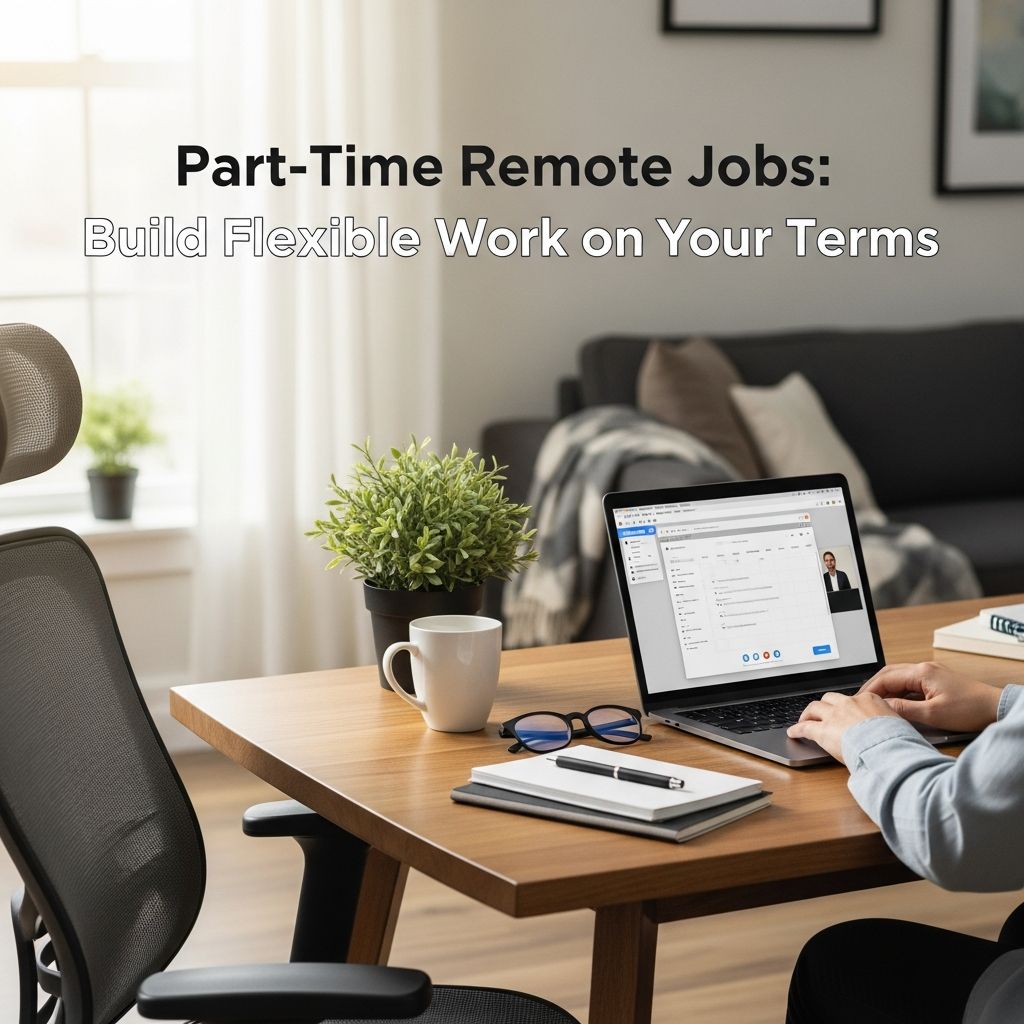
Part-time remote work has moved from a niche option to a mainstream way to earn income, build skills, and protect your time. As more employers adopt flexible arrangements, you no longer have to choose between your career and the rest of your life.
This guide walks you through the essentials of part-time remote jobs: why demand is growing, which roles are most common, how much they pay, and specific steps to find and land a flexible role that fits your goals.
Why Part-Time Remote Work Is Thriving
Remote and hybrid work arrangements are now a permanent feature of the labor market. Research shows that employees and employers alike see clear benefits in flexible work models.
- Studies show that over 70% of full-time workers want to work remotely at least several days per week, demonstrating strong, ongoing demand for flexibility.
- Analyses of job postings indicate that roughly a quarter of new roles are now hybrid and over 10% are fully remote, and flexible options continue to rise relative to fully on-site roles.
- Remote-capable workers consistently value flexibility at a level comparable to a pay raise, and many say they would leave a job that removes remote options.
While most reports focus on full-time roles, this same shift opens space for part-time arrangements. Companies can tap specialized talent for fewer hours, while workers gain income and experience without a full-time schedule.
Who Benefits Most from Part-Time Remote Jobs?
Part-time remote work can be especially helpful for people who:
- Need to balance work with caregiving, education, or health needs
- Want to test a new field before committing to a full-time career change
- Build income from multiple sources, such as freelancing plus a part-time role
- Live far from major job markets but want access to professional opportunities
Top Part-Time Remote Job Categories
Remote work now cuts across industries, not just tech. Data from labor market analyses shows that flexible and remote options are particularly common in knowledge-based roles such as technology, professional services, and certain healthcare functions.
Below are categories where part-time remote opportunities are frequently available.
1. Customer Support and Client Services
Many companies rely on distributed customer support teams to provide coverage across time zones. These roles often offer evening or weekend shifts and can be ideal for part-time schedules.
- Common titles: Customer support representative, client success associate, help desk agent, technical support specialist
- Typical tasks: Answering customer questions via email, chat, or phone; troubleshooting basic issues; documenting interactions; escalating complex cases
- Key skills: Clear written communication, patience, problem-solving, basic technical comfort, empathy
2. Writing, Editing, and Content Production
Digital content is a foundation of marketing, education, and media. Many organizations hire part-time or project-based writers and editors who can work remotely.
- Common titles: Content writer, copywriter, editor, blog writer, proofreader, content strategist (junior)
- Typical tasks: Drafting articles, product descriptions, newsletters, social posts; editing drafts; optimizing content for search engines; fact-checking
- Key skills: Strong writing, research, grammar, attention to detail, basic SEO knowledge
3. Virtual Assistance and Administrative Support
Leaders, entrepreneurs, and small teams often need remote support to handle routine administrative tasks but do not require a full-time hire.
- Common titles: Virtual assistant, administrative assistant, operations assistant, executive assistant (part-time)
- Typical tasks: Inbox and calendar management, travel arrangements, basic bookkeeping, data entry, document preparation
- Key skills: Organization, discretion, time management, proficiency with office and collaboration software
4. Tech and Digital Services
Technology remains one of the most remote-friendly domains. Many tech roles are project-based or lend themselves to flexible hours, making part-time arrangements feasible.
- Common titles: Web developer, junior software engineer, QA tester, data analyst, IT support technician
- Typical tasks: Building or maintaining websites, fixing bugs, running tests, cleaning data, creating dashboards, responding to user tickets
- Key skills: Programming languages, analytics tools, debugging, documentation, collaboration in code repositories
5. Education, Coaching, and Training
Online learning continues to expand, and many organizations hire part-time instructors and support staff to meet demand.
- Common titles: Online tutor, teaching assistant, learning support specialist, language instructor, career coach (part-time)
- Typical tasks: Leading live video sessions, grading, answering student questions, building lesson materials, giving feedback
- Key skills: Subject-matter knowledge, clear explanation, patience, comfort with video and learning platforms
6. Healthcare and Wellness (Non-Clinical)
Not all healthcare work requires in-person contact. The growth of telehealth and digital health services has created more remote-friendly, often part-time roles focused on administration and support.
- Common titles: Medical billing specialist, telehealth coordinator, patient intake representative, health coach (remote)
- Typical tasks: Managing patient records, scheduling, processing claims, explaining benefits, coordinating virtual visits
- Key skills: Confidentiality, familiarity with healthcare terminology, accuracy, customer service
Pay Expectations for Part-Time Remote Jobs
Compensation for part-time remote roles varies widely by industry, experience level, and whether the work is employee-based or freelance. Aggregate research shows that many remote workers earn at least as much as, or slightly more than, in-office peers, although some employers adjust pay based on location.
Use the table below as a directional guide, not a precise salary benchmark. Rates can shift by country, company size, and demand for specific skills.
| Job Category | Example Hourly Range (USD) | Common Experience Level |
|---|---|---|
| Customer Support | $14–$25 | Entry to mid-level |
| Writing & Editing | $18–$40 | Entry to experienced |
| Virtual Assistance | $18–$35 | Entry to mid-level |
| Tech & Digital Services | $25–$70 | Junior to senior |
| Education & Tutoring | $18–$45 | Entry to experienced |
| Healthcare Admin | $18–$35 | Entry to mid-level |
When reviewing pay for part-time remote roles, pay special attention to:
- Pay structure: Hourly, per project, per call, or retainer-based arrangements
- Location adjustments: Some employers use cost-of-living-based pay scales for remote roles
- Unpaid time: Whether meetings, training, or communication time is included in paid hours
- Benefits: Many part-time roles offer limited or no benefits, so calculate total compensation
Essential Skills for Part-Time Remote Success
Beyond technical or role-specific abilities, remote workers rely heavily on a core set of professional skills.
- Self-management: Planning your day, prioritizing tasks, and staying productive without direct supervision
- Digital communication: Writing clear emails and messages, documenting work, and collaborating across time zones
- Tech fluency: Comfort with video platforms, project management tools, cloud storage, and office suites
- Boundary-setting: Keeping work from spilling into personal time, especially when you work from home
- Learning agility: Quickly picking up new tools or processes as distributed teams evolve
How to Find Legitimate Part-Time Remote Jobs
Because remote work is so popular, scams and misleading postings are common. A strategic, cautious approach will help you find real, high-quality roles.
Clarify Your Goals Before You Search
Define what you want before scanning job boards. This prevents you from applying to every vaguely relevant posting and helps you evaluate offers more clearly.
- Your minimum and ideal weekly hours
- Your target pay range
- Preferred time zones or schedule windows
- Whether you want employee status or freelance/contract work
- Types of work that align with your long-term career plans (even if short-term income is the priority)
Use Targeted Search Strategies
Once you know your criteria, you can use more precise search queries such as “remote customer support part-time” or “part-time remote content writer.” On any job platform, filter for:
- Remote location: Fully remote, work from home, or distributed team options
- Job type: Part-time, contract, or temporary roles that specify hours
- Seniority: Entry-level or associate for career switchers; mid-level or senior if you have specialized experience
Do not ignore professional associations, alumni groups, or industry-specific newsletters, which often list flexible roles not widely advertised.
Spot and Avoid Red Flags
Before you invest time in an application, scan for signs that a job may be low quality or fraudulent:
- Unclear company information or no web presence
- Requests for payment or purchases to “get started”
- Promises of unusually high pay for very little work
- Pressure to skip interviews or written agreements
- Vague description of duties, schedule, and reporting structure
When in doubt, research the organization on professional networks and independent review sites. A legitimate company should be discoverable beyond the job ad.
Standing Out as a Part-Time Remote Candidate
Hiring managers for remote roles prioritize reliability and communication. Your materials and interactions should reinforce that you can deliver results without close oversight.
Tailor Your Resume for Remote Work
Adapt your resume to highlight experiences and skills that translate well to distributed teams:
- Showcase remote or hybrid experience, even if it was temporary
- List tools you have used: video platforms, project management software, CRM systems
- Quantify results: reduced response times, increased sales, improved satisfaction scores, or successful projects
- Emphasize independent projects you managed from start to finish
Write Focused, Value-Oriented Cover Letters
In a brief cover letter or intro message, connect the dots between what the role needs and what you offer:
- Mention your ability to work effectively in a remote setup
- Describe one or two specific achievements relevant to the job
- Clarify your approximate availability and time zone
- Keep the tone professional, concise, and outcomes-focused
Prepare for Virtual Interviews
For part-time remote roles, interviews will almost always take place via video or phone. Prepare for both technical and behavioral questions.
- Test your audio, video, and internet connection beforehand
- Choose a quiet, neutral background and good lighting
- Practice answers to questions about communication style, managing your time, and handling competing priorities
- Prepare examples of times you worked independently, handled ambiguity, or resolved issues without direct supervision
Balancing Part-Time Remote Work With the Rest of Your Life
Flexible work can easily spill into every corner of your day if you do not set boundaries. At the same time, it can dramatically improve your well-being when managed intentionally. Research consistently finds that remote workers save significant commute time and often use part of that time for additional work, which can blur boundaries.
To make part-time remote work sustainable:
- Time-block your week: Reserve specific hours for work, personal tasks, and rest
- Create a physical workspace: Even a small dedicated area signals when you are “on” or “off”
- Communicate clearly: Share your core working hours with your manager and teammates
- Monitor your load: Ensure that part-time hours do not quietly turn into full-time responsibilities
Frequently Asked Questions (FAQs)
Q: Are part-time remote jobs harder to find than full-time roles?
A: They can be, because many organizations still default to full-time hiring. However, the growth of remote and hybrid work has expanded opportunities, especially in fields like customer support, content, tech, and education. You may need to search more creatively and stay open to contract or project-based work.
Q: Can part-time remote jobs offer benefits?
A: Some employers provide limited benefits such as paid time off or retirement contributions to part-time staff, but many roles—especially freelance or contract positions—do not. Always ask about benefits, minimum hours required to qualify, and whether you are considered an employee or contractor.
Q: How many hours usually count as part-time in remote roles?
A: Part-time remote roles typically range from 5 to 30 hours per week, with many employers clustering around 15–25 hours. Definitions vary by country and company policy, so review each description carefully.
Q: Is a part-time remote job a good step toward a full-time remote career?
A: Yes. Part-time roles can help you build portfolio pieces, remote-work experience, and professional references. Many companies convert high-performing part-time or contract workers into full-time employees once budget and headcount allow.
Q: How do I avoid burnout when working part-time from home?
A: Treat your part-time role like any professional job: set start and end times, take breaks, avoid constant checking of messages outside agreed hours, and maintain some separation between your workspace and living areas. Remote-work studies show that without clear boundaries remote workers can end up working longer than office-based employees, even when they are technically part-time.
References
- Remote Work Trends 2025: A Talent Strategy Guide — JobsPikr. 2025-01-15. https://www.jobspikr.com/blog/remote-work-trends-2025/
- Remote Work Statistics and Trends for 2025 — Robert Half. 2025-09-10. https://www.roberthalf.com/us/en/insights/research/remote-work-statistics-and-trends
- State of Remote Work 2025: How Remote and Hybrid Arrangements Are Reshaping the Workplace — The Interview Guys (summarizing data from multiple primary sources including Robert Half and Stanford research). 2025-06-20. https://blog.theinterviewguys.com/state-of-remote-work-2025/
- Remote Work Trends: Top 10 Predictions for 2025 — Splashtop (citing research by Statista and Nicholas Bloom). 2025-03-05. https://www.splashtop.com/blog/remote-work-trends-2025
- Remote Hiring Trends in 2025: Sector Growth and Stabilization — Aura. 2025-07-30. https://blog.getaura.ai/remote-hiring-trends-by-sector-and-geography
- Top 100+ Remote Work & Hiring Statistics 2025 & Beyond — Second Talent. 2025-08-18. https://www.secondtalent.com/resources/remote-work-hiring-statistics/
- Top Remote Jobs in 2025: Industries with the Most Opportunities for Remote Workers — Mellow. 2025-05-21. https://www.mellow.io/news-and-articles/top-remote-jobs-2025-4829-1745484822
- 11 Surprising Statistics on Remote Work for 2025 — StrongDM. 2025-04-12. https://www.strongdm.com/blog/remote-work-statistics

Medha Deb is an editor with a master's degree in Applied Linguistics from the University of Hyderabad. She believes that her qualification has helped her develop a deep understanding of language and its application in various contexts. Medha specializes in the areas of beauty, health, sports, and wellness and is committed to ensuring that the content on the website is…