
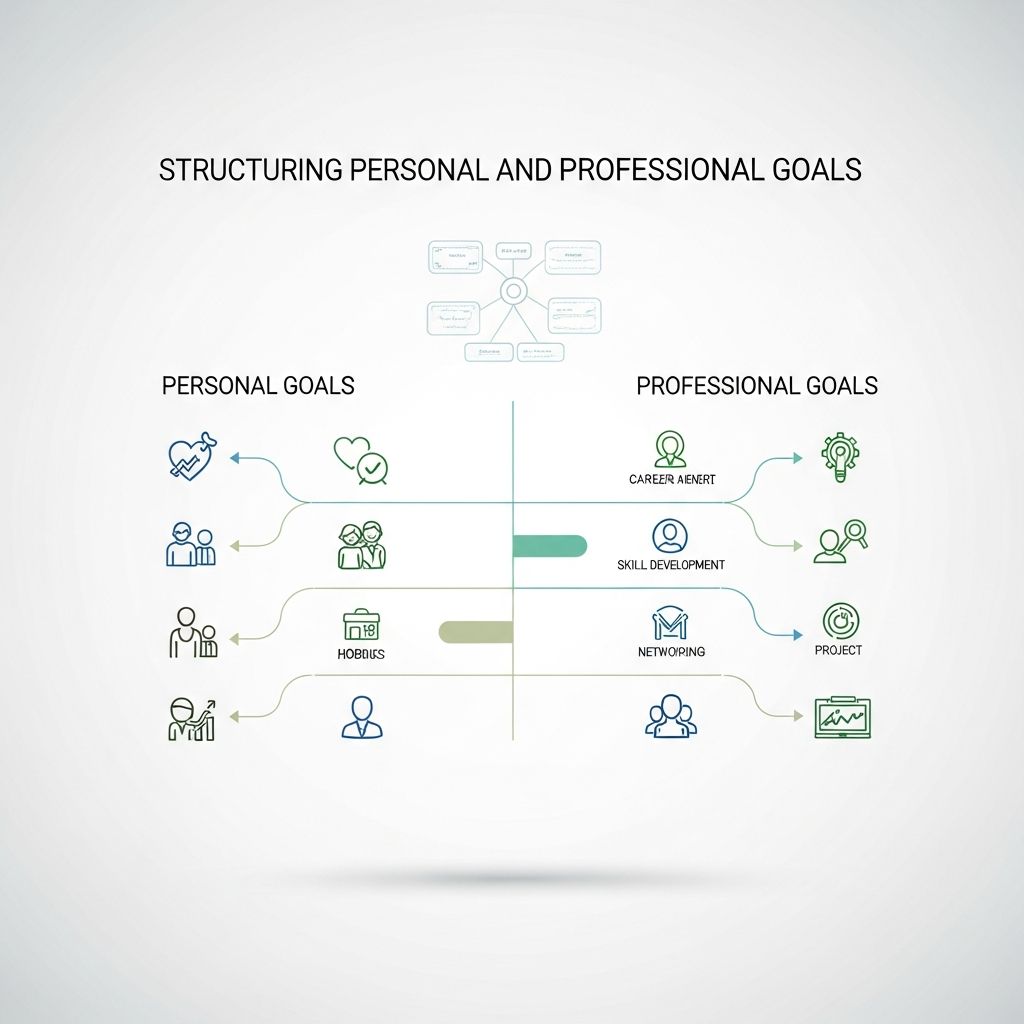
Understanding Goal Architecture and Its Impact on Success
Goals serve as the foundation for meaningful progress in every aspect of our lives. Whether you’re advancing your career, improving your health, or building stronger relationships, the way you structure and approach your goals dramatically influences whether you’ll achieve them. Many people set ambitious intentions but struggle with execution because they haven’t considered the underlying architecture of their objectives. This article explores the various dimensions of goal-setting, helping you understand how to construct goals that actually work.
The key to transformative goal-setting lies in understanding that not all goals are created equal. Some goals operate on tight timeframes, while others span decades. Some focus on specific outcomes, while others emphasize the process itself. By recognizing these distinctions, you can apply the most appropriate strategies to each goal, dramatically increasing your likelihood of success.
Time-Bounded Goal Categories
One of the most fundamental ways to categorize goals involves examining the timeframe within which you expect to achieve them. This temporal dimension shapes how you plan, monitor, and adjust your efforts. Understanding the relationship between timeframe and goal characteristics helps you allocate resources appropriately and maintain motivation throughout your journey.
Immediate Action Items and Short-Term Objectives
Short-term goals typically span anywhere from a few days to several months. These are the building blocks of larger ambitions and provide tangible evidence of progress. A short-term goal might involve completing a professional certification within six months, establishing a daily exercise routine for the next 30 days, or mastering a new software tool by month-end. These goals work exceptionally well for establishing momentum and building confidence because they deliver visible results quickly.
The advantage of short-term goals lies in their immediacy and measurability. You can see progress weekly or even daily, which keeps motivation high. They also function as stepping stones toward larger objectives. For instance, if your long-term vision involves advancing to a leadership position, your short-term goals might include attending communication workshops, seeking mentorship opportunities, or taking on small team responsibilities.
Medium-Range Targets and Developmental Pathways
Medium-term goals span roughly one to three years. These objectives represent significant milestones in your personal and professional development. A medium-term goal might involve saving for a house down payment, developing expertise in a specialized field, or building a professional network of meaningful connections. These goals require sustained effort and strategic planning but remain within a timeframe that feels manageable and actionable.
Medium-term goals excel at bridging the gap between daily actions and lifetime aspirations. They’re substantial enough to require real commitment yet close enough that you can maintain focus and adjust strategies based on changing circumstances. Many people find that achieving medium-term goals provides the momentum and confidence needed to pursue more ambitious long-term objectives.
Lifetime Aspirations and Legacy Objectives
Lifetime goals represent your grandest visions—the accomplishments you hope to achieve by the end of your life or in your later years. These might include retiring early, traveling extensively, earning advanced degrees, building a successful business, raising healthy children, or making meaningful contributions to your community. Lifetime goals operate at the strategic level, providing direction and purpose to all your shorter-term efforts.
While lifetime goals seem distant, they’re equally important to articulate. They serve as your North Star, helping you make decisions about which opportunities to pursue and which to decline. Every medium-term and short-term goal should ideally connect to at least one lifetime aspiration, ensuring your daily efforts move you toward your grandest visions.
Results-Focused Versus Process-Oriented Goal Frameworks
Another crucial dimension for structuring goals involves the distinction between outcome-based objectives and process-based objectives. These represent fundamentally different approaches to goal achievement, and most people benefit from using both simultaneously.
Outcome-Based Goals and End-State Visions
Outcome-based goals focus on specific, measurable results you want to achieve. These goals answer the question: “What do I want to accomplish?” Examples include earning a specific salary, achieving a target weight, reading a certain number of books annually, or securing a promotion. Outcome goals provide clarity about your destination and make it easy to determine whether you’ve succeeded.
The strength of outcome-based goals lies in their specificity and measurability. You know exactly what success looks like, which simplifies tracking and celebration. However, pure outcome focus can sometimes create anxiety or discourage you if external factors interfere with your progress. For instance, a goal to earn a promotion depends partly on company circumstances beyond your control.
Process-Based Goals and Behavioral Commitments
Process-based goals emphasize the actions and habits you’ll develop rather than specific end results. Examples include exercising four times weekly, journaling daily, networking with three new professionals monthly, or reading for 30 minutes before bed. These goals focus on behaviors within your complete control, which makes them inherently more achievable.
Process goals excel at building sustainable habits and maintaining consistency. Because they emphasize what you do rather than what you achieve, they’re less susceptible to external disruptions. A person committed to exercising four times weekly will achieve that goal regardless of whether they hit a specific weight target. Over time, consistent process implementation typically leads to desired outcomes anyway, but with reduced anxiety and increased intrinsic motivation.
Integrating Both Approaches for Maximum Impact
The most effective goal-setting strategy combines both outcome and process orientations. You identify ambitious end results you’re pursuing (outcome goals) while simultaneously committing to the daily and weekly behaviors that create those results (process goals). This dual approach provides both directional clarity and behavioral consistency.
Life Area Goal Categories
Goals exist across multiple dimensions of human experience. Most people benefit from developing objectives in several key life areas simultaneously, creating a balanced and fulfilling existence.
Career and Professional Development Domains
Career goals encompass your aspirations related to work and professional growth. These might include earning certifications, developing specialized expertise, expanding your professional network, increasing income, or advancing to leadership positions. Career goals often serve as the vehicle for both personal fulfillment and financial security. Many people discover that pursuing ambitious career goals increases both their income and their sense of purpose.
Financial and Economic Objectives
Financial goals address your relationship with money and economic stability. These include saving targets, debt elimination timelines, investment strategies, income diversification, and wealth accumulation plans. Financial goals provide the foundation for security, freedom, and the ability to pursue other aspirations. Someone might simultaneously pursue short-term goals like creating a monthly budget and lifetime goals like achieving complete financial independence.
Health, Fitness, and Physical Wellness Targets
Health-focused goals address your physical wellbeing through exercise routines, nutrition improvements, medical screenings, and disease prevention. These goals range from specific fitness achievements like completing a marathon or achieving a target weight to broader commitments like exercising regularly or maintaining consistent sleep schedules. Physical health goals impact energy levels, longevity, and quality of life across all other domains.
Mental, Emotional, and Psychological Growth
Mental health goals address your psychological wellbeing, emotional resilience, and inner peace. These might include practicing mindfulness, developing emotional intelligence, managing stress more effectively, improving self-confidence, or addressing anxiety through professional support. Many people underestimate the importance of mental health goals, yet they dramatically influence your ability to pursue and achieve goals in other areas.
Relationship, Family, and Social Connection Objectives
Relationship goals focus on building and maintaining meaningful connections. These include improving communication with partners, spending quality time with family, expanding your social circle, and nurturing friendships. Strong relationships are among the most reliable predictors of life satisfaction, making relationship goals worthy of the same attention you’d give career or financial objectives.
Personal Growth, Learning, and Skill Development
Learning goals address your intellectual development and skill acquisition. These include learning new languages, reading extensively, taking courses, developing creative abilities, or mastering new technical skills. Lifelong learning keeps your mind engaged, increases adaptability, and often creates unexpected opportunities and connections.
Lifestyle, Environment, and Sustainability Goals
Environmental and lifestyle goals address how you want to live and your impact on the world. These might include reducing your carbon footprint, living more sustainably, volunteering in your community, or contributing to causes you believe in. Many people find that pursuing these goals creates deeper meaning and alignment with their values.
Goal-Setting Frameworks and Methodologies
Beyond categorizing goals by timeframe and domain, several proven frameworks help you structure goals for maximum clarity and achievability.
The SMART Framework for Specific, Measurable, Achievable Goals
The SMART framework ensures your goals have essential characteristics. Specific goals clearly define what you’re pursuing. Measurable goals include quantifiable metrics so you can track progress. Achievable goals stretch you without becoming impossible. Relevant goals align with your values and broader life vision. Time-bound goals include explicit deadlines. For example, rather than “improve my fitness,” a SMART goal reads: “Exercise four times weekly for 30 minutes for the next three months, tracking workouts in a fitness app.”
Key Results and Objective-Based Structuring
The OKR (Objectives and Key Results) framework, popularized by technology companies, provides structure for more complex goals. You identify a qualitative objective (the direction you’re moving) and then establish three to five quantifiable key results that demonstrate progress toward that objective. For instance, an objective might be “Strengthen my financial health,” with key results including “Save $5,000 for a holiday,” “Reduce monthly discretionary spending by 20 percent,” and “Pay off $2,000 in credit card debt.”
Stepping Stone and Milestone-Based Approaches
The stepping stone approach breaks large goals into smaller sequential milestones. Rather than focusing solely on the final destination, you identify intermediate achievements that build progressively toward the larger goal. Someone pursuing a career transition might establish milestones including completing relevant certifications, building a project portfolio, networking with professionals in the target field, and eventually making the job transition.
Practical Goal Implementation Strategies
Conducting a Values and Strength Assessment
Before establishing specific goals, invest time understanding your core values, strengths, weaknesses, passions, and long-term aspirations. Ask yourself: What genuinely matters to me? What activities bring me joy and fulfillment? Where do I excel naturally? What areas challenge me? What fears hold me back? This self-knowledge ensures your goals align with who you actually are, increasing intrinsic motivation and satisfaction.
Prioritizing and Balancing Multiple Objectives
Most people can’t pursue everything simultaneously. Prioritize goals by identifying which ones create the greatest positive impact on your overall life satisfaction. Consider which goals support other objectives and which ones might conflict. Many people find value in pursuing one or two ambitious goals per life area while maintaining simpler objectives in other domains.
Creating Accountability and Tracking Mechanisms
Goals without tracking mechanisms often fade into obscurity. Establish systems for monitoring progress, whether through weekly check-ins, progress journals, habit trackers, or accountability partners. Visible progress reinforces motivation and allows you to adjust strategies when circumstances change.
Frequently Asked Questions About Goal Structuring
Q: How many goals should I pursue simultaneously?
A: Most people perform best with two to four significant goals per time period, supplemented by smaller maintenance goals in other life areas. Too many goals dilute focus, while too few miss opportunities for comprehensive life development.
Q: What should I do if I fail to achieve a goal?
A: Failure provides valuable information. Assess whether the goal was unrealistic, whether your strategy needed adjustment, or whether external circumstances changed. Use this learning to refine your approach for future goals.
Q: How often should I review and adjust my goals?
A: Monthly reviews help you track progress and make tactical adjustments. Quarterly reviews allow strategic reassessment. Annual reviews suit comprehensive life goal revisions based on lessons learned and changing priorities.
Q: Should goals be shared with others or kept private?
A: Research suggests modest public commitment enhances accountability without creating excess pressure. Share goals with trusted supporters who genuinely invested in your success rather than sharing broadly.
Q: How do I balance ambitious goals with contentment?
A: Effective goal-setting includes appreciating current accomplishments while pursuing future aspirations. Process-based goals particularly excel at this, helping you find satisfaction in daily consistent effort rather than distant outcomes.
Q: Can I change goals midway through their timeline?
A: Absolutely. Goals serve you, not the reverse. As circumstances change, priorities shift, or new information emerges, adjusting goals demonstrates wisdom rather than failure. Periodically reassess whether your goals still align with your values.
References
- SMART Goals: Definition and Examples — Purdue Global. 2024. https://www.purdueglobal.edu/blog/careers/setting-professional-goals-with-examples/
- Personal Development Goals: Examples and Frameworks — Reclaim.ai. 2024. https://reclaim.ai/blog/personal-development-goals
- 150 Personal Goals Examples Across Life Domains — Helpful Professor. 2024. https://helpfulprofessor.com/personal-goals-examples/
- Personal Goals and OKR Frameworks — Tability. 2024. https://www.tability.io/odt/articles/personal-okrs-how-to-do-them-right-personal-goals-examples
- 50 Inspiring Personal Goals Examples — Hatch Tribe. 2024. https://www.hatchtribe.com/blog/50-inspiring-personal-goals-examples-to-help-you-succeed

- Integrated M.A. in Applied Linguistics, University of Hyderabad
- 5+ years in editorial, instructional, SEO, and research-based writing
Sneha is a relationships and lifestyle writer with a strong foundation in applied linguistics and certified training in relationship coaching. She brings over five years of writing experience to theskillvault, crafting thoughtful, research-driven content that empowers readers to build healthier relationships, boost emotional well-being, and embrace holistic living. Her writing and insights reflect the belief that beauty, happiness, and wellness…