
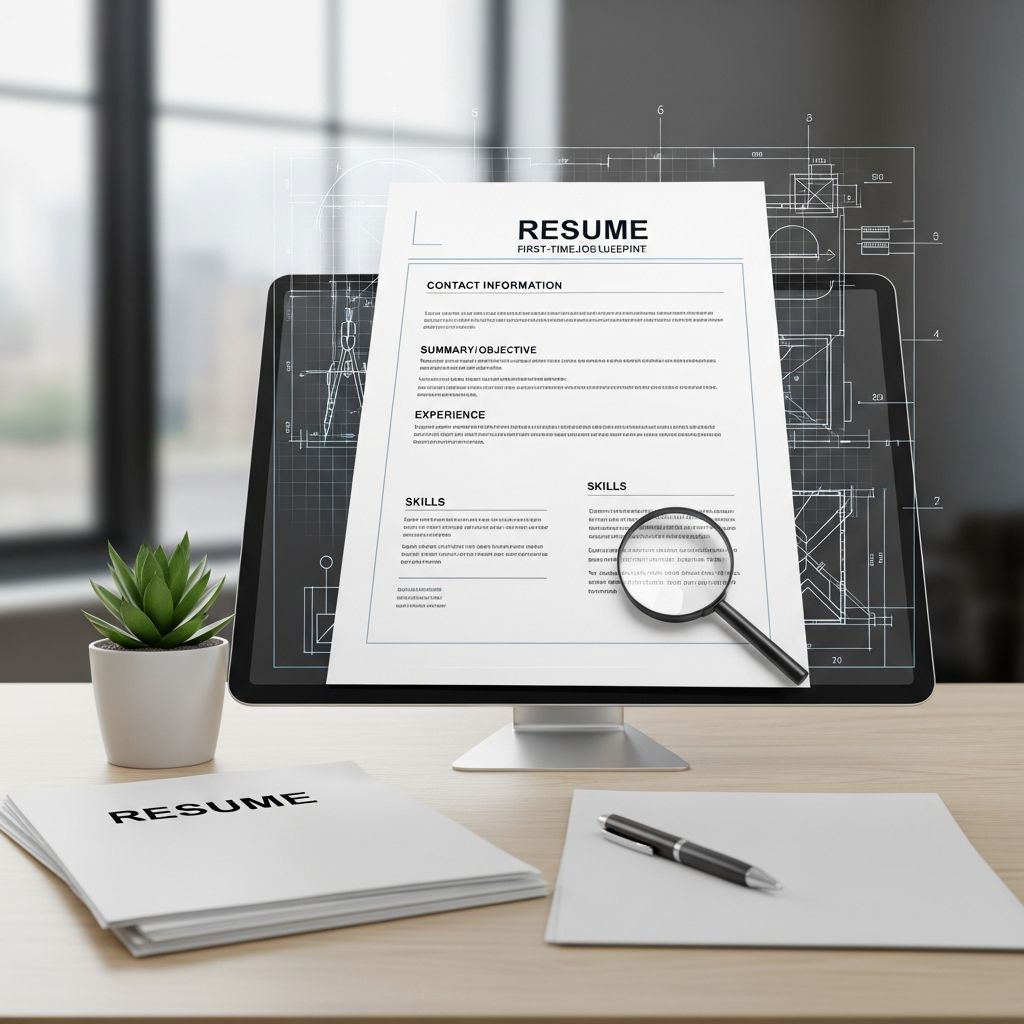
Breaking into the job market with limited or no experience can feel intimidating, but a well-crafted entry-level resume can bridge the gap between where you are today and the role you want next. This guide walks you through how to turn your education, projects, part-time work, and skills into a concise, convincing resume that employers will actually read.
What Makes an Effective Entry-Level Resume?
When you lack full-time experience, employers look less for a long work history and more for evidence of potential. According to major university career centers, a resume is a brief, targeted summary of your education, experience, and skills—not a complete autobiography. Your goal is to make it effortless for a recruiter to answer three questions:
- Can this candidate do the core tasks of the role?
- Have they shown reliability, initiative, and follow-through in any context?
- Do their interests and skills align with this position?
For entry-level roles, your resume should:
- Fit on one page in most cases
- Highlight education, projects, and transferable skills
- Use clear headings and bullet points for quick scanning
- Incorporate keywords from the job description so it passes applicant tracking systems (ATS)
Choosing the Right Resume Structure with Little Experience
There is no single “best” format, but certain structures are more effective when you are just starting out.
| Format | Best For | Key Advantage | Potential Drawback |
|---|---|---|---|
| Chronological | Internships, consistent part-time work | Shows growth and reliability over time | Weak if your work history is thin or unrelated |
| Functional (Skills-Based) | Career changers, very limited experience | Emphasizes skills over job titles | Some recruiters find it vague or confusing |
| Combination | Students, recent grads, and beginners | Balances key skills with a short experience section | Requires careful editing to stay on one page |
For most entry-level candidates, a combination format works best: lead with a short profile and skills section, then list education and experience in reverse-chronological order.
Core Sections Every Entry-Level Resume Needs
Career centers at leading universities commonly recommend five essential sections on a resume.
- Contact information
- Short summary or objective
- Education
- Experience (broadly defined)
- Skills
Contact Information: Make It Easy to Reach You
Place your contact details at the top of the page so they are immediately visible.
- Full name (slightly larger font)
- Phone number (with voicemail set up and professional greeting)
- Email using a professional address (e.g., firstname.lastname@provider.com)
- City and state or general location
- Optional: link to a LinkedIn profile or online portfolio if relevant
Avoid including personal details such as age, photo, marital status, or full mailing address unless your region or industry explicitly expects them.
Summary vs. Objective: Which Should You Use?
A short opening statement can provide context and help employers quickly understand who you are. Guidance from resume experts and university career offices suggests:
- Objective – Focuses on your career goals and the type of role you seek. Better for students or candidates with almost no experience.
- Summary – Highlights your most relevant qualifications and achievements. Stronger when you have some internships, projects, or part-time work to showcase.
For entry-level roles, choose the format that lets you best answer: Why should this employer be interested in me? Keep it to two or three concise sentences and avoid generic claims like “hard-working” without proof.
Turning Education into a Strength
When you are early in your career, your education can be a major asset. Career services at universities often advise placing the Education section near the top of your resume if you are a current student or recent graduate.
Include:
- Degree name and major (e.g., Bachelor of Science in Computer Science)
- Institution name and location
- Graduation date or expected graduation date
- GPA, if it is strong and helpful in your field
- Relevant coursework that mirrors the job description
- Academic honors, scholarships, or awards
- Key academic projects or research with concrete outcomes
To keep this section focused, list only courses and projects that support your target roles—for example, database design and data structures for a junior developer position, or research methods for an entry-level analyst role.
Redefining Experience When You Are Just Starting Out
Many first-time job seekers assume that “experience” must mean full-time, paid roles. In reality, leading career centers define experience broadly to include any setting where you applied relevant skills or took responsibility.
You can treat the following as experience:
- Internships (paid or unpaid)
- Part-time and seasonal jobs
- Volunteer activities and community service
- Leadership positions in clubs or student organizations
- Significant class projects, capstones, or research
- Freelance work or small entrepreneurial efforts
Writing Impactful Bullet Points
Recruiters often skim resumes in seconds, so clear bullet points matter more than lengthy paragraphs. A simple formula helps:
- Action verb + what you did + how or result
Instead of:
- Responsible for helping at front desk
Try:
- Greeted and assisted 40–60 visitors per shift, answering questions and directing them to appropriate services
Whenever possible, include numbers—such as frequency, size, or improvement—to make your contributions concrete.
Prioritizing What to Include
As you decide which experiences to list, ask:
- Does this help prove a skill the employer is asking for?
- Can I describe what I did using specific, professional language?
- Is this more relevant than other things I could include on a one-page resume?
Entry-level resumes benefit from relevance over chronology: it is fine to devote more space to a recent project closely related to the job than to an older part-time job that is less relevant.
Skills That Stand Out on Entry-Level Resumes
A dedicated skills section helps employers quickly match your abilities to their requirements and supports keyword scanning by ATS software. Aim to include a mix of technical and transferable skills.
Technical and Role-Specific Skills
These depend heavily on your field, but might include:
- Software tools (e.g., spreadsheets, analytics platforms, design programs)
- Programming languages or frameworks
- Laboratory techniques or research methods
- Data analysis and visualization
- Social media management or content creation tools
Transferable and Interpersonal Skills
Recruiters consistently emphasize the value of communication, teamwork, and problem solving for early-career candidates. Examples include:
- Written and verbal communication
- Collaboration and teamwork
- Time management and organization
- Customer service and conflict resolution
- Adaptability and willingness to learn
Rather than simply listing these skills, reinforce them in your bullet points by describing specific times you used them effectively.
Tailoring Your Resume to Each Application
Career experts emphasize that customizing each resume to the job description significantly improves your chances of getting noticed. Tailoring does not mean rewriting everything; it means selectively emphasizing the most relevant aspects of your background.
To tailor your entry-level resume:
- Review the job posting and highlight repeated skills or responsibilities
- Mirror the employer’s language when it accurately describes your experience
- Move the most relevant experience and projects higher within each section
- Add or remove bullet points to better match the role’s priorities
- Ensure your skills section reflects the required tools and competencies you actually possess
This focused approach helps both human reviewers and ATS software recognize your fit for the role.
Design, Layout, and Formatting Tips
Clear, simple formatting is more effective than complex designs, especially when applicant tracking systems are involved.
- Use a clean, readable font (e.g., 10–12 point size)
- Keep margins around 0.5–1 inch for adequate white space
- Rely on standard headings such as Education, Experience, and Skills
- Use bullet points instead of long paragraphs
- Maintain consistent date formatting throughout
- Avoid images, graphics, or text boxes that some ATS cannot parse
Save your resume in the file type requested by the employer. If not specified, career advisors often suggest a word-processing format compatible with ATS or a PDF that preserves layout carefully.
Common Entry-Level Resume Mistakes to Avoid
Even strong candidates can be overlooked if their resume contains distractions or red flags. To keep your resume professional:
- Avoid spelling and grammar errors. Use spell check and, if possible, ask someone else to review your document.
- Do not exaggerate or invent experience. Employers may verify your claims, and integrity early in your career is critical.
- Skip irrelevant personal information. Hobbies are optional and should be included only if they demonstrate relevant skills or leadership.
- Do not overcrowd the page. If everything looks equally important, recruiters may miss key details.
- Avoid one-size-fits-all resumes. Sending the same generic document to every role reduces your chances of success.
Practical Checklist Before You Apply
Use this brief checklist to review your entry-level resume before submitting applications:
- All contact information is correct and professional
- Summary or objective clearly matches the role you want
- Education section highlights relevant coursework and achievements
- Experience includes internships, projects, and roles with concrete bullet points
- Skills section reflects both technical and transferable skills tied to the job description
- Formatting is consistent, clean, and easy to scan
- Resume is tailored to the specific job posting
- You have proofread for errors and asked for feedback if possible
Entry-Level Resume FAQs
Q: How long should an entry-level resume be?
Most career services recommend a one-page resume for students and recent graduates, especially when experience is limited. Use the space to emphasize quality and relevance, not to list everything you have ever done.
Q: Can I include high school experience?
Yes, if you are in your early university years or recently graduated and your high school activities or achievements are still your most relevant experience. As you gain more college-level projects and work, you can gradually phase out high school details.
Q: What if I have no internships or work history at all?
Focus on projects, coursework, volunteer work, and campus involvement. Describe them using the same bullet-point structure you would use for a job, emphasizing what you did and what results you achieved. Employers are often more interested in demonstrated initiative than in whether you were paid.
Q: Should I tailor my resume for every job?
Yes. Adjusting your bullet points, skills, and summary to each posting helps your resume pass ATS screenings and shows the employer you understand their priorities. You do not need to start from scratch, but you should refine the details for each application.
Q: Do I need a cover letter with an entry-level resume?
While not every employer requires a cover letter, many still expect one, and career advisors note that a tailored letter can strengthen your application by explaining your motivation and fit in more depth. If the posting allows or requests a cover letter, treat it as an opportunity rather than an optional extra.
References
- CREATE A STRONG RESUME — Harvard University, Mignone Center for Career Success. 2023-08-01. https://careerservices.fas.harvard.edu/resources/create-a-strong-resume/
- RESUMES/COVER LETTERS — Stanford Career Education. 2022-09-15. https://careered.stanford.edu/sites/g/files/sbiybj22801/files/media/file/resume-and-cover-letter-examples.pdf
- Resumes, cover letters, portfolios, and CVs — MIT Career Advising & Professional Development (CAPD). 2023-05-10. https://capd.mit.edu/channels/make-a-resume-cover-letter-cv/
- How To Make Your Resume Comprehensive (With Examples) — Indeed Editorial Team. 2024-02-01. https://www.indeed.com/career-advice/resumes-cover-letters/how-to-make-a-resume-with-examples
- The Best Resume Format for 2025 (Templates & Examples) — ResumeGenius. 2024-01-10. https://resumegenius.com/blog/resume-help/resume-format
- How to Make a Resume in 2025 | Beginner’s Guide — Novorésumé. 2024-03-05. https://novoresume.com/career-blog/how-to-write-a-resume-guide
- Free Beginner Resume Template For 2025: + Examples & Writing Tips — The Interview Guys. 2024-01-20. https://blog.theinterviewguys.com/free-beginner-resume-template/

- Integrated M.A. in Applied Linguistics, University of Hyderabad
- 5+ years in editorial, instructional, SEO, and research-based writing
Sneha is a relationships and lifestyle writer with a strong foundation in applied linguistics and certified training in relationship coaching. She brings over five years of writing experience to theskillvault, crafting thoughtful, research-driven content that empowers readers to build healthier relationships, boost emotional well-being, and embrace holistic living. Her writing and insights reflect the belief that beauty, happiness, and wellness…