
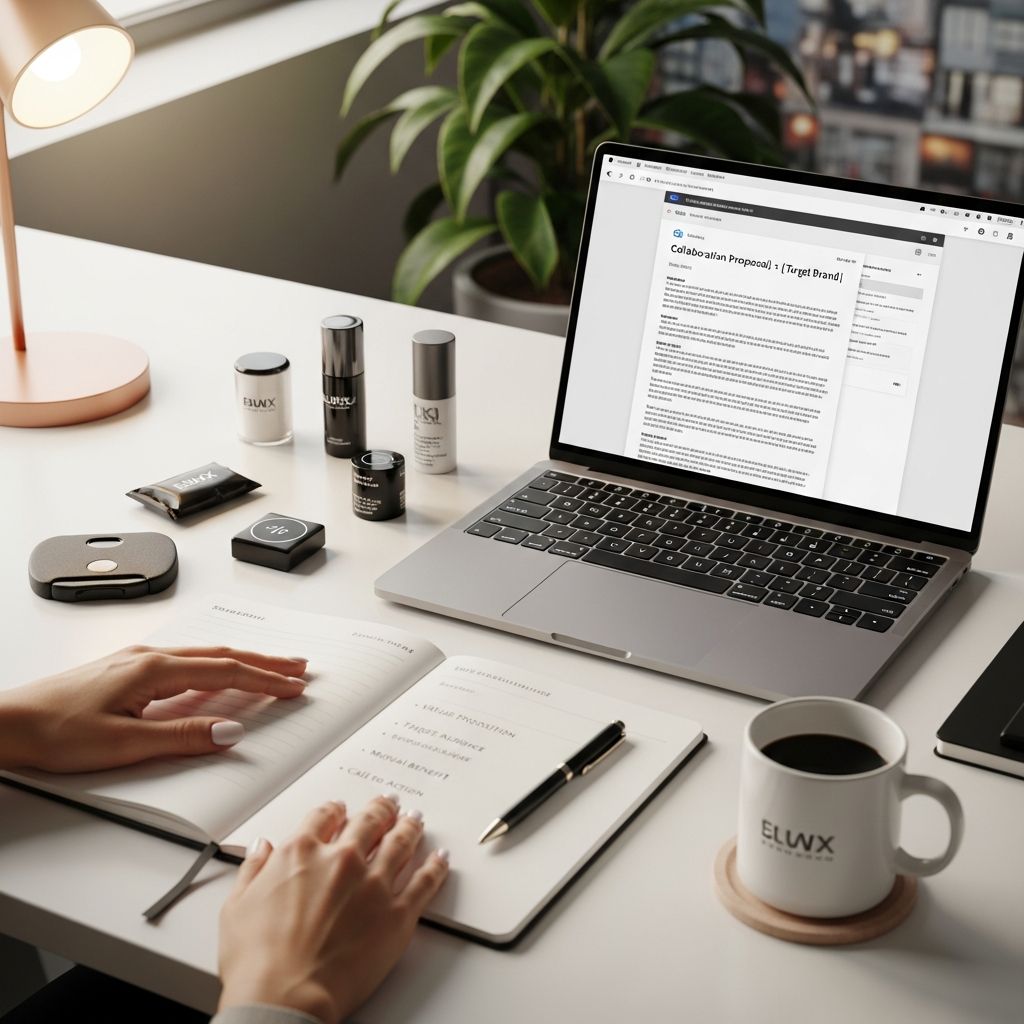
Brand inboxes are crowded, but a thoughtful, well-structured pitch email can still cut through the noise. This guide walks you step by step through writing a brand pitch email that feels personal, demonstrates value, and makes it easy for brands to say yes.
Why Brand Pitch Emails Matter for Creators and Small Brands
For influencers, UGC creators, freelancers, and small businesses, direct outreach is often the fastest way to land collaborations and sponsorships. Research shows that a large share of marketers now rely on influencer and creator partnerships as a core tactic, with many brands running ongoing programs rather than one-off campaigns. A clear, concise pitch email helps you:
- Start conversations with decision-makers instead of waiting to be discovered.
- Showcase your value in a channel brands already use every day: email.
- Control the narrative about your audience, expertise, and collaboration ideas.
- Reuse and adapt a core structure, saving time while staying personal.
Core Principles of a High-Performing Brand Pitch Email
Before you write your first line, anchor your email in these principles. They are consistent with general email marketing best practices and outreach research, which emphasize brevity, personalization, and clear calls to action.
- Relevance: Tie your pitch directly to the brand’s current goals, products, and audience.
- Clarity: Say who you are, what you want, and why it matters in the first few sentences.
- Evidence: Back up your value with specific metrics, results, or examples.
- Specific next step: Make replying easy with a simple, low-friction ask.
- Respect: Keep it short, skimmable, and professional; avoid entitlement or pressure.
Anatomy of an Effective Brand Pitch Email
You can adapt the structure below to almost any brand or industry. Think of it as a framework, not a rigid script.
| Email Part | Goal | Tips |
|---|---|---|
| Subject line | Get opened | Include the brand name, keep it under ~50 characters, hint at the benefit. |
| Personal opening | Show you did your homework | Mention a recent campaign, product launch, or value the brand is known for. |
| Short intro | Explain who you are | In 1–2 lines, state your niche, audience, and what you do. |
| Value proposition | Answer “What’s in it for us?” | Use numbers, results, or examples relevant to that brand and its goals. |
| Collaboration idea | Give a concrete hook | Suggest 1–3 specific ways to work together; keep it flexible. |
| Call to action | Make responding easy | Ask for a quick call or confirmation, not a huge decision on the spot. |
| Signature | Offer context at a glance | Include links to your best platforms, website, or portfolio. |
Pre-Work: Research That Makes Your Pitch Stand Out
Most ignored pitches fail before the sender ever types a word: they rely on generic templates that could be sent to anyone. You can separate yourself with 10–15 minutes of focused research.
What to Look Up Before You Pitch
- The right contact: Look for influencer marketing managers, partnership leads, or PR contacts on LinkedIn or the brand’s site.
- Current campaigns: Check recent social posts, ads, or news to see how they are positioning their products.
- Audience fit: Compare your followers’ demographics with the brand’s target customers.
- Past collaborations: Study how they worked with other creators—platforms, content style, and brand tone.
Quick Research Checklist
- Do I know their main product lines and best sellers?
- Can I explain why my audience overlaps with theirs?
- Have I seen at least two recent campaigns and noted what stood out?
- Do I have a specific idea beyond “I’d love to collaborate”?
Writing Each Part of Your Brand Pitch Email
1. Subject Line: Short, Specific, Benefit-Focused
Email studies consistently show that concise, relevant subject lines perform better than vague or gimmicky ones. Your goal is clarity, not clickbait.
- Include the brand name or product line.
- Hint at value (not just that you want to collaborate).
- Aim for 35–50 characters so it displays well on mobile.
Example formats (adapt the wording):
- “Collab idea for [Brand]: [topic] content”
- “[Brand] x [Your Name] – UGC concepts for [season/launch]”
- “Creator pitch: content to boost [product] education”
2. Opening Line: Prove It’s Not a Mass Email
Start by anchoring the email in something specific to the brand. This can increase perceived authenticity and response likelihood, similar to findings from personalized outreach in other contexts.
- Reference a recent campaign or launch you genuinely liked.
- Mention how you discovered the brand (customer, social follower, etc.).
- Keep it to 1–2 sentences; don’t over-flatter.
3. Your Introduction: Who You Are in Two Lines
Give the essentials and move on. Focus on what is relevant to that brand’s decision.
- Your role (e.g., beauty creator, fitness coach, SaaS founder).
- Your primary platforms and follower ballpark.
- Any notable past collaborations in the same space.
Example structure: “I’m a [niche] creator with a community of [X] on [platform], where I share [specific content focus]. I’ve recently partnered with [example brand] on [type of content].”
4. Value Proposition: Why Working With You Pays Off
Brands care less about your follower count than about outcomes: reach, engagement, content quality, and conversions. Industry analysis of influencer marketing shows that engagement rate and content–audience fit are key success factors for campaigns.
- Highlight metrics that matter (e.g., average views, click-throughs, save rate).
- Share 1–2 concrete results from previous partnerships, when possible.
- Emphasize your audience alignment with the brand’s customers.
Use specific numbers instead of vague claims. For example:
- “My tutorials average 15–20k views with a 6% click-through rate to partner links.”
- “In a recent campaign, I helped a skincare brand sell out a limited drop in 72 hours.”
5. Collaboration Ideas: Give Options, Not Demands
Instead of asking, “What collaborations do you offer?”, propose a few formats they can quickly consider.
- List 2–3 ideas that match how they already show up online.
- Mix lightweight options (single post, UGC set) with deeper partnerships (series, long-term ambassadorship).
- Clarify whether you’re open to gifting, paid work, affiliate, or a mix.
Example idea list:
- Short-form video tutorials highlighting [product benefit].
- Photo and video UGC for your ads and email campaigns.
- A themed content week focused on [brand campaign or launch].
6. Call to Action: Make the Next Step Tiny
A strong email ends with a specific, easy next step. Research on outreach emails in sales and fundraising shows that clear, single CTAs outperform broad, open-ended asks.
- Ask for a short call (10–15 minutes) or a quick yes/no on interest.
- Offer two simple time windows or ask them to share their availability.
- Avoid asking them to answer a long list of questions in the first reply.
Example CTA formats:
- “Would you be open to a 15-minute call next week to see if this could be a fit?”
- “If this sounds interesting, I can send a few tailored concepts. Should I put those together?”
7. Signature: One Glance, Clear Context
Your email signature should make it effortless for a brand manager to check you out.
- Your full name and role.
- Links to your top 1–3 platforms or portfolio.
- Optionally, one highlight metric (e.g., “Reaching 50k+ monthly viewers on YouTube”).
What Not to Include in Your First Brand Pitch Email
Too much information can be as damaging as too little. Here are common pitfalls to avoid in your initial outreach.
- A full rate card: Discuss rates after they confirm interest; early price anchoring can backfire if they are still clarifying scope.
- Large attachments: Big files can trigger spam filters and slow down their inbox. Link to your media kit or portfolio instead, hosted on a site or cloud folder.
- Generic flattery: “I love your brand” without specifics sounds insincere and mass-produced.
- Overly personal information: Keep it professional; your personal story should only appear if it is directly relevant to the brand’s mission.
- Pressure tactics: Avoid ultimatums or guilt-driven language; brands plan campaigns months ahead and need flexibility.
Simple Brand Pitch Email Template (Fill-in-the-Blanks)
Use this structure as a starting point and customize the language to fit your voice and niche.
Subject: Collab idea for [Brand] around [topic/product]Hi [Name],I’ve been following [Brand] since [when/how you discovered them] and really liked [specific campaign, product, or value].I’m [your name], a [niche] creator with a community of [X] on [platform]. I share [short description of your content] with an audience that’s mostly [key demographics]—a strong match with your customers.Recently, I’ve [brief result or collab example that’s relevant to them]. I’d love to explore ways to help you [brand goal, e.g., educate customers about X, launch Y, boost UGC].Here are a few ideas tailored to [Brand]:- [Idea 1]- [Idea 2]- [Idea 3]Would you be open to a quick 10–15 minute call next week to see if this could be a fit? If so, I’m free on [two time options], but happy to work around your schedule.Thank you for your time,[Your name][Best links]Follow-Up Strategy: How and When to Nudge
Even strong pitches can get buried. A respectful follow-up can significantly increase reply rates, similar to patterns observed in sales and fundraising outreach.
Follow-Up Best Practices
- Wait 5–7 business days before your first follow-up.
- Keep follow-ups short—2–4 lines referencing the original email.
- Add one new piece of value (updated metrics, fresh idea, or recent win).
- Limit yourself to 2–3 follow-ups; after that, move on or revisit later.
Frequently Asked Questions (FAQs)
Q: How long should a brand pitch email be?
Aim for about 150–250 words. Long enough to explain who you are and what you propose, but short enough to skim in under a minute.
Q: Do I need a large audience to pitch brands?
No. Many brands actively work with nano- and micro-influencers because their audiences are highly engaged and niche-specific. Industry data shows that smaller creators often deliver higher engagement rates than very large accounts.
Q: Should I send my rates in the first email?
Usually not. Start by confirming interest and scoping the collaboration. Once you understand deliverables and timeline, you can propose rates or ask for their budget.
Q: How many brands can I pitch using a similar template?
You can reuse the same core structure, but personalize at least the subject line, opening, and collaboration ideas for each brand. If your email could be sent to any company without changes, it is too generic.
Q: Is it okay to follow up more than once?
Yes, within reason. Two or three follow-ups spaced several days apart are acceptable. Keep your tone polite, acknowledge their busy schedule, and provide a quick way to decline if they are not interested.
References
- The State of Influencer Marketing 2023: Benchmark Report — Influencer Marketing Hub. 2023-03-01. https://influencermarketinghub.com/influencer-marketing-benchmark-report/
- Email Marketing Benchmarks Report — Campaign Monitor. 2023-02-15. https://www.campaignmonitor.com/resources/guides/email-marketing-benchmarks/
- The Psychology of Personalized Marketing — Think with Google. 2019-09-10. https://www.thinkwithgoogle.com/consumer-insights/consumer-trends/personalized-marketing/
- What Makes Outreach Emails Work? — Harvard Business Review. 2016-04-25. https://hbr.org/2016/04/what-makes-outreach-emails-work

- Integrated M.A. in Applied Linguistics, University of Hyderabad
- 5+ years in editorial, instructional, SEO, and research-based writing
Sneha is a relationships and lifestyle writer with a strong foundation in applied linguistics and certified training in relationship coaching. She brings over five years of writing experience to theskillvault, crafting thoughtful, research-driven content that empowers readers to build healthier relationships, boost emotional well-being, and embrace holistic living. Her writing and insights reflect the belief that beauty, happiness, and wellness…