
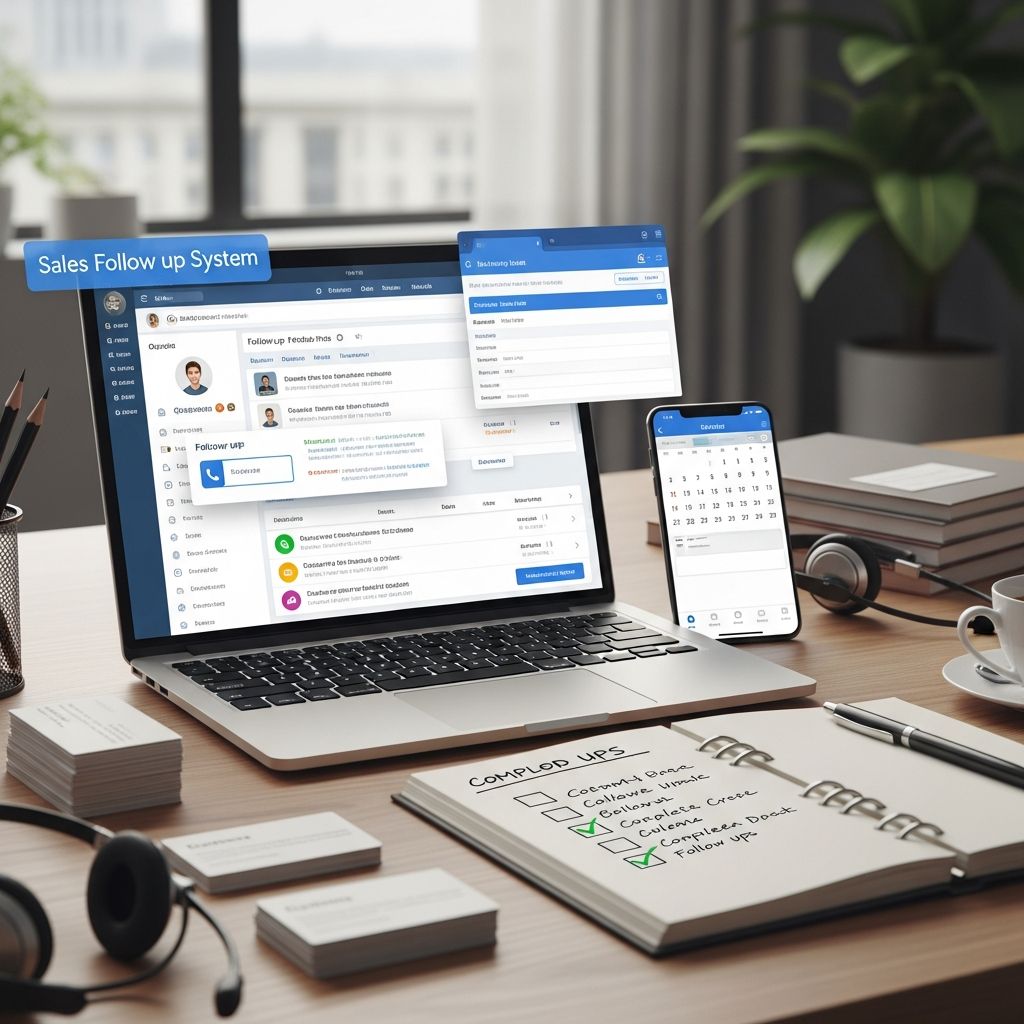
Understanding the Foundation of Systematic Follow-Up
The difference between successful sales professionals and those who struggle often comes down to one critical factor: their ability to maintain consistent, strategic contact with prospects. Many organizations fail not because they lack quality leads, but because they lack a structured approach to nurturing those leads over time. A well-designed follow-up system transforms casual inquiries into committed customers and turns missed opportunities into future revenue streams.
The foundation of any effective follow-up process begins with recognizing that most purchasing decisions don’t happen after a single interaction. Whether you’re selling software, services, or solutions, decision-makers need time to evaluate options, gain internal buy-in, and overcome objections. Your follow-up system serves as the bridge that keeps your organization top-of-mind during this consideration period while demonstrating genuine value at each touchpoint.
Designing Your Multi-Channel Follow-Up Architecture
Modern follow-up processes extend far beyond simple email reminders. The most effective systems integrate multiple communication channels that work together harmoniously. While email remains the primary vehicle for outreach, successful systems also incorporate phone calls, LinkedIn messages, video outreach, and even social media interactions. The key is determining which channels align with your industry norms and audience preferences.
Your architecture should begin with a clear mapping of your sales cycle timeline. Understand how long your typical sales process takes from initial contact to close. A B2B enterprise software sale might take 90 days, while a professional services engagement might take 30 days. This timeline becomes your template for when and how frequently you should make contact with prospects at various stages.
Email as the Primary Communication Channel
Email remains the workhorse of follow-up systems because it’s trackable, scalable, and professional. The challenge lies in balancing frequency with the risk of being perceived as intrusive. Research indicates that the optimal first follow-up occurs three to five days after initial contact. This window is narrow but critical—reach out too quickly and you appear aggressive; wait too long and the prospect forgets your initial conversation entirely.
Subsequent follow-ups should increase in spacing as the sequence progresses. Your second touch might occur 5-7 days after the first follow-up, while your third extends to 10-14 days. This graduated timing prevents fatigue while maintaining engagement momentum. However, this timeline should flex based on industry dynamics and prospect engagement signals. Fast-paced technology sectors may warrant more frequent contact, while traditional industries might require longer intervals between messages.
Integrating Alternative Communication Methods
A multi-channel strategy recognizes that different prospects have different communication preferences. Some check email constantly but rarely answer calls. Others use LinkedIn extensively but might miss email notifications. Building flexibility into your system means preparing templates and outreach sequences for various channels, then deploying them based on prospect behavior and preference indicators.
When transitioning between channels, maintain context and reference your previous interactions. This prevents the jarring experience of prospects feeling like they’re starting from scratch with each new message. A phone call following up on an email discussion should reference the specific content of that email, showing that you’re conducting a genuine follow-up rather than making a cold call.
Crafting Messages That Drive Response
The Progressive Value Proposition
Each message in your follow-up sequence should serve a distinct purpose rather than simply restating your initial pitch. Your first message introduces your offering and establishes relevance to the prospect’s situation. Your second message should introduce new information, whether that’s a case study demonstrating results for similar companies, an industry research report, or a specific capability of your solution that addresses a different aspect of their business.
This progressive approach prevents your follow-up system from feeling repetitive or spam-like. Prospects recognize that you’re investing time in their specific situation rather than blasting generic messages to a massive list. This differentiation significantly increases open rates, read-through rates, and response rates compared to systems that recycle the same message multiple times.
Subject Line Optimization for Increased Open Rates
The subject line is your gateway to prospect engagement. While your first message might use a straightforward, benefit-focused subject line, your follow-up messages should evolve. Personalization works powerfully here—including the prospect’s company name or a specific detail about their business demonstrates attention to detail and relevance.
Questions also perform well in follow-up subject lines. Instead of “Following Up on Our Discussion,” try “How Are You Currently Handling [Specific Challenge]?” This approach invites engagement rather than signaling yet another sales message. Curiosity-driven subject lines that reference something newsworthy in the prospect’s industry or recent company announcements also generate higher open rates than generic alternatives.
Body Message Structure for Maximum Impact
Your follow-up message structure should be lean and purposeful. Begin with a brief, friendly acknowledgment of your previous interaction. This reminds the prospect of your connection without being presumptuous. Move quickly to the core value proposition or new information you’re introducing in this particular message. Use short paragraphs and plenty of white space—email engagement data shows that dense text blocks significantly reduce read-through rates.
Include concrete examples or social proof that validates your claims. Rather than stating “we help companies increase efficiency,” reference a specific client who increased operational efficiency by a measurable percentage within their industry or company size category. This specificity creates credibility and helps prospects visualize how your solution applies to their particular situation.
Timing Strategies That Maximize Engagement
Optimal Days and Times for Send
Research across multiple sales organizations consistently shows that certain days and times generate higher engagement rates than others. Tuesday and Thursday typically outperform other weekdays, with Tuesday showing the strongest response rates. Monday emails often get buried under weekend message accumulation, while Friday messages compete with end-of-week priorities and people mentally checking out of work mode.
Time of day matters significantly. Messages sent between 9 AM and 12 PM in the recipient’s local timezone achieve the highest engagement. This window aligns with when professionals have settled into their workday, cleared immediate priorities, and are reviewing messages. Afternoon sends frequently underperform because decision-makers are in meetings, dealing with urgent issues, or mentally winding down toward end of day.
Accounting for Industry and Role Variations
While general best practices provide a solid foundation, recognize that industry context shapes optimal timing. In creative industries where people often work flexible hours, your assumptions about 9 AM productivity might not hold. In manufacturing or operations, morning timing might work less effectively if key decision-makers are on the floor during early hours.
Similarly, the role of your prospect influences when they check email. C-suite executives often review messages early morning before their calendar fills with meetings. Middle managers might have the most email visibility mid-morning after attending initial standups. Incorporating this role-based timing into your system requires some sophistication but dramatically improves results.
Building Intelligent Segmentation Into Your Process
Behavioral-Based Follow-Up Adjustments
The most sophisticated follow-up systems don’t treat all prospects identically. Instead, they incorporate behavioral triggers that adjust the sequence based on prospect engagement signals. If someone opened your first email and clicked a link, they’ve demonstrated genuine interest—adjust your follow-up to be more specific and action-oriented. If they didn’t open multiple emails, your sequence might benefit from a channel shift or subject line format change.
Engagement scoring provides valuable data for this segmentation. Prospects who consistently engage with your content should progress through an accelerated follow-up timeline since they’re actively evaluating. Those showing little engagement might move to a different sequence that focuses more on value delivery and relationship building rather than direct sales pushes.
Company Size and Industry Considerations
Enterprise prospects operate with longer sales cycles and more complex decision-making structures. Your follow-up system for this segment should account for longer intervals between touches and include sequences that address different stakeholders in the buying process. A technical buyer and financial buyer require different messaging and timing considerations.
Small businesses and mid-market companies typically move faster through sales processes, justifying more frequent follow-ups and quicker progression toward sales conversations. Industry considerations also matter—regulated industries might require more formal, documentation-heavy follow-up sequences, while fast-growth technology companies might respond better to casual, conversational approaches.
The Complete Follow-Up Sequence Framework
Initial Contact Through Final Breakup
| Sequence Stage | Timing | Primary Focus | Key Message Element |
|---|---|---|---|
| Initial Outreach | Day 0 | Establish Relevance | Personalized intro with clear connection to prospect’s business |
| First Follow-Up | Days 3-5 | Reestablish Interest | Gentle reminder plus compelling reason to respond |
| Second Follow-Up | Days 5-7 | Introduce New Value | Case study, research, or alternative angle addressing different pain point |
| Third Follow-Up | Days 10-14 | Social Proof | Testimonials, results data, or third-party validation |
| Breakup Message | Days 14-21 | Create Urgency | Permission-seeking with door left open for future reconnection |
| Re-Engagement | Monthly | Maintain Relationship | Industry insights, valuable resources, genuine relationship building |
The Breakup Email Strategy
After several follow-up attempts without response, most organizations simply give up. Instead, introduce a strategic “breakup” email that actually reengages prospects by shifting the conversation frame. Rather than asking if they’re interested, ask for permission to stop contacting them. This role reversal often triggers response because it removes pressure and creates curiosity.
A well-crafted breakup email might read: “I’ve reached out a few times and haven’t heard back, so I want to respect your time. Before I close your file, I wanted to check—is there a better time to reconnect, or should I assume you’re not interested in exploring this further?” This approach respects the prospect’s autonomy while creating one final opportunity for engagement.
Automation and Personalization: Finding the Balance
Leveraging Technology Without Losing Human Touch
Marketing automation platforms and CRM systems make systematic follow-up scalable, but they also risk making outreach feel robotic and impersonal. The solution lies in using automation strategically—let technology handle timing and sequencing while maintaining personalized content that demonstrates genuine attention to each prospect’s situation.
Effective automation involves templating structures and common elements while leaving space for individual customization. Your system might automatically send a follow-up on day three, but the sales rep personalizes the message based on details from their initial conversation with the prospect. This hybrid approach delivers the consistency benefits of automation with the relationship benefits of personalization.
Conditional Logic and Dynamic Sequences
Advanced follow-up systems incorporate conditional logic that adapts based on prospect behavior. If someone opens an email but doesn’t click any links, the next message might focus more on generating curiosity or include a different type of content format. If they click through to a pricing page, the follow-up sequence might shift toward addressing financial considerations or ROI calculations.
Dynamic sequences ensure that prospects moving quickly through your evaluation process don’t receive the same timeline as those moving slowly. Someone requesting a demo shouldn’t receive generic nurture content—they should progress immediately to sales-focused follow-up that moves the conversation toward closing.
Measuring and Optimizing Your System
Key Performance Indicators for Follow-Up Success
Without measurement, you’re flying blind. Key metrics for evaluating follow-up system effectiveness include open rates, click-through rates, response rates, and conversion rates. Track not just overall performance but performance by sequence stage, timing, day of week, and subject line approach. This data reveals what’s working and where adjustments will yield improvement.
Beyond immediate engagement metrics, track pipeline value influenced by follow-up touches. A prospect might not respond to your initial follow-up but eventually close months later—your system contributed to that outcome even if they didn’t respond at the moment. Attribution modeling helps you understand the full impact of your follow-up process on revenue generation.
A/B Testing for Continuous Improvement
Systematic A/B testing prevents your follow-up process from becoming stale. Test different subject line approaches, vary your send times, experiment with different value propositions in your second and third touches, and measure which variations drive superior results. This testing should be continuous—what works today might need adjustment as markets evolve and audience preferences shift.
Test one variable at a time to isolate what’s driving performance differences. Changing subject line wording while also changing send time makes it impossible to attribute results to either change. Methodical testing builds a follow-up system that continuously improves rather than remaining static.
Common Pitfalls to Avoid
Many organizations undermine their follow-up efforts through preventable mistakes. Failing to provide sufficient time between touches often results in prospects perceiving outreach as spam or harassment. Conversely, spacing touches too far apart allows prospects to forget previous conversations, requiring them to invest mental effort reestablishing context.
Another common error involves sending identical messages repeatedly. Prospects recognize when they’re receiving the same email they’ve already read, which damages credibility and reduces response likelihood. Every touch should add new information or present a different angle that justifies the recipient’s time investment in reading it.
Neglecting to segment and personalize represents perhaps the most significant missed opportunity. Generic, one-size-fits-all follow-up sequences significantly underperform compared to sequences that account for company size, role, engagement level, and specific business challenges expressed by the prospect.
Frequently Asked Questions
Q: How many follow-up attempts should I make before giving up on a prospect?
A: Research suggests that response rates diminish significantly after the fourth touch. A typical sequence includes an initial outreach plus three to four follow-ups, concluding with a breakup email. Going beyond four follow-ups without response rarely yields additional sales opportunities and risks damaging your reputation or domain deliverability. However, prospects who engage at any point should remain in your nurture sequences indefinitely.
Q: Should I use the same message for all follow-up recipients?
A: While templates provide efficiency, each follow-up should be personalized based on the individual prospect’s business, role, and previous interactions with your organization. Generic templates feel impersonal and significantly reduce response rates. Use template structures for consistency but customize content to reflect genuine attention to the prospect’s specific situation.
Q: What should I do if a prospect responds negatively to my follow-up?
A: Negative responses provide valuable information. If someone says they’re not interested, ask why before removing them from your system. Sometimes objections can be addressed through additional information. If they’re genuinely uninterested, respect that decision and remove them from active outreach. However, consider maintaining them in a long-term nurture campaign that delivers valuable content without direct sales pressure—circumstances change and they may become interested in the future.
Q: Is it better to follow up via email or phone?
A: Different prospects prefer different communication channels. A multi-channel approach that includes both email and phone outreach typically outperforms single-channel strategies. Use email for initial attempts since it’s less intrusive, and incorporate phone calls or LinkedIn messages as alternatives if email isn’t generating response. However, always respect communicated preferences—if a prospect indicates they prefer email, honor that preference.
Q: How do I avoid having my follow-up emails marked as spam?
A: Maintain healthy email list quality by focusing on prospects with genuine relevance to your offering. Limit follow-up sequence length to four touches maximum. Include clear unsubscribe options in every email. Monitor spam complaint rates and sender reputation scores. Avoid spam trigger words and excessive formatting. Most importantly, deliver genuine value in every message—spam complaints decrease when prospects perceive your outreach as genuinely helpful rather than annoying.
References
- 5 Essential Cold Email Follow-Up Strategies to Boost Your Response Rate — Persana AI. Accessed December 9, 2025. https://persana.ai/blogs/5-essential-cold-email-follow-up-strategies-to-boost-your-response-rate
- No Response? Here’s How to Nail Your Cold Email Follow-Up — Artisan. Accessed December 9, 2025. https://www.artisan.co/blog/cold-email-follow-up
- 21 Tips & Strategies: How To Follow Up — OnePageCRM. Accessed December 9, 2025. https://www.onepagecrm.com/blog/how-to-follow-up-effectively/
- How to Craft A Follow Up Email Strategy & The Best Practices — Postaga. Accessed December 9, 2025. https://postaga.com/follow-up-email-strategy/
- Cold Email Follow-Up Guide: Increase Your Conversion Rates — Warmup Inbox. Accessed December 9, 2025. https://www.warmupinbox.com/blog/cold-emailing/cold-email-follow-up/
- 8 Effective Strategies to Follow Up With Potential Clients — Hiver. Accessed December 9, 2025. https://hiverhq.com/blog/effective-follow-up-potential-clients

- Integrated M.A. in Applied Linguistics, University of Hyderabad
- 5+ years in editorial, instructional, SEO, and research-based writing
Sneha is a relationships and lifestyle writer with a strong foundation in applied linguistics and certified training in relationship coaching. She brings over five years of writing experience to theskillvault, crafting thoughtful, research-driven content that empowers readers to build healthier relationships, boost emotional well-being, and embrace holistic living. Her writing and insights reflect the belief that beauty, happiness, and wellness…