
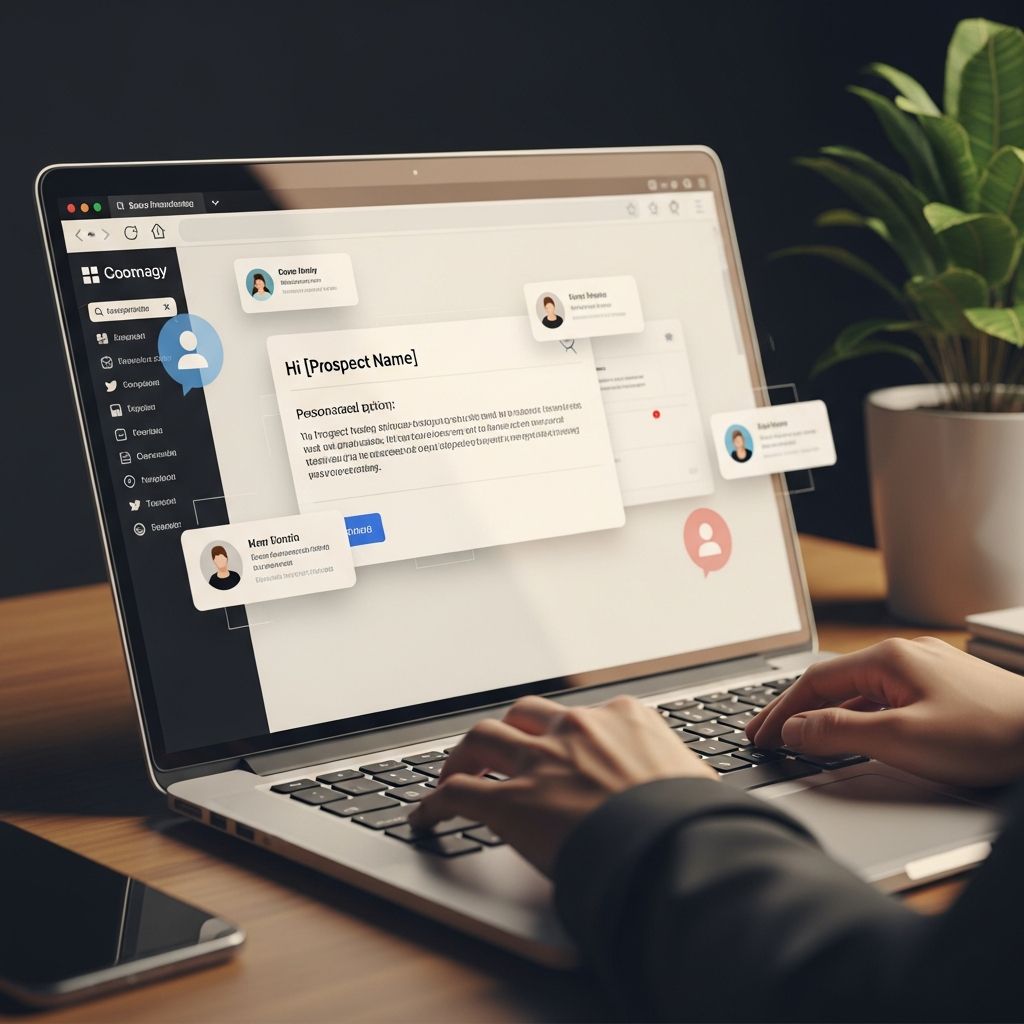
Prospecting has shifted from blasting generic messages to building targeted, relevant conversations at scale. Buyers have more information, more options, and less patience for outreach that does not respect their time or context. To earn replies, sales professionals must combine structured research, personalization, and consistent follow-up across channels.
This guide walks through a complete, modern approach to prospecting inspired by expert practitioners: how to choose targets, research them efficiently, craft personalized messages, and design follow-up sequences that convert.
Why Thoughtful Prospecting Matters More Than Ever
Sales teams can automate almost anything, but what still wins is relevant, human communication. When outreach reflects a clear understanding of the prospect’s role, company, and challenges, it stands out from the noise.
- Prospects are overwhelmed: B2B buyers receive a high volume of emails, calls, and social messages every week.
- Information is abundant: Buyers often research solutions online before talking to a salesperson, which raises the bar for outreach quality.
- Trust is scarce: Buyers respond when they believe you understand their world and can provide specific value, not just a demo.
Effective prospecting is no longer about who can send the most messages. It is about who can maintain a healthy pipeline by consistently reaching the right people with the right message at the right time.
Defining High-Value Prospects
Before you personalize, you must be confident you are talking to the right type of buyer. Strong prospecting starts with a clear ideal customer profile (ICP) and qualification criteria.
| Criterion | What to Look For | Why It Matters |
|---|---|---|
| Business need | Evidence of pain or goals your product addresses | Ensures you are solving a relevant problem, not forcing a fit. |
| Decision power | Budget owners or influential stakeholders | Reduces long cycles with people who cannot move the deal. |
| Budget | Company size, funding, or spend patterns | Prevents time spent with buyers who cannot afford your solution. |
| ICP fit | Industry, region, tech stack, and team size | Aligns outreach with customers most likely to succeed with your product. |
| Engagement | Website visits, content downloads, or event attendance | Warmer prospects respond at higher rates than completely cold contacts. |
Simple Checklist Before You Reach Out
- Does this organization match your ICP by size, industry, and market?
- Is there a plausible, concrete problem you can help them solve?
- Are you reaching someone with budget influence or decision-making power?
- Have they engaged with your brand or related topics recently?
If the answer is yes for most of these, the prospect is worth your time and personalization effort.
Research: Finding Relevant Insights Fast
Research drives personalization, but it can easily become a time sink. The goal is to uncover one to three strong insights that help you write a relevant message—without spending half an hour on each contact.
What to Research About the Company
- Recent company news such as funding, product launches, or leadership changes.
- Publicly stated goals from press releases, annual reports, or blog posts.
- Technology stack or tools that indicate current workflows and gaps.
- Industry and market signals, such as regulation changes or macro trends.
What to Research About the Person
- Role and responsibilities based on title and job description.
- Content they have shared, liked, or commented on recently.
- Past employers or experience that reveals their perspective.
Keeping Research Efficient
To avoid over-researching, many sales teams use a time-boxed process—limiting research per prospect to a set number of minutes and following a checklist.
- Open the company site and a professional profile tab.
- Scan for trigger events: new initiatives, growth, or change.
- Note one company-level and one personal-level insight in your CRM.
- Stop when your timer goes off and move on to writing.
Sales intelligence platforms can speed this process by centralizing firmographic data, tech stack information, and recent news for each account.
Personalization That Scales
Personalization does not mean writing every message from scratch. Effective teams combine modular templates with custom elements so each prospect feels uniquely addressed while keeping outreach scalable.
Core Elements of a Personalized Message
- Specific hook: A first line that references a real event, problem, or observation.
- Relevance bridge: A short explanation of why that observation connects to what you offer.
- Clear benefit: One concrete outcome you can help them achieve.
- Low-friction call to action: A simple next step, like a short call or a quick reply.
Using Templates Intelligently
Instead of one generic email, build a few frameworks tailored to different roles, industries, or use cases, and then personalize key lines.
- Keep 60–70% of the email as reusable structure that explains your value.
- Reserve the opening sentence, a reference sentence, and the CTA wording for personalization.
- Document what works, then refine templates based on reply and meeting rates.
Writing Cold Emails That Get Replies
Email remains a central prospecting channel. When done carefully, it allows you to reach many prospects while still sounding like a one-to-one conversation.
1. Crafting the Subject Line
Subject lines strongly influence open rates, and personalization helps. Research shows that emails with personalized subject lines are significantly more likely to be opened.
- Include the prospect’s name, company, or a specific initiative when relevant.
- Aim for clarity over cleverness—hint at value or context, not clickbait.
- Keep it short enough to be fully visible on mobile devices.
2. Structuring the Body
- Lead with them, not you: Start by referencing their situation, not your product.
- Connect insight to value: Explain how your solution ties directly to their challenge or goal.
- Offer something useful: A brief idea, data point, or resource can make the email worth reading even if they are not ready to buy.
- End with a clear ask: Make the next step specific and easy, such as proposing a short time window.
3. Common Mistakes to Avoid
- Writing long, dense paragraphs that are difficult to skim.
- Talking only about features instead of outcomes and impact.
- Using vague CTAs like “let me know your thoughts” without a defined next step.
- Ignoring mobile formatting; most emails are now first viewed on a phone.
Phone and Social Outreach: Beyond the Inbox
Relying on a single channel is risky. Many high-performing teams use a multi-touch, multi-channel cadence that mixes email, phone, and social to increase connection rates.
Smart Phone Prospecting
The phone allows for real-time conversation and richer discovery than most emails can achieve. An effective call is brief, respectful, and focused on value.
- Prepare a flexible call outline instead of a rigid script.
- Open with context from previous touches or research.
- Ask a few targeted questions to test fit and understand urgency.
- Close by agreeing on a clear follow-up action, even if it is a later check-in.
Because many calls go to voicemail, it helps to practice concise messages: who you are, why you are calling, and a specific, easy way to respond.
Social Selling and Light Touches
Social platforms, particularly professional networks, help sellers build familiarity long before a direct ask.
- Connect or follow prospects and engage with their posts in a genuine way.
- Share content that addresses problems your ICP cares about.
- Use direct messages sparingly and only after some interaction or clear relevance.
These lighter touches can warm up cold accounts and increase the odds that your emails and calls are recognized rather than ignored.
Designing Effective Follow-Up Sequences
Most opportunities do not materialize from a single touch. Structured follow-up sequences keep you organized and persistent without overwhelming prospects.
Characteristics of a Strong Sequence
- Multiple channels: A mix of email, phone, and social interactions.
- Varied angles: Each touch explores a slightly different benefit or use case.
- Reasonable pacing: Enough touches to stay top-of-mind, spaced to avoid spammy behavior.
- Defined end: A clear point where you gracefully stop if there is no engagement.
Example Cadence Concept
This is a conceptual example; you should customize timing and channels to your buyers and industry.
- Day 1: Personalized email focused on a core pain point.
- Day 3: Brief call attempt; leave a concise voicemail if appropriate.
- Day 5: Second email referencing voicemail and offering another angle of value.
- Day 8: Social touch—connect or interact with a recent post.
- Day 12: Third email, more direct, asking whether the issue is a priority this quarter.
- Day 15+: Close the loop message if there has been no response, leaving the door open for future contact.
Use your CRM or sales engagement platform to track touches, automate reminders, and test variations in timing and messaging.
Using Data and Experiments to Improve
Modern prospecting is iterative. Even experienced sellers regularly review performance data and run experiments to refine their approach.
Key Metrics to Monitor
- Open rate: Indicates the effectiveness of your subject lines and sender reputation.
- Reply rate: Shows how compelling your messaging and targeting are.
- Meeting rate: Measures how well replies convert into real sales conversations.
- Pipeline created: Links prospecting activity directly to opportunities.
What to Experiment With
- Different subject line styles: problem-focused vs. outcome-focused.
- Shorter or longer emails, as appropriate to your audience.
- Alternative CTAs, such as asking a single qualifying question instead of immediately requesting a call.
- Cadence timing and channel order, especially in new markets.
As AI and automation tools evolve, they can help with tasks like drafting first-pass emails, identifying high-intent leads, or suggesting optimal send times. However, humans still need to verify accuracy, apply judgment, and ensure outreach aligns with ethical and legal standards.
Maintaining a Prospect-Centric Mindset
At its core, effective prospecting is about helping qualified buyers reach better outcomes, not just hitting quotas. That mindset shift influences tone, content, and persistence.
- Approach every interaction with the question: “If I were in their role, would this be helpful?”
- Respect their time by being concise, relevant, and honest about fit.
- Accept that “not now” can be a good outcome if you leave the relationship in a better place.
When research, personalization, and follow-up are guided by genuine curiosity and respect, sales conversations feel less like interruptions and more like welcome opportunities to solve real problems.
Frequently Asked Questions (FAQs)
Q: How much time should I spend researching each prospect?
A: For most outbound motions, a practical range is 5–15 minutes per high-value prospect. Time-box your research and focus on a short checklist: company context, one relevant trigger event, and one personal detail you can use to open the conversation.
Q: Is it better to personalize fewer emails or send more generic ones?
A: In competitive B2B markets, lightly personalized emails to well-qualified prospects outperform high-volume generic blasts. Combining targeted lists with modular templates gives you the best of both worlds—scale and relevance.
Q: How many follow-ups are appropriate before I stop?
A: Many sales organizations use sequences of 5–10 touches spread over 2–4 weeks, mixing email, phone, and social. After a reasonable number of attempts with no engagement, send a clear “closing the loop” message and move your focus to more responsive prospects.
Q: When should I use phone calls versus email?
A: Email is usually the best starting point because it is less intrusive and easy to reference later. Phone calls are more effective after initial context has been set, for deeper discovery, or when time sensitivity is high. Combining both—plus social touches—produces stronger results than relying on a single channel.
Q: How can AI tools help with prospecting without sounding robotic?
A: AI can assist with tasks like summarizing company news, suggesting first-draft emails, or prioritizing accounts based on intent signals. To avoid robotic messaging, always review AI-generated content, add your own perspective, and ensure that every message includes a clearly human insight or question.
References
- Sales prospecting best practices — ZoomInfo. 2023-07-10. https://help.zoominfo.com/s/article/Overview-of-Sales-Prospecting-Best-Practices
- 8 B2B sales prospecting strategies for 2025 — Atlassian. 2024-01-18. https://www.atlassian.com/blog/loom/sales-prospecting
- Sales prospecting: How to find the right-fit customers — Salesforce. 2023-09-05. https://www.salesforce.com/sales/prospecting/
- 9 proven sales prospecting techniques for 2025 — Salesloop. 2024-02-12. https://salesloop.io/blog/sales-prospecting-techniques/
- Tips and techniques for successful sales prospecting in 2025 — Salesmate. 2024-03-20. https://www.salesmate.io/blog/sales-prospecting/
- Top sales prospecting trends to know in 2025 — Outreach. 2024-05-08. https://outreach.io/resources/blog/prospecting-2025
- Master AI for sales prospecting in 2025: Strategies & tools — Nooks. 2024-06-14. https://www.nooks.ai/blog-posts/mastering-ai-for-sales-prospecting-strategies-for-2025-success

- Integrated M.A. in Applied Linguistics, University of Hyderabad
- 5+ years in editorial, instructional, SEO, and research-based writing
Sneha is a relationships and lifestyle writer with a strong foundation in applied linguistics and certified training in relationship coaching. She brings over five years of writing experience to theskillvault, crafting thoughtful, research-driven content that empowers readers to build healthier relationships, boost emotional well-being, and embrace holistic living. Her writing and insights reflect the belief that beauty, happiness, and wellness…