
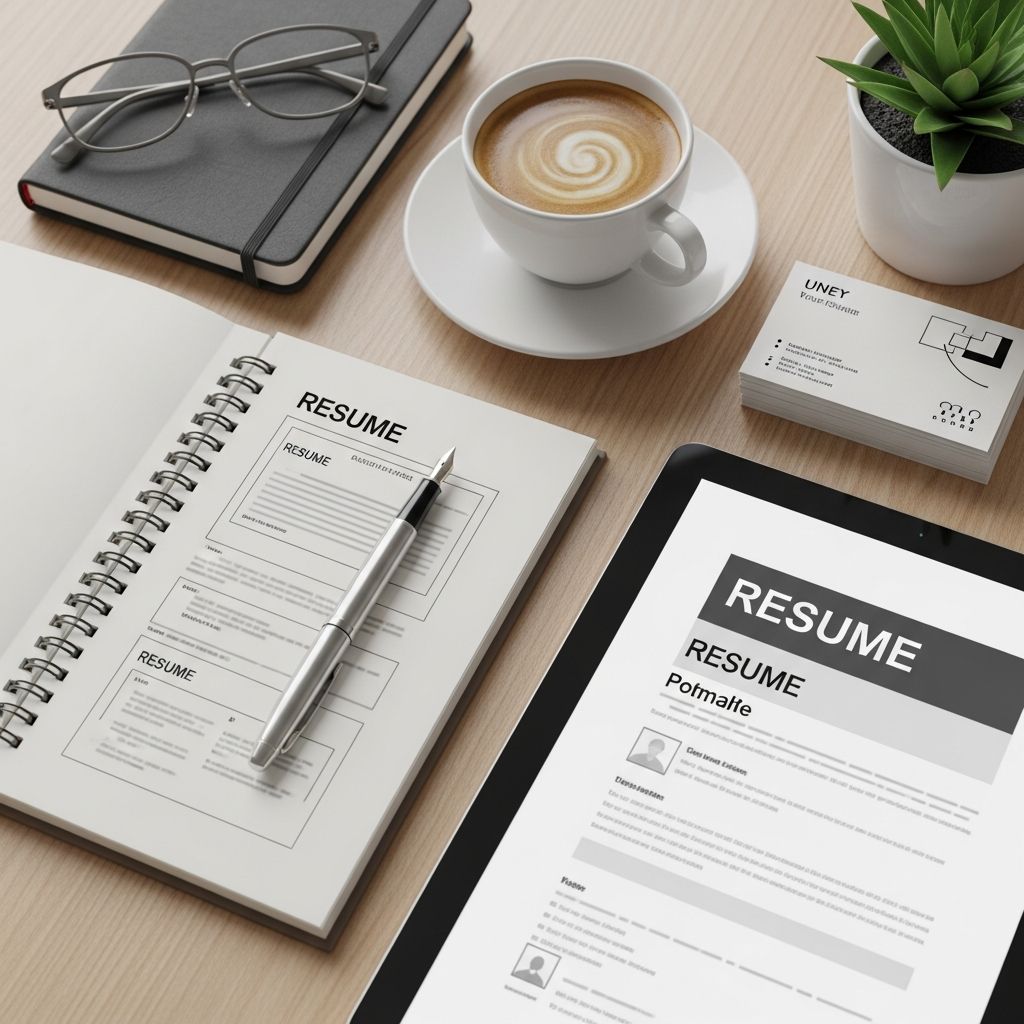
Understanding Modern Resume Expectations
The employment landscape continues to evolve, and with it comes shifting expectations about how candidates present themselves on paper. Today’s hiring managers and automated screening systems demand resumes that balance aesthetic appeal with substantive content. The days of lengthy, narrative-style resumes have largely passed, replaced by documents that prioritize clarity, measurable achievements, and strategic keyword integration. Understanding these contemporary standards is the first step toward creating a resume that stands out in competitive job markets.
Modern resumes serve multiple audiences simultaneously. First, they must pass through Applicant Tracking Systems (ATS)—software designed to scan and rank applications based on job requirements. Second, they need to captivate human reviewers who spend mere seconds initially scanning each document. This dual requirement means your resume must be both technically optimized and visually compelling, a balance that requires careful attention to both content and presentation.
Selecting the Optimal Format for Your Career
Choosing an appropriate resume format represents one of the most consequential decisions in the application process. Different formats emphasize different aspects of your professional history, making format selection essential for showcasing your strengths effectively.
Reverse-Chronological Presentations
The reverse-chronological approach remains the dominant choice across most industries and experience levels. This format arranges your employment history beginning with your most recent position and working backward through your career progression. This structure works particularly well for candidates with consistent employment records or steady career advancement within a single field. Hiring managers appreciate this format because it mirrors how they naturally think about career trajectories—they want to understand what you’ve done recently and how you’ve progressed over time.
Functional Format Alternatives
A functional resume emphasizes skills and competencies rather than chronological employment history. This approach proves valuable for career changers, individuals with employment gaps, or those transitioning between industries. By highlighting transferable capabilities upfront, this format allows you to demonstrate relevance to your target position even when your work history doesn’t follow a traditional pathway.
Hybrid Structural Models
Combination resumes blend chronological and functional elements, allowing you to showcase both your skills and your career progression. This versatile approach works well for professionals with diverse experiences or those seeking roles that value both specific competencies and demonstrated growth.
Essential Components of Professional Resumes
Every resume requires foundational sections that provide hiring managers with critical information about your qualifications and background.
Contact Information and Professional Identity
Your resume begins with identifying details that allow potential employers to reach you. Include your full name, phone number, and professional email address. Add your LinkedIn profile URL and any relevant professional websites or portfolios. Avoid including personal photographs unless specifically requested by the employer, as this practice varies significantly across industries and regions. Ensure your email address sounds professional—creative email addresses from your teenage years should be replaced with something straightforward containing your name.
Professional Summary Section
A compelling professional summary serves as your resume’s opening statement, positioning you advantageously before hiring managers read further. This section should concisely articulate your professional identity, highlight three to five key accomplishments or strengths, and connect your background to the specific opportunity you’re pursuing. Limit this section to three to four sentences maximum, ensuring every word contributes meaningful information. Your summary should answer the implicit question every hiring manager asks: “Why should we interview this candidate?”
Experience and Achievement Documentation
The employment history section constitutes your resume’s most substantive component. For each position, provide your job title, employer name, employment dates, and location. Below this header information, include five to seven bullet points describing your primary responsibilities and quantifiable accomplishments. Focus on achievements rather than mere duties—instead of stating you “managed social media accounts,” explain that you “increased social media engagement by 150% through targeted content strategy implementation.” Numbers, percentages, and concrete outcomes resonate powerfully with recruiters because they demonstrate tangible value creation.
Skills Inventory and Technical Proficiencies
Create a dedicated skills section highlighting both technical and soft competencies relevant to your target position. Review the job posting carefully and identify which skills the employer emphasizes most prominently. Prioritize these skills at the beginning of your skills section to improve both ATS compatibility and visual impact. Include software proficiencies, language fluencies, certifications, and professional capabilities that differentiate you from other candidates.
Educational Credentials and Academic Background
Document your educational qualifications beginning with your highest degree. Include the degree type, institution name, graduation year, and location. Recent graduates should consider adding relevant coursework, academic honors, scholarships, or significant projects. If your GPA exceeds 3.7, you may include it, though many employers no longer emphasize this metric for experienced professionals.
Advanced Formatting and Design Principles
Beyond content selection, the visual presentation of your resume significantly impacts its effectiveness. Strategic formatting enhances readability and demonstrates attention to detail—qualities employers value regardless of position.
Typography and Visual Hierarchy
Select professional fonts that project competence and remain easily readable both on screens and when printed. Sans-serif fonts like Calibri, Arial, and Helvetica work well for modern resumes, while serif options like Times New Roman suit more traditional fields. Maintain consistent font sizing throughout your document, typically using 11-12 point text for body content and 14-16 point sizing for section headings. This size differentiation creates visual hierarchy that guides reviewers through your resume logically.
Strategic Use of White Space
Adequate white space transforms a dense document into an inviting, scannable presentation. Set your margins to one inch on all sides, creating breathing room around your content. Use consistent spacing between sections and allow sufficient line height between bullets. Overcrowded resumes signal disorganization and make reviewers work harder to extract information—an outcome that negatively impacts your candidacy.
File Format Considerations
Submit your resume as a PDF file to preserve formatting across different devices and operating systems. This choice ensures that the visual presentation you carefully crafted remains intact regardless of what computer or software the employer uses to open your document. Word documents may reformat unpredictably, potentially disrupting your intended layout.
Language Choices and Descriptive Strategies
The words you select significantly influence how hiring managers perceive your capabilities and experience.
Action Verb Implementation
Begin your achievement statements with powerful action verbs that convey initiative and accomplishment. Instead of passive constructions, employ dynamic language: “Directed” rather than “was responsible for,” “Optimized” rather than “improved,” “Orchestrated” rather than “participated in.” These verb choices project confidence and demonstrate active contribution rather than passive participation in projects.
Quantification and Measurable Outcomes
Whenever possible, attach numbers to your achievements. Metrics transform vague accomplishments into concrete evidence of your value. Rather than claiming you “enhanced customer satisfaction,” state that you “increased customer satisfaction scores from 72% to 89% through implementation of personalized service protocols.” Percentages, dollar amounts, time saved, and quantity improvements all provide tangible proof of your professional impact.
Tailoring Content to Job Descriptions
Every resume submission should be customized to match the specific opportunity. Review the job posting and identify keywords, required skills, and emphasized responsibilities. Strategically incorporate these elements throughout your resume, ensuring alignment between the employer’s needs and your qualifications. This customization improves both ATS compatibility and human reviewer perception, as your resume will directly address their stated requirements.
Optimization for Automated Screening Systems
Applicant Tracking Systems represent the first hurdle in many hiring processes, and understanding their mechanics improves your success rates.
Keyword Strategy and Strategic Placement
ATS systems scan resumes for specific keywords matching job requirements. To succeed, identify relevant keywords in each job posting and incorporate them naturally throughout your resume. Place important keywords in your professional summary, skills section, and experience descriptions. However, maintain balance—forced keyword stuffing damages readability and may trigger ATS algorithms designed to detect manipulation.
Structural Clarity and Parsing Reliability
Format your resume to maximize ATS compatibility. Use clear section headings, consistent formatting, and straightforward bullet points. Avoid complex tables, graphics, text boxes, and unusual formatting that ATS systems may struggle to parse. While these visual elements might enhance a human-reviewed resume, they often confuse automated screening systems, potentially causing your resume to be rejected before a human ever sees it.
Common Mistakes and How to Avoid Them
Understanding frequent resume errors helps you sidestep pitfalls that undermine otherwise qualified candidates.
Length and Content Management
Maintain a one-page resume for most positions, particularly if you have fewer than five years of professional experience. Two pages may be appropriate for senior professionals with extensive accomplishments, but err toward brevity. Every item on your resume should directly support your candidacy for the specific position. Remove outdated positions, irrelevant skills, or experiences that don’t strengthen your application.
Consistency in Formatting and Dating
Establish consistent date formatting throughout your resume and maintain uniform structure across all sections. When describing previous positions, use past tense; for current roles, employ present tense. Inconsistent verb tenses and formatting irregularities suggest carelessness and create cognitive friction as reviewers parse your information.
Grammatical Precision and Proofreading
Spelling errors, grammatical mistakes, and punctuation inconsistencies damage your professional credibility significantly. Thoroughly proofread your resume multiple times, ideally having trusted colleagues review it as well. Use spell-check tools but don’t rely on them exclusively, as they miss context-dependent errors. A single typo can undermine an otherwise strong application.
Contemporary Resume Trends Shaping 2025 Standards
The resume landscape continues evolving as hiring practices and technology advance. Several emerging trends are shaping current best practices.
Minimalist Design Philosophy
Contemporary resumes increasingly favor clean, minimalist aesthetics over elaborate designs. This trend reflects both ATS requirements and recruiter preferences for easy scanning. Strategic use of spacing, subtle formatting, and clear hierarchy replaces colorful graphics and ornamental design elements. This approach proves both more accessible and more universally professional across industries.
Personal Brand Development Through Summary Statements
Modern resumes leverage professional summaries to establish personal brand identity. Rather than generic introductions, today’s summaries convey your unique value proposition and professional philosophy. They communicate not just what you’ve done, but who you are as a professional—helping employers assess cultural fit alongside technical capabilities.
Strategic Keyword Optimization
The emphasis on keyword optimization has intensified as ATS systems become more sophisticated. However, this trend demands balance—keyword inclusion must feel natural and authentic rather than forced. Employers increasingly recognize when resumes have been artificially manipulated for search algorithms, and such attempts may backfire by appearing inauthentic.
Industry-Specific Considerations
While core resume principles apply broadly, specific industries maintain unique expectations and conventions worth acknowledging.
| Industry | Key Emphasis | Format Preference | Unique Elements |
|---|---|---|---|
| Technology | Technical skills, projects, tools | Chronological or Functional | GitHub profiles, coding projects, open-source contributions |
| Creative Fields | Portfolio pieces, visual accomplishments | Functional or Hybrid | Design samples, published work, creative awards |
| Finance | Quantifiable results, certifications | Chronological | CPA, CFA, relevant licenses and credentials |
| Healthcare | Licenses, certifications, clinical experience | Chronological | Medical licenses, continuing education, clinical specializations |
| Nonprofit/Government | Impact metrics, mission alignment | Chronological | Grant writing experience, program outcomes, community focus |
Frequently Asked Questions
Q: Should I include an objective statement on my resume?
Modern resumes typically replace objective statements with professional summaries. Objectives often state obvious information (“seeking a position where I can contribute my skills”), while summaries highlight specific achievements and distinguish you from other candidates. A well-crafted summary proves far more valuable to hiring managers than generic objectives.
Q: How far back should I include previous employment?
Generally, include the last 10-15 years of employment history. Very early career positions become less relevant as your career progresses. However, if an older position demonstrates critical skills needed for your current target role, you might include it. Prioritize recent, relevant experience over comprehensive historical detail.
Q: Should I include references on my resume?
Avoid listing references directly on your resume. Instead, prepare a separate reference list to provide only when specifically requested. This approach preserves space on your limited resume real estate and allows you to inform references before sharing their contact information with potential employers.
Q: How should I address employment gaps?
Don’t attempt to hide employment gaps—they’re typically discovered during background checks anyway. If asked, briefly explain the gap factually and positively. Focus on what you accomplished during that time: education, skill development, family responsibilities, or health management. A functional or hybrid resume format can minimize emphasis on gaps by prioritizing skills over strict chronological employment.
Q: Can I use resume templates, or should I create one from scratch?
Quality resume templates save time and ensure professional formatting, making them valuable starting points for most candidates. However, customize the template substantially to reflect your unique background and accomplishments. A template provides structure; your content and customization provide differentiation. Never submit a resume that reads like an untouched template example.
Q: Should I tailor my resume for each application?
Absolutely. While maintaining your core resume structure, adjust content to emphasize skills and experiences most relevant to each specific position. This customization significantly improves both ATS compatibility and human reviewer perception. The effort invested in tailoring typically pays dividends through increased interview requests.
References
- The Best Resume Format for 2025 (Templates & Examples) — Resume Genius. 2025. https://resumegenius.com/blog/resume-help/resume-format
- How to Make a Resume in 2025 | Beginner’s Guide — Novoresume. 2025. https://novoresume.com/career-blog/how-to-write-a-resume-guide
- 10 Resume Writing Tips To Help You Land a Position — Indeed.com. 2025. https://www.indeed.com/career-advice/resumes-cover-letters/10-resume-writing-tips
- Current Resume Trends for 2025 — ResumeBuilder.com. 2025. https://www.resumebuilder.com/career-center/resume-trends/
- CREATE A STRONG RESUME — Mignone Center for Career Success, Harvard University. 2025. https://careerservices.fas.harvard.edu/resources/create-a-strong-resume/
- 16 Top Resume Tips to Help You Land a Job in 2026 — Coursera. 2025. https://www.coursera.org/articles/resume-tips

- Integrated M.A. in Applied Linguistics, University of Hyderabad
- 5+ years in editorial, instructional, SEO, and research-based writing
Sneha is a relationships and lifestyle writer with a strong foundation in applied linguistics and certified training in relationship coaching. She brings over five years of writing experience to theskillvault, crafting thoughtful, research-driven content that empowers readers to build healthier relationships, boost emotional well-being, and embrace holistic living. Her writing and insights reflect the belief that beauty, happiness, and wellness…