
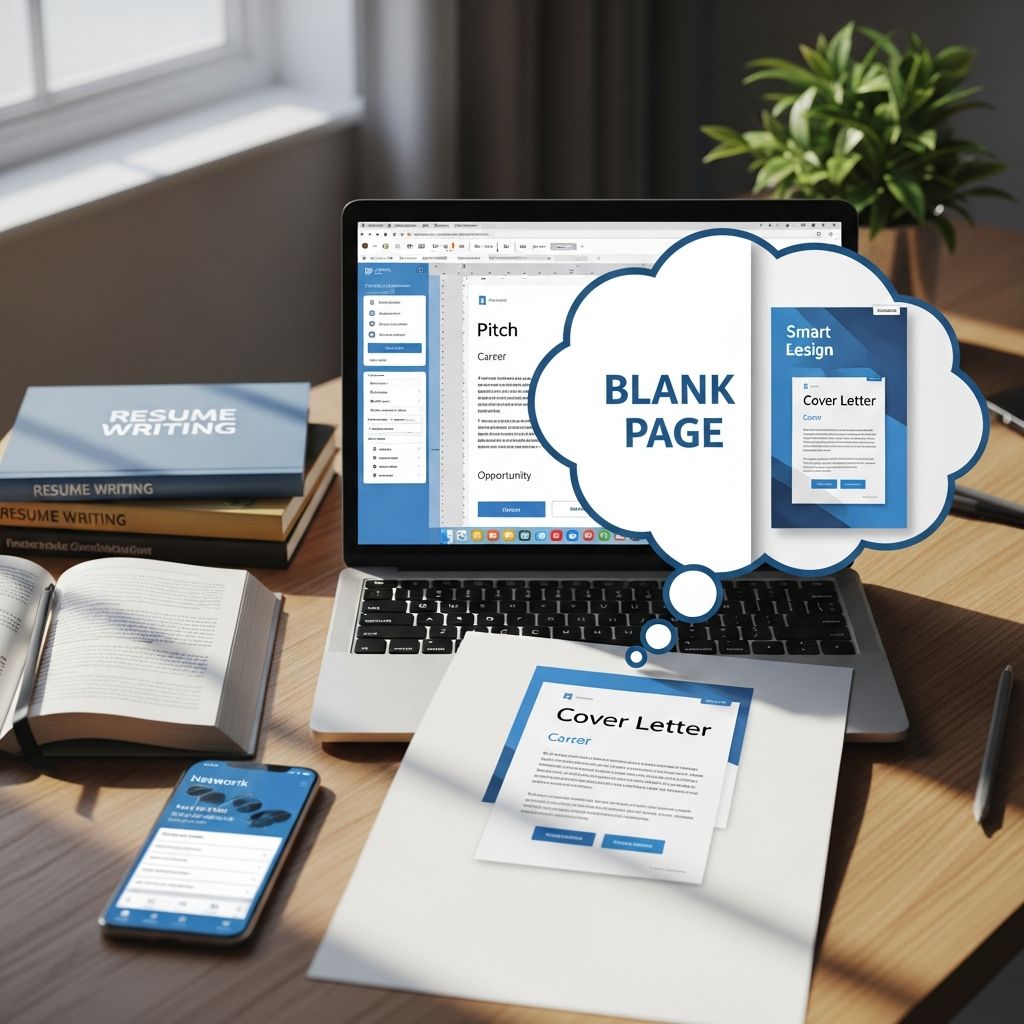
A cover letter is more than a formality. When done well, it works as a short, focused pitch that explains why you are the right person for a specific role and why you want to join that particular employer. Instead of repeating your resume, it connects the dots, adds context, and shows your motivation.
What a Modern Cover Letter Is (and Is Not)
Before you start writing, it helps to be clear about the purpose of a cover letter and how employers use it.
- It introduces who you are and why you are writing.
- It highlights a few relevant skills, achievements, and experiences most important for this position.
- It shows fit with the organization’s mission, values, or projects.
- It demonstrates communication skills through clear, concise, error-free writing.
A cover letter is not meant to be:
- a full biography or career story from high school onward
- a copy-paste of your resume in paragraph form
- a generic note you send unchanged to every employer
Essential Building Blocks of a Strong Cover Letter
Most effective cover letters follow a simple structure that recruiters recognize and can skim quickly.
| Section | Main Purpose |
|---|---|
| Contact details & greeting | Make it clear who you are and whom you are writing to. |
| Opening paragraph | State the role, how you found it, and your key value themes. |
| Middle paragraph(s) | Show 2–3 targeted examples that match the job requirements. |
| Closing paragraph | Reinforce your interest and invite next steps. |
Step-by-Step: How to Go From Job Ad to First Draft
Instead of jumping straight into writing, take a few minutes to prepare. This makes it much easier to produce a focused letter instead of a vague one.
1. Decode the Job Description
Read the job posting line by line and look for patterns.
- Highlight skills and competencies that appear more than once (for example, project management, data analysis, stakeholder communication).
- Note specific tools, methods, or domains (such as SQL, clinical research, agile methods).
- Pay attention to behavioral traits the employer values (collaboration, initiative, attention to detail).
Pick the two or three most critical requirements; these will anchor your letter.
2. Match Your Experience to Their Needs
For each key requirement from the posting, quickly brainstorm where you have demonstrated that strength.
- Think of a specific situation (a project, class assignment, internship, or previous role).
- Identify your actions (what you did, not just what your team did).
- Capture the result or impact (numbers, improvements, feedback, or outcomes).
These short notes will become the evidence you use in your middle paragraphs.
3. Research the Employer
A generic cover letter is easy to spot. Employers respond better when you clearly understand their work and show a reasoned interest in them.
- Review their official website for mission, current projects, and recent news.
- Scan press releases or news articles from reputable outlets for context on strategy or challenges.
- Look at role-related pages (for example, research centers, practice groups, or product teams) to understand priorities.
Use a sentence or two in your letter to reflect that research: you might refer to a particular program, initiative, or value that genuinely aligns with your background or goals.
Formatting and Layout That Recruiters Expect
Most career services and employer guides recommend a simple, professional layout that is easy to scan on screens and in print.
- Length: generally one page, or about 250–400 words.
- Font: a standard, readable typeface (for example, Arial, Calibri, Times New Roman) at 10–12 points.
- Spacing: single-spaced paragraphs with a blank line between them.
- Margins: roughly 1 inch (2.5 cm) on all sides for clarity and balance.
- Consistency: match your resume’s visual style where possible (same font family, similar heading style) so your application feels unified.
Writing Each Part of the Letter
Once your preparation is complete, drafting the letter becomes a matter of filling in each section with targeted content.
Contact Details and Greeting
Start with your contact information at the top, then add the date and the employer’s details if requested by the application system.
- Your full name, city, phone number, and professional email address
- Recipient’s name, title, organization, and address (when known)
- A specific greeting such as Dear Ms. Chen: or Dear Hiring Manager:
Using a person’s name, when available, signals that you took time to learn who will receive the application.
Opening Paragraph: Set the Context Quickly
The opening should answer three questions in a few sentences:
- Which position are you applying for?
- How did you learn about it (posting, referral, campus event)?
- What are the top few strengths or themes that connect you to this role?
Instead of long personal stories, use a concise statement that combines your background (for example, degree or recent experience) with one or two key competencies that match the posting.
Middle Paragraphs: Prove Your Value with Evidence
The body of the letter is where you move from claims to proof. Many university guides recommend one or two short paragraphs that each focus on a specific theme or example.
- Choose one core skill per paragraph (e.g., analysis, leadership, communication).
- Use a brief story structure: challenge, your actions, and measurable outcome.
- Mirror relevant keywords from the job posting naturally in your descriptions.
Ideally, an employer should be able to read just the topic sentences of your middle paragraphs and immediately see why you are a strong fit.
Closing Paragraph: Reinforce and Invite Action
The final paragraph does not need to be complex. Its goals are to:
- Reaffirm your interest in this specific role and employer.
- Briefly restate one or two strengths you most want the reader to remember.
- Politely point to next steps, such as discussing your application in an interview.
End with a courteous sign-off such as Sincerely or Best regards, followed by your name.
Tailoring Strategies That Make Your Letter Stand Out
Two candidates may have similar resumes, but their cover letters can create very different impressions. Effective tailoring shows that you understand the employer’s priorities and that you are not sending the same message to dozens of organizations.
- Echo the employer’s language: use some of the same terms they use for skills and responsibilities so the connection is obvious.
- Connect your story to their mission: if the organization emphasizes impact, learning, or innovation, briefly show how your experiences reflect those themes.
- Prioritize relevance: you may have many accomplishments, but highlight the ones that best match this particular role, not everything you have done.
- Show knowledge of the field: reference a relevant trend, method, or challenge only if you truly understand it; accuracy matters more than buzzwords.
Common Mistakes and How to Avoid Them
Career offices and employer surveys consistently highlight a few recurring issues that weaken otherwise strong applications.
- Generic openings: starting with a vague line that could fit any job or company.
- Rewriting the resume: listing every position again rather than focusing on a few relevant examples.
- Overly long letters: going beyond one page or several dense paragraphs, which many recruiters do not read in full.
- Spelling and grammar errors: these are frequently cited as reasons applications are rejected early.
- Informal tone: using slang, emojis, or overly casual expressions that do not match professional norms.
Reading your letter aloud and asking someone else to review it can help you catch issues with clarity, tone, and length.
Checklist Before You Send
Use this quick checklist to review your final draft:
- The letter is no longer than one page and easy to scan.
- The position title and organization name are correct everywhere.
- Each paragraph has a clear purpose and is not longer than 4–6 lines on screen.
- You have used concrete examples, not just claims, to show your strengths.
- There are no spelling, grammar, or formatting errors.
- The tone is confident but respectful, avoiding exaggeration.
Frequently Asked Questions About Cover Letters
Do employers still read cover letters?
Many employers continue to expect cover letters, especially for professional, academic, non-profit, and competitive roles. While some high-volume recruiters may skim rather than read in detail, a strong letter can still distinguish you from applicants who submit only a resume.
Can I use one cover letter for multiple jobs?
You can reuse a general structure, but you should customize each letter to the specific role and employer. This includes updating the skills you emphasize, the examples you share, and the way you connect your background to the organization’s work.
What if I do not meet all the listed requirements?
Very few candidates match every single qualification perfectly. Use your cover letter to highlight the requirements you do meet strongly and to show how related experiences prepare you to grow into the rest. Emphasize transferable skills and your ability to learn.
Should my cover letter be different from my resume summary?
Yes. It should align with your resume but not duplicate it. A cover letter lets you explain context behind key experiences, show motivation, and connect your skills to this particular job in a way a resume’s bullet points cannot.
Is it acceptable to use AI or templates to start my letter?
Templates and tools can help you structure your thoughts, but you should always revise the text so it reflects your voice, experiences, and understanding of the role. Employers are looking for authentic communication, not generic language.
References
- How to Write a Cover Letter (With Examples and Tips) — Indeed Editorial Team. 2023-08-21. https://www.indeed.com/career-advice/resumes-cover-letters/how-to-write-a-cover-letter
- Writing a Cover Letter — McGill University Career Planning Service. 2019-01-01. https://www.mcgill.ca/careers4engineers/files/careers4engineers/guide_coverletter.pdf
- Cover Letter Writing Guide — Harvard T.H. Chan School of Public Health Career Services. 2016-02-25. https://content.sph.harvard.edu/wwwhsph/sites/36/2016/06/Cover-letter-writing-guide-Feb-25-2016.pdf
- Cover Letter Writing Guide — University of Pennsylvania Career Services. 2021-01-01. https://careerservices.upenn.edu/cover-letter-writing-guide/
- Cover Letter Guide — Princeton University Center for Career Development. 2019-08-01. https://careerdevelopment.princeton.edu/sites/g/files/toruqf1041/files/documents/cover_letter_guide_2019.pdf
- Cover Letter Resources — University of Michigan University Career Center. 2020-01-01. https://careercenter.umich.edu/content/cover-letter-resources
- How to Write a Cover Letter That Sounds Like You (and Gets Noticed) — Harvard Business Review. 2022-05-16. https://hbr.org/2022/05/how-to-write-a-cover-letter-that-sounds-like-you-and-gets-noticed

- Integrated M.A. in Applied Linguistics, University of Hyderabad
- 5+ years in editorial, instructional, SEO, and research-based writing
Sneha is a relationships and lifestyle writer with a strong foundation in applied linguistics and certified training in relationship coaching. She brings over five years of writing experience to theskillvault, crafting thoughtful, research-driven content that empowers readers to build healthier relationships, boost emotional well-being, and embrace holistic living. Her writing and insights reflect the belief that beauty, happiness, and wellness…