
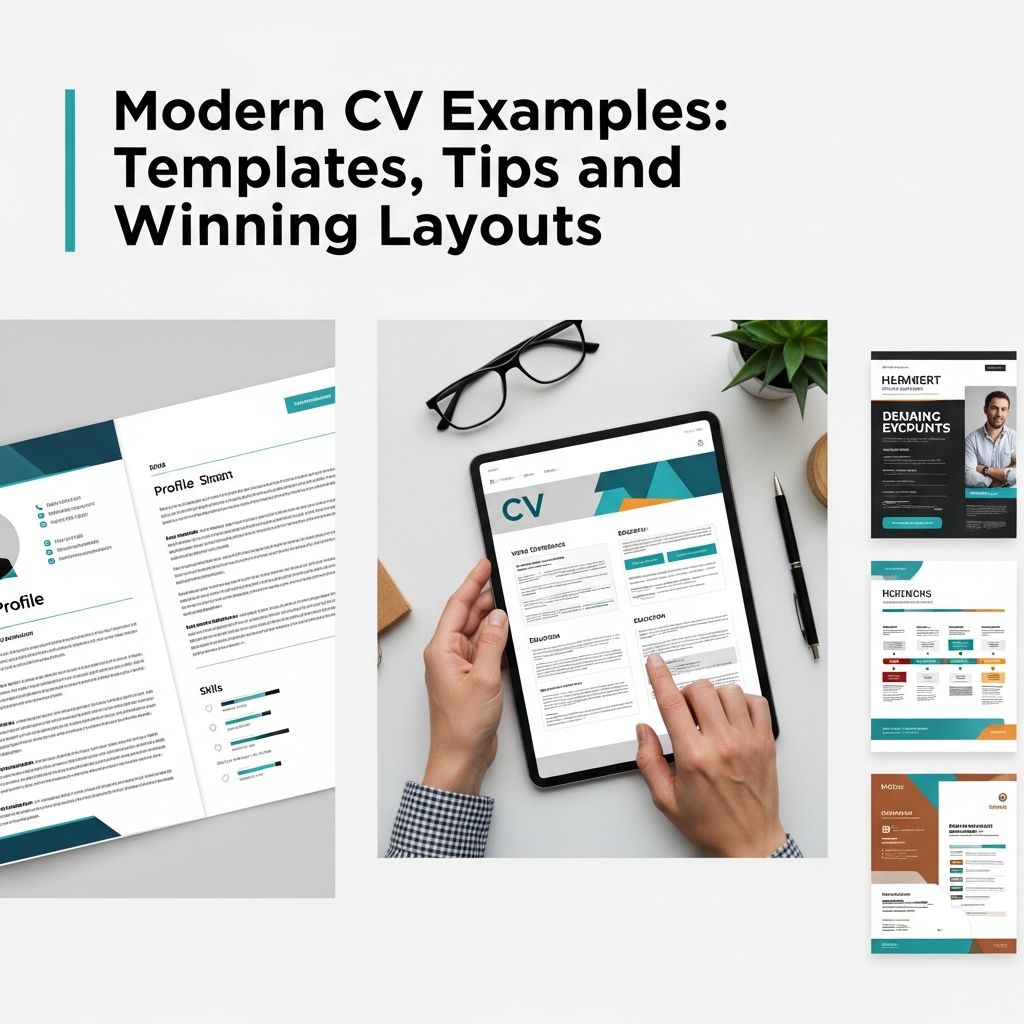
A strong CV is no longer a static list of jobs and degrees. Recruiters expect a document that is focused, skimmable, tailored to the role, and easy to compare against other candidates. This guide uses the logic behind proven CV examples to show you how to build a curriculum vitae that reflects your experience and passes modern screening practices.
Instead of copying any single template, you will learn how to recognize what makes good CVs effective and then adapt those ideas to your own background.
1. CV vs. Resume: What You Are Actually Writing
Before choosing an example to follow, you need to know whether employers expect a CV or a resume.
- Academic CV: A detailed record of your scholarly work, including publications, teaching, grants, and conferences. It can run several pages.
- Professional CV / Resume: In many countries, “CV” informally means a 1–2 page job application document focused on skills, achievements, and work history.
Always read the job posting carefully. University and research roles usually want an academic CV, while most employers in business, technology, and industry expect a shorter, skills-focused document similar to a resume.
2. Core Sections Every Strong CV Example Shares
Even though layouts vary, most effective CVs contain the same core building blocks.
- Contact details
- Profile or professional summary
- Work or research experience
- Education
- Skills
- Optional sections tailored to the role
According to leading university career centers, the order of these sections is flexible. Arrange them to highlight your strengths for each application rather than following any example rigidly.
3. Choosing the Right CV Format: Reverse, Functional, or Hybrid
The best CV examples use formatting to guide the reader’s eye. Three structures dominate modern applications.
| Format | Best For | Main Advantage | Key Risk |
|---|---|---|---|
| Reverse-chronological | Most professionals with a steady work history | Familiar to recruiters and applicant tracking systems (ATS) | Highlights employment gaps |
| Functional (skills-based) | Career changers or those with limited experience | Emphasizes skills over job titles | Some employers distrust it because dates are less clear |
| Hybrid (combination) | Experienced professionals or those with varied paths | Balances key skills with clear work history | Takes more effort to keep concise |
Unless you have a specific reason not to, a reverse-chronological layout is usually the safest choice because it is easy to scan and aligns with most employer expectations.
4. Building a Professional Header That Looks Like Top CV Examples
Your header should mirror what you see in strong examples: clean, minimal, and functional.
- Include: full name, phone number, professional email address, city and country, and one to two relevant links (such as LinkedIn or a portfolio).
- Avoid: nicknames, unprofessional email addresses, unnecessary personal details like marital status, and elaborate graphics that distract from the content.
University and government career services emphasize clarity: recruiters should be able to identify who you are and how to contact you in seconds.
5. Crafting a Summary That Matches Strong CV Examples
Many modern CVs open with a short paragraph or bulleted summary rather than an objective. Its job is to convince the reader to keep going.
Effective summaries in real-world examples usually:
- Run 3–5 lines at most.
- Mention your role or target field.
- Highlight 2–3 core strengths supported by later evidence.
- Reference the type of organizations or problems you work with.
Avoid vague claims such as “hard-working” or “team player” unless you immediately back them up with concrete achievements in the experience section.
6. Work Experience: Turning Duties into Achievements
In the strongest CV examples, experience sections do not just list responsibilities; they quantify outcomes.
6.1 Structuring Each Experience Entry
For each position, mirror the structure that top career centers recommend:
- Job title
- Organization name and location
- Dates (month/year is usually enough)
- 3–6 bullet points focused on impact
6.2 Writing Impact-Focused Bullet Points
Good examples almost always use the same pattern:
- Start with a strong action verb (“led”, “designed”, “implemented”).
- Explain what you did, not just the task name.
- Show outcomes with numbers, time saved, revenue gained, or quality improvements when possible.
For instance, a university career guide suggests listing concrete accomplishments and arranging them in order of importance to the target employer, not in the order you performed them.
7. Education: Adapting Examples to Your Career Stage
The education section usually appears near the top for students and recent graduates, and after experience for professionals whose main value is their work history.
Typical elements include:
- Degree name and level (e.g., BSc, MA, PhD)
- University name and location
- Graduation date or expected completion
- Honors, thesis title, or relevant coursework (when it supports your application)
Graduate schools and research roles expect much more detail here, including research topics, advisors, and dissertation titles.
8. Skills Section: Reflecting Real Employer Needs
Modern CV examples typically group skills rather than listing them in a single long line. The goal is to help the reader quickly see that you match the technical and interpersonal requirements of the role.
- Technical or hard skills: software, programming languages, lab techniques, data tools.
- Domain knowledge: regulations, industry standards, research methods.
- Soft skills: communication, leadership, organization—ideally supported elsewhere with specific achievements.
Use wording that overlaps with the job posting where it accurately describes you. Many employers use automated systems to scan for relevant keywords, so matching language helps ensure your CV is not filtered out prematurely.
9. Optional Sections that Strong CV Examples Use Strategically
Top CVs do not include every possible section; they choose what supports the target role. Here are common add-ons drawn from academic and professional guidance.
- Projects: Ideal for students, career changers, and technical professionals. Include project name, context, tools used, and measurable outcomes.
- Certifications & Licenses: Important in regulated fields (healthcare, finance, engineering). List the issuing body and validity dates.
- Publications & Presentations: Essential for academic CVs, optional for expert roles in industry.
- Volunteering & Leadership: Showcases initiative, values, and transferable skills, especially when you lack paid experience.
- Languages: Specify proficiency level and any formal tests if relevant.
- Awards & Honors: Scholarships, prizes, or recognition that differentiate you from peers.
10. Learning from CV Examples for Different Career Stages
While each person’s document is unique, you can look for patterns in strong examples that mirror your own situation.
10.1 Students and Recent Graduates
- Place education near the top.
- Use projects, coursework, and extracurriculars to demonstrate skills.
- Emphasize internships, part-time jobs, and volunteering as “experience”, not as an afterthought.
10.2 Mid-Career Professionals
- Lead with a summary that frames your experience for the target role.
- Prioritize achievements from the last 5–10 years.
- Trim older roles to short entries unless they are directly relevant.
10.3 Academics and Researchers
- Follow an academic CV model: sections for research, teaching, publications, grants, and conferences.
- List items in reverse-chronological order within each category.
- Include only conferences and papers that support your target role rather than every activity you have ever completed.
11. Visual Style: What Modern CV Examples Get Right
Career services and large job platforms consistently highlight similar design principles.
- Clean layout: consistent margins, line spacing, and font size.
- Readable fonts: widely used, professional typefaces.
- Strategic emphasis: limited bold and italics used only to guide attention to job titles, organizations, and section headings.
- No clutter: graphics, charts, and photos are rare outside creative fields.
Minimalistic, well-organized layouts make it easier for recruiters and automated systems to find what they need quickly.
12. Tailoring Your CV Like the Best Examples
One thing nearly all successful CVs have in common is that they are tailored to a specific role or employer, not used unchanged for every application.
- Study the job description and highlight its most important skills and responsibilities.
- Reorder your bullet points so the most relevant achievements appear first.
- Rename or combine sections to match what the employer emphasizes (for example, “Research Experience” instead of just “Experience” for a lab role).
- Remove content that does not help your case for this particular job.
Career experts recommend maintaining a longer master document with every experience and achievement, then creating targeted versions for each application from that source.
13. Common Mistakes You Will Not See in Strong CV Examples
When you compare weaker CVs against professional examples, a few patterns emerge.
- Too long or too short: several pages of detail for an entry-level job, or a half-page that omits vital information.
- Purely task-based bullets: duties with no context or results.
- Inconsistent formatting: changing fonts, misaligned dates, and random bullet styles.
- Spelling and grammar errors: many career centers emphasize proofreading as a non-negotiable step.
- Irrelevant personal details: information that either introduces bias or does not support your professional story.
14. Quick Checklist to Model Your CV on Good Examples
Use this checklist before sending your CV:
- Is the most important information visible in the top half of the first page?
- Have you removed outdated or irrelevant details that distract from your current goals?
- Are all bullet points written with action verbs and, where possible, measurable outcomes?
- Does the document use a consistent, simple visual style?
- Have you aligned your language with the job posting without exaggerating or misrepresenting your experience?
Frequently Asked Questions About CV Examples
Q1: Is it acceptable to copy wording from an online CV example?
Using examples to understand structure and tone is helpful, but copying sentences directly can make your CV sound generic and may not reflect your real abilities. Recruiters read many similar applications, so original, accurate descriptions of your work are more convincing.
Q2: How long should my CV be?
Most early-career professionals should aim for one to two pages. Academic CVs and senior roles can extend beyond this because they require detailed lists of publications, grants, and leadership activities. Focus on relevance rather than hitting a specific page count.
Q3: Do I need a separate CV for every job?
You do not need to rebuild your document from scratch for each application, but you should adjust your summary, reorder bullet points, and highlight different experiences so that each version speaks directly to the specific role.
Q4: Should I include hobbies and personal interests?
Hobbies are optional. They can help humanize your application or show transferable skills—such as teamwork, persistence, or creativity—but only if they are presented briefly and professionally.
Q5: Are graphics and photos a good idea?
Clean, minimal layouts are preferred in most fields because they work well with automated screening tools and are easier to read quickly. Photos and complex graphics are typically only appropriate in industries where visual design is part of the role.
References
- How to Write a CV: Tips, Template and Example — Indeed Career Guide. 2022-08-25. https://www.indeed.com/career-advice/resumes-cover-letters/how-to-write-a-cv
- Resumes and CVs — Cornell University Graduate School. 2023-01-10. https://gradschool.cornell.edu/career-and-professional-development/pathways-to-success/prepare-for-your-career/take-action/resumes-and-cvs/
- CVs — University of Oxford Careers Service. 2022-11-03. https://www.careers.ox.ac.uk/cvs
- Create a Strong Resume — Harvard University, Mignone Center for Career Success. 2023-02-15. https://careerservices.fas.harvard.edu/resources/create-a-strong-resume/
- Resumes, Cover Letters, Portfolios, and CVs — MIT Career Advising & Professional Development. 2023-04-20. https://capd.mit.edu/channels/make-a-resume-cover-letter-cv/
- Current Resume Trends for 2025 — ResumeBuilder.com. 2024-06-12. https://www.resumebuilder.com/career-center/resume-trends/

Medha Deb is an editor with a master's degree in Applied Linguistics from the University of Hyderabad. She believes that her qualification has helped her develop a deep understanding of language and its application in various contexts. Medha specializes in the areas of beauty, health, sports, and wellness and is committed to ensuring that the content on the website is…