
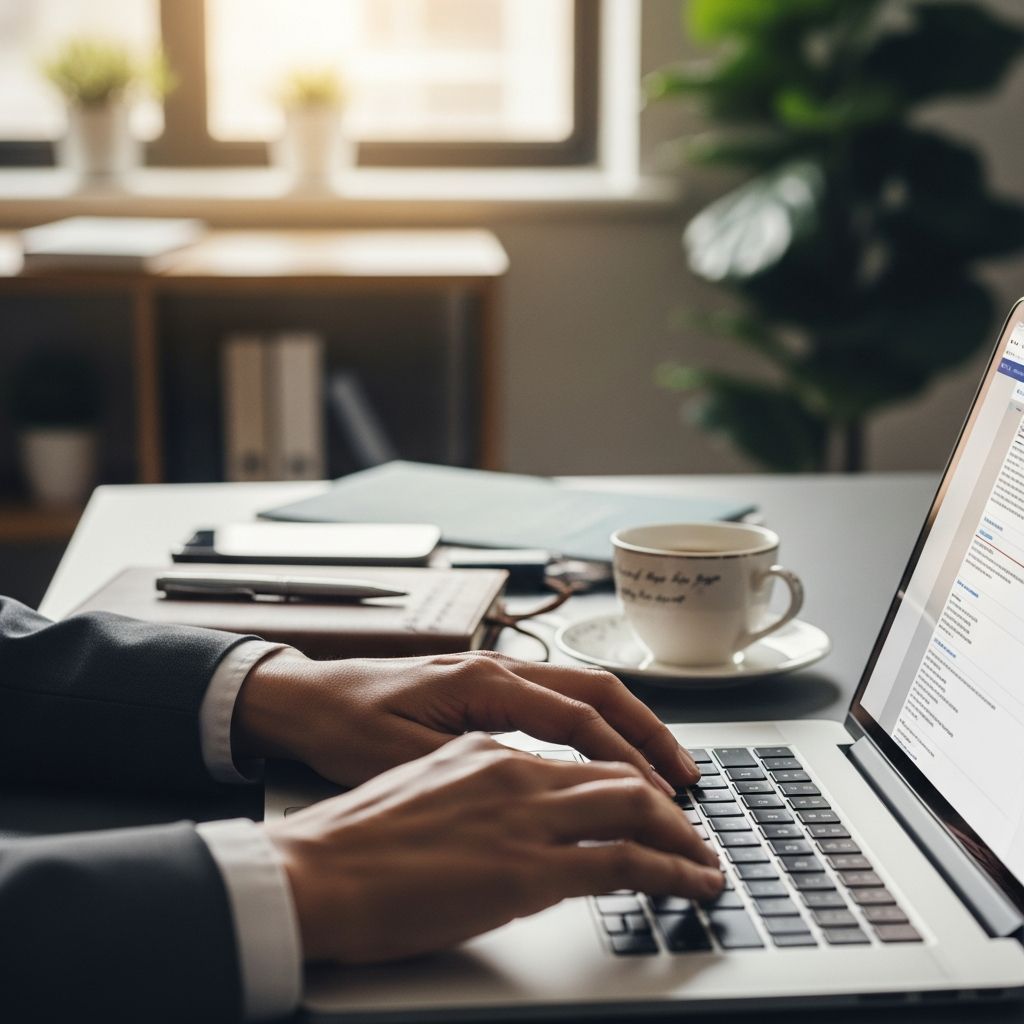
A thoughtful thank-you email after an interview is one of the simplest ways to stand out as a professional, show respect for the interviewer’s time, and reinforce why you are the right person for the job. While many candidates skip this step, recruiters and hiring managers consistently note that it can positively influence their impression of a candidate.
This guide explains why follow-up messages matter, when to send them, what to include, and how to adapt your note for different situations. You will also find examples, a quick-reference checklist, and answers to common questions.
Why Thank-You Emails Matter More Than You Think
Sending a thank-you email is more than a courtesy. It serves several strategic purposes in your job search.
- Reinforces professionalism: Polite, timely follow-up is a core part of workplace etiquette and signals that you understand professional norms.
- Shows continued interest: Employers want to invest in candidates who are genuinely motivated; expressing enthusiasm can confirm that the role is a strong match for your goals.
- Clarifies your fit: The email is a second chance to connect your strengths to the role, especially if you forgot to mention something important in the interview.
- Keeps you memorable: Interviewers may meet many candidates for the same position. A concise, tailored note helps your conversation stand out in their memory.
- Builds long-term relationships: Even if you do not receive an offer, a great follow-up can leave the door open for future roles or referrals.
When to Send Your Thank-You Email
Timing affects how your message is perceived. You want your email to arrive while the discussion is still fresh, but not so quickly that it feels rushed or automatic.
- Ideal window: Within 24 hours of the interview is widely recommended by university career centers and professional organizations.
- Same-day interviews: If your interview is in the morning, sending your email later that afternoon or early evening is appropriate.
- Late-day or evening interviews: The next morning (local time for the interviewer) is usually best.
- Panel interviews: Send a separate, tailored message to each interviewer rather than one mass email.
- Multi-round processes: Send a brief thank-you after each stage, adjusting length and detail based on how in-depth the conversation was.
Core Building Blocks of a Strong Thank-You Email
Though every message should be personalized, most effective thank-you emails follow a clear structure. Think of your note as five short parts.
| Component | Purpose | Tips |
|---|---|---|
| Subject line | Clarifies why you are writing | Keep it simple and professional, such as “Thank you for today’s conversation” or “Grateful for our interview about [Role].” |
| Greeting | Sets a respectful tone | Use a direct salutation: “Dear Ms. Lopez” or “Hello Alex,” matching how they introduced themselves. |
| Opening appreciation | Expresses thanks for their time | Mention the position and interview format (phone, video, on-site) to jog their memory. |
| Body (1–2 short paragraphs) | Connects your strengths to the role and references the discussion | Highlight 1–2 key topics from the conversation and link them to your skills or experience. |
| Closing and sign-off | Signals continued interest and provides a clear end | Reiterate your enthusiasm, invite further questions, and close with “Best regards” or “Sincerely.” |
What to Say: Content Ideas You Can Adapt
Use these prompts to tailor your message so that it sounds specific and genuine instead of generic.
1. Anchor the email with genuine appreciation
Your first sentence should clearly state your thanks and remind the interviewer who you are and why you met.
- Mention the job title to avoid confusion if they are interviewing for multiple roles.
- Reference the format (e.g., “video interview this morning” or “on-site conversations yesterday”).
- Keep the tone positive and concise—one or two sentences is enough.
2. Refer to specific parts of the conversation
Specificity shows that you were engaged. It also allows you to reinforce your fit around what matters most to the employer.
- Note a project, challenge, or goal the interviewer described.
- Connect that point to your own experience or skills.
- Avoid summarizing the entire interview; focus on one or two impactful themes.
3. Re-emphasize your strengths briefly
Your thank-you email is not a second cover letter, but you can briefly restate how you add value.
- Choose 2–3 qualifications that align most closely with the job description.
- Link them to outcomes (e.g., “led a cross-functional project,” “improved response times,” “reduced costs”).
- If you missed a key example during the interview, this is a good place to mention it concisely.
4. Address any follow-ups or promised materials
If you agreed to share documents or links, your email is a natural place to do so.
- Attach or link your portfolio, code samples, writing samples, or references, as appropriate.
- Briefly state what you have included so they know what to look for.
- Keep attachments relevant and clearly labeled.
5. Close with next steps and openness
End on a confident, forward-looking note that keeps communication open without sounding demanding.
- Express that you are looking forward to hearing about next steps.
- Invite them to contact you if they need more information.
- Finish with a professional sign-off and your full name.
Sample Thank-You Email Templates You Can Customize
Use these examples as starting points. Replace the placeholders and adjust the tone to match the culture of the organization and the style of your conversation.
Short Thank-You Email (Phone or Initial Screen)
Subject: Thank you for our conversation about the [Job Title] role
Email body:
Dear [Interviewer Name],
Thank you for speaking with me today about the [Job Title] opportunity. I appreciated learning more about how your team is approaching [briefly mention a key project, initiative, or challenge].
Our discussion reinforced my interest in contributing my experience in [one or two relevant skills] to support your goals. Please let me know if I can share any additional information as you move forward.
Best regards,
[Your Name]
More Detailed Email (On-Site or Final Round)
Subject: Grateful for the chance to meet the [Team Name]
Email body:
Hello [Interviewer Name],
Thank you again for taking the time to meet with me yesterday about the [Job Title] position. I enjoyed hearing about your work on [specific team, product, or initiative], especially your insights on [short reference to a topic you discussed].
Our conversation highlighted how my background in [skill or area] and my experience with [brief example] could help your team [desired outcome or impact]. I am very enthusiastic about the possibility of joining [Company Name] and contributing to the goals we discussed.
As mentioned, I have included [portfolio link, sample work, or reference] for your review. Please feel free to reach out if there is anything else I can provide.
Sincerely,
[Your Name]
Tailoring Your Message to Different Interview Types
While the core structure is similar, different interview formats benefit from subtle adjustments in tone and content.
Video or Remote Interviews
- Acknowledge the virtual format briefly (e.g., “Thank you for taking the time to meet via video today”).
- If there were any technical issues, you can lightly recognize their patience if it feels appropriate.
- Because remote interactions can feel less personal, referencing a small personal moment (a shared interest, a comment about the team) can help build rapport.
Panel Interviews
- Send individual emails to each person on the panel whenever possible.
- Customize one sentence in each email to reflect what you discussed with that individual (for example, their area of responsibility or a question they asked).
- Keep the overall structure similar to avoid inconsistency in tone.
Technical or Case Interviews
- Briefly reference the problem-solving aspect of the interview (e.g., “I enjoyed working through the case on…”).
- If you have reflections that show growth—such as another approach you considered—share them concisely to demonstrate analytical thinking, without re-arguing the exercise.
- Emphasize your excitement about tackling similar challenges in the role.
Internship and Early-Career Interviews
- Highlight your willingness to learn and enthusiasm for mentorship opportunities.
- Connect academic or extracurricular experiences to real-world impact where possible.
- Keep the tone professional but warm; you can show personality while remaining respectful.
Style and Etiquette Tips
Small details can strongly influence how your message is received. These guidelines will help you avoid common missteps.
- Match formality: Mirror the interviewer’s tone. If they were very formal, avoid overly casual language; if they used first names and a relaxed style, you can be slightly more conversational.
- Keep it concise: Aim for roughly 150–300 words. Most hiring professionals prefer short, focused messages.
- Proofread carefully: Check spelling, grammar, and names. Mistakes in a follow-up can undercut an otherwise strong impression.
- Use a professional email address: Ideally, something with your name, not nicknames or jokes.
- Avoid pressure: Do not ask directly if you got the job, and avoid language that sounds impatient about a decision.
- Respect boundaries: If you have been given a clear decision timeline, avoid repeated follow-ups before that window has passed.
Common Mistakes to Avoid
Even a well-intentioned thank-you email can miss the mark if it contains certain pitfalls.
- Copy-pasting the same note to everyone: Recruiters can often recognize generic messages. Customize at least a few lines for each interviewer.
- Rewriting your entire resume: The follow-up should complement, not duplicate, your application materials.
- Overly casual language or emojis: Unless the culture is extremely informal and you are certain it is appropriate, keep the tone business-like.
- Negative comments: Never criticize previous employers, other candidates, or aspects of the interview process.
- Late or multiple apologies: A brief, sincere apology is fine if truly needed, but avoid dwelling on minor missteps.
Quick Checklist Before You Hit Send
Use this quick list to make sure your thank-you email is polished and ready.
- Clear, professional subject line mentioning thanks and/or role
- Accurate spelling of interviewer’s name and company
- Reference to the correct job title
- One or two specific details from the conversation
- Short reminder of your most relevant strengths
- Attachments or links promised during the interview included
- Expression of enthusiasm for potential next steps
- Final proofread on a laptop or desktop screen if possible
Frequently Asked Questions About Interview Thank-You Emails
Q: Is a thank-you email really necessary for every interview?
While not always strictly required, many career services offices and hiring experts recommend sending a thank-you after every interview because it is a low-effort way to demonstrate professionalism and can positively influence hiring decisions.
Q: What if I forget and it has been several days?
If more than a couple of days have passed, it is still better to send a brief, polite note than to say nothing. Acknowledge the delay very briefly (one phrase is enough), focus on appreciation, and avoid lengthy explanations.
Q: Should I send both an email and a handwritten note?
Email is generally sufficient and preferred because it arrives quickly and can be forwarded to others on the hiring team. Some candidates choose to send a short handwritten card in addition after an onsite interview, but only if it will arrive while the process is still ongoing.
Q: Is it okay to connect with my interviewer on LinkedIn?
Many professionals are comfortable with a LinkedIn request, especially later in the process, but practices vary by industry. If you choose to connect, customize your invitation with a short message referencing your conversation, and still send a proper thank-you email.
Q: What if I am no longer interested in the role?
It is still courteous to send a thank-you email. Use it to express appreciation, briefly state that you have decided to pursue a different direction, and thank them again for their time. This helps preserve a positive relationship for future opportunities.
References
- How to Write a Thank You Email After an Interview (With Examples) — Harvard Business Review. 2022-11-23. https://hbr.org/2022/11/how-to-write-a-thank-you-email-after-an-interview
- Interview Follow-Up: Thank-You Notes — Harvard Law School Office of Public Interest Advising. 2023-01-10. https://hls.harvard.edu/bernard-koteen-office-of-public-interest-advising/opia-job-search-toolkit/interview-follow-up-thank-you-notes/
- 4 Sample Thank-You Emails To Send After an Interview — Indeed Career Guide. 2023-04-05. https://www.indeed.com/career-advice/interviewing/sample-thank-you-letter-after-interview
- How to Write a Thank-you Email After an Interview (With Samples) — The Muse. 2022-06-15. https://www.themuse.com/advice/how-to-write-an-interview-thankyou-note-an-email-template
- Thank You Email After Interview — IvyWise. 2021-09-20. https://www.ivywise.com/blog/thank-you-email-after-interview/

- Integrated M.A. in Applied Linguistics, University of Hyderabad
- 5+ years in editorial, instructional, SEO, and research-based writing
Sneha is a relationships and lifestyle writer with a strong foundation in applied linguistics and certified training in relationship coaching. She brings over five years of writing experience to theskillvault, crafting thoughtful, research-driven content that empowers readers to build healthier relationships, boost emotional well-being, and embrace holistic living. Her writing and insights reflect the belief that beauty, happiness, and wellness…