
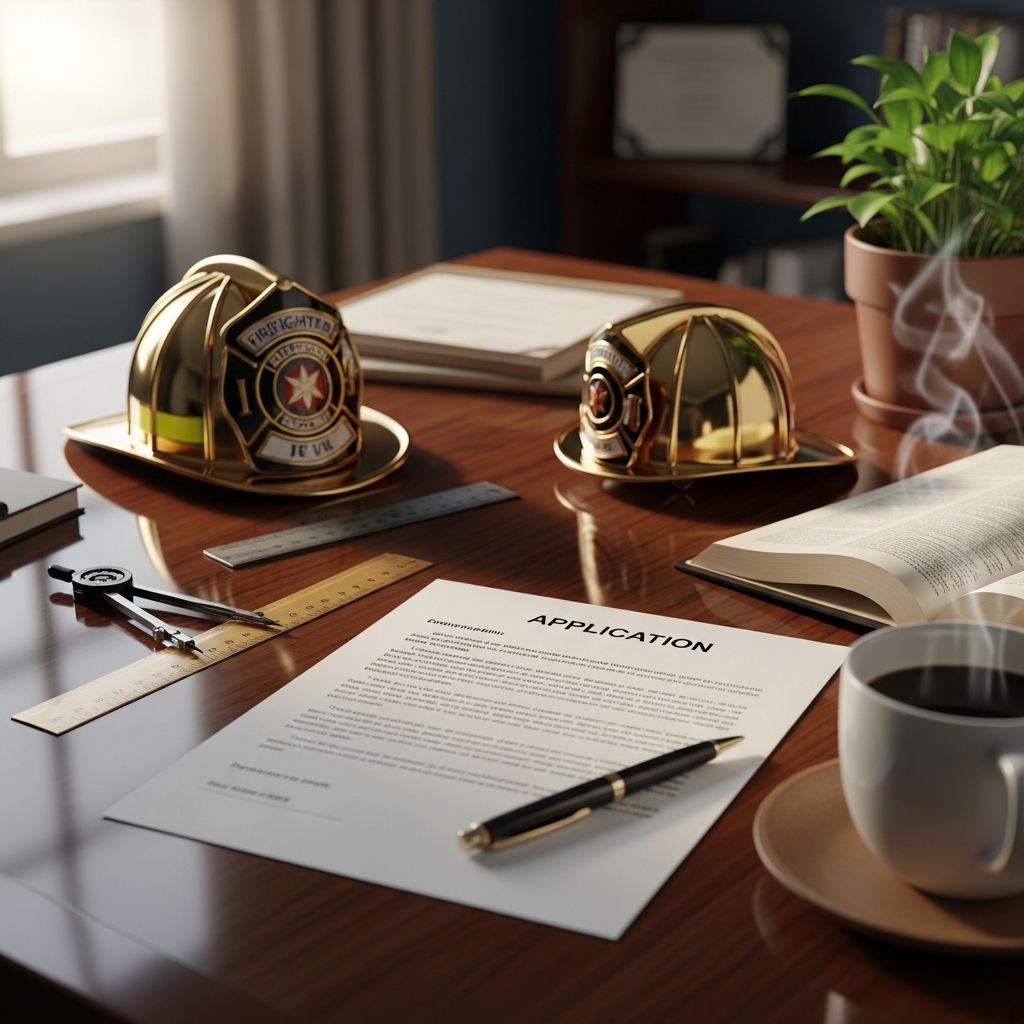
Understanding the Purpose of Your Firefighter Cover Letter
When applying for a firefighter position, your cover letter serves as your personal introduction to the hiring manager before they ever review your resume. This document functions as more than just a formality—it’s your opportunity to demonstrate your passion for public service, your understanding of the fire department’s mission, and your unique value as a candidate. A well-crafted letter can transform a generic application into a memorable one, distinguishing you from other applicants who may have similar qualifications.
The cover letter allows you to tell your professional story in your own voice, connecting the dots between your background and the specific position you’re pursuing. Unlike a resume, which lists accomplishments in bullet points, a cover letter provides context and narrative flow that helps hiring managers understand your motivation and commitment to firefighting. This personalized approach shows that you’ve invested time in your application, which signals respect for the position and the department.
Structuring Your Document for Maximum Impact
The Header Section: Making Contact Information Clear
Begin your cover letter with a professional header that includes all necessary contact information. Your full name should appear at the top, followed by your phone number, email address, and city/state. If you have a LinkedIn profile or professional website, including the URL here adds credibility. The header should be clean and easy to scan, allowing the hiring manager to quickly locate how to reach you if they decide to move forward with your application.
Below your information, add the date of submission and the recipient’s details. Include the hiring manager’s name and title, the fire department’s name, and the complete mailing address. This formal structure demonstrates attention to detail and professionalism—qualities essential in emergency response positions.
The Greeting: Personalization Over Generic Phrases
Address your letter directly to the hiring manager or recruitment officer whenever possible. Spend time researching the fire department’s website or calling their office to find the appropriate person’s name. Using “Dear Mr./Ms. [Last Name]” shows you’ve done your homework and treats the recipient with respect. Avoid outdated or impersonal greetings like “To Whom It May Concern” or “Dear Sir or Madam,” as these lack the personal touch that modern hiring managers appreciate.
Crafting an Opening That Captures Attention
Your opening paragraph functions as a hook that compels the reader to continue. Rather than starting with a generic statement about being interested in the position, launch directly into something compelling. You might begin with a significant achievement—such as leading a successful rescue operation or maintaining a perfect response time record—that immediately demonstrates your capability. Alternatively, share a brief anecdote about what inspired you to pursue firefighting, connecting an emotional element to your professional qualifications.
The introduction should accomplish three things: introduce yourself and the position you’re applying for, establish your enthusiasm for both firefighting and the specific department, and hint at the strengths you’ll elaborate on later. Keep this section concise—typically three to four sentences. Your goal is to make the hiring manager want to learn more about you, not to provide every detail in the opening.
Using Concrete Examples and Metrics
When describing your background and accomplishments, move beyond vague statements and incorporate specific examples with measurable results. Instead of writing “I responded to many emergency calls,” state “I responded to an average of 45 emergency calls monthly, maintaining a 98% on-time arrival rate.” Numbers and metrics make your achievements tangible and verifiable, giving hiring managers concrete evidence of your capabilities.
If you’re highlighting rescue operations, mention the number of lives saved or the complexity of the operations you’ve managed. If you’re emphasizing your commitment to community safety, quantify the number of fire safety presentations you’ve conducted or the populations you’ve educated. These specific details transform your cover letter from generic to genuinely impressive.
Developing the Body Section: Demonstrating Your Qualifications
Matching Your Skills to Department Needs
The body of your cover letter should directly address how your experience aligns with the job description and the fire department’s stated priorities. Begin by identifying the key skills and qualifications mentioned in the posting—such as expertise in hazmat response, rescue techniques, emergency medical services, or leadership abilities. Then, structure your body paragraphs to demonstrate how you possess these exact qualities.
For each major qualification, provide a brief narrative that shows how you’ve developed and applied this skill. If the department emphasizes physical fitness and strength, describe a specific situation where your physical capabilities made a difference in an emergency response. If community engagement is prioritized, explain your involvement in fire prevention education or public outreach programs. This direct correlation shows that you understand what the department needs and that you’re equipped to deliver it.
Showcasing Relevant Training and Certifications
Highlight any specialized training, certifications, or educational credentials that strengthen your candidacy. This might include EMT or paramedic certification, hazardous materials training, technical rescue certifications, or advanced firefighting techniques. Explain how each credential has prepared you to handle the specific challenges of the position. If you’ve completed advanced fire science coursework or received special recognition for your training performance, include this information as it demonstrates your commitment to professional development.
Connecting with Department Culture and Mission
Research the specific fire department you’re applying to and reference something concrete about their reputation, recent initiatives, or community impact. Perhaps they’ve received recognition for innovation in emergency response, initiated new community programs, or demonstrated exceptional disaster response capabilities. Mentioning these specific attributes shows you’ve invested time in understanding the organization, not just submitting a generic application to any fire department.
Explain why these aspects of the department appeal to you and how your professional values align with their mission. This connection demonstrates that you’re not just seeking any job, but that you’ve thoughtfully chosen this specific opportunity because it matches your career aspirations and values.
Essential Elements for Stronger Applications
Incorporating Industry Keywords and Language
Review the job posting carefully and integrate relevant keywords throughout your cover letter. Fire departments often use specific terminology when describing responsibilities—terms like “emergency response protocols,” “incident management,” “structural firefighting,” or “victim rescue operations.” By naturally incorporating these same terms into your writing, you demonstrate familiarity with the profession and improve the chances of your application passing through initial screening processes.
However, avoid forcing keywords unnaturally. The language should flow smoothly, as if you’re genuinely discussing your experience, not simply checking boxes from the job description.
Demonstrating Problem-Solving and Leadership
Beyond technical firefighting skills, departments seek candidates who can think critically and lead others. Provide an example of a time you faced an unexpected challenge during emergency response and how you adapted your approach. Perhaps you encountered a situation where standard protocols needed modification, or you had to quickly assess an evolving emergency scenario and make decisions that protected lives or property.
If you have supervisory or leadership experience, even informal leadership such as mentoring newer firefighters, highlight this. Fire departments appreciate candidates who can contribute to a positive team environment and help develop their colleagues’ skills.
Perfecting the Closing Section
The Call to Action
Your closing paragraph should invite further conversation and express genuine enthusiasm for the opportunity to interview. Rather than passively stating “I look forward to hearing from you,” take a more active approach: “I welcome the opportunity to discuss how my ten years of emergency response experience and proven leadership abilities can contribute to the continued excellence of your department.” This phrasing demonstrates confidence while inviting dialogue.
You might also mention your availability for an interview or indicate that you’ll follow up within a specific timeframe if you don’t hear back. This proactive approach shows your genuine interest and organizational skills.
Professional Sign-Off
Close with a professional salutation such as “Sincerely,” “Best regards,” or “Respectfully,” followed by your full name. If submitting a physical copy, leave space for your handwritten signature between the closing phrase and your typed name. If submitting digitally, your typed name alone is appropriate.
Proofreading and Refinement
Before submitting your cover letter, conduct multiple rounds of proofreading. Errors in grammar, spelling, or punctuation can damage your credibility and suggest carelessness—a serious concern in a profession where attention to detail can be life-saving. Read your letter aloud to catch awkward phrasing, then have a trusted colleague review it for clarity and impact.
Verify that all dates, names, and addresses are accurate. Double-check that your contact information is correct and that phone numbers and email addresses are properly formatted. A hiring manager trying to reach you shouldn’t encounter obstacles due to transcription errors.
Customization for Different Career Stages
For Entry-Level Candidates
If you’re new to firefighting, emphasize your fire science education, EMT certification, physical fitness achievements, and genuine passion for the profession. Highlight any volunteer firefighting experience, internships, or ride-along programs you’ve completed. Emphasize your eagerness to learn and your understanding of the responsibilities involved, even if your practical experience is limited.
For Experienced Firefighters
Candidates with extensive experience should focus on accomplishments, promotions, and specialized skills developed over years in the field. Quantify your contributions—such as improved response times, successful rescue operations, or innovations you’ve implemented. If you’re applying for a higher rank or position, emphasize your leadership track record and your vision for contributing to the department’s future success.
Common Mistakes to Avoid
Repeating Your Resume Verbatim: Your cover letter should complement your resume, not duplicate it. Use the letter to explain your motivations, provide context for your experience, and tell your professional story in a way that reveals your personality and passion.
Making It Too Long: Keep your cover letter to one page. Hiring managers typically spend minutes reviewing applications, so brevity with impact is essential. Every sentence should serve a purpose.
Using Generic Templates Unchanged: While templates provide structure, failing to customize the content for each specific department is a missed opportunity. Generic letters signal that you’re mass-applying rather than genuinely interested in the position.
Overlooking the Importance of Tone: Maintain a professional yet personable tone throughout. Avoid being overly casual or formal to the point of stiffness. Your letter should reflect how you’d communicate with colleagues and supervisors in a real firehouse environment.
Frequently Asked Questions
Q: How long should a firefighter cover letter be?
A: Aim for one page, single-spaced, typically 250–400 words. This length allows sufficient detail without overwhelming the reader.
Q: Should I include salary expectations in my cover letter?
A: Generally, no. Unless the job posting specifically requests salary information, avoid mentioning it in your cover letter. Save salary discussions for later interview stages.
Q: Can I use the same cover letter for multiple fire department applications?
A: While you can use the same general template and structure, customize key sections for each department. Different departments have different priorities and cultures, and your letter should reflect that you’ve done your research for each specific opportunity.
Q: What if I’m changing careers into firefighting?
A: Address this directly by explaining what attracted you to the profession and how your previous career experience has equipped you with transferable skills relevant to firefighting, such as teamwork, crisis management, or emergency response experience.
Q: Should I mention physical fitness in my cover letter?
A: If you have notable physical achievements or fitness certifications relevant to the role, you can mention them briefly. However, assume the hiring department will assess physical capability through testing, so focus more on relevant experience and skills.
Q: How should I address gaps in my work history?
A: If there are notable gaps, a brief, honest explanation in your cover letter is better than letting the hiring manager speculate. Keep it professional and focus on how you’ve remained engaged with your field during the gap period if applicable.
References
- How to Format a Cover Letter (With an Outline and Examples) — Indeed Career Guide. 2024. https://www.indeed.com/career-advice/cover-letter-samples/firefighter
- Firefighter Cover Letter Examples & Templates — My Perfect Resume. 2024. https://www.myperfectresume.com/cover-letter/examples/fire-fighting/firefighter
- 6 Firefighter Cover Letter Examples and Templates for 2025 — Resume Builder. 2025. https://www.resumebuilder.com/cover-letter-examples/firefighter/
- Firefighter Cover Letter Sample — Resume Genius. 2024. https://resumegenius.com/cover-letter-examples/firefighter-cover-letter
- 5 Firefighter Cover Letter Examples — BeamJobs. 2024. https://www.beamjobs.com/cover-letters/firefighter-cover-letter-examples

- Integrated M.A. in Applied Linguistics, University of Hyderabad
- 5+ years in editorial, instructional, SEO, and research-based writing
Sneha is a relationships and lifestyle writer with a strong foundation in applied linguistics and certified training in relationship coaching. She brings over five years of writing experience to theskillvault, crafting thoughtful, research-driven content that empowers readers to build healthier relationships, boost emotional well-being, and embrace holistic living. Her writing and insights reflect the belief that beauty, happiness, and wellness…