
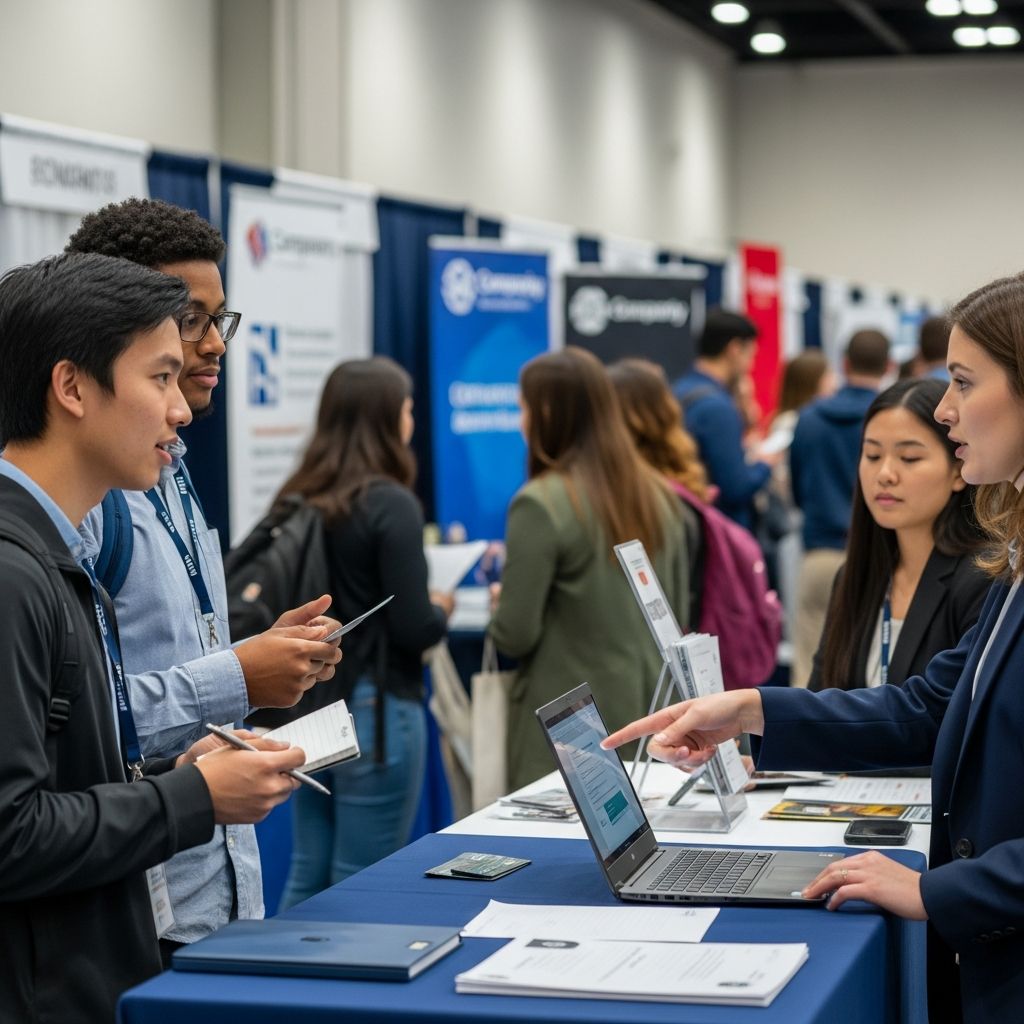
Career fairs can feel overwhelming: dozens of booths, long lines, and only a few minutes with each recruiter. What separates forgettable conversations from memorable ones is not just your resume, but the quality of your questions. Thoughtful questions show preparation, curiosity, and professionalism—traits employers consistently look for in candidates.
This guide walks you through strategic questions to ask at career fairs, why they matter, and how to adapt them to your goals—whether you are exploring options, targeting a specific role, or trying to understand a company’s culture and growth opportunities.
Why Your Questions Matter More Than You Think
According to university career centers and employer surveys, recruiters use brief in-person interactions to quickly assess a candidate’s interest, communication skills, and professionalism—not just their GPA or major. Well-crafted questions help you:
- Stand out from other students who only ask about salaries or say nothing at all.
- Gather insider information about roles, teams, and expectations that job descriptions rarely explain.
- Show you did your research on the organization and came prepared.
- Build rapport with recruiters who may later screen your application or refer you internally.
- Decide faster whether a company or role aligns with your values and goals.
Before You Go: Build a Simple Question Strategy
You do not need dozens of questions for every employer. Instead, create a small set you can adapt on the spot:
- 1–2 questions about a specific role you are considering.
- 1–2 questions about the company’s hiring process and timelines.
- 1–2 questions about growth and development opportunities.
- 1–2 questions about culture and day-to-day work.
- 1 closing question that makes it easy to follow up.
Think of this as your personal question “toolkit” that you can quickly adjust depending on what the recruiter just said or what you see at the booth.
Questions to Understand Specific Roles and Responsibilities
Use these questions when you already have a particular job or internship in mind and want to know what the work is really like.
Role-focused questions you can ask
- “If I joined this role, what would my first three months likely look like?”
- “What does a typical day or week look like for someone in this position?”
- “What kinds of projects or problems does this team work on most often?”
- “What skills or experiences help new hires in this role ramp up quickly?”
- “How does this role interact with other teams or departments?”
- “What are the biggest challenges someone in this role should be ready for?”
These questions help you assess whether the role matches your interests, preferred work style, and current skill set. They also give you openings to briefly connect your own experience to what the recruiter just described.
Questions About the Hiring Process and Next Steps
Understanding how an organization hires helps you prioritize applications and manage your timeline. Many employers use multi-step processes and fixed recruiting seasons, especially for students and new graduates.
Process and timeline questions
- “What does your typical hiring process look like for students or recent graduates?”
- “What are the main stages after the initial application—interviews, assessments, or case studies?”
- “Is there a particular time of year when you hire most interns or entry-level employees?”
- “About how long does it usually take from application to decision for this type of role?”
- “Is there anything you recommend applicants do to stand out in your screening process?”
- “What is the best way to stay informed about new opportunities after the career fair?”
Questions About Growth, Training, and Career Paths
Research and employer surveys highlight that early-career professionals place a high value on learning, development, and advancement when choosing jobs. Asking about growth shows you are thinking beyond your first role.
Growth and development questions
- “What does long-term career progression typically look like for someone starting in this position?”
- “Do you offer structured training, mentorship, or rotational programs for early-career employees?”
- “How does your organization support employees in building new skills or moving into new areas?”
- “Are there examples of people who started in this role and moved into other teams or leadership positions?”
- “How do you evaluate performance and discuss advancement opportunities?”
- “What kinds of learning resources—courses, conferences, or certifications—are commonly used by your team?”
Questions to Explore Company Culture and Work Environment
Company culture heavily influences job satisfaction, retention, and performance, so it is crucial to understand how people work together, communicate, and make decisions. Culture questions are especially useful when roles look similar across several employers.
Culture-focused questions
- “How would you describe the day-to-day working style on your team—more independent, collaborative, or a mix of both?”
- “What does successful communication look like in your organization?”
- “How do managers typically give feedback to their teams?”
- “What are some traditions, events, or practices that people here really enjoy?”
- “How does the company support work–life balance for early-career employees?”
- “What does diversity, equity, and inclusion look like in practice at your organization?”
Questions That Show You Researched the Company
Recruiters quickly notice when candidates have done even basic research before approaching a booth. Drawing on recent news, products, or initiatives signals genuine interest and preparation.
Company-specific questions
- “I saw that your company recently expanded into [market or product]. How has that affected the teams you are hiring for?”
- “I read about your work on [project, technology, or initiative]. What skills are most valuable for contributing to that work?”
- “Your website mentions a focus on [value such as sustainability, innovation, or community impact]. How does that show up in day-to-day decision-making?”
- “What distinguishes your organization from competitors for someone in my field?”
- “Have there been any major changes in your industry recently that are shaping the roles you are hiring for?”
Questions to Ask When You Are Still Exploring Options
If you are unsure exactly what you want to do, that is fine—career fairs are a perfect place to explore. Employers and career centers often encourage students to ask open-ended questions when they are still learning about fields and roles.
Exploratory questions
- “For someone with my major or background, what kinds of roles do you typically hire for?”
- “What skills or experiences do you recommend I build over the next year to be a strong candidate for your roles?”
- “When you think of people who thrive at your company, what do they tend to have in common?”
- “Are there particular courses, projects, or student activities that you find especially valuable in applicants?”
- “If I am interested in [field or function], which of your teams would be the best fit to explore further?”
Connecting With the Recruiter as a Person
Building a genuine connection—not just asking transactional questions—can make your interaction memorable. Asking about a recruiter’s own path gives you insight into the company and helps you practice deeper networking conversations.
Relationship-building questions
- “How did you first get started with this company or in this field?”
- “What do you enjoy most about your work here?”
- “What has kept you with the organization over time?”
- “Is there anything you wish you had known when you were first considering this company?”
- “If a student wants to stay in touch with you or your team, what is the most appropriate way to do that?”
Sample Question Types by Situation (Comparison Table)
The table below summarizes example question types depending on your goal at the fair.
| Situation | Main Goal | Example Question Type |
|---|---|---|
| You know the exact role you want | Clarify daily work and expectations | “What does a typical week look like for someone in this position?” |
| You are comparing several companies | Understand culture and growth differences | “How would you describe the culture on your team compared with others in your industry?” |
| You are early in your studies | Figure out how to prepare | “What experiences should I focus on over the next year to be competitive for your internships?” |
| You are switching fields | Assess transferability of skills | “Given my background in [field], which skills would be most relevant for roles on your team?” |
| You are nearing graduation | Get clarity on hiring process and advancement | “What does the hiring timeline look like for new grads, and what are typical next roles after this one?” |
How to Ask Great Questions in the Moment
Even the best questions lose impact if they come across as rehearsed or disconnected from the conversation. Keep these quick guidelines in mind:
- Listen first. Let the recruiter share their overview, then build your questions from what they emphasize.
- Start broad, then go specific. Begin with a general question and follow up on anything interesting they mention.
- Connect back to yourself. After they answer, briefly relate their response to your skills, projects, or interests.
- Avoid questions easily answered online. Save your time for deeper, experience-based topics rather than basic facts from the homepage.
- Watch the line. If others are waiting, prioritize one or two strong questions and ask how to follow up later.
Smart Ways to End the Conversation
Your final questions should set up clear next steps and make it easier for the recruiter to remember you when reviewing applications.
Good closing questions
- “Based on what we discussed, which roles or teams do you think I should explore first?”
- “What is one thing you recommend I do in the next week if I am serious about applying here?”
- “Would it be alright if I connect with you on LinkedIn or follow up by email after I apply?”
- “Is there anyone else on your team you recommend I speak with to learn more about [specific area]?”
After you step away, jot down a few notes—what you learned, the recruiter’s name, and any advice they gave. These details make your follow-up messages more personal and effective.
Frequently Asked Questions (FAQs)
How many questions should I ask at each booth?
Most conversations last just a few minutes, so aim for 2–4 targeted questions per employer. Prioritize one role-based question, one about culture or growth, and one about the hiring process. If the booth is quiet and the recruiter seems open to talking longer, you can ask follow-ups.
Is it okay to read my questions from a list?
Bringing a short list is fine—and often recommended—but try not to read directly from it. Glance at your notes between booths, then ask questions naturally so the conversation feels like a dialogue, not an interview script.
What questions should I avoid at a career fair?
Avoid questions that are overly personal, negative, or easily answered online. Save detailed compensation or vacation questions for later in the process unless the recruiter brings them up. Steer clear of anything that sounds like you have not read the job description.
Can I ask about remote work or flexible schedules?
Yes, but frame these questions thoughtfully. For example: “How does your team usually structure work—on-site, hybrid, or remote—and does that vary by role or location?” This shows openness rather than demanding a specific arrangement up front.
What if I do not know what I want to do yet?
You can still have valuable conversations. Focus on exploratory questions like: “For someone with my background, what kinds of roles do you see as a good starting point?” or “What experiences should I prioritize over the next year if I might want to work here in the future?” Employers and career services often expect and welcome these types of questions from students who are still deciding.
References
- Sample Questions to Ask Employers — Boise State University Career Services. 2024-01-10. https://www.boisestate.edu/career/career-fair/sample-questions-to-ask-employers/
- 19 Questions To Ask at a Career Fair — Indeed Editorial Team. 2023-06-30. https://www.indeed.com/career-advice/interviewing/questions-to-ask-at-a-career-fair
- Tips for Career Fair Success for Candidates — MIT Career Advising & Professional Development. 2023-08-15. https://capd.mit.edu/tips-for-career-fair-success-for-students/
- Engaging Questions to Ask Recruiters at the Job Fair — The University of Texas at Arlington Career Development Center. 2022-09-01. https://cdn.prod.web.uta.edu/-/media/project/website/student-affairs/careers/student-alumni-forms/engaging-questions-to-ask-recruiters-at-the-job-fair.pdf
- 8 Questions To Ask Employers At A Career Fair — Career Fair Plus. 2022-04-05. https://www.careerfairplus.com/blog/8-questions-to-ask-employers
- 6 Questions to Ask Employers at a Career Fair — Bridgewater State University Career Services. 2024-09-05. https://careers.bridgew.edu/blog/2024/09/05/6-questions-to-ask-employers-at-a-career-fair/
- 5 Questions to Ask at Career Fairs — Choose Work! (Social Security Administration). 2024-09-24. https://choosework.ssa.gov/blog/2024-09-24-5-questions-to-ask-at-career-fairs.html

Medha Deb is an editor with a master's degree in Applied Linguistics from the University of Hyderabad. She believes that her qualification has helped her develop a deep understanding of language and its application in various contexts. Medha specializes in the areas of beauty, health, sports, and wellness and is committed to ensuring that the content on the website is…