
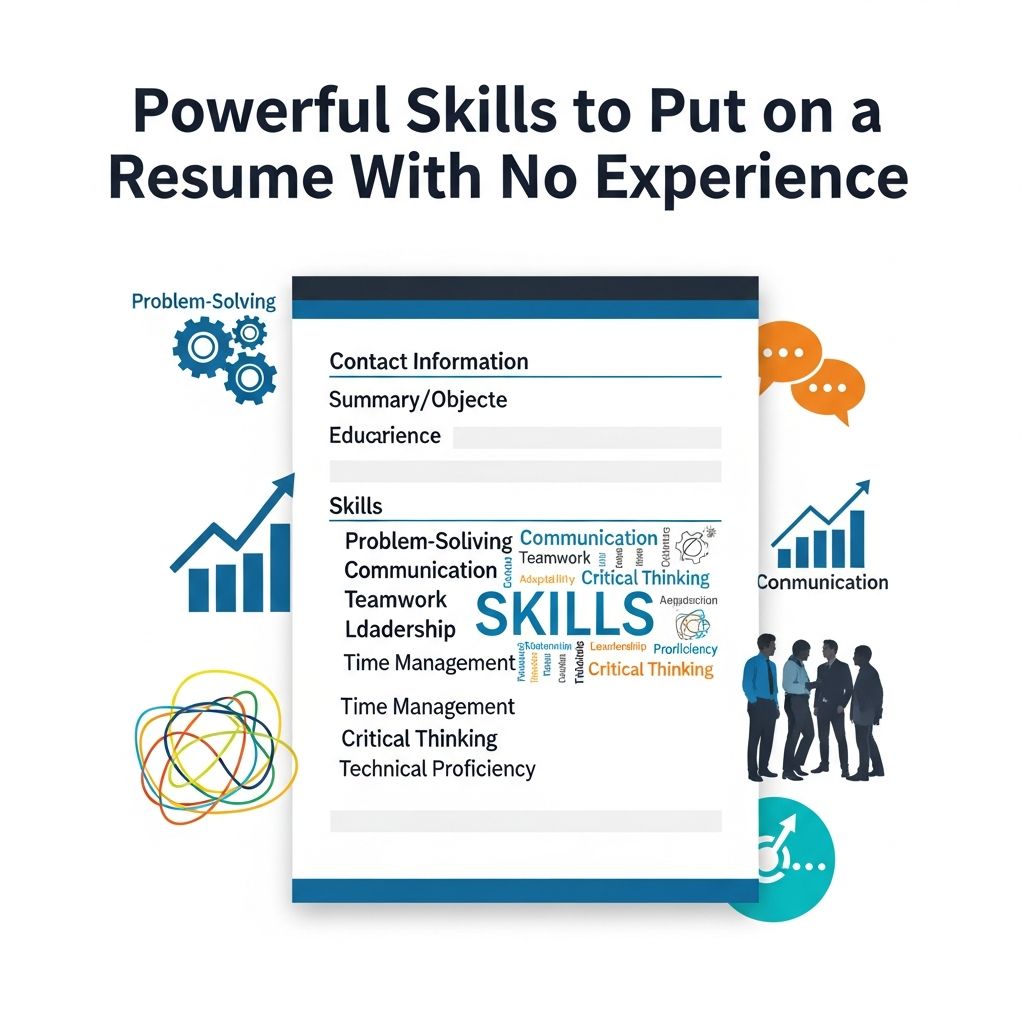
Not having formal work history does not mean you have no skills. If you have studied, volunteered, joined clubs, completed projects, or even managed responsibilities at home, you already have abilities employers care about. The key is learning how to name those skills in an employer-friendly way and present them clearly on your resume.
This guide explains which skills to highlight, how to pull them from your real-life experiences, and how to organize them on a resume so you can stand out for entry-level roles.
Understanding What Counts as a “Skill” for Employers
Hiring managers are not only looking for specific tools or software; they also want to know how you think, behave, and collaborate. Research on hiring for entry-level roles shows that employers consistently value communication, teamwork, problem-solving, and work ethic as core competencies in new graduates and early-career candidates.
Broadly, you can think of skills in two buckets:
- Transferable or behavioral skills (often called soft skills): Ways you work with people, approach tasks, and handle challenges. These apply in almost any job.
- Technical or job-specific skills (hard skills): Practical abilities related to particular tools, methods, or fields (e.g., Excel, programming, design software).
Even without past jobs, you can build both types of skills through school, personal projects, online courses, sports, clubs, and community involvement.
High-Value Transferable Skills for a No-Experience Resume
The skills below are in demand across many industries. Choose the ones that genuinely fit you, then back them up with short examples in your resume bullets.
1. Communication Skills
Effective communication is one of the top skills employers seek in entry-level applicants because nearly every role requires sharing information clearly with colleagues, customers, or stakeholders.
- What it includes: Writing emails, speaking in meetings, presenting, listening carefully, explaining complex ideas simply.
- Where you may have used it: Class presentations, debate club, student journalism, tutoring, customer-facing volunteering.
Sample wording you might adapt: “Clear written and verbal communication; regularly presented group research findings and explained technical concepts to non-technical classmates.”
2. Teamwork and Collaboration
Most work happens in teams, so employers prioritize people who can cooperate, share responsibility, and give and receive feedback constructively.
- What it includes: Supporting teammates, resolving conflicts, contributing ideas, taking shared ownership of outcomes.
- Where you may have used it: Group assignments, sports teams, band or choir, student organizations, hackathons, community events.
Sample wording you might adapt: “Collaborated with a cross-functional group of classmates to deliver a semester-long project on time and with strong reviews.”
3. Problem-Solving
Employers want people who can notice issues, analyze causes, and suggest practical solutions, not just execute instructions. Surveys of hiring managers repeatedly list problem-solving as a critical skill for new hires.
- What it includes: Identifying problems, evaluating options, testing solutions, learning from mistakes.
- Where you may have used it: Troubleshooting a technical issue, improving a process in a club, figuring out how to meet a deadline with limited resources.
Sample wording you might adapt: “Identified bottlenecks in our club’s event signup process and reorganized the form, reducing registration time for new members.”
4. Critical Thinking
Critical thinking goes beyond solving immediate problems; it involves analyzing information, questioning assumptions, and making well-reasoned decisions. Many academic programs intentionally cultivate this skill, and employers report it as essential in modern, information-heavy workplaces.
- What it includes: Evaluating evidence, comparing sources, drawing logical conclusions, thinking independently.
- Where you may have used it: Research papers, analyzing data in lab classes, comparing sources for a project, planning strategies in competitions.
Sample wording you might adapt: “Applied critical thinking to evaluate conflicting research sources and build a coherent argument in written reports.”
5. Organization and Time Management
Being able to plan, prioritize, and follow through on tasks is vital in any role. Employers rely on entry-level hires who can manage their own workload rather than needing constant reminders.
- What it includes: Prioritizing tasks, scheduling, meeting deadlines, keeping information structured.
- Where you may have used it: Balancing coursework and part-time responsibilities, coordinating events, managing a busy extracurricular schedule.
Sample wording you might adapt: “Managed multiple deadlines across five classes while leading two club initiatives, consistently submitting work on schedule.”
6. Adaptability and Willingness to Learn
Because early-career employees are still building experience, employers look for evidence that you can learn quickly and adjust to new tools, processes, and expectations.
- What it includes: Trying new approaches, picking up unfamiliar software, staying calm in change.
- Where you may have used it: Shifting to online learning, learning new platforms, changing project scopes, moving into a new role in a club or team.
Sample wording you might adapt: “Quick to learn new systems; independently taught myself basic spreadsheet and presentation tools to support group projects.”
7. Attention to Detail
Detail-oriented work reduces errors, protects data quality, and builds trust. For entry-level roles involving data entry, documentation, or customer records, this skill is especially important.
- What it includes: Spotting errors, carefully following instructions, checking work before submission.
- Where you may have used it: Editing papers, maintaining records for a club, preparing financial logs, proofreading newsletters.
Sample wording you might adapt: “Known for careful attention to detail; proofread team reports and corrected inconsistencies before submission.”
Practical Technical Skills You Can Showcase Early
Even with limited experience, you can often demonstrate basic technical or job-specific skills gained from schoolwork, self-study, or volunteer projects. Employers frequently expect entry-level candidates to have at least foundational digital literacy.
1. Productivity and Office Software
Many roles require comfort with common office tools.
- Examples: Word processing, spreadsheets, presentation software, email and calendars, collaboration tools (such as shared documents or chat platforms).
- Where you may have used it: Writing reports, tracking budgets for a club, building slide decks, coordinating group assignments.
2. Writing and Content Creation
Clear writing is valuable far beyond traditional writing jobs; it improves documentation, internal communication, and customer messaging.
- Examples: Blog posts, social media captions, essays, newsletters, how-to guides, clear emails.
- Where you may have used it: Class assignments, personal blog, club social media, campus newspaper, grant applications or proposals.
3. Data and Numerical Skills
Comfort with numbers and basic data handling is increasingly useful across industries, from marketing to operations.
- Examples: Entering and cleaning data, creating simple charts, calculating percentages, interpreting survey results.
- Where you may have used it: Lab work, statistics courses, analyzing survey responses for a project, tracking fundraising results.
4. Digital and Online Skills
Many organizations want early-career talent who understand online environments and basic digital tools.
- Examples: Managing a simple website or blog, basic image editing, scheduling social media posts, using learning platforms.
- Where you may have used it: Running social pages for a club, personal creative projects, school technology platforms, online courses.
Turning Life Experience Into Resume-Ready Skills
If you feel like you “haven’t done much,” reframe your experiences by focusing on what you did and what skills that required. Many career services centers advise students to mine the following areas for relevant examples.
| Experience Type | Possible Skills You Can Claim |
|---|---|
| School projects and coursework | Research, writing, presentations, time management, data analysis, collaboration |
| Clubs, sports, and student groups | Leadership, teamwork, event planning, communication, conflict resolution |
| Volunteering and community work | Customer service, reliability, problem-solving, empathy, organizational skills |
| Personal and creative projects | Initiative, self-directed learning, technical skills (software, design, coding), perseverance |
| Family and life responsibilities | Organization, budgeting, caregiving, multitasking, dependability |
How to List Skills on a Resume With No Experience
Where you place skills on your resume and how you describe them can strongly influence how they are perceived. Career advisors often recommend that candidates with limited experience use the skills section strategically.
1. Create a Focused Skills Section
Instead of a long, unfocused list, select 6–10 of your strongest, most relevant skills for the job you are targeting.
- Group similar skills together (for example, “Communication and Teamwork” or “Digital and Office Tools”).
- Use short, clear phrases: “Written communication,” “Customer interaction,” “Spreadsheet basics,” “Time management.”
- Avoid listing tools you have barely used; employers may expect you to demonstrate them.
2. Reinforce Skills With Mini-Examples
Skills are more believable when you show where you used them. Under your education, projects, or volunteer entries, add bullets that connect actions to outcomes.
- Start with a strong verb (organized, led, analyzed, created, supported, improved).
- Mention the skill implicitly or explicitly (“organized,” “analyzed,” “presented”).
- When possible, include a simple result (“increased participation,” “met deadline,” “reduced errors”).
3. Align Skills With Each Job Posting
Job descriptions tell you exactly which abilities matter most. Many employers screen resumes by searching for specific skill terms, so tailoring is especially important when you lack experience.
- Highlight keywords from the posting that you truly have (for example, “teamwork,” “customer service,” “basic Excel”).
- Reorder your skills list so the most relevant ones appear first.
- If the role emphasizes customers, move communication, empathy, and problem-solving up your list.
Common Mistakes to Avoid With Skills on a First Resume
When you are early in your career, it is tempting to pack your resume with every term you can think of. Being selective and honest will help you more in the long run.
- Being too generic: Instead of listing only single words (“hard-working,” “motivated”), show them through actions and outcomes.
- Overstating technical skills: If you have only watched a single video about a complex tool, do not claim proficiency.
- Ignoring evidence: For each important skill, make sure there is at least one bullet somewhere in your resume that illustrates it.
- Copying every keyword: Focus on skills you actually possess. Interviews often test what you claim.
- Forgetting basic professionalism: Proofread carefully; spelling and grammar errors undermine claims of attention to detail and communication ability.
Quick Checklist: Do Your Skills Tell a Clear Story?
Before you send your resume, use this checklist to evaluate your skills section and related bullets:
- Have you included a mix of transferable and technical skills?
- Do your skills match the requirements and language in the job description?
- Can you point to at least one example for each major skill listed?
- Have you avoided exaggerating or adding skills you cannot use independently?
- Would someone who knows you well recognize you from this skills list?
Frequently Asked Questions (FAQs)
Q: How many skills should I list on a resume with no work experience?
Aim for about 6–10 focused skills that match the job you want. Too few may undersell you, but a very long list can feel unfocused and less credible.
Q: Should I list soft skills or technical skills first?
Order them based on the role. For customer-facing or general entry-level positions, soft skills like communication and teamwork can come first. For technical or specialist roles, you may want to highlight specific tools and technical abilities at the top.
Q: Can I include skills I learned from school projects and volunteering?
Yes. Employers expect entry-level applicants to draw on schoolwork, volunteer roles, and other non-paid experiences. The important part is describing what you did and what skills you used or developed in those contexts.
Q: Is it okay to mention beginner-level skills on my resume?
You can include beginner-level skills if they are genuinely relevant and you can use them independently for basic tasks. If your knowledge is very limited, it is better to keep learning and only list the skill once you can apply it without close supervision.
Q: How often should I update the skills on my resume?
Update your skills whenever you complete new courses, projects, or responsibilities that give you measurable ability—especially after internships, major class projects, or skill-based certifications.
References
- National Association of Colleges and Employers Job Outlook 2024 — National Association of Colleges and Employers. 2023-11-15. https://www.naceweb.org/job-market/trends-and-predictions/job-outlook-2024
- Career Planning: Building Skills Employers Want — U.S. Bureau of Labor Statistics. 2022-11-01. https://www.bls.gov/careeroutlook/2023/article/career-planning.htm
- Core Competencies for New Graduates — American Association of Colleges and Universities. 2021-06-10. https://www.aacu.org/research
- Future of Jobs Report 2023 — World Economic Forum. 2023-04-30. https://www.weforum.org/reports/the-future-of-jobs-report-2023
- How to Write a Resume With No Work Experience — University of Washington Career & Internship Center. 2023-02-20. https://careers.uw.edu/resources/how-to-write-a-resume-with-no-work-experience

Medha Deb is an editor with a master's degree in Applied Linguistics from the University of Hyderabad. She believes that her qualification has helped her develop a deep understanding of language and its application in various contexts. Medha specializes in the areas of beauty, health, sports, and wellness and is committed to ensuring that the content on the website is…