
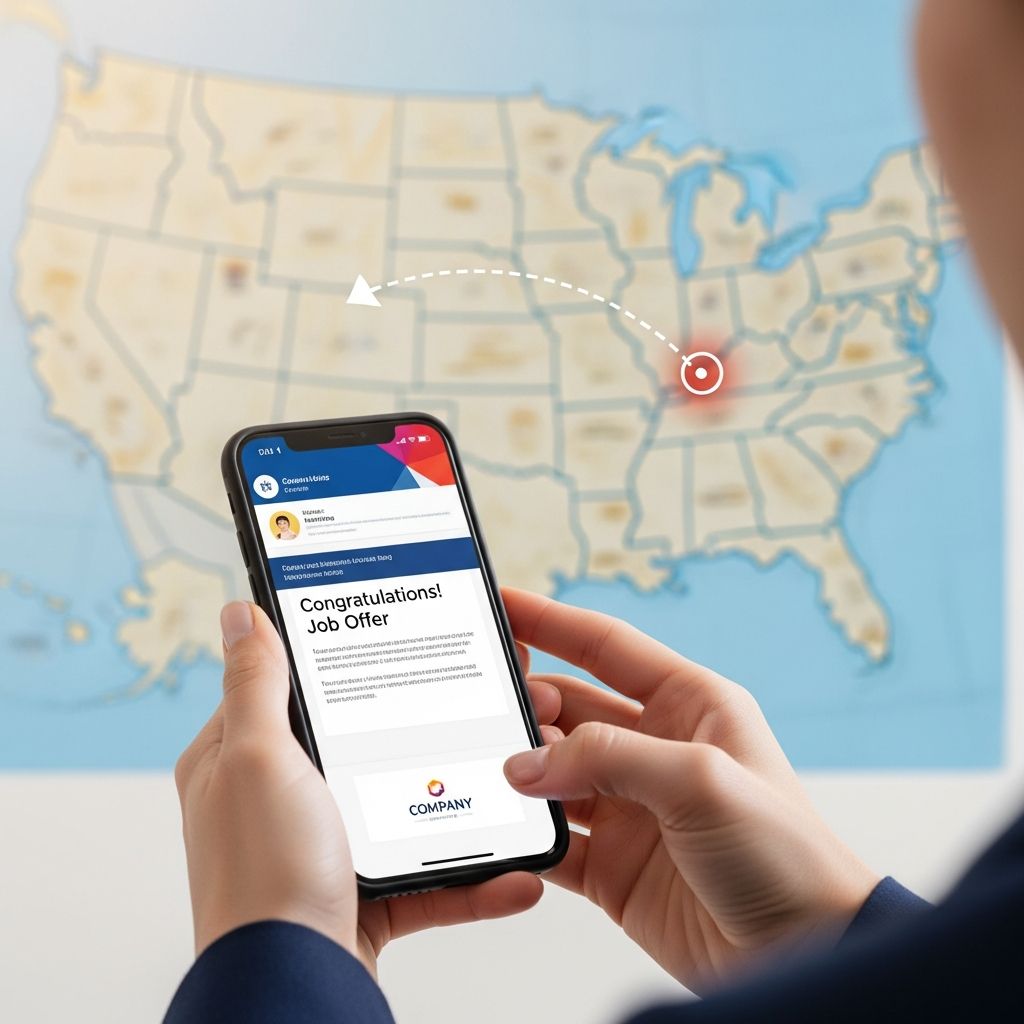
Finding a job in another state before you relocate can significantly reduce your financial risk, stress, and time without income. With remote work, virtual interviews, and digital networking tools, it is more realistic than ever to secure an offer across state lines if you approach the process strategically.
This guide walks through how to evaluate your target location, present yourself as a serious relocation candidate, network from afar, and navigate interviews and offers when you are not yet a local.
Clarify Your Target: Where and Why You Want to Move
Before you send a single application, define the purpose and parameters of your move. Employers are more likely to consider out-of-state candidates when your reasons for relocating are clear and convincing.
- Decide on 1–2 primary locations instead of applying everywhere. Focus helps you learn each market’s norms and build local connections more quickly.
- Identify your relocation timeline (for example, “mid-summer” or “within 90 days of accepting an offer”). This shows employers you have a concrete plan, not just a vague idea.
- Write out your relocation story: why this state, what you’re looking for, and what commitments (family, cost of living, lifestyle, industry prospects) support the move.
Having a clear narrative also helps you answer common interview questions about why you are job-hunting in another state and how serious you are about relocating.
Study the Local Job Market Like a Research Project
Each state and metro area has its own mix of industries, salary norms, and hiring customs. Understanding these differences lets you pitch yourself realistically and target employers who are more open to relocation candidates.
| Market Factor | What to Look For | How It Affects Your Job Search |
|---|---|---|
| Key Industries | Dominant sectors (e.g., tech, healthcare, manufacturing) | Align your skills with sectors that are hiring and growing |
| Unemployment Rate | State and metro unemployment compared with national figures | Lower rates often indicate a tighter labor market and more openings |
| Job Growth | Industries adding jobs over the last 1–3 years | Target fields with expansion, not contraction |
| Cost of Living | Housing, taxes, and everyday costs vs. your current city | Inform your salary expectations and budget for relocation |
Authoritative sources like the U.S. Bureau of Labor Statistics and state labor departments provide current data on employment, wages, and industry growth, which you can use to benchmark realistic salary ranges and understand local demand.
Practical ways to research your target state
- Review state and city labor market reports for unemployment, job openings, and wage trends.
- Scan employer career pages to see which teams are hiring and what skills they emphasize.
- Search for professional associations and local chapters in your field to gauge how active the professional community is.
- Look up cost-of-living calculators from government or major nonprofit sources to estimate how far a salary will go in your new city.
Position Yourself on Paper as Relocation-Ready
Many employers default to local candidates because they appear less risky and faster to onboard. Your resume and cover letter must counter this bias by signaling preparation and commitment.
Resume tips for out-of-state applicants
- Address strategy:
- If you already have a future local address (for example, a signed lease), you can list it.
- If not, consider omitting a full street address and instead using phone, email, and a line such as Open to relocation to [City, State] in your header.
- Highlight portable skills that are in demand everywhere: technical skills, data literacy, communication, project management, and leadership. Labor market analyses consistently show these skills are valued across industries.
- Tailor your bullet points using keywords you see repeatedly in local job listings for your target roles.
- Add a brief profile section that mentions your relocation goal, such as Marketing analyst with 5+ years in B2B tech, seeking opportunities in Austin, TX.
Write cover letters that remove relocation doubts
Use your cover letter to proactively answer the questions hiring managers may hesitate to ask:
- State clearly that you plan to relocate, not that you are merely considering it.
- Mention your timeframe and willingness to move for the right role.
- Explain why that region makes sense for you professionally and personally (such as alignment with industry clusters, family ties, or long-term plans).
- Offer flexibility: note that you are available for video interviews immediately and can travel for final-round discussions if needed.
Use Networking to Break the “Local Only” Bias
Relying only on job boards often leaves out-of-state candidates at a disadvantage. Informational interviews and warm introductions can help you bypass automated filters that favor local addresses.
Build a local network from a distance
- Leverage alumni networks: Many universities maintain alumni directories and regional chapters. Alumni are often receptive to short, specific requests for advice.
- Connect through professional associations: Join local chapters in your target state and attend virtual panels or webinars.
- Search by location and industry on professional networking platforms to identify people in roles or companies that interest you.
- Request brief conversations (15–20 minutes) focused on learning about the regional market, not asking directly for a job.
What to ask in informational conversations
- How hiring typically works in that city or sector (timelines, seasonality, use of recruiters).
- Which employers are expanding or have strong reputations.
- What skills or certifications give candidates an edge locally.
- Whether it is common for companies to consider relocation candidates for your type of role.
Use the insights and contacts you gather to tailor your approach and, when appropriate, to request referrals into specific openings.
Time Your Applications for Maximum Impact
Applying too early can mean hiring managers forget you; applying too late can mean roles are filled before you can arrange travel or relocation. Career practitioners often recommend aiming to apply about 2–3 months before your target move date, especially for professional and corporate roles that follow multi-stage interview processes.
Decide your application strategy
- Rolling applications: For fast-moving roles (retail, hospitality, hourly positions), apply closer to your move date since hiring cycles are short.
- Planned timelines: For roles with clear posting and closing dates (government, universities, large corporations), work backward from the close date to schedule your outreach, networking, and application.
- Remote-first positions: Some jobs are location-flexible or fully remote; these can serve as a bridge while you continue to pursue strictly local opportunities.
Expand Your Options: Remote, Hybrid, and Temporary Roles
The growth of remote and hybrid work has changed what “out-of-state” hiring looks like. Some organizations are open to candidates who will start remotely and relocate later, while others are fully remote and only care about time zones.
Consider flexible arrangements
- Remote roles with eventual relocation: You begin from your current state and relocate once you’ve proven fit or when office attendance becomes important.
- Fully remote work: These roles may not require relocation at all, but can give you income and experience while you plan your move.
- Short-term or contract work: Temporary roles can help you gain local experience quickly once you arrive and can lead to permanent positions.
Major labor market studies show that remote and hybrid arrangements grew substantially after 2020, especially in knowledge-based occupations, which increases your options for cross-state job searches.
Ace Virtual and Out-of-State Interviews
Virtual interviews are now standard for many roles and are an important opportunity to show that distance will not hinder communication, collaboration, or your ability to start smoothly.
Prepare for remote interviews
- Test your setup (camera, microphone, internet connection, and platform) in advance; many employers report that preventable technical issues can create a negative impression.
- Use a quiet, well-lit space with a neutral background to keep attention on you and your answers.
- Practice behavioral questions that explore teamwork, remote collaboration, and how you manage deadlines from a distance.
- Have your relocation plan ready and be prepared to discuss timing, housing plans, and any constraints succinctly.
Address relocation questions confidently
- Emphasize that you have already decided to move or will move upon accepting a suitable offer.
- Share a clear timeframe (for example, I can relocate within six weeks of signing an offer ).
- Clarify whether you will cover your own moving costs or are hoping for relocation assistance, depending on your role level and the norms in your industry.
- Explain any existing ties to the area, such as family, prior residence, or professional networks, which help counter concerns that you may change your mind.
Plan the Logistics: Money, Timing, and Onboarding
Even when an offer is in hand, success depends on how you manage the transition. A realistic relocation plan reassures your future employer and protects you financially.
Budget for your move
- Estimate moving costs (packing, transport, temporary storage) and compare quotes.
- Include short-term housing if you may need a hotel or rental while finding a permanent home.
- Maintain a cash buffer for 2–3 months of basic living expenses in case start dates shift or deposits are higher than expected.
Government and consumer finance agencies consistently recommend maintaining an emergency fund to cover several months of expenses, particularly during major transitions like job changes and relocations.
Discuss start dates and flexibility
- Propose a realistic start date that factors in your notice period, travel, and housing arrangements.
- Offer to start remotely for onboarding and training if feasible, then transition onsite when you arrive.
- Clarify how many days you will need for the physical move and any time off required during your first months.
Common Mistakes to Avoid in Out-of-State Job Searches
- Being vague about relocation: Saying you are open to moving without clear timing or reasons can make you appear uncertain.
- Sending generic applications: Failing to tailor materials to local employers and industries weakens your candidacy, especially when you are competing with locals.
- Ignoring local norms: Not understanding typical salaries, titles, or hiring timelines in the new market can lead to misaligned expectations.
- Waiting until after you move to apply: For many professional roles, applying only once you arrive means months without income that could have been shortened by earlier outreach.
- Underusing networking: Relying only on job boards is particularly limiting for out-of-state searches because automated filters may deprioritize non-local candidates.
Frequently Asked Questions About Finding a Job in Another State
How far in advance should I start applying for out-of-state jobs?
For most professional roles, starting applications about two to three months before your ideal move date is a practical window. This allows time for multiple interview rounds, reference checks, and any negotiation, while still being close enough that hiring managers can see you realistically relocating within their timelines.
Will employers take me seriously if I do not live there yet?
Yes, if you clearly communicate your relocation plan. Demonstrate seriousness by researching the market, explaining why you chose that state, offering a concrete timeline, and being flexible about virtual interviews and travel for final rounds. A thoughtful plan helps reduce any perceived risk.
Should I put my future city on my resume?
If you have a definitive move date or a signed lease, listing the new city and state can make sense. If your plans are still contingent, it is often better to omit your full address and include a short statement such as Pursuing opportunities in [City, State] in your profile or cover letter.
Is it better to move first and then look for a job?
It depends on your finances, field, and risk tolerance. Some roles hire quickly and favor local availability, making relocation-first viable. However, securing an offer before you move can reduce financial stress and gaps in employment. Many job seekers combine approaches: they begin searching and interviewing remotely, then intensify local applications and networking once they arrive.
Can remote jobs help me transition to another state?
Yes. Fully remote or remote-first roles can be done from your current state while you plan your move, and some employers allow you to relocate later as long as you stay within certain time zones or legal jurisdictions. These roles can provide income and relevant experience while you continue to pursue location-specific opportunities.
References
- Cost of Living Information — U.S. Bureau of Labor Statistics. 2024-01-11. https://www.bls.gov/cpi/factsheets/relative-importance-2023.htm
- Employment Projections and Industry Growth — U.S. Bureau of Labor Statistics. 2023-09-06. https://www.bls.gov/emp/tables/industry-employment.htm
- Emergency Savings and Financial Resilience — Consumer Financial Protection Bureau. 2022-05-24. https://www.consumerfinance.gov/consumer-tools/educator-tools/resources-for-financial-educators/emergency-savings/
- Remote Work and Telework — U.S. Bureau of Labor Statistics. 2022-09-22. https://www.bls.gov/news.release/flex2.nr0.htm
- Employment Interviewing — Purdue University Center for Career Opportunities. 2023-08-01. https://www.purdue.edu/cco/students/interviewing/index.html

- Integrated M.A. in Applied Linguistics, University of Hyderabad
- 5+ years in editorial, instructional, SEO, and research-based writing
Sneha is a relationships and lifestyle writer with a strong foundation in applied linguistics and certified training in relationship coaching. She brings over five years of writing experience to theskillvault, crafting thoughtful, research-driven content that empowers readers to build healthier relationships, boost emotional well-being, and embrace holistic living. Her writing and insights reflect the belief that beauty, happiness, and wellness…