
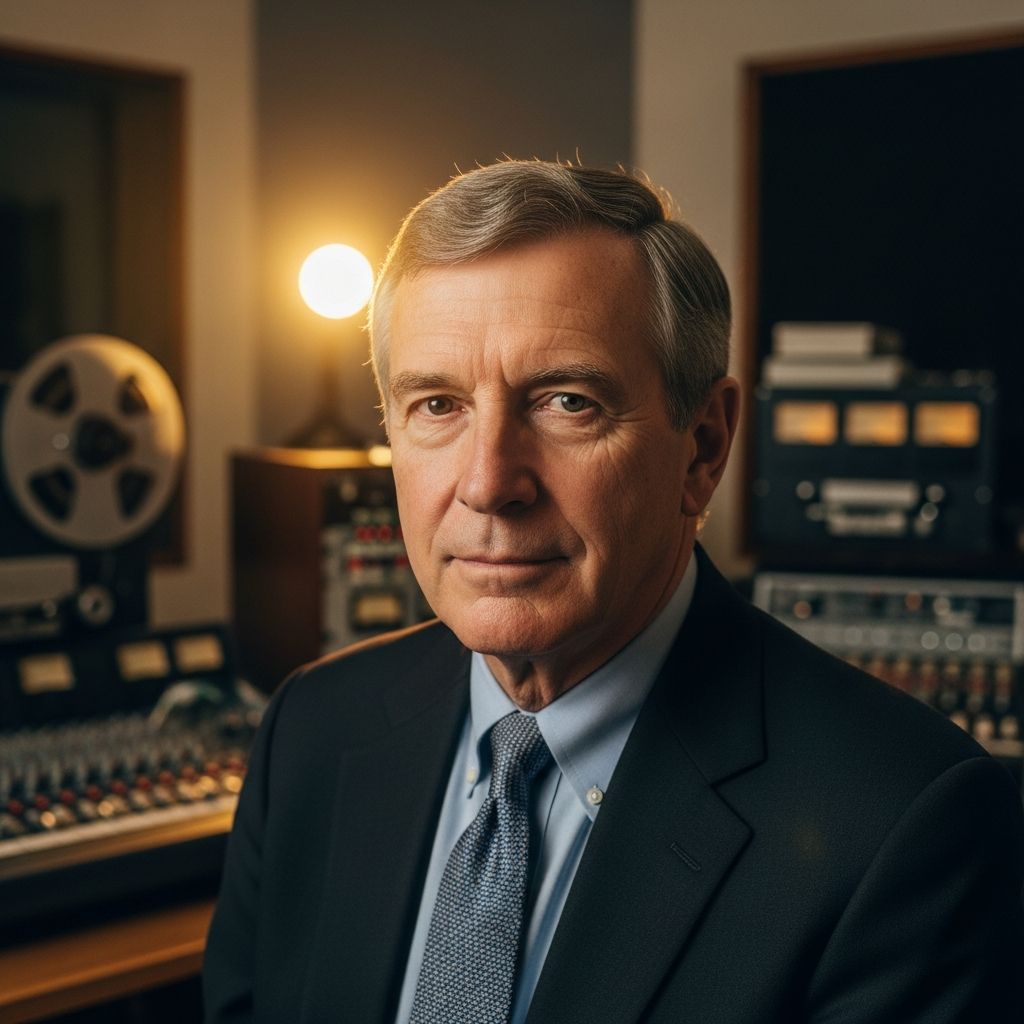
The Visionary Behind Modern Sound Technology
The evolution of entertainment technology has been shaped by countless innovators, yet few have left as indelible a mark as Ray Dolby, whose contributions to audio engineering fundamentally transformed how we experience sound in movies, music, and broadcasting. Born in 1933, Dolby possessed an exceptional talent for identifying problems in existing audio systems and engineering elegant solutions that would benefit millions of people worldwide. His journey from academic excellence to entrepreneurial success demonstrates how scientific rigor combined with creative thinking can revolutionize entire industries.
Ray Dolby’s educational foundation was particularly strong, having studied electrical engineering at Stanford University before winning a prestigious Marshall Scholarship to pursue physics at Cambridge University, where he earned his doctorate in 1961. This combination of practical engineering knowledge and theoretical physics expertise would prove invaluable as he embarked on his professional career. After working briefly with the United Nations in India, Dolby made the pivotal decision to establish his own laboratory, setting the stage for one of the most significant technological legacies of the twentieth century.
Identifying the Problem: The Tape Hiss Challenge
During the 1960s, as magnetic tape technology became increasingly prevalent in both professional and consumer applications, a persistent technical problem frustrated audio engineers, musicians, and listeners alike. The inevitable hissing sound that accompanied tape recordings—whether on open-reel formats, cassettes, or film soundtracks—represented an inherent limitation of the technology that most people had accepted as unavoidable. This background noise degraded audio quality across the entire spectrum of entertainment and communications applications.
Rather than accepting this limitation as permanent, Ray Dolby recognized an opportunity to apply advanced signal processing techniques to eliminate or significantly reduce this unwanted noise. His insight was revolutionary: by understanding the characteristics of both the desired audio signal and the unwanted tape hiss, he could develop a system that would preserve music and dialogue while suppressing the background noise. This conceptual breakthrough led to the development of the Dolby Noise Reduction system, which would become his first major technological achievement and the foundation upon which his entire company would be built.
Establishing Dolby Laboratories and Early Success
In 1965, Ray Dolby founded Dolby Laboratories in London, establishing a facility dedicated to advancing audio technology research and development. The same year, he invented the Dolby Noise Reduction system, creating an audio signal processing method that effectively addressed the tape hiss problem that had plagued the industry for years. His first U.S. patent on this technology was filed four years later in 1969, providing legal protection for his innovations while he worked to commercialize the system.
The early adoption of Dolby technology by major recording companies demonstrated the profound impact of his innovation. Decca Records became the first recording label to implement the Dolby System, and this initial success prompted other industry giants to follow suit. By 1967, major record labels including RCA, MCA, and CBS had adopted Dolby technology in their recording processes, validating Ray Dolby’s technical approach and establishing the company as a credible force in professional audio.
This rapid adoption by recording companies reflected a fundamental shift in how the industry viewed audio quality. Musicians and producers recognized that Dolby’s technology provided them with a powerful new tool for enhancing their recordings, enabling them to achieve cleaner, more dynamic sound that better captured the artistic intent of their work. The album “Sgt. Pepper’s Lonely Hearts Club Band” by The Beatles benefited from Dolby’s 8-track technology, helping produce one of the most influential recordings in music history.
The Strategic Transition: From Recording to Film
While Dolby Laboratories achieved considerable success in the recording industry, Ray Dolby held a deeper ambition to bring his audio innovations to Hollywood. He recognized that the same fundamental problems affecting tape recordings—particularly the hissing sound and limited dynamic range—also plagued motion picture projection systems. The studios initially proved receptive to applying his patented processes to their soundtracks, with early adopters like the film “A Clockwork Orange” in the early 1970s demonstrating the potential of Dolby technology in cinema.
A crucial strategic decision at this point involved Ray Dolby’s business model. Rather than attempting to manufacture consumer electronics products directly and compete against established giants in the consumer electronics industry, Dolby Laboratories chose to focus on technology development and licensing. This decision proved extraordinarily wise, allowing the company to concentrate on innovation while partnering with manufacturers like KHL for production and distribution. This licensing-based approach enabled rapid market penetration and widespread adoption without the capital requirements and operational complexity of manufacturing.
The Cinema Revolution: Dolby Stereo and Surround Sound
The introduction of Dolby Stereo in 1975 represented a watershed moment in cinema history. This new 35mm-print format incorporated Dolby sound technology and featured the first practical implementation of what would later become known as surround sound. Unlike traditional single-channel monaural soundtracks that limited audio to a single loudspeaker, Dolby Stereo enabled filmmakers to position sound elements throughout the theater, creating an immersive acoustic environment that surrounded the audience.
The impact of this innovation became unmistakable when “Star Wars” premiered in 1977. George Lucas, the film’s director, recognized the transformative potential of Dolby’s audio technology and incorporated it fully into his groundbreaking science fiction epic. The revolutionary sound design in “Star Wars,” featuring directional effects that moved around the theater and immersive ambient soundscapes, captivated audiences and industry professionals alike. Viewers experienced not just a visual spectacle but an audio environment that transported them into the fictional universe of the film. This success proved decisive—Dolby Stereo rapidly became the de facto industry standard for theatrical film exhibition.
The collaboration between Ray Dolby’s company and visionary filmmakers extended beyond “Star Wars.” Director Stanley Kubrick and other acclaimed cinematographers recognized the artistic possibilities enabled by Dolby’s technology, leading to innovative soundscapes in films like “Apocalypse Now.” These high-profile partnerships established Dolby as the trusted standard for cinema audio and demonstrated how technological innovation could serve artistic expression rather than simply masking technical limitations.
Expanding the Technological Arsenal
Throughout the 1980s and beyond, Dolby Laboratories continued to develop increasingly sophisticated audio technologies. In 1982, the company introduced Dolby Surround for home video, bringing theatrical-quality surround sound to consumer entertainment systems. This extension of cinema technology to the home market represented another strategic innovation, recognizing that audiences who experienced surround sound in theaters would want similar experiences in their living rooms.
A particularly ingenious technical solution involved storing digital audio data in the space between film sprocket holes. This backward-compatible approach allowed Dolby to introduce digital audio capability to existing 35mm film formats without requiring wholesale replacement of projection equipment in theaters worldwide. Cinemas could adopt digital sound capabilities gradually while maintaining compatibility with both new digital projectors and existing analog equipment.
The development of AC3 compression technology represented another breakthrough achievement. This compression scheme efficiently encoded high-quality digital audio, enabling multichannel surround sound to be incorporated into films and other media. AC3 became the technological foundation for Dolby Digital, a format that would eventually achieve ubiquity across cinema, home entertainment, and broadcasting applications.
Recognition and Legacy
Ray Dolby’s contributions to audio technology garnered numerous prestigious recognitions throughout his lifetime. He received an Academy Award of Merit in 1989 for his contributions to cinema sound, acknowledging his impact on one of the world’s most influential industries. The National Academy of Television Arts and Sciences awarded him multiple Emmy Awards, including recognition for the invention of the Ampex videotape recorder and his pioneering work with Dolby Laboratories across multiple decades.
Beyond these entertainment-industry honors, Ray Dolby received recognition from the scientific and academic communities. He earned the National Medal of Technology and Innovation for inventing technologies that dramatically improved sound recording. Cambridge University awarded him an honorary doctorate in 1997, recognizing his scientific contributions, and the University of York followed with another honorary doctorate in 1999.
The scale of Ray Dolby’s impact extended far beyond awards and accolades. During his lifetime, he earned more than 50 U.S. patents, each representing a distinct technological innovation. Thousands of films and billions of consumer products incorporated Dolby technologies, touching the entertainment experiences of millions of people worldwide. His personal success reflected the value of his innovations, with Forbes estimating his personal fortune at more than $2 billion by the time of his passing.
Dolby Laboratories: From Private Innovation to Public Company
Under Ray Dolby’s leadership, Dolby Laboratories grew from a small London laboratory into a global technology powerhouse. The company moved to San Francisco in 1976 as it expanded, establishing offices, laboratories, and manufacturing facilities to support its ambitious research and development programs. This growth trajectory reflected the increasing recognition of Dolby’s technological importance across multiple industries.
In 2005, Dolby Laboratories became a publicly traded company, offering shares on the New York Stock Exchange under the ticker symbol DLB. This transition from private company to public corporation provided capital for continued expansion and innovation while allowing investors to participate in the company’s ongoing success. The company celebrated its 40th anniversary that same year at the ShoWest 2005 Festival in San Francisco, marking decades of continuous innovation and market leadership.
The Lasting Impact on Entertainment and Technology
Ray Dolby’s influence on entertainment extends across multiple dimensions. Film directors recognized sound as a powerful artistic element that could enhance storytelling and emotional impact in ways previously impossible. Philip Kaufman and other acclaimed filmmakers noted how Dolby’s work changed moviemaking by elevating sound from a technical necessity to an integral artistic component of cinematic expression.
The impact on consumer experiences proved equally significant. Television viewers, home theater enthusiasts, and music listeners benefit continuously from technologies developed at Dolby Laboratories. The progression from simple noise reduction to multichannel surround sound to modern spatial audio formats reflects the company’s commitment to continuous innovation and improvement in how people experience entertainment.
Frequently Asked Questions
What specific problem did Ray Dolby’s noise reduction system solve?
Ray Dolby’s noise reduction system addressed the inevitable hissing sound that accompanied magnetic tape recordings. This background noise degraded audio quality across all tape formats from professional open-reel to consumer cassettes. His system used signal processing to identify and suppress this hiss while preserving the desired audio content, making tape a viable medium for high-quality audio production.
How did Dolby Stereo change cinema?
Dolby Stereo, introduced in 1975, transformed cinema by enabling directional sound placement throughout theaters. Rather than audio emanating from a single location, filmmakers could position sound effects and music around the audience, creating immersive environments. “Star Wars” (1977) demonstrated this capability so effectively that Dolby Stereo rapidly became the industry standard for theatrical exhibition.
Why did Ray Dolby choose licensing over manufacturing?
Recognizing that competing directly with established consumer electronics manufacturers would be challenging, Ray Dolby strategically chose to license his technologies rather than manufacture products. This allowed Dolby Laboratories to focus exclusively on research and innovation while partners handled production and distribution, enabling rapid market penetration without capital-intensive manufacturing operations.
What patents and recognitions did Ray Dolby receive?
Ray Dolby earned more than 50 U.S. patents during his lifetime, protecting innovations across noise reduction, surround sound, and digital audio. He received an Academy Award of Merit in 1989, multiple Emmy Awards from the National Academy of Television Arts and Sciences, the National Medal of Technology and Innovation, and honorary doctorates from Cambridge University and the University of York.
How did Dolby’s technology influence music recording?
Dolby’s noise reduction technology became essential in professional music recording during the 1960s and beyond. Record labels like Decca, RCA, MCA, and CBS adopted Dolby systems in their recording processes. The technology enabled cleaner, more dynamic recordings that better captured artistic intent, contributing to iconic albums like “Sgt. Pepper’s Lonely Hearts Club Band.”
References
- Ray Dolby: Inventing the Future of Entertainment — Dolby Laboratories (Official Company Profile). Retrieved from https://www.dolby.com/about/leadership/ray-dolby/
- Ray Dolby – National Medal of Technology and Innovation Laureate — National Science and Technology Medals Foundation. Retrieved from https://nationalmedals.org/laureate/ray-dolby/
- Ray Dolby Biography — Television Academy. Retrieved from https://www.televisionacademy.com/bios/ray-dolby
- How Did Dolby Sound Change the Movies? — TIME Magazine. 2013-09-16. Retrieved from https://entertainment.time.com/2013/09/16/how-did-dolby-sound-change-the-movies/
- Ray Dolby and the Dolby Noise Reduction — National Inventors Hall of Fame. Retrieved from https://www.invent.org/inductees/ray-dolby
- Dolby Labs History and Impact — Sports Broadcasting Hall of Fame. Retrieved from https://www.sportsbroadcastinghalloffame.org/inductees/ray-dolby/
- Dolby Laboratories — Wikipedia. Retrieved from https://en.wikipedia.org/wiki/Dolby

- Integrated M.A. in Applied Linguistics, University of Hyderabad
- 5+ years in editorial, instructional, SEO, and research-based writing
Sneha is a relationships and lifestyle writer with a strong foundation in applied linguistics and certified training in relationship coaching. She brings over five years of writing experience to theskillvault, crafting thoughtful, research-driven content that empowers readers to build healthier relationships, boost emotional well-being, and embrace holistic living. Her writing and insights reflect the belief that beauty, happiness, and wellness…