
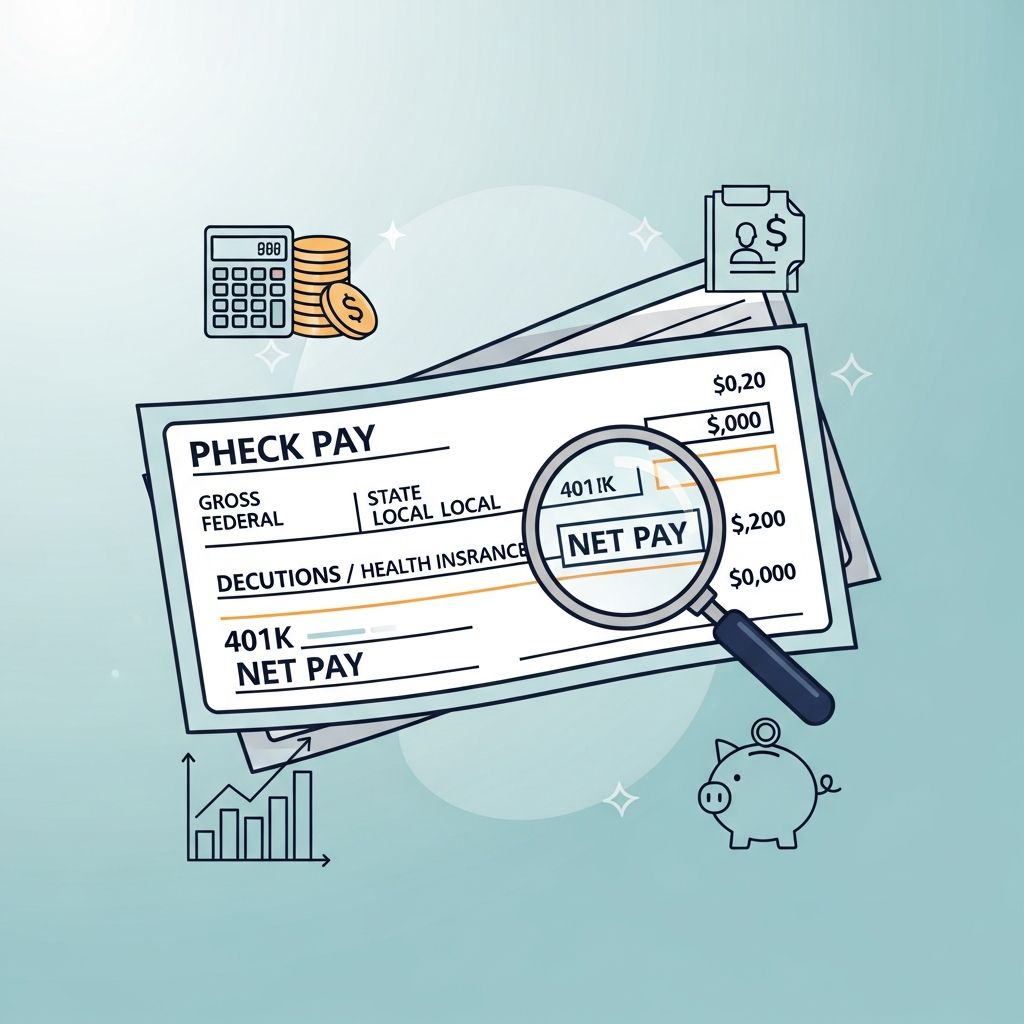
Seeing your first paycheck hit your bank account is exciting, but it can also be confusing. The number you expected based on your salary or hourly rate often looks very different from the amount you actually take home. This guide walks you through what your first paycheck really means, why it is smaller than you thought, and how to use it wisely.
1. Before the Money Arrives: What Happens Behind the Scenes
Several important steps happen between accepting a job offer and receiving your first paycheck. Understanding this process will help you know when you’ll be paid and why the amount looks the way it does.
1.1 Forms You Fill Out on Day One
Most employers require a small stack of paperwork before they can legally pay you. These forms determine how much tax is withheld and how you get your money.
- Tax withholding form (W-4 in the U.S.): Tells your employer how much federal income tax to withhold from each paycheck.[10]
- Work authorization form (I-9 in the U.S.): Confirms your identity and eligibility to work.[10]
- State or local tax forms: Some states and cities have their own tax withholding documents.[10]
- Direct deposit authorization: Gives payroll your bank details so they can send your pay straight to your account.
If any of these are incomplete, your first paycheck could be delayed or your taxes may be withheld at a higher default rate.
1.2 How Often You’ll Get Paid
Each employer follows a specific pay schedule. Typical options include:
- Weekly (once a week)
- Biweekly (every two weeks)
- Semimonthly (usually twice a month, such as the 15th and last day of the month)
- Monthly (once a month)
Most companies issue paychecks on or shortly after the last day of a pay period. If you start in the middle of a pay period, you may not see a paycheck until the end of the next full cycle, depending on company policy.
1.3 Why Your First Check May Arrive Later Than You Expect
It’s common for new employees to wait longer for their first paycheck than for later ones. Reasons include:
- Mid-cycle start date: You only get paid for days worked within the pay period, so a partial first period may not be processed until the next payroll run.
- Payroll processing cutoff: If you start after the payroll cutoff date, your hours may roll into the next period.
- Bank processing time: Direct deposits can take a day or two to show up depending on your bank.
2. Gross Pay vs. Take-Home Pay: Why Your Check Is Smaller
One of the biggest surprises on a first paycheck is discovering that you do not receive the full amount you thought you earned. The difference comes down to gross pay versus net (take-home) pay.
2.1 Key Paycheck Terms
- Gross pay: The total amount you earned during the pay period before any taxes or deductions. For hourly workers, this is your hourly rate multiplied by hours worked. For salaried workers, it is your annual salary divided by the number of pay periods per year.
- Net pay: The amount you actually take home after all taxes and deductions have been subtracted.
- Pre-tax deductions: Money taken out before taxes are calculated (for example, certain retirement contributions or some health insurance premiums).
- Post-tax deductions: Amounts taken out after taxes, such as wage garnishments or some voluntary savings plans.
2.2 Typical Payroll Deductions
Your employer is required or allowed to withhold several types of amounts from your gross pay. Common deductions include:
- Federal income tax: Based on your wages, filing status, and the information you provided on your tax form.[10]
- State and local income taxes (where applicable): Vary widely by location.
- Social Security tax: Funds the federal retirement and disability program. Employees usually pay 6.2% of wages up to an annual limit, with the employer paying a matching amount.
- Medicare tax: Supports the federal health insurance program for older adults and certain disabled people. Employees generally pay 1.45% of wages, with an additional amount for very high earners, and employers match the basic rate.
- Benefit premiums: Your share of the cost of employer-sponsored health, dental, vision, or other insurance, plus possible health savings or flexible spending accounts.
- Retirement contributions: Money you choose to direct into a 401(k) or similar plan, sometimes with an employer match.
2.3 A Simple Take-Home Pay Breakdown
Here is an illustrative example of how gross pay might turn into net pay for one pay period. The numbers are for explanation only and do not reflect your exact situation.
| Item | Description | Example Amount |
|---|---|---|
| Gross pay | Total earnings for the period | $3,000 |
| Federal income tax | Based on W-4 elections and tax brackets | -$300 |
| State income tax | Varies by state or locality | -$120 |
| Social Security & Medicare | Required payroll taxes on wages | -$230 |
| Health insurance premium | Employee share of employer plan | -$150 |
| Retirement contribution | Voluntary 401(k) deferral | -$150 |
| Net (take-home) pay | Amount you receive | $2,050 |
The gap between $3,000 and $2,050 represents a combination of taxes and financial choices (like benefits and savings) that benefit you now or in the future.
3. How to Estimate Your First Take-Home Pay
Because tax systems and benefits vary, it can be hard to predict your exact paycheck. Still, you can get a reasonable estimate by following a few steps.
3.1 Step-by-Step Estimation
- Identify your gross pay for one period
If you are hourly, multiply your hourly rate by the hours you expect to work. If you are salaried, divide your annual salary by the number of pay periods in a year (for example, 26 for biweekly or 24 for semimonthly).
- Approximate your tax rate
Use a reputable paycheck calculator from a payroll provider or tax authority to estimate federal, state, and local withholding. These tools ask for your income, location, and filing status and apply current tax rules.
- Account for Social Security and Medicare
In many cases, employees pay a combined 7.65% of wages for these programs, while employers pay another 7.65% on their side. Multiplying your gross pay by 0.0765 gives a rough idea of these deductions.
- Subtract benefit and retirement contributions
Ask HR what your share of health insurance, dental, or other benefits will be each period, and decide how much you want to contribute to any retirement plan.
- Compare your estimated net pay with your budget
Use your estimate to plan for rent, utilities, transportation, debt payments, savings, and everyday expenses.
3.2 Why Online Calculators Help
Tax systems can be complex, especially if you live in a place with multiple levels of taxation. Many reputable organizations provide free paycheck calculators that factor in current tax rates and rules, reducing the risk of miscalculating your net income.
4. Reading Your Pay Stub Like a Pro
Whether you receive a paper check or direct deposit, you should receive a pay stub (sometimes called an earnings statement). This document shows exactly how your pay was calculated and how much was withheld.
4.1 What You’ll Usually See on a Pay Stub
Although formats vary, most pay stubs include several common sections:
- Employee information: Your name, address, and sometimes employee ID.
- Pay period and pay date: The date range you are being paid for and the date the money is issued.
- Hours and rates: Regular hours, overtime hours, and pay rates for each.
- Earnings: Breakdown of gross pay (salary, hourly wages, overtime, bonuses, commissions).
- Taxes: Separate lines for federal, state, local, Social Security, and Medicare.
- Deductions: Benefit premiums, retirement contributions, and any other withholdings.
- Net pay: The amount you actually receive for the period.
- Year-to-date (YTD) totals: Cumulative earnings and deductions for the calendar year so far.
4.2 How to Review Your First Paycheck Carefully
When you receive your first pay stub, take a few minutes to check it line by line.
- Confirm that your name and address are correct.
- Verify your pay rate (hourly or salary) matches your offer.
- Check that the number of hours worked is accurate.
- Look at the tax withholding amounts and confirm they reflect your tax elections.
- Make sure any benefits you signed up for appear as deductions (and none you didn’t enroll in).
- If something looks off, contact your HR or payroll department promptly.
5. Making Smart Money Moves With Your First Paycheck
Your first paycheck is more than just income—it’s an opportunity to start building good financial habits that can compound over time.
5.1 Build a Simple Starter Budget
Once you know your typical take-home pay, build a basic monthly budget to guide your spending and saving. A simple approach is to separate your money into a few categories:
- Essentials: Rent, food, utilities, transportation, insurance, minimum debt payments.
- Savings: Emergency fund, retirement, short-term goals.
- Flexible spending: Dining out, entertainment, hobbies, non-essential shopping.
Many financial educators suggest aiming to save at least a small portion of each check, even if it is only a few dollars to start.
5.2 Consider Setting Up Automatic Transfers
To avoid spending your entire paycheck without realizing it, consider automating your priorities:
- Automatic transfers to a savings account each payday.
- Automatic contributions to a retirement plan through your employer.
- Optional automatic payments for key bills like student loans or credit cards.
By paying yourself first, you make saving and investing part of your routine instead of an afterthought.
6. Common First-Paycheck Surprises and How to Handle Them
New employees often run into similar surprises when their first paycheck arrives. Recognizing them can help you respond calmly and logically.
6.1 “My paycheck is much smaller than my salary suggests.”
This usually happens when someone mentally calculates income as salary divided by 12 months and forgets about taxes and deductions. Revisit your pay stub and separate out gross pay, taxes, benefits, and net pay to see where the differences come from.
6.2 “I thought I would be paid sooner.”
If your first check is late, verify:
- Whether your start date fell after the payroll cutoff.
- That your paperwork and direct deposit details were submitted correctly.
- What your official pay schedule is (weekly, biweekly, etc.).
HR or payroll can clarify where you are in the cycle and when to expect your deposit.
6.3 “I don’t recognize some of the deductions.”
If you see unfamiliar abbreviations or deduction names, ask for a payroll glossary or explanation. Employers are generally required to make pay information transparent and can help you understand each line item.
Frequently Asked Questions (FAQs)
Q1: Do I have to keep copies of my pay stubs?
It is a good idea to keep digital or paper copies of your pay stubs for at least a year, and sometimes longer. They can help you verify income for rental applications, loan approvals, tax filing, and resolving any future payroll questions.
Q2: Can I change how much tax is taken out of my paycheck?
Yes. You can generally submit an updated tax withholding form (such as a new W-4 in the U.S.) to adjust how much federal income tax is withheld from your pay. Changes usually take effect in a later pay period rather than immediately.[10]
Q3: What should I do if my paycheck amount appears incorrect?
If the amount you receive does not match your expectations, compare your pay stub with your offer letter and your recorded hours, then contact your manager, HR, or payroll department as soon as possible. Many organizations encourage employees to review their first paycheck specifically to catch any errors early.
Q4: Is direct deposit safer than getting a paper check?
Direct deposit is widely considered secure and is often preferred because it reduces the risk of lost or stolen checks and usually gets money into your account faster.
Q5: Why does my friend’s paycheck look different even though we have similar jobs?
Differences in tax withholding choices, benefit selections, retirement contributions, state or local taxes, and overtime or bonuses can all cause paychecks for similar jobs to look quite different.
References
- Hiring employees — Internal Revenue Service. 2024-01-12. https://www.irs.gov/businesses/small-businesses-self-employed/hiring-employees
- When Do You Get Your First Paycheck? A Complete Guide — Indeed Editorial Team. 2025-06-09. https://www.indeed.com/career-advice/pay-salary/when-do-you-get-your-first-paycheck
- Payroll Onboarding: A Step-by-Step Checklist for New Employees — Simon CPAs. 2023-05-01. https://www.simon-cpas.com/content_library.htm?id=RXOMPZBB
- Payroll Tips for New Hire — Miami University Human Resources. 2022-08-15. https://miamioh.edu/human-resources/payroll/payroll-tips-new-hire/index.html
- Payroll 101: A Guide for New Employees — Nextep. 2023-07-10. https://www.nextep.com/blog/payroll-101/
- Got Your First Job? Understand Your Paycheck — Charles Schwab Moneywise. 2023-03-20. https://www.schwabmoneywise.com/teen/story/understand-your-paycheck
- First Paycheck: What to Know — Fidelity Investments. 2023-02-14. https://www.fidelity.com/learning-center/personal-finance/first-paycheck

- Integrated M.A. in Applied Linguistics, University of Hyderabad
- 5+ years in editorial, instructional, SEO, and research-based writing
Sneha is a relationships and lifestyle writer with a strong foundation in applied linguistics and certified training in relationship coaching. She brings over five years of writing experience to theskillvault, crafting thoughtful, research-driven content that empowers readers to build healthier relationships, boost emotional well-being, and embrace holistic living. Her writing and insights reflect the belief that beauty, happiness, and wellness…