
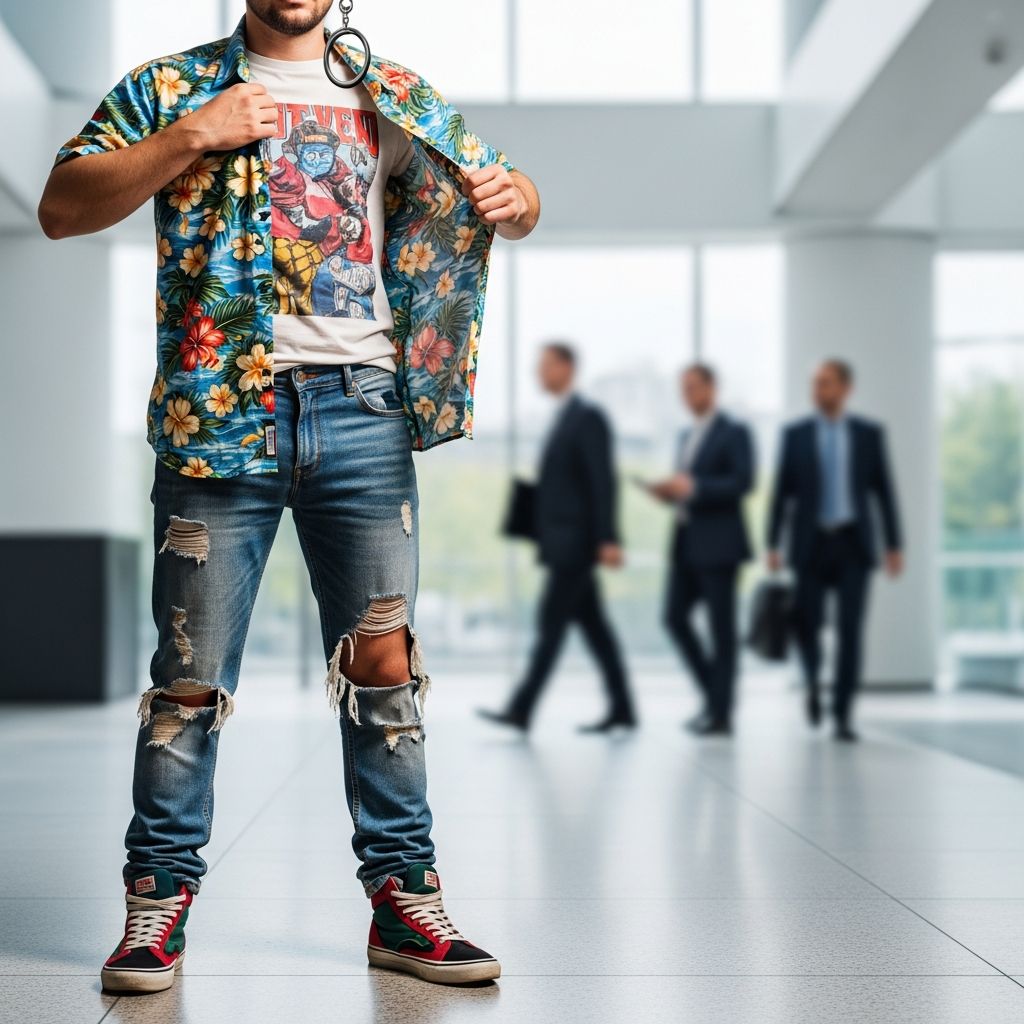
Hiring managers form impressions within seconds, long before you answer the first question. Your outfit does not win you the job, but it can easily hurt your chances if it sends the wrong message. This guide explains what not to wear to a job interview and how to avoid common wardrobe mistakes so the spotlight stays on your skills and experience.
Why Interview Clothing Matters
Research on first impressions shows that appearance can strongly influence judgments of competence, trustworthiness and professionalism in the first moments of an interaction. In interviews, your clothing acts as non-verbal communication about how seriously you take the role and whether you understand the workplace norms.
That does not mean you must look like everyone else, but it does mean your outfit should never distract, confuse, or undermine your credibility.
General Principles: The “No-Distraction” Rule
Before looking at specific items to avoid, use this simple filter: if your clothing, accessories, or grooming might distract the interviewer, reconsider it. Career centers and employer guides consistently stress a clean, well-fitted, and conservative look for interviews, regardless of gender.
- Clean and pressed: No stains, odors, wrinkles, or visible damage.
- Proper fit: Not too tight, not too loose, and comfortable enough to sit and stand without adjusting constantly.
- Neutral impact: Colors, patterns and accessories that support your professional image instead of becoming the main event.
Top Clothing Mistakes to Avoid
The list below covers the most common outfit choices that can work against you in an interview, along with better alternatives.
1. Overly Casual Pieces
Even at casual or creative workplaces, wearing something that looks like weekend lounge wear signals that you may not take the opportunity seriously.
- Avoid: Graphic T-shirts, sweatshirts, hoodies, ripped jeans, leggings as pants, athletic shorts, or sweatpants.
- Why it hurts you: These pieces are associated with relaxation or workouts, not professionalism or reliability.
- Better choice: Dark jeans or chinos with a collared shirt or blouse for casual settings, or slacks and a button-down for business casual.
2. Clothes That Are Too Tight, Short, or Revealing
Career centers and employer guidelines consistently advise against tight or revealing clothing for interviews because it distracts and can be interpreted as unprofessional.
- Avoid:
- Very short skirts or dresses above mid-thigh.
- Low-cut tops, gaping buttons, or visible undergarments.
- Bodycon dresses that cling everywhere.
- Why it hurts you: It draws attention away from your qualifications and may suggest poor judgment about workplace norms.
- Better choice: Knee-length skirts or dresses and shirts that remain closed comfortably when you sit and move.
3. Wrinkled, Damaged, or Dirty Clothing
Even a well-chosen outfit looks careless if it is wrinkled, stained, or frayed. Universities and career guides highlight cleanliness and condition as basic interview requirements.
- Avoid:
- Noticeable stains, deodorant marks, or food spots.
- Missing buttons or broken zippers.
- Frayed hems, pilling sweaters, or faded black fabrics.
- Why it hurts you: It suggests disorganization, lack of preparation, and poor attention to detail.
- Better choice: Iron or steam clothes the night before and do a final mirror check for lint, pet hair, and loose threads.
4. Loud Colors and Busy Patterns
Neutral, understated colors like navy, black, gray, and soft blues are commonly recommended because they project calm and professionalism and avoid distracting the interviewer.
- Avoid:
- Neon shades, fluorescent accents, or head-to-toe bold color.
- Busy prints, large logos, or cartoon graphics.
- Head-spinning patterns (e.g., competing stripes, bright plaid and polka dots together).
- Why it hurts you: When your outfit is the most memorable thing about you, the hiring manager may struggle to focus on your answers.
- Better choice: Solid or softly patterned pieces in neutrals, with a small pop of color in a tie, scarf, or accessory if appropriate to the industry.
5. Over-the-Top Statement Accessories
Accessories can show personality, but they should not dominate the conversation.
- Avoid:
- Oversized necklaces or bracelets that clink and jingle.
- Very large or flashy earrings.
- Multiple rings on each hand or stacks of bangles.
- Anything that you fidget with when nervous.
- Why it hurts you: Visual and audible distractions compete with your words and can come across as unpolished.
- Better choice: Simple jewelry such as a watch, small earrings, or a subtle necklace that complements your outfit without drawing attention.
6. Inappropriate Footwear
Shoes complete your outfit and send strong signals about how prepared you are. Many interview attire guides emphasize closed-toe, clean, and polished shoes for most roles.
- Avoid:
- Flip-flops or beach sandals.
- Dirty sneakers or athletic trainers (unless job-relevant or explicitly acceptable).
- Sky-high heels that affect your balance or stride.
- Overly worn boots with scuffs and peeling soles.
- Why it hurts you: Inappropriate or shabby shoes undermine an otherwise strong outfit and may signal a lack of professionalism.
- Better choice: Closed-toe flats, loafers, oxfords, low-to-moderate heels, or clean dress shoes that match the formality of your outfit.
7. Distracting Fragrances and Heavy Makeup
While fragrance and makeup are personal choices, strong scents or dramatic looks can overshadow your message.
- Avoid:
- Strong perfume, cologne, or aftershave that lingers.
- Glitter-heavy makeup or neon eye shadow.
- Very dark lipstick if it does not fit the company’s culture.
- Why it hurts you: Scents can trigger allergies or sensitivities, and bold makeup may be perceived as less professional in conservative settings.
- Better choice: Light or no fragrance and makeup that enhances rather than transforms your features.
8. Overly Casual Bags and Accessories
What you carry into the interview also contributes to your overall impression.
- Avoid:
- Large gym bags or backpacks plastered with patches.
- Shopping bags or wrinkled totes.
- Clutching your phone or keys in your hand.
- Why it hurts you: It suggests a rushed, unprepared arrival and can look sloppy.
- Better choice: A simple briefcase, portfolio, or structured tote that can hold copies of your resume and a notebook.
Industry-Specific Pitfalls
What is too formal in one field might be too casual in another. The key is to dress one small step above what employees normally wear, while avoiding extremes.
| Workplace Type | Common Mistakes | Better Approach |
|---|---|---|
| Corporate / Finance / Law |
|
|
| Business Casual Offices |
|
|
| Startups / Creative Fields |
|
|
| Retail / Customer-Facing Roles |
|
|
Grooming and Presentation Mistakes
Even a perfect outfit falls short if grooming appears rushed.
- Unkempt hair: Extremely messy or greasy hair can overshadow your professionalism. Aim for a style that stays in place and does not require frequent adjusting.
- Visible pet hair or lint: Use a lint roller on dark fabrics, especially coats and blazers.
- Chewed nails or chipped polish: Hands are highly visible in handshakes and gestures; keep nails clean and polish minimal or freshly applied.
- Bulging pockets: Overstuffed pockets with phones, wallets, and keys can distort the lines of your clothing and look sloppy.
How to Check Your Outfit Before the Interview
Use this quick checklist the day before and the day of your interview.
- Day before:
- Lay out your full outfit, including shoes, belt, and accessories.
- Iron or steam anything wrinkled.
- Confirm everything fits comfortably when you sit, stand, and walk.
- Day of:
- Do a head-to-toe mirror check in good lighting.
- Remove tags, stickers, and loose threads.
- Check teeth, hair, and nails after your final snack or drink.
- Apply fragrance, if any, lightly and only once.
Frequently Asked Questions (FAQs)
Q: Is it worse to be overdressed or underdressed?
Being slightly overdressed is generally safer than being underdressed, especially in traditional industries. However, arriving in a very formal suit to a clearly casual startup can make you seem out of touch. Aim for one small step more formal than the company norm rather than an extreme in either direction.
Q: Can I wear jeans to a job interview?
Jeans can be acceptable for roles in casual or creative environments if they are dark, well-fitted, free of rips or distressing, and paired with a smart top and shoes. For traditional corporate, finance, or legal roles, jeans are usually not appropriate.
Q: How much jewelry is too much?
If your jewelry makes noise, swings dramatically when you move, or becomes a conversation piece on its own, it is too much for most interviews. A watch, wedding or simple ring, small earrings, and one subtle necklace or bracelet are usually sufficient.
Q: I have tattoos and piercings—should I hide them?
Expectations vary by industry and employer. Conservative fields may prefer visible tattoos and nontraditional piercings to be covered or minimized; creative or youth-oriented workplaces may be more accepting. If you are unsure, you can err on the side of covering tattoos and choosing understated jewelry for the first meeting, then adjust once you understand the culture.
Q: What if I cannot afford new clothes right now?
Focus on cleanliness, fit, and simplicity. Well-maintained, basic pieces often look more professional than brand-new but flashy items. Many universities, community organizations, and career centers offer free or low-cost professional clothing closets for job seekers; these can be a valuable resource when building an interview outfit on a tight budget.
References
- How to Dress for an Interview — University of Cincinnati Career Education. 2024-01-15. https://www.uc.edu/campus-life/career-co-op-support/interviews/how-to-dress.html
- How to Dress for Every Type of Job Interview — Montana State University Billings Career & Employment Services. 2023-08-01. https://www.msubillings.edu/careers/pdf/How%20to%20Dress%20for%20Every%20Type%20of%20Job%20Interview%202023.pdf
- Dressing for an Interview — University of North Texas Career Center. 2023-06-10. https://careercenter.unt.edu/resources/dressing-for-an-interview/
- How to Dress for a Job Interview — Indeed Career Guide. 2023-11-02. https://www.indeed.com/career-advice/interviewing/how-to-dress-for-a-job-interview
- Interview and Workplace Attire — Temple University Career Center. 2022-09-20. https://careercenter.temple.edu/students/fly/interview-and-workplace-attire
- What to Wear to an Interview: 2026 Guide — Coursera Career Academy. 2024-03-05. https://www.coursera.org/articles/what-to-wear-to-an-interview

Medha Deb is an editor with a master's degree in Applied Linguistics from the University of Hyderabad. She believes that her qualification has helped her develop a deep understanding of language and its application in various contexts. Medha specializes in the areas of beauty, health, sports, and wellness and is committed to ensuring that the content on the website is…