
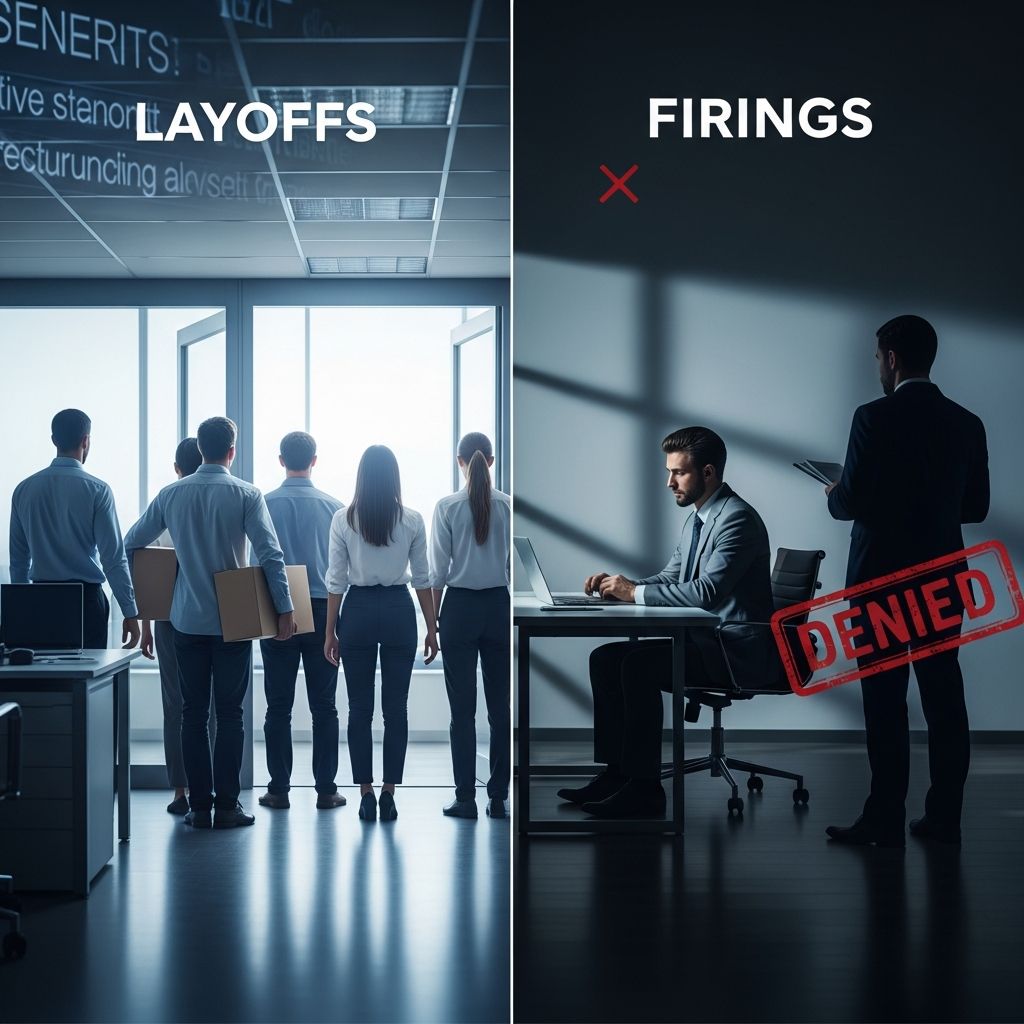
Understanding Employment Termination: Two Distinct Paths to Job Loss
Losing a job ranks among life’s most challenging experiences, yet not all job losses carry the same weight or consequences. When employment ends, the circumstances surrounding that departure create vastly different legal, financial, and professional outcomes. The distinction between being laid off and being fired fundamentally shapes your immediate financial situation, your eligibility for support programs, and your prospects for finding future employment. Many employees use these terms interchangeably, but doing so obscures important differences that directly impact their rights, benefits, and career trajectory.
The primary distinction centers on responsibility and control. A layoff occurs when an employer initiates termination due to business decisions entirely outside an employee’s influence—such as organizational restructuring, cost reduction measures, facility closures, or market downturns. Conversely, being fired represents termination stemming from an employee’s performance deficiencies, behavioral issues, or policy violations. This fundamental distinction ripples through multiple dimensions of employment law, financial compensation, and professional reputation.
The Nature of Layoffs: Business-Driven Separations
Layoffs represent involuntary employment terminations initiated by employers for reasons unrelated to individual employee performance or conduct. These separations occur when companies make strategic business decisions that inevitably affect workforce size or composition. Understanding what constitutes a layoff helps employees recognize when they may be impacted by broader organizational changes.
Common Catalysts for Layoffs
Several business circumstances typically trigger layoffs. Economic downturns force companies to reduce expenses, and workforce reduction becomes a primary cost-cutting strategy. Organizational restructuring—including mergers, acquisitions, or management changes—often leads to position eliminations and role consolidations. Technological advancement and automation can render certain positions redundant, particularly in manufacturing and administrative functions. Market shifts may cause companies to pivot away from certain business segments, eliminating associated jobs. Additionally, facility closures, whether temporary or permanent, necessitate layoffs of workers at those locations. Plant shutdowns and relocation decisions represent particularly visible layoff triggers affecting large employee groups simultaneously.
Key Characteristics of Layoff Situations
Layoffs share several defining characteristics that distinguish them from performance-based terminations. The affected employee typically bears no responsibility for the termination—the separation occurs through no fault of their own. The layoff decision applies to multiple employees or entire departments rather than targeting individual workers for personal reasons. Employers often provide advance notice, though timing varies based on company policy and legal requirements. The separation is presented as a business necessity rather than a reflection of the employee’s value or capabilities. In many cases, employers attempt to ease the transition through severance packages, outplacement assistance, and extended benefits coverage.
Being Fired: Performance and Conduct-Based Terminations
Being fired differs fundamentally from layoffs because the termination stems directly from the employee’s actions, choices, or capabilities. When an employer fires someone, they are responding to performance deficiencies, behavioral problems, or policy violations serious enough to warrant immediate separation. Understanding the reasons employers resort to firing helps clarify why this type of termination carries different implications than layoffs.
Reasons Employees Get Fired
Performance issues rank among the most common firing triggers. Employees who consistently fail to meet job expectations despite receiving feedback, warnings, and opportunities for improvement may face termination. This includes missing deadlines, producing substandard work quality, failing to achieve sales targets, or demonstrating insufficient competency in required skills. Behavioral problems constitute another major category, encompassing insubordination, dishonesty, workplace harassment, violence, theft, or creating hostile work environments. Attendance failures—chronic absenteeism, excessive tardiness, or unauthorized leave—can lead to firing, particularly when the employee ignores warnings and performance improvement plans. Policy violations ranging from minor infractions repeatedly ignored to serious breaches like theft or safety violations provide grounds for termination. Some firings result from substance abuse issues, particularly when they impact job performance or workplace safety. In rare cases, employers may fire employees for off-duty conduct that severely damages the company’s reputation or public trust.
The Progressive Discipline Approach
Most employers follow progressive discipline procedures before firing someone, though this isn’t universally required. Typically, an employee receives an initial verbal warning for minor infractions or performance issues. If behavior doesn’t improve, a written warning follows, often accompanied by a performance improvement plan specifying expectations and timelines. Continued problems may lead to suspension or demotion. Final termination follows after the employee fails to meet improvement plan requirements. However, employers may skip these steps and fire immediately for serious misconduct such as theft, violence, or gross insubordination. Understanding this progression helps employees recognize when their employment may be at serious risk.
Compensation Differences: Severance and Benefits
The financial consequences of layoffs versus firings diverge significantly. These differences reflect legal frameworks treating involuntary separations due to business decisions differently from performance-based terminations.
| Compensation Element | Laid Off Employees | Fired Employees |
|---|---|---|
| Severance Pay | Commonly offered; amount varies by tenure and employer policy | Rarely provided unless specified in employment contract |
| Unemployment Benefits | Typically eligible regardless of reason | Eligibility depends on termination cause; misconduct disqualifies many |
| Health Insurance Continuation | COBRA coverage available; employer may subsidize briefly | COBRA available but employee pays full premium |
| Retirement Contributions | Employer contributions through separation date preserved | May forfeit unvested portions if termination for cause |
| Final Paycheck | Includes accrued vacation; may include payment for unused time | Includes accrued vacation per state law; may lose bonuses or commissions |
Severance Packages for Laid-Off Workers
When companies lay off employees, they frequently offer severance packages acknowledging the separation results from business decisions rather than employee failure. Severance typically includes a lump sum payment based on tenure—often calculated as one or two weeks’ pay per year of service. Some employers extend health insurance coverage for several months beyond separation. Outplacement services helping employees find new positions represent another common benefit. Severance packages often require employees to sign release agreements waiving claims against the company in exchange for receiving the benefits. While severance isn’t legally required in most cases, companies offer it to ease transitions and reduce potential legal exposure.
Limited Compensation for Fired Employees
Fired employees typically receive no severance pay and may only receive their final paycheck including accrued paid time off to the extent required by state law. Some employment contracts specify severance amounts even for termination for cause, but these represent exceptions rather than the norm. Fired employees often forfeit bonuses, commissions, and stock options still vesting at the time of termination. The primary financial consequence extends beyond immediate compensation to unemployment benefits eligibility, as termination for serious misconduct can disqualify workers from collecting unemployment.
Unemployment Benefits: Critical Eligibility Differences
Perhaps the most consequential difference between layoffs and firings concerns unemployment insurance eligibility. Unemployment benefits provide crucial financial support during job transitions, making eligibility status critically important.
Laid-off employees are almost universally eligible for unemployment compensation. Since the separation results from employer business decisions rather than employee actions, it meets the legal standard for involuntary job loss qualifying for benefits. This eligibility typically applies regardless of how many times the employee was laid off or how recently they separated from the company.
Fired employees face substantially different circumstances. When termination results from performance issues, most states consider this grounds for unemployment benefits because the employee attempted to meet job requirements, even if unsuccessfully. However, termination for misconduct—willful violations of company policy, dishonesty, insubordination, or behavior demonstrating disregard for the employer’s interests—typically disqualifies workers from benefits. The legal threshold for misconduct is substantial; minor policy violations or occasional performance lapses rarely trigger benefit disqualification. However, serious breaches like theft, violence, or repeated refusal to follow reasonable instructions usually result in benefit denial.
The difference in benefits eligibility can amount to thousands of dollars. A worker receiving unemployment at the average state rate for six months might collect $6,000 to $12,000 in benefits, a substantial cushion during job transition periods. This financial support significantly reduces the pressure to accept unsuitable positions quickly.
Career Impact and Professional Reputation
Beyond immediate financial consequences, the termination type profoundly affects future employment prospects. This dimension often matters more long-term than severance or unemployment benefits.
Layoffs and Job Search Challenges
Employees who were laid off can explain their job loss as a result of business decisions entirely outside their control. This narrative resonates with potential employers because layoffs are routine business occurrences affecting competent employees through no fault of their own. Workers can confidently state they were laid off when asked about prior separations. Background checks and reference calls typically confirm the layoff status without raising concerns about the employee’s capabilities or reliability. The layoff actually generates some sympathy, as hiring managers understand that business decisions sometimes eliminate otherwise desirable positions. This straightforward explanation allows job seekers to focus conversations on their qualifications and interest in new roles rather than defending termination circumstances.
Firing’s Lasting Professional Consequences
Being fired creates substantially more complications for future employment. When potential employers learn about a firing, they immediately question whether performance or behavioral problems will recur in the new role. Hiring managers worry about the underlying reasons: Was the termination for poor work quality? Attendance problems? Interpersonal conflicts? Integrity issues? Even when the specific reason seems minor or situational, the firing itself raises questions about judgment, reliability, or capability. Some employers won’t hire anyone who was previously fired, viewing it as too risky. Others will hire fired employees but may offer lower compensation, start them on extended probationary periods, or scrutinize their performance more closely than other new hires.
Reference Implications
References represent another critical difference. Laid-off employees can typically use former managers as references who will provide positive or neutral confirmations without raising concerns. Fired employees often cannot use their most recent manager as a reference because that reference might disclose the firing, making it more difficult for the candidate to control the narrative. Some fired employees use other supervisors or colleagues, but gaps in reference coverage raise questions about what happened at the final position. Employers conducting background checks can discover firing history through employment verification, making it impossible to hide the termination.
How to Discuss Your Termination with Future Employers
If you’ve been laid off, describe the separation accurately and briefly. You might say: “The company went through a reorganization that eliminated my position,” or “Our facility closed due to the company’s business restructuring.” This clear explanation requires no further elaboration and allows the conversation to move forward. Emphasize how you’ve used the transition time—developing new skills, exploring different roles, or networking in your industry.
If you were fired, focus on lessons learned and growth since the termination. Rather than using the word “fired,” consider stating you were “terminated” or simply that “we mutually decided to part ways.” Then briefly explain: “I learned important lessons about time management” or “That experience helped me understand the importance of following established procedures.” Acknowledge what led to the separation without making excuses, demonstrate how you’ve changed, and redirect to your current qualifications and enthusiasm for the new role. If the termination was truly unfair or resulted from circumstances beyond your control, briefly explain those circumstances without appearing defensive.
Special Considerations: When Companies Reframe Firings as Layoffs
Some companies blur the distinction between layoffs and firings for humane or legal reasons. Rather than formally firing an employee, a company might offer a voluntary exit package—essentially a layoff—to an underperforming employee. This approach gives the employee severance benefits and unemployment eligibility they wouldn’t receive from a firing while allowing the company to separate without formal discipline. The employee receives layoff benefits despite underlying performance issues. From the employee’s perspective, this creates a much better outcome: severance, unemployment eligibility, and a clean separation they can discuss with future employers. Employers making this choice believe it’s more ethical and reduces potential legal disputes. The practice reflects recognition that clear layoff versus firing distinctions sometimes matter more for employee dignity and outcomes than the underlying circumstances.
Key Distinctions at a Glance
The essential differences between layoffs and firings can be summarized across several dimensions. In terms of cause, layoffs result from business decisions while firings result from employee actions. Responsibility lies with the company for layoffs and with the employee for firings. Notice periods are typically provided for layoffs but may be absent for firings. Severance packages are common for layoffs but rare for firings. Unemployment eligibility is presumed for layoffs and uncertain for firings depending on misconduct determination. Future employment prospects are relatively unaffected by layoffs but may be significantly impacted by firings. Finally, the emotional and professional impact differs substantially, with layoffs viewed as business necessities and firings reflecting individual failure.
Frequently Asked Questions
Q: Can I be fired without warning or performance improvement plans?
A: Yes, employers can terminate employees for cause immediately without progressive discipline, particularly for serious misconduct such as theft, violence, or gross insubordination. However, most employers use progressive discipline for performance issues to document the problems and provide improvement opportunities.
Q: If I was laid off, should I mention severance in job interviews?
A: Avoid volunteering information about severance packages. If asked directly about your financial situation, you can mention severance briefly without details. Focus interviews on your skills and value to the prospective employer rather than financial matters from previous employment.
Q: Can an employer challenge my unemployment claim if I was laid off?
A: Employers can challenge unemployment claims, but successfully contesting a layoff claim is difficult because the burden of proof requires demonstrating employee misconduct or voluntary quitting. Layoffs due to business decisions typically result in approved unemployment benefits.
Q: How long do layoffs and firings remain visible to future employers?
A: While layoffs and firings don’t formally “expire,” their impact diminishes over time as you build new employment history. After two or three years of solid performance at subsequent jobs, previous terminations become less concerning to hiring managers. Some employers may conduct background checks covering seven to ten years, but focus on recent history.
Q: Should I list a job where I was fired on my resume?
A: Yes, you should list all employment periods on your resume. Omitting jobs creates gaps that raise more questions than brief entries would. Include the company name, your title, and employment dates. Provide truthful explanations if asked during interviews, but don’t volunteer details on the resume itself.
Q: Can I negotiate severance if I’m being laid off?
A: Many companies have standard severance formulas, but negotiation is possible, particularly for senior positions. You might negotiate additional severance, extended benefits coverage, outplacement services, or favorable references in exchange for signing release agreements. It’s worth asking, especially if the layoff seems arbitrary or unexpected.
References
- Laid Off vs. Being Fired: Implications for Unemployment Cost Management — Experian Employer Services. 2024. https://www.experian.com/blogs/employer-services/laid-off-vs-fired-implications-for-unemployment-cost-management/
- Being Laid Off vs. Getting Fired — Corporate Finance Institute. 2024. https://corporatefinanceinstitute.com/resources/career/being-laid-off-vs-getting-fired/
- The Difference Between Being Laid Off and Being Fired — Setyan Law. 2024. https://setyanlaw.com/laid-off-vs-being-fired/
- Laid Off vs Terminated: What Are The Differences? — INTOO. 2024. https://www.intoo.com/us/blog/terminated-vs-laid-off-best-approaches/
- Laid Off vs. Fired: The Differences and Your Employees’ Rights — CareerMinds. 2024. https://careerminds.com/blog/layoff-vs-fired

Medha Deb is an editor with a master's degree in Applied Linguistics from the University of Hyderabad. She believes that her qualification has helped her develop a deep understanding of language and its application in various contexts. Medha specializes in the areas of beauty, health, sports, and wellness and is committed to ensuring that the content on the website is…