
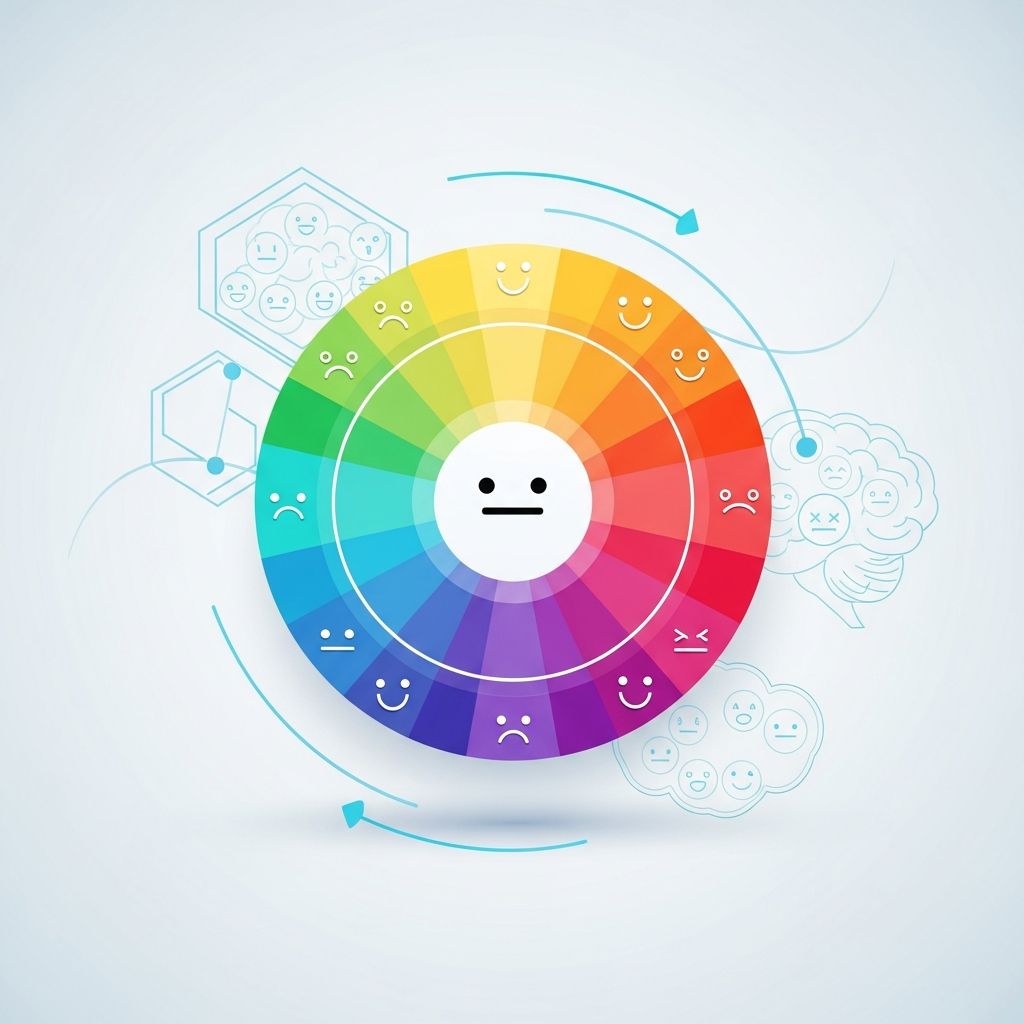
Understanding the Emotion Wheel
The emotion wheel is more than just a colorful chart of feelings—it’s a practical, research-informed tool designed to help people make sense of their inner emotional world. At its core, the wheel organizes emotions into a structured, visual format that makes it easier to move from vague, overwhelming sensations to precise, nameable feelings. This clarity is essential for emotional regulation, self-understanding, and healthier relationships.
While several versions exist, most emotion wheels share a common design: a central hub of broad, primary emotions, with increasingly specific feelings radiating outward. This layered structure mirrors how emotions actually unfold in real life—starting with a general sense of discomfort or pleasure, then branching into more nuanced states like frustration, resentment, hopefulness, or guilt. By using the wheel, individuals can slow down their emotional reactions and gain insight into what they’re truly experiencing.
Why Emotional Literacy Matters
Many people struggle to describe how they feel beyond simple labels like “good,” “bad,” “stressed,” or “fine.” This limited emotional vocabulary can make it harder to understand oneself, communicate with others, and respond effectively to difficult situations. Emotional literacy—the ability to recognize, name, and understand emotions—is a foundational skill for mental health and resilience.
Research in psychology shows that people who can accurately identify their emotions are better at:
- Regulating intense feelings
- Reducing anxiety and rumination
- Improving decision-making under stress
- Building stronger, more empathetic relationships
The emotion wheel directly supports emotional literacy by providing a shared language for emotions. Instead of staying stuck in a fog of “I feel awful,” someone can pinpoint whether they’re feeling overwhelmed, ashamed, disappointed, or betrayed. That small shift in precision can dramatically change how they respond to the situation.
How the Emotion Wheel Works
Most emotion wheels follow a concentric design, with emotions arranged in layers from general to specific. Here’s how it typically functions:
1. Core Emotions at the Center
The innermost circle usually contains a small set of primary emotions such as:
- Anger
- Fear
- Sadness
- Joy
- Surprise
- Disgust
These are considered fundamental emotional states that appear across cultures and are often linked to basic survival and social functions. They serve as anchor points for further exploration.
2. Secondary and Tertiary Emotions
As you move outward from the center, the wheel branches into more specific emotions. For example:
- Under anger: frustration, irritation, resentment, rage
- Under fear: anxiety, nervousness, panic, dread
- Under sadness: grief, loneliness, disappointment, shame
- Under joy: contentment, excitement, pride, gratitude
This layered structure helps users move from a broad feeling (“I’m upset”) to a more accurate description (“I’m feeling resentful because I feel taken for granted”).
3. Intensity and Blending
In some models, emotions closer to the center represent more intense or primal states, while those on the outer edges are milder or more complex. Additionally, emotions that sit between core categories often represent blends—such as feeling both excited and anxious (a mix of joy and fear) before a big presentation.
Practical Uses of the Emotion Wheel
The emotion wheel isn’t just a theoretical concept; it has real-world applications in daily life, therapy, and personal development.
1. Enhancing Self-Awareness
When emotions feel overwhelming, the wheel can serve as a grounding tool. By asking, “Which core emotion am I closest to right now?” and then exploring the more specific options, individuals can:
- Identify the root of their discomfort
- Distinguish between primary emotions (e.g., sadness) and secondary reactions (e.g., irritability)
- Notice patterns in how they respond to stress, conflict, or change
2. Improving Emotional Regulation
Once an emotion is clearly named, it becomes easier to manage. For example:
- Recognizing that you’re feeling anxious rather than just “stressed” can lead to targeted strategies like deep breathing or cognitive reframing.
- Seeing that anger is masking underlying hurt or insecurity can shift the focus from blame to self-compassion.
Therapists often use the wheel to help clients pause, label, and then choose a response rather than reacting impulsively.
3. Strengthening Communication
In relationships, vague emotional expressions like “I’m fine” or “You always do this” often lead to misunderstandings. The emotion wheel helps people communicate more clearly by:
- Providing specific language to describe feelings
- Reducing defensiveness by focusing on internal experience rather than blame
- Helping partners, family members, or colleagues understand each other’s emotional states
For example, saying “I feel disappointed and a bit lonely when we don’t spend time together” is more constructive than “You never make time for me.”
4. Supporting Therapy and Coaching
Mental health professionals and coaches frequently incorporate the emotion wheel into sessions because it:
- Helps clients articulate complex emotional experiences
- Clarifies the difference between thoughts, behaviors, and emotions
- Supports trauma processing by identifying buried or suppressed feelings
- Tracks emotional patterns over time, which can inform treatment planning
5. Building Emotional Intelligence in Children
Simplified versions of the emotion wheel are widely used in schools and parenting to help children:
- Recognize and name their feelings
- Understand that all emotions are valid
- Develop empathy by seeing how others might feel
- Use words instead of behaviors (like tantrums or withdrawal) to express distress
Teaching emotional vocabulary early lays the foundation for better mental health and social skills throughout life.
How to Use the Emotion Wheel in Daily Life
Integrating the emotion wheel into everyday routines doesn’t require special training—just curiosity and a willingness to pause and reflect.
1. Check-In Practice
Set aside a few minutes each day (morning, evening, or during a break) to ask:
- What am I feeling right now?
- Which core emotion is closest to this feeling?
- Can I find a more specific word on the wheel that fits?
Over time, this practice builds emotional awareness and reduces the tendency to ignore or suppress feelings.
2. Journaling with the Wheel
Pair the emotion wheel with journaling by:
- Choosing an emotion from the wheel and writing about when you’ve felt it recently
- Exploring what triggered it and how it influenced your thoughts and actions
- Noticing whether certain emotions come up repeatedly in specific situations
This can reveal patterns related to work stress, relationships, self-esteem, or unmet needs.
3. Using It in Conflict
During disagreements, emotions can escalate quickly. The wheel can help by:
- Pausing to identify your own emotion before responding
- Asking the other person, “What emotion are you closest to right now?”
- Shifting the conversation from accusations (“You’re being unfair”) to emotional honesty (“I feel disrespected and frustrated”)
This approach fosters empathy and reduces defensiveness, making resolution more likely.
4. Teaching Others
Sharing the emotion wheel with family, friends, or team members can create a shared emotional language. In workplaces, for example, it can support psychological safety by normalizing emotional expression and reducing stigma around stress, anxiety, or burnout.
Benefits of Regular Emotion Wheel Use
Consistently using the emotion wheel can lead to several long-term benefits:
| Benefit | Description |
|---|---|
| Greater self-awareness | Improved ability to recognize and understand your emotional patterns. |
| Better emotional regulation | Reduced impulsivity and more thoughtful responses to stress. |
| Stronger relationships | Clearer communication and deeper emotional connection with others. |
| Enhanced decision-making | Ability to separate emotional reactions from rational choices. |
| Reduced emotional overwhelm | Less confusion and paralysis when dealing with intense feelings. |
Common Misconceptions About the Emotion Wheel
Despite its usefulness, some people misunderstand what the emotion wheel is and how it should be used.
1. It’s Not About “Fixing” Emotions
The goal isn’t to eliminate “negative” emotions or force yourself into “positive” ones. Instead, the wheel helps you understand and accept all emotions as valid signals about your needs, values, and experiences.
2. It’s Not a One-Size-Fits-All Tool
Different versions of the wheel exist (Plutchik’s model, Geneva wheel, simplified children’s versions), and not every emotion will resonate with everyone. The key is to find a version that feels helpful and adapt it to your personal and cultural context.
3. Naming Emotions Isn’t the End Goal
While labeling feelings is important, it’s only the first step. The real value comes from using that awareness to reflect on triggers, needs, and behavioral patterns, and then making intentional choices about how to respond.
Frequently Asked Questions
What is the emotion wheel used for?
The emotion wheel is used to help people identify, understand, and communicate their emotions more clearly. It supports emotional awareness, regulation, and healthier relationships in personal, professional, and therapeutic settings.
Who created the emotion wheel?
The most well-known version is based on the work of psychologist Robert Plutchik, who proposed a model of eight primary emotions and their combinations. Other versions, like the feelings wheel by Dr. Gloria Willcox, adapt this concept into practical tools for emotional literacy.
Can the emotion wheel help with anxiety or depression?
Yes. By helping individuals name and explore their emotions, the wheel can reduce the intensity of overwhelming feelings and support therapeutic work. It’s often used alongside cognitive-behavioral strategies, mindfulness, and other evidence-based approaches.
How can I use the emotion wheel with children?
Use a simplified, child-friendly version with pictures and basic emotion words. Encourage kids to point to how they feel, talk about when they’ve felt that way, and explore what helps them feel better. This builds emotional vocabulary and coping skills from an early age.
Is the emotion wheel backed by science?
Yes. The underlying concepts—such as the universality of basic emotions and the importance of emotional labeling—are supported by decades of psychological research. Tools like the emotion wheel operationalize these ideas into practical, accessible formats for everyday use.
References
- Plutchik, R. (1980). A general psychoevolutionary theory of emotion — In R. Plutchik & H. Kellerman (Eds.), Emotion: Theory, research, and experience. Academic Press.
- Ekman, P., Friesen, W. V., & Ellsworth, P. (1972). Emotion in the human face — Cambridge University Press.
- Willcox, G. (n.d.). The Feelings Wheel — Positive Psychology Program. https://positivepsychology.com/emotion-wheel/

- Integrated M.A. in Applied Linguistics, University of Hyderabad
- 5+ years in editorial, instructional, SEO, and research-based writing
Sneha is a relationships and lifestyle writer with a strong foundation in applied linguistics and certified training in relationship coaching. She brings over five years of writing experience to theskillvault, crafting thoughtful, research-driven content that empowers readers to build healthier relationships, boost emotional well-being, and embrace holistic living. Her writing and insights reflect the belief that beauty, happiness, and wellness…