
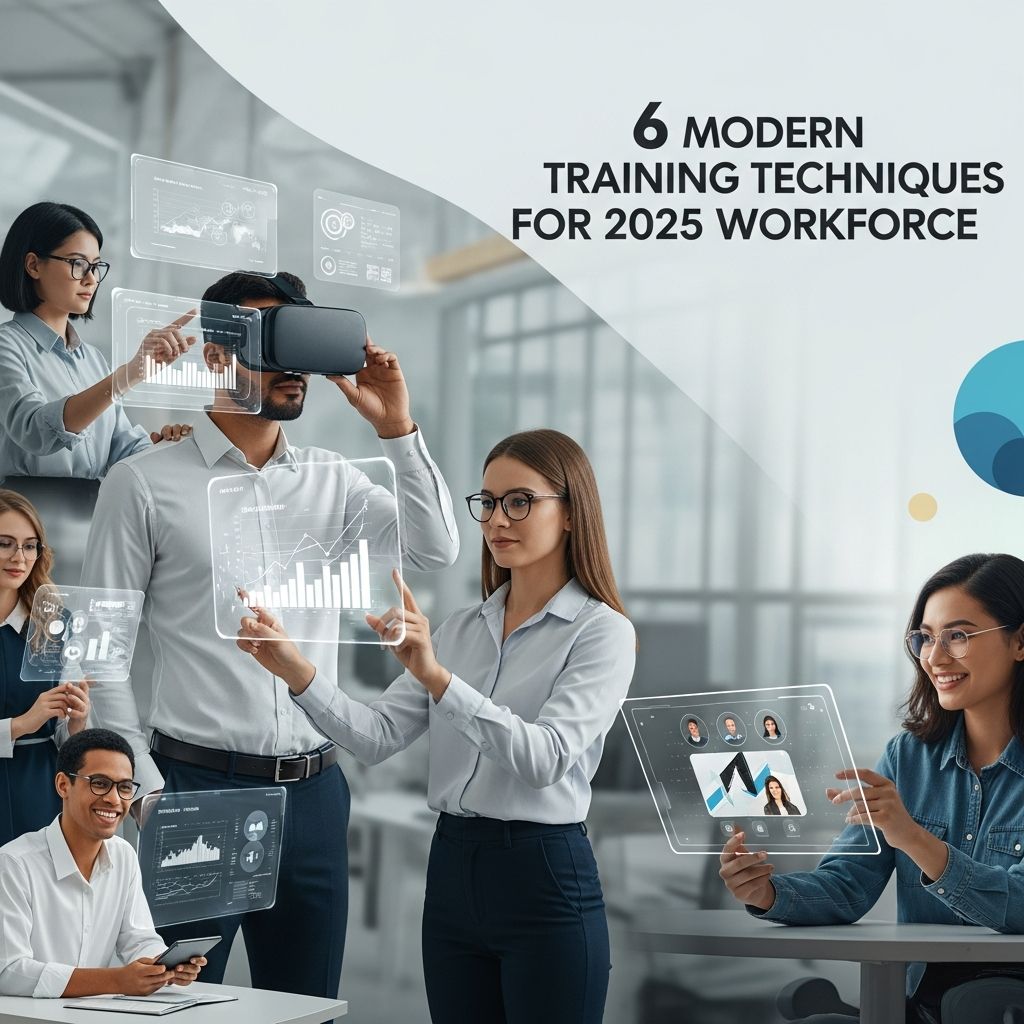
Transforming Corporate Learning in 2025
As organizations adapt to hybrid work, digital transformation, and rapidly changing skill demands, traditional training models are no longer enough. Employees expect learning experiences that are relevant, flexible, and aligned with real-world challenges. The most effective training strategies now combine technology, behavioral science, and human-centered design to create lasting impact.
This article explores six modern training techniques that are redefining how companies develop talent. These approaches go beyond static e-learning modules and one-size-fits-all workshops, focusing instead on personalization, interactivity, and continuous growth.
1. Adaptive Learning Pathways
One of the biggest limitations of conventional training is that it treats all learners the same, regardless of prior knowledge or learning speed. Adaptive learning pathways solve this by using data and intelligent systems to tailor content dynamically.
Instead of a fixed curriculum, learners receive content that adjusts based on their performance, preferences, and role requirements. If someone struggles with a concept, the system offers additional explanations, practice exercises, or alternative formats. If they master a topic quickly, it accelerates them to more advanced material.
How It Works
- Initial assessment identifies baseline knowledge and skill gaps.
- AI algorithms recommend next steps based on performance and goals.
- Content difficulty, format (video, text, quiz), and sequence are adjusted in real time.
- Progress is continuously monitored, and pathways are refined over time.
Benefits for Organizations
- Higher completion rates due to relevance and appropriate challenge level.
- Improved knowledge retention by focusing on areas where learners need the most support.
- Efficient use of training budgets by avoiding redundant or overly basic content.
- Scalability across large, diverse workforces with varying skill levels.
2. Microlearning for Just-in-Time Development
Modern employees are time-constrained and often learn best in short, focused bursts. Microlearning delivers training in small, targeted units—typically 3 to 10 minutes—that address specific skills or knowledge points.
These bite-sized modules can cover anything from a new software feature to a customer service script or compliance rule. Because they’re concise and easy to consume, microlearning fits naturally into the workday without requiring long blocks of time.
Common Formats
- Short explainer videos
- Interactive checklists and quick-reference guides
- Mini-quizzes and knowledge checks
- Audio snippets for on-the-go learning
- Push notifications with tips or reminders
Why It’s Effective
- Reduces cognitive overload by focusing on one concept at a time.
- Supports learning in the flow of work, especially for frontline and remote teams.
- Encourages repeated exposure, which strengthens long-term memory.
- Can be easily updated as processes or tools change.
3. Immersive Simulation and Scenario-Based Practice
People learn best by doing, but many roles involve high-stakes situations where mistakes are costly. Immersive simulations and scenario-based training allow employees to practice in realistic, risk-free environments.
These experiences can range from browser-based branching scenarios to full VR/AR environments, depending on the complexity and safety requirements of the role. Learners make decisions, see the consequences, and receive feedback—all within a controlled setting.
Use Cases Across Industries
| Industry | Application |
|---|---|
| Healthcare | Emergency response drills, patient interaction practice |
| Retail & Hospitality | Handling difficult customers, upselling techniques |
| Manufacturing | Equipment operation, safety procedures |
| Finance & Compliance | Anti-fraud scenarios, regulatory decision-making |
| Leadership | Conflict resolution, performance feedback conversations |
Key Advantages
- Builds confidence by allowing repeated practice in realistic contexts.
- Improves decision-making under pressure through experiential learning.
- Provides immediate, contextual feedback that reinforces correct behavior.
- Reduces on-the-job errors and safety incidents by preparing employees in advance.
4. Social and Collaborative Learning Models
Learning is not a solitary activity. Social and collaborative learning leverages peer interaction, discussion, and shared problem-solving to deepen understanding and build a learning culture.
These models move beyond passive content consumption to active participation, where employees learn from each other through discussions, group projects, mentoring, and peer feedback.
Designing Effective Collaborative Experiences
- Structured cohorts with clear timelines and shared goals.
- Discussion forums or channels dedicated to specific topics or challenges.
- Group assignments that require collaboration and knowledge sharing.
- Peer review and feedback mechanisms to build critical thinking and communication skills.
- Regular live sessions (virtual or in-person) for Q&A, reflection, and application.
Impact on Engagement and Culture
- Increases accountability and motivation through shared progress.
- Strengthens team cohesion and cross-functional relationships.
- Encourages knowledge transfer and reduces silos across departments.
- Supports continuous learning by making it a visible, ongoing part of work life.
5. Gamified Learning Experiences
Gamification applies game design elements—such as points, levels, challenges, and leaderboards—to non-game contexts like training. When done well, it transforms learning from a chore into an engaging, motivating experience.
Effective gamification is not just about competition; it’s about creating a sense of progress, mastery, and achievement that aligns with business goals.
Core Gamification Elements
- Progression: Clear levels or stages that learners advance through.
- Feedback: Immediate recognition of correct answers or behaviors.
- Challenges: Time-bound tasks or problem-solving scenarios.
- Rewards: Badges, certificates, or tangible incentives for milestones.
- Competition & Collaboration: Leaderboards for individuals or teams, or cooperative missions.
Where Gamification Delivers Value
- Onboarding programs to increase completion and engagement.
- Compliance training to make dry content more interactive.
- Sales and customer service training to practice scripts and techniques.
- Continuous learning initiatives to encourage regular participation.
6. Learning in the Flow of Work
Traditional training often happens in isolation—before a role, after a problem, or during dedicated off-site sessions. Learning in the flow of work integrates development directly into daily tasks and tools.
This approach delivers support exactly when and where employees need it, reducing the gap between learning and application.
Practical Implementation Strategies
- In-app guidance and tooltips within software platforms (e.g., CRM, ERP, HR systems).
- Contextual help embedded in workflows, such as step-by-step walkthroughs.
- Just-in-time microlearning modules triggered by specific actions or roles.
- AI-powered assistants that answer questions or suggest relevant resources.
- Performance support tools like checklists, templates, and decision trees.
Business Benefits
- Reduces time to proficiency for new hires and role changes.
- Minimizes errors and rework by providing real-time guidance.
- Supports continuous improvement by making learning a seamless part of work.
- Increases adoption of new systems and processes by reducing friction.
Choosing the Right Techniques for Your Organization
No single method works for every team or objective. The key is to align training techniques with your specific goals, audience, and constraints.
Key Considerations
- Learning Objectives: Are you building foundational knowledge, practicing complex skills, or changing behaviors?
- Learner Profile: What is their role, experience level, and preferred learning style?
- Work Environment: Are teams remote, hybrid, or on-site? How much time can they dedicate to training?
- Technology Infrastructure: Do you have access to LMS, AI tools, VR/AR, or collaboration platforms?
- Business Impact: What outcomes matter most—productivity, compliance, customer satisfaction, or innovation?
Blending Techniques for Maximum Impact
Most organizations benefit from a blended approach. For example:
- Use adaptive pathways for onboarding, with microlearning for ongoing skill updates.
- Combine immersive simulations with social learning for leadership development.
- Integrate gamification into compliance training, supported by in-the-flow support tools.
Frequently Asked Questions
What is the most effective training method for remote teams?
For remote teams, a combination of microlearning, social/collaborative learning, and learning in the flow of work tends to be most effective. These approaches support flexibility, engagement, and practical application without requiring long synchronous sessions.
How can I measure the success of these training techniques?
Success can be measured through a mix of quantitative and qualitative indicators, such as completion rates, assessment scores, time to proficiency, performance metrics (e.g., sales, error rates), employee feedback, and manager observations. The most meaningful metrics are those tied directly to business outcomes.
Do I need expensive technology to implement these methods?
Not necessarily. While some techniques (like VR) require specialized tools, many can be implemented with existing platforms. Microlearning, social learning, and in-the-flow support can often be delivered through standard LMS, collaboration tools, and simple content design. Start small, test, and scale based on results.
How do I get leadership buy-in for innovative training approaches?
Frame the conversation around business impact—productivity, risk reduction, talent retention, and customer experience. Pilot a small initiative with clear goals and metrics, then share results to demonstrate value. Align training initiatives with strategic priorities like digital transformation or skills development.
Can these techniques work for non-technical roles?
Absolutely. These methods are effective for all roles, from frontline staff to executives. The content and context change, but the principles of engagement, relevance, and practice remain the same. For example, gamification can improve customer service skills, and simulations can prepare managers for difficult conversations.
References
- Learning in the Flow of Work — Josh Bersin Academy. 2023. https://joshbersin.com/reports/learning-in-the-flow-of-work
- Adaptive Learning: An Overview — U.S. Department of Education, Office of Educational Technology. 2022. https://tech.ed.gov/
- Gamification in Corporate Training — Deloitte Insights. 2023. https://www2.deloitte.com/insights

Medha Deb is an editor with a master's degree in Applied Linguistics from the University of Hyderabad. She believes that her qualification has helped her develop a deep understanding of language and its application in various contexts. Medha specializes in the areas of beauty, health, sports, and wellness and is committed to ensuring that the content on the website is…