
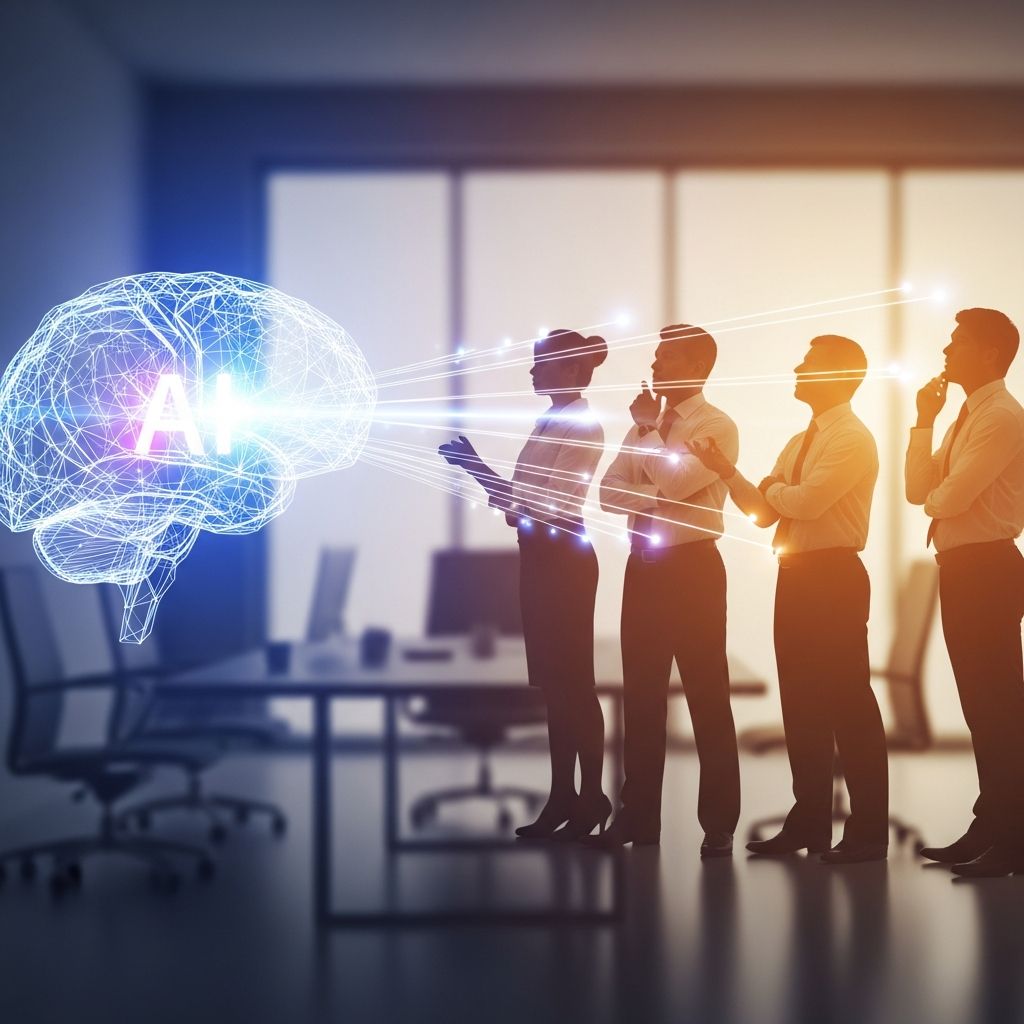
AI-powered coaching companions are emerging as a powerful way for organizations to extend the impact of human coaching, deliver continuous support between sessions, and offer every employee a personalized development experience. Drawing on advances in conversational AI, people analytics, and behavioral science, these tools are reshaping how companies approach learning, performance, and engagement.
Instead of replacing human coaches, AI companions act as an intelligent layer around coaching programs: they keep momentum alive between live conversations, provide just-in-time guidance, and help employees practice critical skills in a safe, private environment. This combination of human insight and AI augmentation is at the core of the next generation of digital coaching platforms.
The New Era of Digital Coaching
Traditional coaching has long been limited to a small segment of leaders due to cost, scheduling constraints, and geographic dispersion. Digital platforms reduced some of these barriers by connecting employees and coaches virtually, but gaps remained between sessions and across time zones.
AI coaching companions address these constraints by providing:
- On-demand access to a conversational coach whenever employees need support.
- Personalized guidance tailored to role, goals, and behavior patterns.
- Scalable experiences that can reach thousands of employees consistently and cost-effectively.
For organizations investing heavily in leadership and talent development, AI-driven coaching layers help transform episodic learning into continuous, embedded growth.
How AI Coaching Companions Work
Modern AI coaching companions combine large language models, proprietary coaching frameworks, and contextual data from the organization. They are often integrated into tools employees already use—such as messaging platforms or learning systems—to minimize friction and increase adoption.
Core Capabilities Behind the Scenes
- Conversational AI interprets natural language queries and responds with context-aware guidance, prompts, or exercises.
- Behavioral data and learning history shape recommendations, nudges, and examples to each user’s objectives.
- Coaching models encode evidence-based approaches from leadership development, positive psychology, and communication science.
- Security and privacy controls protect user data while enabling aggregate insights for HR and learning leaders.
Typical Employee Interactions
Employees can use an AI coaching companion for many micro-scenarios that arise between formal coaching sessions, including:
- Clarifying how to apply insights from a recent coaching or training session to a real situation.
- Practicing a difficult conversation through role play before meeting a manager, peer, or client.
- Receiving tailored learning resources and exercises mapped to their development plan.
- Reflecting on progress against goals with structured prompts and behavior tracking.
Key Benefits for Employees and Organizations
AI coaching companions deliver value at multiple levels: individual employees, managers, coaches, HR, and the broader organization.
| Stakeholder | Primary Benefits |
|---|---|
| Employees | 24/7 support, personalized learning, safe practice space, faster skill growth. |
| Managers | Help with feedback, team communication, and action planning based on engagement data. |
| Coaches | Better-prepared coachees, richer session insights, more time for deep work. |
| HR & L&D | Scalable programs, more consistent experiences, data-driven decisions about talent. |
| Organization | Higher engagement, better retention, stronger leadership bench, AI fluency across workforce. |
1. Continuous Learning and Just-in-Time Support
Research on workplace learning shows that skills are best retained when people apply and revisit them in real contexts rather than through one-off events. AI companions encourage this by transforming learning into short, frequent touchpoints:
- Micro-reflections at the end of the day.
- Guided problem-solving when new challenges arise.
- Reminders to practice new behaviors over time.
This cadence helps employees solidify habits and transfer skills into their daily workflows.
2. Practicing Critical Conversations Safely
Many employees struggle not with knowing what to do, but with how to say it—especially in high-stakes interpersonal moments. AI coaching companions can simulate challenging scenarios so employees can rehearse language, tone, and structure before real conversations.
- Delivering constructive feedback to a peer.
- Escalating a concern to a senior leader.
- Navigating conflict within a team.
- Managing performance discussions with empathy and clarity.
This combination of real-time guidance and low-risk practice builds confidence and improves communication quality across the organization.
3. Personalized Development at Scale
Historically, personalized coaching was reserved for senior executives. AI-powered tools change that equation by enabling tailored guidance across the entire workforce, regardless of location or level.
Key advantages include:
- Equity: Every employee can access quality developmental support, not just high-potential groups.
- Localization: Support in multiple languages, local examples, and cultural nuances.
- Consistency: Shared frameworks and messages aligned with company values and competency models.
4. Data-Driven Insights for Talent and Culture
While individual conversations remain private, aggregated and anonymized patterns can inform HR and business leaders about where employees need more support. Advanced platforms synthesize signals from coaching interactions, engagement surveys, and performance data to reveal trends.
- Common capability gaps (e.g., feedback, change leadership, cross-cultural collaboration).
- Hot spots where engagement or psychological safety may be at risk.
- Topics that require additional training, communication, or leadership attention.
When combined with traditional HR analytics, this coaching intelligence helps organizations design more targeted, evidence-based interventions.
AI Coaching and Employee Experience
Employee experience encompasses how people feel, perform, and grow at work. AI coaching companions can influence each of these factors by providing a more supportive, empowering environment.
Supporting Wellbeing and Psychological Safety
AI companions can offer employees a confidential sounding board during stressful moments: they can explore options, regulate emotions, and reframe situations before responding. Used thoughtfully, these tools help employees:
- Reflect on stressors and identify healthier coping strategies.
- Prepare for conversations that might otherwise be avoided.
- Align intent and impact in sensitive communications.
When employees feel more prepared and supported, they are more likely to engage constructively and remain committed to the organization.
Empowering Managers as Everyday Coaches
Managers are central to the employee experience but often lack time or skills to interpret data, craft action plans, and communicate clearly. AI coaching tools can assist managers by:
- Summarizing engagement or pulse survey results into clear themes and priorities.
- Proposing concrete actions they can take with their teams.
- Helping draft messages that acknowledge feedback and outline next steps.
This support helps managers become more effective day-to-day coaches, turning insights into sustained improvements in team climate and performance.
Human Coaches + AI: A Hybrid Model
Experts emphasize that AI is most powerful in coaching when it augments rather than replaces humans. In a hybrid model, AI and human coaches have complementary roles.
What AI Handles Best
- Routine check-ins, reminders, and habit-tracking.
- On-demand access for clarifying concepts or exploring options.
- Simulated practice and micro-learning recommendations.
- Synthesizing patterns and providing structured reflections.
Where Humans Are Irreplaceable
- Deep emotional processing and complex relational dynamics.
- Context-heavy decisions with ethical or organizational implications.
- Challenging mindset shifts and transformational work.
- Building trust through shared lived experience.
By letting AI manage repetitive, time-consuming aspects of coaching, human coaches can focus on high-impact conversations, ultimately improving both program outcomes and coach wellbeing.
Governance, Ethics, and Trust
As AI coaching becomes embedded in daily work, organizations must treat governance and ethics as design requirements, not afterthoughts.
Key Considerations for Responsible Deployment
- Privacy & confidentiality: Clearly define what data is collected, how it is stored, and how it may be aggregated or anonymized. Communicate this to employees in accessible language.
- Bias mitigation: Regularly test AI outputs across demographics and geographies, and apply diverse training data and human oversight.
- Transparency: Make it explicit when users are interacting with AI, what the system can and cannot do, and how it should complement human support.
- Safeguards: Establish escalation paths so potential risk or crisis signals are appropriately handled by humans.
Building trust in AI coaching requires collaboration among HR, legal, IT, and employee representatives, plus ongoing measurement of user sentiment and outcomes.
Implementing an AI Coaching Companion: Practical Steps
Organizations considering an AI coaching companion can improve their chances of success by following a structured approach.
1. Clarify Strategic Objectives
- Decide whether the focus is leadership development, frontline enablement, wellbeing, culture, or a combination.
- Define the outcomes you expect (e.g., engagement scores, internal mobility, manager effectiveness, retention).
2. Start With High-Impact Populations
- Consider piloting with people managers, new leaders, or critical roles undergoing change.
- Ensure volunteers understand they are co-designers and will be asked for detailed feedback.
3. Integrate With Existing Ecosystems
- Connect the AI companion to your coaching platform, learning system, and collaboration tools employees already use.
- Map competencies and program goals into the AI’s guidance framework.
4. Measure and Iterate
- Track adoption, satisfaction, perceived usefulness, and impact on coaching outcomes.
- Use both quantitative metrics (usage, time-to-action) and qualitative data (stories, coach feedback).
Future Directions for AI Coaching
The field of AI coaching is evolving rapidly, with several promising directions:
- Richer multimodal experiences: Analyzing tone of voice or video role plays to provide feedback on presence and non-verbal communication, where appropriate privacy safeguards exist.
- Deeper integration with work tools: Contextual prompts appearing during email drafting, meeting preparation, or customer interactions.
- Adaptive learning journeys: Dynamic coaching paths that adjust in real time based on performance data and changing business priorities.
- Cross-organization benchmarking: Anonymized insights that help organizations compare and learn from broader trends while protecting individual privacy.
As employees become more comfortable collaborating with AI, coaching companions are likely to become a normal part of how people navigate careers, relationships, and growth at work.
Frequently Asked Questions (FAQs)
Q1: Does an AI coaching companion replace my human coach?
No. AI coaching companions are designed to complement human coaches, not replace them. They handle routine check-ins, practice, and just-in-time questions, so your live sessions can focus on deeper, more complex topics.
Q2: How is my data protected when I use an AI coaching tool?
Reputable platforms apply strong security controls, encryption, and role-based access, and they separate personal interactions from aggregated reporting. Organizations should provide clear policies on what is collected, how it is used, and what remains confidential.
Q3: Can AI really personalize coaching for different employees?
Yes. By combining learning objectives, behavioral data, and prior interactions, AI systems can tailor prompts, resources, and practice scenarios to each user’s context and goals, while still following consistent coaching frameworks.
Q4: What kinds of topics can I bring to an AI coaching companion?
Typical topics include preparing for conversations, clarifying priorities, improving time management, developing leadership behaviors, reflecting on feedback, and exploring options for career moves or skill building.
Q5: How do organizations know if AI coaching is working?
Impact can be measured through engagement scores, manager effectiveness ratings, retention metrics, skill assessments, and feedback from coachees and coaches. Usage patterns and qualitative stories often reveal improvements in confidence, communication, and collaboration.
References
- CoachHub Launches Pioneering AI Coaching Companion to Elevate Employee Experience — PR Newswire / CoachHub. 2024-05-14. https://www.prnewswire.com/news-releases/coachhub-launches-pioneering-ai-coaching-companion-to-elevate-employee-experience-302143787.html
- AI in Employee Engagement: The Role of AI Coaching — Culture Amp. 2024-02-07. https://www.cultureamp.com/blog/ai-driven-employee-engagement
- What Is AI Coaching? 5 Reasons Why You Need It — Retorio. 2023-10-10. https://www.retorio.com/blog/what-is-ai-coaching
- The Future of Growth: Coaching, Mentoring, and the Rise of AI in Employee Success — Unboxed Technology. 2023-06-15. https://unboxedtechnology.com/blog/the-future-of-growth-coaching-mentoring-the-rise-of-ai-in-employee-success/
- AI Coaching in the Workplace: Opportunities, Challenges, and Best Practices — DILAN Consulting Group. 2023-09-01. https://dilanconsulting.com/ai-coaching-in-the-workplace/
- AI Can Improve Employee Experience — The Kyndryl Institute. 2024-04-17. https://www.kyndryl.com/us/en/institute/employee-experience
- The Future of Work Is Personal: How AI Is Reshaping Employee Experience — SHRM. 2023-08-22. https://www.shrm.org/enterprise-solutions/insights/future-of-work-is-personal-how-ai-is-reshaping-employee

- Integrated M.A. in Applied Linguistics, University of Hyderabad
- 5+ years in editorial, instructional, SEO, and research-based writing
Sneha is a relationships and lifestyle writer with a strong foundation in applied linguistics and certified training in relationship coaching. She brings over five years of writing experience to theskillvault, crafting thoughtful, research-driven content that empowers readers to build healthier relationships, boost emotional well-being, and embrace holistic living. Her writing and insights reflect the belief that beauty, happiness, and wellness…