
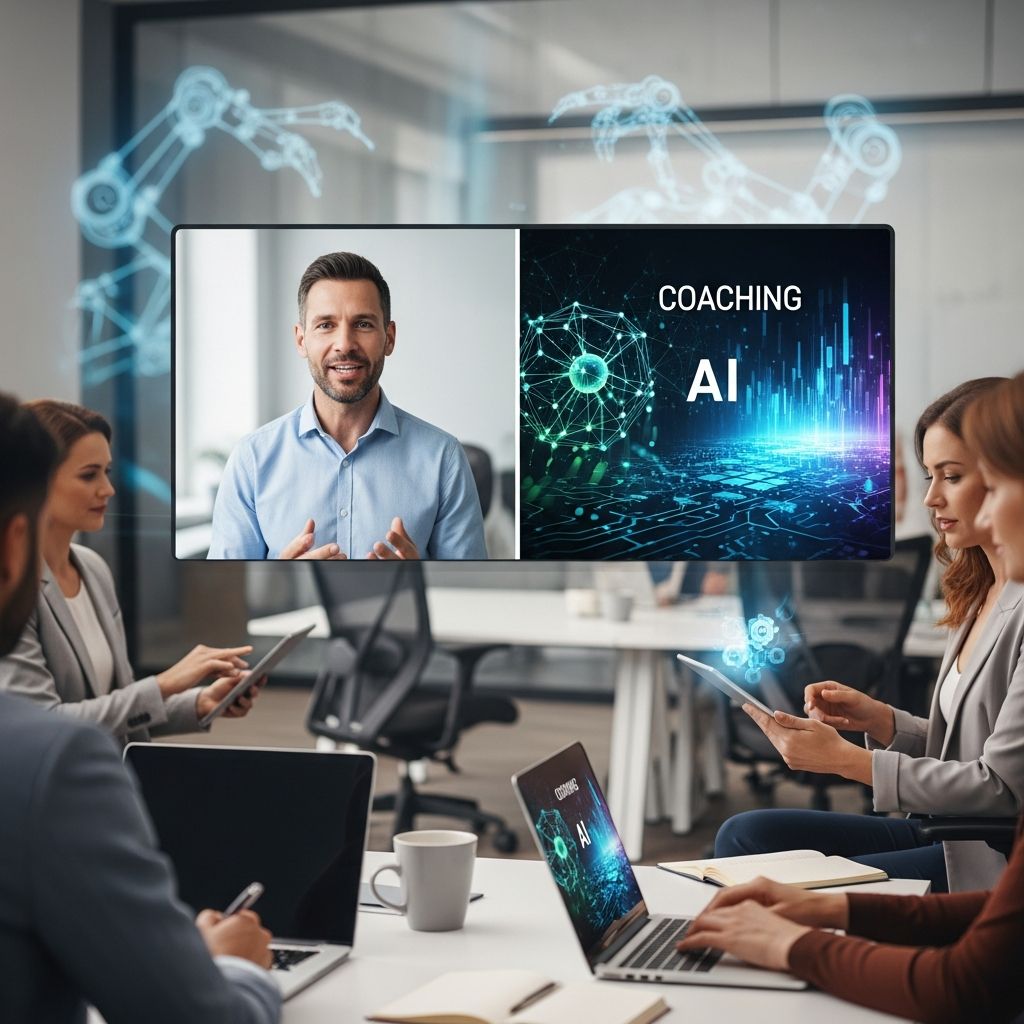
Organizations are under constant pressure to transform, innovate, and retain top talent. On-demand coaching webinars have emerged as a powerful way to scale leadership development, introduce digital coaching, and explore how artificial intelligence (AI) can unlock new levels of performance and engagement across the workforce.
This article explores how modern coaching webinars connect themes such as AI in coaching, talent development, employee experience, inclusive leadership, and high-performance cultures, giving HR and business leaders a practical roadmap for people development in a rapidly changing world.
Why On-Demand Coaching Webinars Matter
On-demand webinars are more than recorded presentations; they are a flexible learning channel that supports busy leaders and employees wherever they are.
- Anytime access: Participants can learn when it best fits their schedules, which is crucial for global and hybrid teams.
- Scalable learning: A single webinar can reach thousands of employees, supporting organization-wide initiatives at low marginal cost.
- Thought leadership: Sessions often feature experts, researchers, and practitioners who share current insights on topics like AI, digital coaching, and organizational transformation.
- Practical applications: Many modern coaching webinars combine conceptual input with case examples, frameworks, and reflective questions participants can apply immediately.
Digital learning formats like webinars are now core elements of corporate learning ecosystems, complementing coaching, mentoring, and self-paced content.
Core Themes in Modern Coaching Webinars
On-demand coaching webinars from digital coaching providers typically cluster around several recurring themes that reflect current business priorities.
1. Digital Coaching and High-Performance Cultures
One major focus is how digital coaching helps organizations build and sustain high performance while protecting well-being and engagement.
- From pressure to performance: Webinars often examine how leaders can convert business pressure into constructive stretch rather than burnout, using coaching to clarify goals, manage workload, and build resilience.
- High-performance culture: Sessions explore how regular coaching conversations, feedback, and reflection embed accountability and continuous improvement in teams.
- Measurable impact: Many organizations pair coaching with analytics to understand how leadership behavior changes and how this correlates with performance and retention.
Research from the International Coaching Federation (ICF) has shown that organizations using coaching report higher goal attainment, improved team functioning, and better employee engagement, reinforcing these webinar themes.
2. AI Innovation in Coaching and People Development
Another prominent theme is how AI is reshaping coaching and leadership development.
- AI-supported matching: Algorithms help match coachees and coaches at scale by considering preferences, skills, and historical success indicators, increasing perceived fit and satisfaction.
- AI-recommended content: Platforms use AI to recommend personalized learning resources, such as articles, videos, or exercises, aligned to individuals’ development goals.
- AI as a coaching companion: Some webinars discuss AI-driven tools that support reflection, track goals, or suggest prompts, while keeping the human coach at the center of complex behavioral change.
- Responsible AI: Thought leaders highlight the importance of transparency, ethics, and data protection when deploying AI in people development.
Reports from the OECD and World Economic Forum indicate that AI is transforming not only jobs and skills, but also how organizations design learning and talent programs, making these discussions highly relevant for HR and business leaders.
3. Measuring ROI of Talent Development
On-demand webinars increasingly focus on how to demonstrate the return on investment (ROI) of coaching and talent development initiatives.
| Dimension | Typical Metrics | How Webinars Address It |
|---|---|---|
| Individual impact | Goal attainment, skill improvement, behavior change | Frameworks for goal-setting, 360° feedback, pre/post assessments |
| Team impact | Collaboration, engagement, productivity | Case studies on team-level coaching and culture shifts |
| Business outcomes | Revenue growth, customer metrics, turnover | Ways to link coaching cohorts to strategic KPIs |
Evidence from professional bodies such as CIPD and academic research suggests that organizations with strong learning cultures and structured development programs achieve better financial performance and lower voluntary turnover, which supports the emphasis on measurement and ROI.
4. Workforce Transformation and Future-Ready Skills
Many webinars take a sector or function-specific lens on transformation, for example in automotive, technology, or financial services.[10]
- Reskilling and upskilling: Coaching is positioned as a lever to help employees build new skills, adapt to changing roles, and remain employable.
- Change agility: Sessions emphasize how leaders can communicate clearly, manage resistance, and sustain morale during large-scale change.
- Future-proof capabilities: Topics such as critical thinking, learning agility, resilience, and empathy are described as “power skills” that remain relevant even as technical skills evolve.
Global skills outlook reports from organizations like the World Economic Forum highlight similar priorities, noting that analytical thinking, resilience, and leadership continue to rank highly among in-demand skills.
5. Inclusive Leadership, Well-Being, and Employee Experience
On-demand coaching webinars increasingly connect leadership development to diversity, equity, inclusion, and well-being.
- Women’s leadership and representation: Sessions examine how coaching can support women leaders, address systemic barriers, and equip organizations to create more inclusive pipelines.
- Belonging and psychological safety: Webinars explore how coaching conversations help leaders foster trust, encourage open dialogue, and respond constructively to feedback.
- Well-being and burnout prevention: Many programs highlight the connection between sustainable performance and mental health, positioning coaching as support for self-care, boundary-setting, and workload management.
- Employee experience: There is a clear focus on how a strong development offering contributes to engagement, retention, and perceived organizational support.
Surveys by Gallup and other research organizations have consistently found that development opportunities are a key factor in employee engagement and retention, lending weight to these webinar topics.
Key Benefits of On-Demand Coaching Webinars
When thoughtfully designed, coaching-focused webinars can support multiple stakeholders across the organization.
Benefits for HR and People Leaders
- Scalable communication of new initiatives, frameworks, or leadership standards.
- Evidence-based narratives for executive stakeholders about why to invest in digital coaching.
- Access to expert insights on AI, analytics, and change management without lengthy consulting projects.
- On-demand resources to integrate into internal learning portals, leadership programs, or manager toolkits.
Benefits for Leaders and Managers
- Practical tools for having coaching-style conversations with their teams.
- Guidance on leading through uncertainty, restructuring, or rapid scaling.
- Exposure to peer experiences through case studies from other organizations.
- Short, targeted learning that fits into busy schedules and complements 1:1 coaching.
Benefits for Employees and Emerging Talent
- Awareness of coaching as a development resource, not just a remedial tool.
- Self-paced learning on topics like resilience, feedback, and career growth.
- Stronger sense of support from the organization’s investment in their development.
Designing a Webinar Portfolio for Your Organization
Instead of treating webinars as one-off events, many organizations now curate them into a strategic portfolio aligned with business priorities.
Step 1: Clarify Strategic Objectives
Before planning topics, define what you want the webinar series to achieve. Common objectives include:
- Accelerating leadership capability for a growth or transformation agenda.
- Building awareness and adoption of a digital coaching platform.
- Improving specific people metrics, such as manager effectiveness or engagement.
- Strengthening inclusion and psychological safety across teams.
Step 2: Map Topics to the Employee Lifecycle
Consider how webinars can support talent at different stages:
- Onboarding: Sessions on feedback culture, growth mindset, and thriving in hybrid work.
- First-time managers: Introduction to coaching skills, delegation, and performance conversations.
- Senior leaders: Strategy execution, AI in leadership, and leading large-scale change.
- High-potential talent: Resilience, influence, stakeholder management, and executive presence.
Step 3: Integrate Webinars with Coaching Programs
On-demand webinars are most powerful when connected to broader coaching experiences.
- Use a kickoff webinar to introduce a new coaching initiative, explain expectations, and answer common questions.
- Offer thematic webinars (e.g., feedback, resilience, inclusive leadership) alongside coaching cohorts focusing on those topics.
- Encourage coachees to watch selected sessions between coaching meetings and reflect with their coach on application to their role.
Step 4: Measure Engagement and Outcomes
To demonstrate value and continuously improve, track:
- Registration and completion rates.
- Participant feedback and satisfaction scores.
- Changes in self-reported confidence or skills related to the topic.
- Links to broader indicators such as engagement survey results or leadership effectiveness ratings.
Sample Webinar Journey for a Growing Organization
The table below illustrates how an organization undergoing rapid growth might structure a suite of on-demand webinars around coaching and AI-driven people development.
| Stage | Webinar Focus | Primary Audience | Main Outcomes |
|---|---|---|---|
| 1. Awareness | Why Digital Coaching Matters for Growth | Executives, HR, senior leaders | Shared understanding of coaching’s strategic value |
| 2. Adoption | Getting Started with Your Digital Coach | All enrolled employees | Higher activation and early engagement with the platform |
| 3. Deepening Skills | Leading High-Performance Teams Under Pressure | People managers | Stronger coaching skills and better team conversations |
| 4. Innovation | AI in Coaching: Opportunities and Guardrails | HR, L&D, digital leaders | Clear view of responsible AI use in people development |
| 5. Sustainability | Measuring the Impact of Coaching on Business Outcomes | HR analytics, executives | Evidence-based narrative for ongoing investment |
Best Practices for Maximizing Impact
To get the most from a portfolio of on-demand coaching webinars, organizations can apply the following practices:
- Keep sessions focused: Narrow topics make it easier for busy professionals to understand the benefit and commit time.
- Blend inspiration with action: Combine thought leadership with concrete tools, frameworks, or reflection prompts.
- Highlight stories: Real-world examples and client stories help participants imagine applying concepts in their own context.
- Promote internally: Partner with internal communications and business sponsors to ensure webinars are visible and relevant.
- Leverage data: Use attendance and feedback data to iterate topics, formats, and length.
Frequently Asked Questions (FAQs)
Q1: How are on-demand coaching webinars different from traditional training?
On-demand coaching webinars typically focus on behavior change, reflection, and leadership mindsets rather than solely on technical skills. They often connect directly to coaching conversations, support ongoing development journeys, and are designed for flexible consumption across time zones and work schedules, which is particularly important in hybrid and remote settings.
Q2: Can AI replace human coaches in digital coaching programs?
Current expert consensus is that AI can enhance but not replace human coaches in complex development contexts. AI excels at tasks like matching, recommending content, or providing reminders and prompts, while human coaches bring empathy, contextual understanding, ethical judgment, and the ability to navigate nuanced interpersonal dynamics. Most credible providers position AI as a complement to, not a substitute for, professional coaching.
Q3: How do organizations ensure quality and credibility in coaching webinars?
Quality is built through careful curation of speakers, evidence-based content, and alignment with recognized coaching and learning standards. Many digital coaching providers draw on research from psychology, organizational behavior, and learning science, and some seek external accreditation or continuing education credits for their programs. Clear learning objectives and participant feedback loops also help maintain high standards.
Q4: What role do managers play when employees have access to digital coaching and webinars?
Managers remain central to everyday performance and engagement. Webinars can equip managers with coaching-style skills, while external coaches provide a confidential, neutral space for employees to reflect and grow. When managers, coaches, and HR work in alignment, employees receive consistent messages and practical support for applying what they learn on the job.
Q5: How can smaller organizations benefit from on-demand coaching webinars?
Smaller organizations can use on-demand webinars to access expertise they might not be able to hire internally, introduce coaching practices at scale, and build leadership capability without extensive training infrastructure. Because webinars are scalable and reusable, they can be a cost-effective way to provide consistent learning experiences to all employees, including future leaders.
References
- Global Coaching Study — International Coaching Federation. 2023-01-01. https://coachingfederation.org/research/global-coaching-study
- On-demand Webinars | CoachHub — CoachHub. 2024-01-01. https://www.coachhub.com/resources/webinars
- Learning and skills at work survey — CIPD. 2023-05-10. https://www.cipd.org/en/knowledge/reports/learning-skills-work
- Experience the power of a business coaching program — CoachHub. 2023-11-01. https://www.coachhub.com/coaching-experience
- The CoachHub Academy — CoachHub. 2023-10-01. https://www.coachhub.com/coachhub-academy
- The Future of Jobs Report — World Economic Forum. 2023-04-30. https://www.weforum.org/reports/the-future-of-jobs-report-2023
- Virtual Event | Leading in the Age of AI — CoachHub. 2023-09-15. https://resources.coachhub.com/leadingintheageofai

Medha Deb is an editor with a master's degree in Applied Linguistics from the University of Hyderabad. She believes that her qualification has helped her develop a deep understanding of language and its application in various contexts. Medha specializes in the areas of beauty, health, sports, and wellness and is committed to ensuring that the content on the website is…