
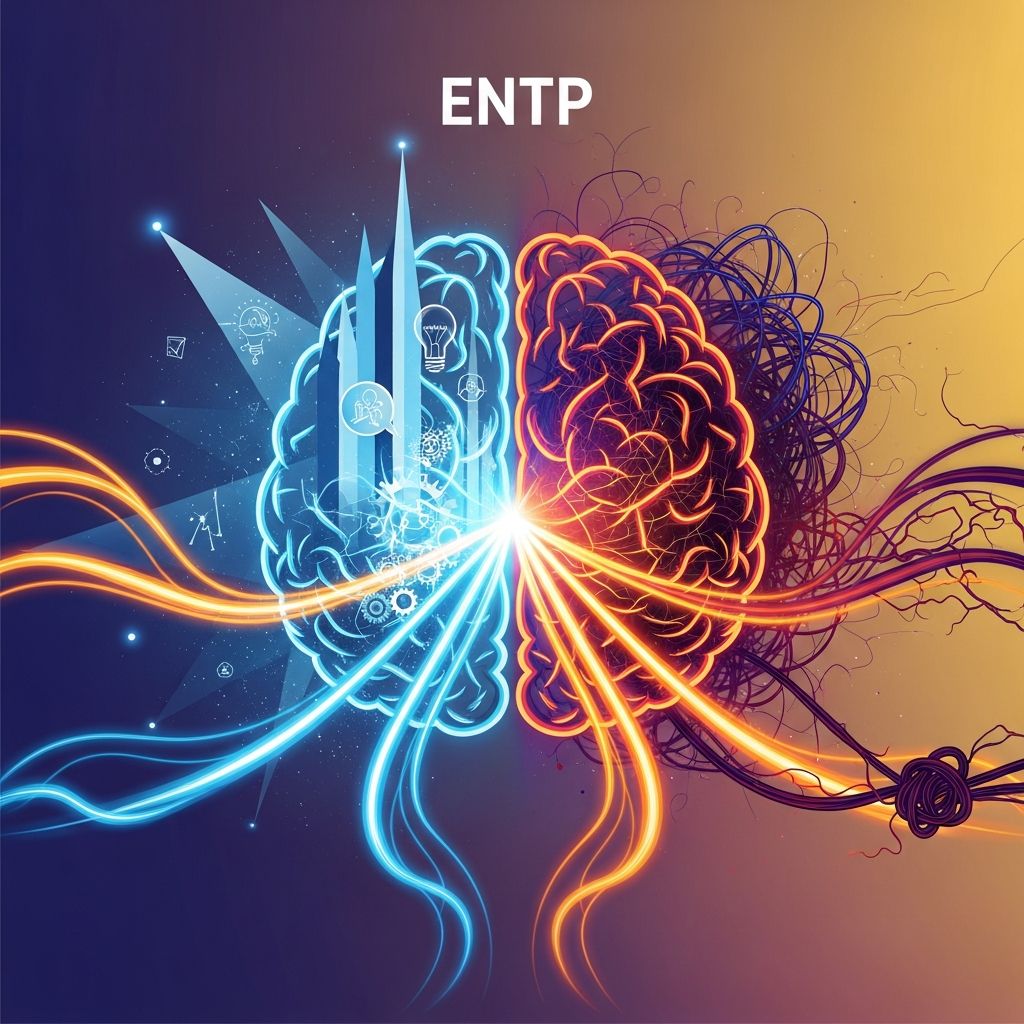
The ENTP personality type is often described as bold, curious, and endlessly inventive. They are energized by ideas, discussions, and possibilities, yet they can also struggle with follow-through, structure, and emotional nuance.
This guide explores the most common strengths and weaknesses of ENTPs and offers concrete ways to maximize their potential while managing their blind spots.
Understanding the ENTP Temperament
ENTP stands for Extraverted, Intuitive, Thinking, Perceiving. This combination describes people who:
- Extraverted (E): Gain energy from interaction, discussion, and shared experiences.
- Intuitive (N): Focus on patterns, concepts, and future possibilities more than concrete details.
- Thinking (T): Prefer objective logic over emotional considerations when making decisions.
- Perceiving (P): Like flexibility, spontaneity, and keeping options open rather than rigid plans.
Together, these preferences shape a personality that is drawn to experimentation, big-picture thinking, and questioning the status quo.
Core ENTP Strengths
Many ENTP strengths revolve around ideas, adaptability, and social energy. Below are some key advantages this type brings to teams, relationships, and projects.
1. Idea Generation and Intellectual Agility
ENTPs have a talent for rapidly producing new concepts and perspectives. Their minds naturally scan for alternatives and hidden connections between topics that others may treat as unrelated.
- They enjoy brainstorming and can quickly generate multiple possible solutions to a problem.
- They often see opportunities in situations others view as blocked or limited.
- They are comfortable thinking several steps ahead and speculating about future trends.
This strength makes ENTPs valuable in environments that reward innovation, such as startups, research, strategy, and creative industries.
2. Persuasive Communication and Debate
ENTPs tend to be articulate, quick-witted, and expressive. They often enjoy discussion and can argue multiple sides of an issue with ease.
- They frequently use humor, analogy, or storytelling to keep conversations engaging.
- They are comfortable challenging assumptions and asking difficult questions.
- They can quickly adapt their arguments to new information or perspectives.
In many group settings, ENTPs become informal facilitators, energizing conversations and preventing stagnation. However, this same trait can become a weakness if overused purely for intellectual sport.
3. Adaptability and Comfort With Change
ENTPs are generally at ease in fast-moving or uncertain situations. Change often excites them because it brings new data, options, and problems to solve.
- They adjust quickly when plans need to shift.
- They are willing to experiment and treat setbacks as learning opportunities.
- They can thrive in roles where priorities frequently change or where innovation is constant.
This adaptability is particularly valuable in emerging fields and dynamic organizations where strict routines are less effective.
4. Strategic and Big-Picture Thinking
Because they naturally look for patterns, ENTPs tend to think in systems rather than isolated details.
- They are skilled at seeing how different components of a situation interact.
- They can anticipate possible long-term consequences or ripple effects of decisions.
- They enjoy designing frameworks, models, or roadmaps that organize complexity.
Strategic planning, concept development, and future-focused problem-solving are areas where ENTPs often shine.
5. Social Curiosity and Network Building
Although their style is primarily intellectual, many ENTPs connect easily with a wide range of people.
- They ask probing questions out of genuine curiosity about how others think.
- They can bridge different social groups or disciplines through shared interests in ideas.
- They often maintain broad networks that expose them to novel perspectives and information.
These social strengths can open doors professionally and help them find collaborators for their many projects.
Common ENTP Weaknesses
Alongside their strengths, ENTPs face recurring challenges that can limit their effectiveness if left unaddressed.
1. Difficulty With Follow-Through
Many ENTPs love the thrill of starting things but lose interest as soon as a project becomes routine.
- They may accumulate unfinished initiatives, from business ideas to hobbies.
- They often underestimate the time and detail work required to bring visions to completion.
- They can move on prematurely, abandoning promising paths before results appear.
Over time, this pattern can lead to frustration for both the ENTP and those who depend on them.
2. Tendency to Argue or Challenge Excessively
Because debate is engaging for ENTPs, they may slip into arguing out of habit rather than necessity.
- Others may experience their style as combative or contrarian.
- They can prioritize winning an argument over preserving harmony.
- They might unintentionally dismiss emotions as “irrational” or irrelevant.
This can damage trust in relationships and create tension in teams, particularly with people who value consensus and emotional safety.
3. Impatience With Structure and Routine
ENTPs often dislike repetitive tasks, strict procedures, or tightly controlled environments.
- They may resist detailed planning or administration.
- They can struggle with deadlines and consistent habits.
- They may overlook essential details, focusing instead on the next idea.
While this resistance supports creativity, it can also create real-world problems when accountability and precision are non-negotiable.
4. Emotional Blind Spots
Because ENTPs rely heavily on logic, they may miss or underestimate emotional cues in themselves and others.
- They might unintentionally come across as insensitive or dismissive.
- They may have difficulty articulating their own feelings beyond intellectual analysis.
- They sometimes treat emotionally charged conflicts as puzzles rather than human experiences.
Without deliberate effort, this pattern can lead to misunderstandings in close relationships.
5. Overextension and Scattered Focus
ENTPs can become excited by so many possibilities that they overcommit.
- They may take on more projects than they can realistically manage.
- They can feel mentally overloaded yet still chase new stimuli.
- Others may view them as unreliable or inconsistent when commitments are dropped.
Managing energy and focus becomes critical for long-term effectiveness.
ENTP Strengths vs. Weaknesses at a Glance
| Domain | Typical ENTP Strength | Related Weakness Risk |
|---|---|---|
| Thinking & Ideas | Rapid idea generation and innovative thinking | Jumping between ideas without finishing any |
| Communication | Persuasive, engaging, and witty discussion | Argumentativeness and intellectual one-upmanship |
| Work Style | Adaptable, thrives in changing environments | Difficulty with routine, structure, and deadlines |
| Relationships | Curious, stimulating, and open-minded partner or friend | Underestimating emotional needs and depth |
| Personal Growth | Willingness to challenge assumptions and learn | Restlessness, constantly seeking the “next big thing” |
How ENTP Traits Show Up in Daily Life
At Work and in Careers
Research on personality and work suggests that people tend to gravitate toward roles that align with their natural preferences and strengths.
- Well-suited environments: Fast-paced, idea-driven fields such as entrepreneurship, consulting, design, technology, innovation, journalism, and research.
- Key contributions: Generating concepts, improving systems, identifying new opportunities, and challenging inefficient norms.
- Typical friction points: Detailed paperwork, strict hierarchies, repetitive tasks, and micromanagement.
When ENTPs can pair their visionary thinking with partners or systems that support implementation, their impact often increases dramatically.
In Friendships and Social Life
Socially, ENTPs tend to be animated and intellectually playful.
- They enjoy stimulating conversations and shared adventures.
- They often keep diverse friend groups connected through humor and ideas.
- They may have fewer very deep friendships compared to the number of casual connections.
Close friends who appreciate debate and novelty usually find ENTPs energizing, provided there is mutual respect and the ENTP recognizes when to switch from “debate mode” to “supportive mode.”
In Romantic Relationships
ENTPs as partners often bring creativity, spontaneity, and mental stimulation.
- They may propose unusual dates, new experiences, or unconventional life paths.
- They typically value independence—for themselves and their partners.
- They can struggle with routine relationship maintenance or sustained emotional processing.
Couples counseling research emphasizes the importance of understanding differing communication styles, including how much emphasis each partner places on emotion versus logic. For ENTPs, learning to slow down, listen fully, and validate feelings is critical for long-term relational stability.
Growth Strategies for ENTPs
Personality type describes preferences, not fixed limits. ENTPs can develop skills that balance their temperament and make their strengths more sustainable over time.
1. Build Systems for Follow-Through
- Use external tools such as calendars, task apps, or shared project boards to track commitments.
- Break large ideas into small, concrete steps with deadlines.
- Deliberately finish a few key projects before starting new ones to build a track record of completion.
2. Practice Selective Debating
- Ask yourself whether a debate serves a real purpose or is just entertainment.
- Check in with others’ comfort levels when conversations get intense.
- Experiment with exploring ideas collaboratively instead of trying to “win.”
3. Strengthen Emotional Awareness
- Notice physical and emotional signals in your own body, not just your thoughts.
- When someone shares a feeling, summarize it back to them before offering analysis or solutions.
- Engage in activities that foster empathy, such as reflective journaling or perspective-taking exercises.
Emotional intelligence training has been linked to better relationship satisfaction and workplace effectiveness, making this a high-impact area for development.
4. Respect Your Energy Limits
- Set a maximum number of simultaneous major projects.
- Schedule regular time to review existing commitments before accepting new ones.
- Recognize that rest and boredom can create the mental space for your best ideas.
5. Collaborate With Complementary Types
- Seek colleagues who enjoy detail work, implementation, and stability.
- Clarify roles so that your ideation complements, rather than disrupts, execution.
- Invite honest feedback about how your style affects others, and act on recurring patterns.
Frequently Asked Questions About ENTP Strengths and Weaknesses
Q: Are ENTPs always argumentative?
No. ENTPs often enjoy debate and may use it as a way to explore ideas, but with self-awareness they can choose when to engage and when to prioritize harmony. Many learn to channel their questioning into collaborative problem-solving rather than constant opposition.
Q: Why do ENTPs struggle to finish what they start?
Their energy peaks during the exploration phase of a project, when possibilities are open and new. As tasks become more predictable, their interest naturally declines. Structured support, clear deadlines, and accountability partners can help convert inspiration into completed work.
Q: Are ENTPs good leaders?
ENTPs can be highly effective leaders in contexts that reward innovation, rapid adaptation, and strategic thinking. They often excel at inspiring others with a compelling vision. However, they may need to consciously develop skills in follow-through, empathy, and consistent communication to succeed in more traditional or hierarchical settings.
Q: How can someone work well with an ENTP colleague?
Share big-picture goals and invite their input on improving systems or products. Agree together on specific next steps and timelines, and document decisions so they don’t get lost in ongoing ideation. Be direct but respectful when their debating style becomes unproductive; most ENTPs appreciate frank, logical feedback.
Q: Can ENTP weaknesses be “fixed”?
Weaknesses are often the flip side of strengths. Rather than trying to eliminate their natural tendencies, ENTPs benefit from learning when and how to apply them. Developing complementary skills—such as emotional awareness, planning, and disciplined execution—allows them to keep their originality while reducing negative consequences.
References
- This Is the ENTP Personality Type: The Flexible, Formidable Socialite — PsychCentral. 2022-08-29. https://psychcentral.com/health/entp-persontality-type
- Personality type and relationships — American Psychological Association. 2017-01-01. https://www.apa.org/topics/personality/personality-type
- ENTP Personality Type: Debater — Simply Psychology. 2023-06-15. https://www.simplypsychology.org/entp-personality.html
- 10 characteristics of the debater personality type (ENTP) — Calm Blog. 2023-03-10. https://www.calm.com/blog/entp
- All About the ENTP Personality Type — Truity. 2021-11-05. https://www.truity.com/blog/personality-type/entp
- ENTP: MBTI Personality Profile — Myers-Briggs Company. 2019-09-01. https://eu.themyersbriggs.com/en/tools/MBTI/MBTI-personality-Types/ENTP

Medha Deb is an editor with a master's degree in Applied Linguistics from the University of Hyderabad. She believes that her qualification has helped her develop a deep understanding of language and its application in various contexts. Medha specializes in the areas of beauty, health, sports, and wellness and is committed to ensuring that the content on the website is…