
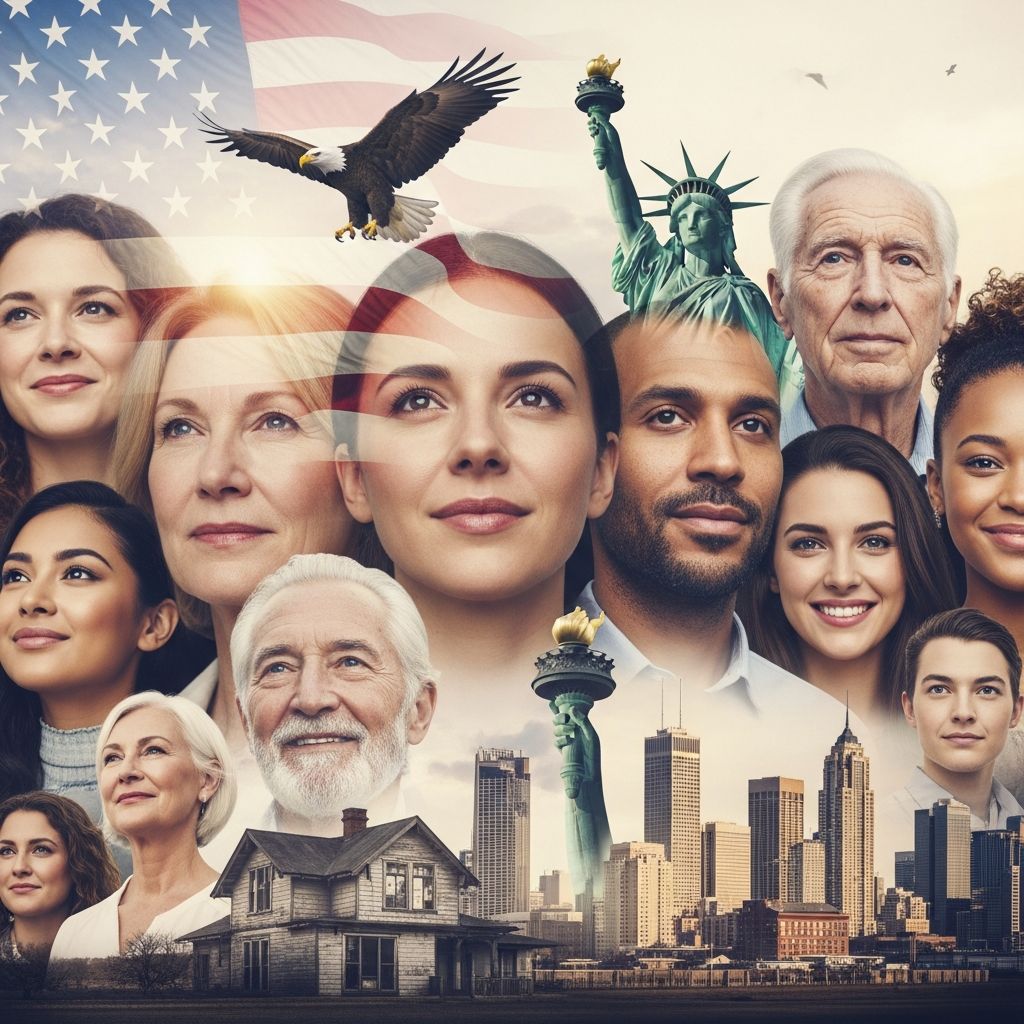
The Foundations of American Cultural Identity
American culture represents a complex tapestry of values, beliefs, and behaviors that have evolved over centuries. Unlike more homogeneous societies, the United States embodies a distinctive set of cultural characteristics that reflect its historical foundation as a nation built on principles of liberty and opportunity. Understanding these cultural elements requires examining not only the dominant values but also recognizing how America’s multicultural composition continues to reshape and redefine what it means to be American in the contemporary world.
The cultural identity of Americans is rooted in foundational ideals articulated in the nation’s founding documents. The Declaration of Independence and the Constitution establish principles that prioritize individual rights, personal freedoms, and the concept that all people possess equal inherent worth. These constitutional ideals have permeated American society, creating a distinct worldview that emphasizes personal autonomy, self-determination, and the pursuit of individual aspirations.
Core Values That Shape American Society
The Principle of Individual Autonomy
One of the most distinguishing characteristics of American culture is the emphasis on individual agency and self-reliance. From childhood education through professional development, Americans are encouraged to develop independence and rely primarily on their own capabilities and efforts. This cultural emphasis on personal responsibility creates a society where individuals are expected to chart their own courses and take ownership of their outcomes. Research demonstrates that a substantial majority of Americans—approximately 57 percent—believe they possess significant control over their personal futures, compared to only 38 percent of respondents from other countries. This confidence in individual agency reflects a deeply embedded cultural belief that personal effort and determination can overcome external obstacles.
American educational systems reinforce this value by grading students based on individual performance rather than collective contributions. Universities allow students to select their own academic paths, majors, and career directions. This contrasts sharply with educational systems in other cultures that prioritize collective achievement and standardized curricula. The cultural message is clear: your future depends on your choices, abilities, and commitment.
Equality as a Foundational Principle
The American commitment to equality operates as a cornerstone of cultural identity. Unlike societies organized around hierarchical structures such as caste systems, American ideology asserts that all individuals deserve equal legal protection and equal opportunity to pursue their desired paths. This egalitarian principle manifests in numerous ways throughout daily life and institutional structures. In workplace environments, hierarchical formality is minimized, and managers interact with employees using relatively informal protocols rather than elaborate titles that emphasize status differences. This casual approach to social hierarchy surprises many international visitors accustomed to more formal structures that acknowledge and reinforce organizational rank.
The equality principle extends to democratic participation and civic engagement. Americans expect that regardless of background, ethnicity, or socioeconomic status, they possess equivalent rights to vote, pursue education, and access economic opportunities. While reality often falls short of this ideal, the principle itself shapes how Americans perceive social relationships and organizational structures.
Direct Communication and Transparency
American communication styles reflect a preference for directness and explicit expression over indirect suggestion or euphemistic language. Rather than hinting at problems or using elaborate diplomatic language, Americans tend to address issues straightforwardly and propose solutions openly. This directness extends across personal relationships, workplace environments, and educational settings. When conflicts arise, Americans are encouraged to address them directly rather than allowing tension to accumulate or employing intermediaries.
In academic and professional writing, Americans begin with their primary point or thesis, a style that some other cultures perceive as abrupt or presumptuous. The cultural assumption is that clarity and directness serve communication better than building context gradually. This preference for transparency reflects an underlying belief that honesty and openness facilitate better understanding and more effective problem-solving.
Future-Oriented Perspective
American culture demonstrates a pronounced orientation toward the future rather than the past or present. Contemporary decisions and current efforts are understood through the lens of future goals and aspirations. This temporal orientation encourages Americans to embrace change, innovate, and constantly work toward improvement. The cultural narrative suggests that tomorrow can be better than today, and that progress is both possible and desirable. This future-focused mindset drives entrepreneurship, technological innovation, and the constant pursuit of self-improvement that characterizes much of American society.
Achievement and Work Ethic
Americans place significant cultural value on achievement, success, and the work required to attain them. The cultural narrative promotes the idea that hard work leads to tangible rewards and that success is achievable through personal effort. This emphasis on achievement creates a society that celebrates professional accomplishments, educational credentials, and material success. Americans often define themselves through their professional roles and accomplishments, viewing work as central to personal identity and social status.
Privacy, Informality, and Social Interaction
The American Approach to Privacy
Despite their reputation for friendliness and openness, Americans value privacy regarding personal information. Salary details, family finances, and intimate personal matters are generally considered private and not shared casually in social or professional contexts. This boundary between public friendliness and private discretion can confuse international visitors who interpret American warmth as an invitation to deeper personal disclosure. Americans maintain what might be described as a friendly distance, offering surface-level warmth while preserving personal boundaries regarding sensitive information.
Informality in Daily Life
American culture embraces informality across numerous contexts. Dress codes in educational and professional settings tend toward casualness compared to many other countries. Forms of address are relaxed, with first names commonly used across hierarchical relationships. This informality reflects the underlying egalitarian principle that status differences should not dictate elaborate protocols or formal distance. Americans often greet acquaintances and even strangers with casual phrases like “How’s it going?” or “What’s up?” These greetings are meant as friendly gestures rather than invitations for detailed personal updates. The informality extends to body language, where Americans tend to be more relaxed and animated in gestures and physical presence.
The Evolving Landscape of American Diversity
A Nation of Multiple Traditions
The United States functions as a multicultural society where diverse ethnic, religious, and cultural traditions coexist and intersect. The American population includes significant communities of European, African American, Asian, Latino, Middle Eastern, and Native American heritage. This demographic diversity has intensified in recent decades, with growing populations from various ethnic backgrounds reshaping the nation’s cultural composition. Rather than erasing these distinct traditions, American culture increasingly celebrates and honors the contributions of its constituent communities through food, music, art, celebrations, and historical commemorations.
Regional Variations in Cultural Expression
While certain values appear consistent across the United States, significant regional differences characterize American culture. The Northeast, particularly urban areas like New York and Boston, exhibits a fast-paced, direct communication style. People in these regions tend to walk quickly, speak with minimal social niceties, and rely on public transportation. The South presents a markedly different cultural expression, with slower-paced interactions, greater formality in address (such as using “ma’am” and “sir”), and stronger emphasis on church communities and family traditions. Southern cuisine, including barbecue and fried chicken, reflects distinct regional culinary traditions. The West, Midwest, and other regions display their own characteristic variations in communication styles, social priorities, and cultural practices.
Navigating Cultural Sensitivities
Despite the cultural emphasis on directness and openness, Americans generally avoid explicit discussion of certain sensitive topics in casual social settings. Politics and religion are typically considered private matters that can create social tension if introduced without careful context. This apparent contradiction—between the value placed on directness and the avoidance of sensitive topics—reflects a cultural balance between personal freedom and social cohesion. Americans value the right to hold diverse political and religious views while preferring to preserve social harmony by avoiding confrontational discussions about these deeply personal matters.
Distinctive Cultural Subgroups
The Amish: A Countercultural Example
The Amish communities represent a significant cultural subgroup that deliberately maintains values and practices distinct from mainstream American culture. Speaking a German dialect and educating their children in separate schools, the Amish preserve traditions that emphasize community cohesion, religious devotion, and hard work over individual achievement and technological advancement. Their cultural values prioritize the collective good and hierarchical community structure, creating a stark contrast to the individualism that dominates mainstream American society. The Amish example demonstrates that American cultural diversity extends beyond ethnic and religious communities to include groups that consciously reject certain dominant American values.
Constitutional Framework and Cultural Values
Freedom as a Defining Principle
The American Constitution establishes a legal framework that protects fundamental freedoms and limits governmental authority over personal life. These constitutional protections—freedom of speech, religion, assembly, and other liberties—form the legal foundation for American cultural values. Americans expect the freedom to work in chosen professions, practice selected religions, travel freely, and construct lives according to personal preferences. This constitutional protection of individual liberty creates a cultural environment where personal choice and individual determination are not merely preferred but legally protected.
Comparative Cultural Analysis
| Cultural Value | American Emphasis | Global Contrast |
|---|---|---|
| Individual vs. Collective | Strong emphasis on individual achievement and autonomy | Many cultures prioritize collective welfare and group harmony |
| Social Hierarchy | Minimized formality; egalitarian interactions | Many cultures maintain explicit hierarchical protocols and titles |
| Communication Style | Direct, explicit, and confrontational when necessary | Many cultures prefer indirect communication and diplomatic language |
| Temporal Orientation | Future-focused with emphasis on innovation and change | Many cultures balance past traditions with present practices |
| Informality Level | Relaxed dress, casual address, animated interaction | Many cultures maintain formal protocols and professional distance |
Frequently Asked Questions
Q: What are the primary values that define American culture?
A: Key American values include individual independence, equality, directness in communication, future orientation, achievement and hard work, privacy, informality, and freedom. These values are reflected in American institutions, education, and daily social interactions.
Q: How does American individualism differ from collectivist cultures?
A: American culture prioritizes personal achievement, self-reliance, and individual choice over group harmony and collective welfare. Americans are encouraged to pursue personal goals and rely primarily on their own efforts, whereas collectivist cultures emphasize family and community obligations.
Q: Why do Americans seem so informal compared to other cultures?
A: American informality stems from the cultural principle of equality. Since Americans theoretically disregard status differences, they avoid formal titles and protocols that would emphasize hierarchical distinctions. This informality is intended as friendliness rather than disrespect.
Q: How diverse is American culture?
A: The United States is highly multicultural, with significant populations from African American, Asian, Latino, European, Middle Eastern, and Native American communities. This diversity creates regional variations in cultural expression and continuously reshapes American identity.
Q: Are there topics Americans avoid discussing?
A: Despite valuing directness, Americans typically avoid explicit discussion of politics and religion in casual social settings, as these topics can create social tension and reflect deeply personal beliefs.
Q: What is the geographic variation in American culture?
A: Significant regional differences exist. The Northeast tends to be fast-paced and direct, the South more formally polite with stronger family and church traditions, and other regions display distinct communication styles and social priorities.
References
- American Culture: Overview, Characteristics & Examples — Study.com. Accessed 2025. https://study.com/academy/lesson/american-culture-lifestyle-today-values-characteristics.html
- American Culture: Values, Customs & More in the USA — Shorelight. Accessed 2025. https://shorelight.com/student-stories/culture-of-usa
- U.S. Culture — International Students and Scholars Office, University of California, San Francisco. Accessed 2025. https://isso.ucsf.edu/u-s-culture
- Guide to the American Culture — 162nd Wing, U.S. Air Force. Accessed 2025. https://www.162wing.ang.af.mil/162nd-Wing/IMSO/Guide-to-the-American-Culture/
- Understanding American Culture: A Modern Guide for International Participants — InterExchange. Accessed 2025. https://www.interexchange.org/blog/international-participants/10-things-to-know-about-u-s-culture/
- American Culture: Traditions and Customs of the United States — LiveScience. Accessed 2025. https://www.livescience.com/28945-american-culture.html
- Understanding Diversity in the USA — USAHello. Accessed 2025. https://usahello.org/life-in-usa/culture/diversity/

Medha Deb is an editor with a master's degree in Applied Linguistics from the University of Hyderabad. She believes that her qualification has helped her develop a deep understanding of language and its application in various contexts. Medha specializes in the areas of beauty, health, sports, and wellness and is committed to ensuring that the content on the website is…