
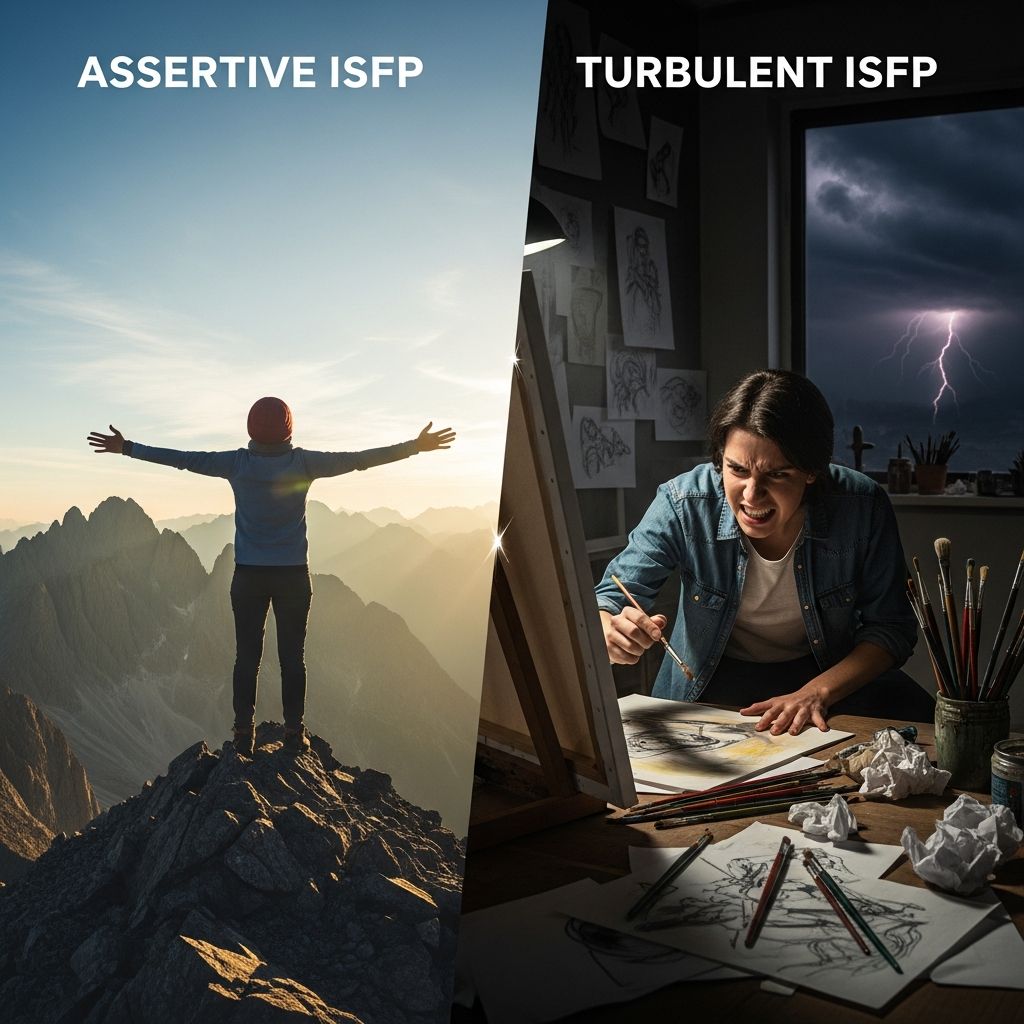
Understanding the Two Faces of the ISFP Adventurer
The ISFP personality type, known as the Adventurer, represents individuals who are introverted, sensing-oriented, feeling-driven, and perceiving in their approach to life. However, not all adventurers experience their world in exactly the same way. A crucial distinction exists between two variants of this personality: the assertive ISFP (ISFP-A) and the turbulent ISFP (ISFP-T). This distinction hinges on how individuals manage stress, view themselves, and navigate their emotional landscapes. Understanding these variations provides valuable insight into the nuanced ways ISFPs interact with their environment and process their experiences.
The divergence between assertive and turbulent ISFPs stems from differences in how confident, stable, and resilient individuals feel in their day-to-day lives. While both variants share the core ISFP traits of kindness, artistic sensibility, loyalty, and a preference for living authentically, their emotional baselines and coping mechanisms create notably different personality expressions. Recognizing these distinctions can help ISFPs better understand themselves and improve their relationships with others.
The Foundation of Assertiveness and Turbulence
At the heart of the ISFP-A and ISFP-T distinction lies the concept of emotional volatility and self-assurance. Assertive ISFPs tend to possess a more stable emotional baseline, experiencing less fluctuation in their moods and self-perception. They approach life with a quiet confidence that doesn’t require external validation, though they still value genuine connection and approval from those they care about. This steadiness allows them to move through challenges with relative equanimity.
Turbulent ISFPs, by contrast, experience more pronounced emotional shifts and sensitivity to their surroundings. They are more likely to question their decisions, doubt their abilities, and feel the weight of criticism more acutely. This heightened emotional reactivity doesn’t diminish their creativity or their capacity for deep connection; rather, it shapes how they engage with the world around them and how they respond to setbacks.
Confidence and Self-Perception: A Tale of Two ISFPs
One of the most visible differences between assertive and turbulent ISFPs emerges in their relationship with self-confidence. Assertive ISFPs maintain a relatively steady view of their abilities and worth. They trust their intuition and creative instincts without constant second-guessing. While they remain open to feedback and genuinely care about improving, they don’t internalize criticism as deeply or allow external opinions to shake their sense of self. This doesn’t make them arrogant or dismissive; rather, they possess a grounded self-assurance that allows them to pursue their passions without excessive self-doubt.
Turbulent ISFPs, conversely, engage in more introspection regarding their capabilities and value. They may replay conversations, wondering if they said the right thing or made the right decision. Their internal critic tends to be more vocal, and they may struggle with imposter syndrome or perfectionism. This self-reflection, while sometimes burdensome, also fosters greater empathy and a deeper understanding of others’ struggles. Turbulent ISFPs often become more thoughtful and nuanced in their approach to personal growth.
Emotional Expression and Communication Styles
Both ISFP variants are naturally introverted and prefer deep, authentic connections over superficial socializing. However, their emotional communication differs in meaningful ways. Assertive ISFPs express their feelings more readily once they’ve established trust, sharing their experiences with a matter-of-fact warmth. They process emotions internally but can articulate their feelings to trusted companions without excessive hesitation. Their emotional expression tends to be steady and predictable, which creates a sense of stability in their relationships.
Turbulent ISFPs internalize their emotions more deeply before sharing them, even with close friends and family. They may struggle to articulate complex feelings, instead expressing emotions through creative outlets like art, music, or physical activity. When they do communicate their emotional needs, it may come with accompanying anxiety about whether their feelings are valid or understandable to others. This internal processing can make turbulent ISFPs appear more mysterious or emotionally distant than they actually are, when in reality they’re experiencing profound emotional depth.
Handling Stress and Adversity
The approaches assertive and turbulent ISFPs take when facing stress reveal significant personality differences. Assertive ISFPs tend to compartmentalize challenges and maintain focus on moving forward. When difficulties arise, they acknowledge the problem, consider their options, and proceed with action. Their stress response is generally contained, preventing anxiety from bleeding into unrelated areas of their lives. This resilience allows them to bounce back relatively quickly from setbacks and maintain productivity during demanding periods.
Turbulent ISFPs experience stress more pervasively, with anxiety potentially affecting multiple life domains simultaneously. A single criticism at work might influence how they approach creative projects or interact with loved ones. However, this heightened stress sensitivity also motivates them to address issues more thoroughly and avoid repeating mistakes. Their anxiety, while sometimes exhausting, serves as an internal feedback system that encourages continuous improvement and deeper self-awareness.
Decision-Making Patterns and Risk Assessment
Both ISFP variants rely on their feeling function to guide decisions, prioritizing values and authenticity over pure logic. However, their decision-making processes show variation in risk tolerance and deliberation. Assertive ISFPs make decisions with relative confidence, trusting their gut instincts and values-based judgments. They’re willing to take calculated risks and pursue unconventional paths without excessive worry about potential negative outcomes. This confidence enables them to pursue their passions and creative endeavors with determination.
Turbulent ISFPs approach decisions with more caution, weighing potential consequences and worrying about whether they’re making the right choice. They may spend considerable time deliberating before committing to major decisions, researching options thoroughly and considering how their choices might affect themselves and others. While this deliberation can lead to analysis paralysis, it also ensures that turbulent ISFPs make thoughtful, well-considered decisions aligned with their values.
Career Preferences and Professional Environments
The distinction between assertive and turbulent ISFPs significantly influences career satisfaction and professional dynamics. Assertive ISFPs thrive in environments that offer creative freedom and autonomy. They take on projects with enthusiasm, handle feedback professionally, and maintain steady productivity. They’re less likely to experience workplace anxiety and more likely to advocate for themselves when seeking promotions or better opportunities. Their confidence makes them effective in collaborative settings where they can contribute their unique perspective without fear of judgment.
Turbulent ISFPs perform best in supportive, low-pressure work environments with clear expectations and constructive feedback. They may experience greater workplace anxiety, particularly in highly competitive or critical settings. However, their conscientiousness and desire to excel often make them dedicated, detail-oriented employees who care deeply about producing quality work. Turbulent ISFPs may gravitate toward roles involving helping others or creative expression, where their sensitivity becomes an asset rather than a liability.
Relationship Dynamics and Social Connection
In relationships, both ISFP variants demonstrate loyalty, kindness, and a genuine desire to understand their partners. Yet their approaches to building and maintaining connections show distinct patterns. Assertive ISFPs move into relationships with relative ease, comfortable with vulnerability once trust is established. They maintain healthy boundaries without excessive anxiety about them, and they communicate their needs clearly. Their relationships tend to feel effortless because they don’t second-guess their partners’ intentions or their own worthiness of love.
Turbulent ISFPs often experience more relationship anxiety, wondering if they’re loved enough or if they’re giving enough to their partners. They may be more hesitant to initiate relationships, fearing rejection or judgment. Once in a relationship, they might monitor their partner’s moods carefully, seeking reassurance about the relationship’s stability. This hypervigilance, while sometimes exhausting, reflects their deep investment in creating harmonious connections and their genuine care for their partners’ wellbeing.
Creative Expression and Artistic Pursuits
Creativity flows naturally through all ISFPs, but the manner in which assertive and turbulent variants express themselves artistically differs notably. Assertive ISFPs create with confidence, sharing their work readily and drawing inspiration from their immediate experiences. They’re comfortable experimenting with new artistic directions and less concerned with perfecting every detail. Their creative process tends to be relatively unencumbered by self-doubt, allowing them to produce prolifically.
Turbulent ISFPs often struggle with perfectionism and creative blocks, experiencing anxiety about whether their work is good enough to share. They may revise repeatedly, second-guessing aesthetic choices and thematic elements. However, this meticulous approach frequently results in deeply personal, nuanced artistic creations that reflect their intense emotional processing. Their struggle with perfectionism, while sometimes limiting, can ultimately produce profoundly moving and authentic work.
Managing Perfectionism and Self-Criticism
A defining challenge for turbulent ISFPs is navigating the internal experience of perfectionism and self-criticism. Their tendency toward self-doubt can manifest as reluctance to share work, pursue new opportunities, or take creative risks. This internal pressure to meet impossible standards can create unnecessary stress and limit their willingness to grow. Developing self-compassion and learning to celebrate progress rather than chasing perfection becomes essential for turbulent ISFPs’ wellbeing.
Assertive ISFPs generally experience less perfectionism-driven anxiety. They’re content with “good enough” and understand that perfectionism often impedes progress. This more relaxed approach allows them to iterate quickly, learn from failures, and move forward without excessive rumination. However, even assertive ISFPs can benefit from recognizing when higher standards are genuinely necessary versus when they’re pursuing unrealistic ideals.
Motivation and Personal Drive
Understanding what motivates each ISFP variant provides insight into their sustained efforts and goal-pursuit patterns. Assertive ISFPs are motivated by intrinsic drives aligned with their values. They pursue goals that feel meaningful without requiring constant external validation or reassurance. Their motivation tends to be consistent and reliable, though it may wax and wane based on changing interests and priorities.
Turbulent ISFPs often need external encouragement and validation to maintain motivation. They respond well to supportive communities, mentorship, and opportunities to contribute meaningfully to causes they believe in. Their motivation may fluctuate more dramatically, rising when they receive encouragement and dipping when facing criticism or self-doubt. However, when turbulent ISFPs commit to something meaningful, their dedication becomes formidable, driven by their deep emotional investment.
Personal Growth and Self-Development Journeys
Both ISFP variants have capacity for significant personal growth, though their approaches differ. Assertive ISFPs tend to pursue self-development at a comfortable pace, integrating new insights without extensive internal struggle. They’re open to feedback and willing to change, but they don’t agonize over past mistakes or potential future failures. Their growth trajectory is often steady and incremental.
Turbulent ISFPs may experience personal development as more emotionally intense. They deeply examine their behaviors, motivations, and patterns, sometimes to the point of overthinking. However, this intensive self-examination often yields profound personal transformation and greater self-awareness. Turbulent ISFPs who embrace their introspective nature frequently become wiser, more empathetic individuals with deeper understanding of themselves and others.
Choosing Between Assertive and Turbulent Traits
It’s important to recognize that assertiveness and turbulence aren’t binary categories but rather tendencies along a spectrum. Most people experience both qualities at different times or in different contexts. Someone might be assertive in their creative work but turbulent in their relationships, or vice versa. Recognizing your natural leanings allows for greater self-acceptance and more effective personal development strategies. Neither variant is superior; each possesses distinct advantages and challenges.
Common Questions About ISFP Variants
Q: Can an ISFP’s variant change over time?
A: Yes, personality expression can shift based on life circumstances, therapy, personal development work, and changing life situations. Someone who identifies as turbulent may become more assertive through building self-confidence, while major life disruptions might increase turbulent tendencies temporarily.
Q: Are turbulent ISFPs more creative than assertive ISFPs?
A: Both variants possess strong creative abilities. Turbulent ISFPs may produce deeply introspective work reflecting their emotional depth, while assertive ISFPs create with greater confidence and prolific output. Creativity quality isn’t determined by variant.
Q: How can assertive ISFPs support their turbulent partners?
A: Assertive ISFPs can offer consistent reassurance, validate their turbulent partners’ feelings without dismissing them, maintain emotional stability during conflicts, and provide patient understanding of their partners’ need for processing time.
Q: Which variant makes better leaders?
A: Both variants can be effective leaders in different contexts. Assertive ISFPs excel in confident, inspiring leadership roles, while turbulent ISFPs often become more empathetic, understanding leaders who deeply care about their team members’ wellbeing.
Q: Can turbulent ISFPs overcome anxiety and perfectionism?
A: Absolutely. Through self-awareness, therapy, mindfulness practices, and cognitive restructuring, turbulent ISFPs can significantly reduce anxiety levels and develop healthier relationships with perfectionism without fundamentally changing their personality.
References
- ISFP Personality (Adventurer) – Strengths & Weaknesses — 16Personalities. Accessed December 2025. https://www.16personalities.com/isfp-strengths-and-weaknesses
- ISFP Personality (Adventurer) — 16Personalities. Accessed December 2025. https://www.16personalities.com/isfp-personality
- ISFP Personality (Adventurer) – Simply Psychology — Simply Psychology. Accessed December 2025. https://www.simplypsychology.org/isfp-personality.html
- 10 Characteristics of the Adventurer Personality Type (ISFP) — Calm. Accessed December 2025. https://www.calm.com/blog/isfp
- ISFP: MBTI Personality Profile — The Myers-Briggs Company. Accessed December 2025. https://eu.themyersbriggs.com/en/tools/MBTI/MBTI-personality-Types/ISFP

Medha Deb is an editor with a master's degree in Applied Linguistics from the University of Hyderabad. She believes that her qualification has helped her develop a deep understanding of language and its application in various contexts. Medha specializes in the areas of beauty, health, sports, and wellness and is committed to ensuring that the content on the website is…