
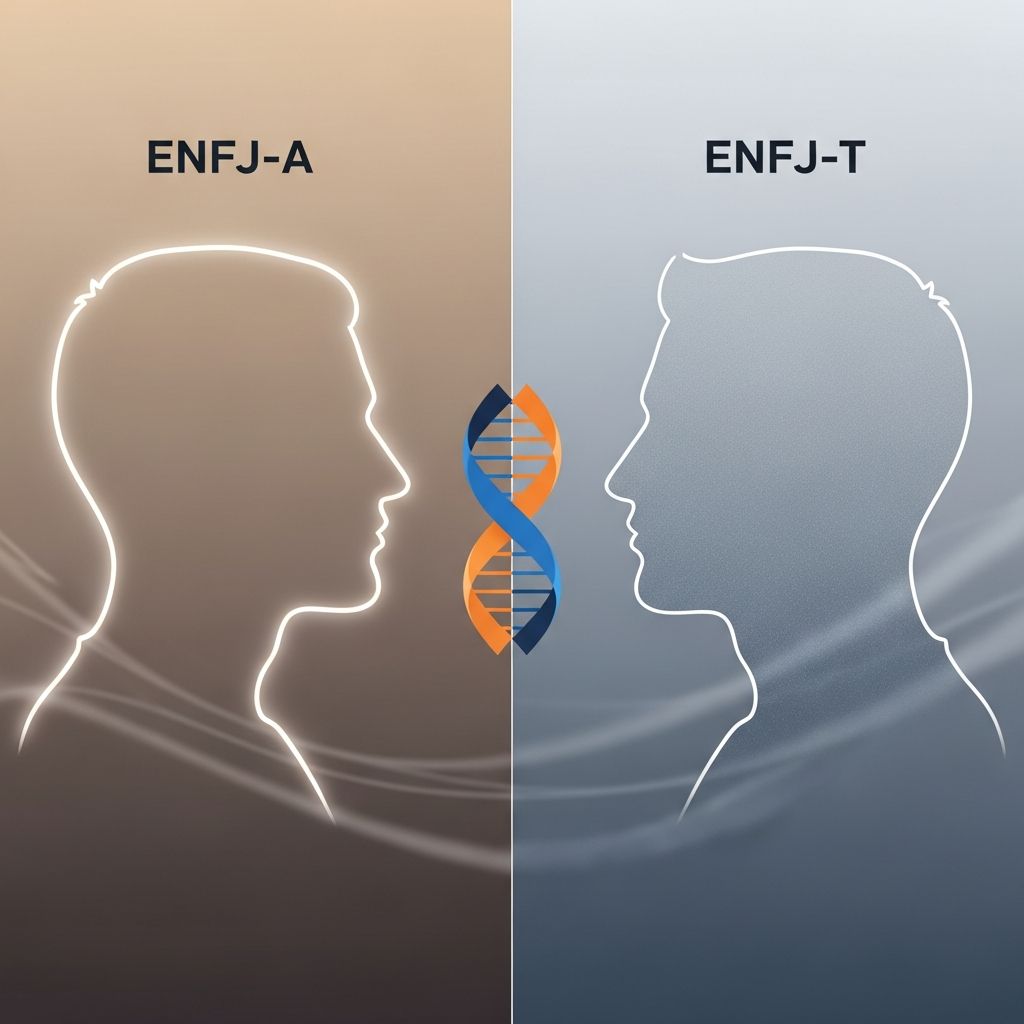
Understanding the Two Faces of the ENFJ Personality
The ENFJ personality type, commonly known as “The Protagonist,” represents a unique combination of extroversion, intuition, feeling, and judging preferences. However, within this classification exists an important distinction that significantly influences how these charismatic leaders navigate the world. The fundamental division centers on the Assertive (ENFJ-A) and Turbulent (ENFJ-T) variants, each bringing distinct emotional patterns, stress responses, and life philosophies to the core ENFJ framework.
While both variants share the characteristic ENFJ traits—warmth, charisma, dedication to helping others, and natural leadership ability—the way they process self-doubt, handle pressure, and maintain emotional equilibrium differs considerably. Understanding these nuances provides valuable insight into why two people with the same four-letter personality code might approach similar situations in markedly different ways.
The Foundation: What Makes an ENFJ
Before diving into the assertive-turbulent distinction, it’s important to establish what defines all ENFJs. These individuals are natural communicators who excel at reading social dynamics and understanding the emotional needs of those around them. Their extraverted feeling function drives them to prioritize group harmony, fairness, and the emotional wellbeing of their communities. ENFJs typically comprise only 2-3% of the population, making them one of the rarer personality types.
ENFJs are driven by several core motivations. They are invigorated by social connection and expanding their networks. They are motivated by personal excellence and self-mastery, alongside the validation that comes from being respected by others. Most importantly, ENFJs find deep purpose in facilitating the personal growth of those around them, which reinforces their sense of self-worth and meaning.
The Assertive ENFJ: Confidence and Resilience
The Assertive ENFJ-A operates from a foundation of self-assurance and emotional stability. These individuals demonstrate a stronger sense of confidence in their abilities, judgment, and interpersonal effectiveness. When facing challenges or criticism, ENFJ-A personalities tend to maintain perspective and bounce back relatively quickly without prolonged self-doubt.
Key Characteristics of ENFJ-A
Assertive ENFJs possess a remarkably steady emotional baseline. They experience fluctuations in mood like anyone else, but they recover from setbacks with greater ease. When receiving constructive feedback, they can separate the critique from their sense of self-worth, viewing it as practical information rather than a personal attack. This emotional resilience enables them to take interpersonal risks, such as initiating difficult conversations or addressing conflicts directly, without excessive anxiety.
These individuals tend to trust their own judgment and are less prone to second-guessing their decisions. While they remain open to others’ perspectives—a hallmark ENFJ trait—the ENFJ-A does not experience paralysis when facing multiple viewpoints. They make decisions, move forward, and adjust course if needed without ruminating excessively about what they might have done differently.
ENFJ-A personalities typically experience lower levels of perfectionism compared to their turbulent counterparts. They set high standards but recognize that completion and progress matter more than flawless execution. In their professional lives, this means they launch projects, pursue promotions, and take leadership opportunities without being stopped by the fear of imperfection.
In relationships, Assertive ENFJs maintain a healthy balance between caring deeply about others’ feelings and maintaining appropriate emotional boundaries. They can offer support without absorbing others’ emotional burdens to an overwhelming degree. This psychological distance, while maintaining genuine empathy, allows them to sustain long-term helping relationships without burnout.
The Turbulent ENFJ: Depth and Consciousness
The Turbulent ENFJ-T operates from a more cautious and introspective emotional framework. These individuals experience greater internal scrutiny, more pronounced self-doubt, and heightened sensitivity to feedback. This does not mean they are weak or ineffective; rather, it indicates a different relationship with uncertainty and perfectionism that shapes their approach to life.
Key Characteristics of ENFJ-T
Turbulent ENFJs experience more volatile emotional responses to both positive and negative events. A compliment might feel validating but temporary, soon overshadowed by memories of past mistakes. Criticism lands harder and stays longer, prompting extended reflection and worry about how others perceive them. This heightened emotional reactivity means ENFJ-T individuals are acutely aware of social dynamics and potential relational risks.
These individuals tend toward perfectionism and high self-standards. They imagine idealized outcomes and experience frustration when reality falls short. This quality can drive exceptional effort and achievement, as ENFJ-T personalities push themselves relentlessly toward improvement. However, it can also create internal stress and the sense that nothing they accomplish is quite good enough.
ENFJ-T personalities often experience anxiety around their interpersonal impact. They worry whether they’ve hurt someone’s feelings, managed a situation appropriately, or lived up to others’ expectations. This consciousness of their effect on others’ emotional states can lead to over-apologizing, excessive people-pleasing, or difficulty setting boundaries without guilt.
In professional contexts, Turbulent ENFJs may hesitate before pursuing opportunities, despite being qualified. They might delay launching a project until every detail is perfected or withdraw from leadership opportunities due to imposter syndrome. This cautious approach, while sometimes limiting, also means they tend to anticipate problems, consider edge cases, and prepare thoroughly.
Comparative Framework: Key Differences
| Dimension | ENFJ-A (Assertive) | ENFJ-T (Turbulent) |
|---|---|---|
| Self-Confidence | Naturally high; trusts own judgment | Variable; prone to self-doubt |
| Stress Response | Recovers quickly; maintains perspective | Prolonged worry; rumination |
| Perfectionism | High standards but accepts “good enough” | High standards with difficulty accepting completion |
| Feedback Processing | Separates critique from self-worth | Takes feedback personally; extensive processing |
| Decision-Making | Decisive; limited second-guessing | Thorough; prone to reconsideration |
| Boundary-Setting | Maintains boundaries with less guilt | Struggles with boundary guilt |
| Risk-Taking | More willing to pursue opportunities | More cautious about potential failure |
| Emotional Volatility | More stable baseline | More reactive to events |
How Each Variant Handles Leadership
Both ENFJ-A and ENFJ-T individuals often find themselves in leadership positions due to their natural charisma and people orientation. However, their leadership styles reflect their assertive-turbulent differences.
Assertive ENFJs typically embrace leadership roles with confidence. They make decisions clearly, communicate vision convincingly, and move forward without excessive second-guessing. Their teams often experience them as steady and trustworthy. ENFJ-A leaders tend to delegate effectively and trust their team members’ capabilities, as they don’t overcomplicate matters with excessive worry about potential failures.
Turbulent ENFJs often struggle more with the decisiveness that leadership requires. They may over-prepare, solicit excessive input, or revisit decisions frequently. However, this tendency creates leaders who are exceptionally thoughtful about team members’ wellbeing, considerate of various perspectives, and invested in developing their people. ENFJ-T leaders often inspire loyalty through their genuine concern and willingness to continuously improve their leadership approach.
Relationship Dynamics and Emotional Connection
The assertive-turbulent distinction significantly influences how each variant navigates romantic relationships, friendships, and family bonds.
ENFJ-A individuals bring stable emotional presence to relationships. They care deeply about their loved ones but maintain enough psychological separation to avoid being overwhelmed by others’ emotions. They can offer support without absorbing problems as their own. This often means they’re the reliable friend or partner who shows up consistently without burning out.
ENFJ-T individuals often experience relationships with greater emotional intensity. They may worry frequently about whether they’re being a good friend, partner, or family member. They might seek reassurance from loved ones and feel hurt more easily by perceived slights. While this can create richness and depth in relationships, it can also lead to misunderstandings, as they sometimes perceive rejection when none was intended.
Strengths Unique to Each Variant
ENFJ-A Strengths
Assertive ENFJs bring action-oriented energy to any endeavor. Their confidence enables them to take necessary risks and inspire others through their conviction. They are less likely to be paralyzed by perfectionism, allowing them to initiate projects, lead change initiatives, and champion causes effectively. Their emotional stability makes them reliable mentors and advisors who can offer perspective without getting emotionally entangled in others’ problems.
ENFJ-T Strengths
Turbulent ENFJs bring conscientiousness and thoroughness to their work. Their internal drive for improvement means they’re unlikely to settle for mediocrity. They tend to be exceptionally attuned to team members’ emotional needs and potential concerns, making them particularly effective at creating inclusive environments. Their awareness of their own shortcomings often translates into genuine humility and willingness to learn and grow throughout their lives.
Challenges Each Variant Faces
ENFJ-A Challenges
Assertive ENFJs may underestimate the importance of their own emotional needs, as their confidence can make them believe they should be able to handle everything independently. They might not seek support when appropriate or recognize when they’re pushing too hard. Their stability can sometimes come across as indifference to those who experience emotions more intensely.
ENFJ-T Challenges
Turbulent ENFJs may struggle with decision paralysis, as they continually seek reassurance or revisit choices. Their perfectionism can prevent them from taking necessary action or pursuing opportunities. They might experience chronic anxiety about interpersonal relationships and their impact on others, leading to exhaustion and burnout from overextending themselves emotionally.
Navigating Career Paths
Career selection and advancement differ somewhat between the two variants. ENFJ-A individuals tend to pursue leadership positions more readily and advocate for themselves in career discussions. They’re more likely to negotiate aggressively and pursue challenging roles without excessive self-doubt.
ENFJ-T individuals may need to actively cultivate self-advocacy skills and push themselves beyond their comfort zones to achieve their potential. However, their thoroughness and conscientiousness often lead to exceptional work quality and deep expertise in their chosen fields. They may excel in roles requiring detailed attention to process improvement and people development.
Frequently Asked Questions
Q: Can an ENFJ change from turbulent to assertive or vice versa?
A: The assertive-turbulent distinction is relatively stable, reflecting baseline emotional patterns. However, personal development, therapy, and life experience can influence how pronounced these traits are. An ENFJ-T might develop greater confidence and emotional stability through achievement and supportive relationships, while an ENFJ-A might develop greater empathy and conscientiousness through intentional personal work.
Q: Which variant is more successful?
A: Success depends on context and individual definition. ENFJ-A individuals may achieve external recognition more easily through their confidence and action orientation. ENFJ-T individuals often build deeper, more meaningful relationships and may achieve greater personal fulfillment through growth-oriented work. Both can be equally successful in different domains.
Q: How should relationships between ENFJ-A and ENFJ-T individuals look?
A: An ENFJ-A and ENFJ-T pairing can be complementary. The assertive partner can help the turbulent partner take action despite self-doubt, while the turbulent partner can encourage the assertive partner to reflect and consider emotional nuances more deeply.
Q: Is turbulent a sign of mental health problems?
A: No. Turbulent is a personality variant reflecting emotional reactivity and conscientiousness, not a mental health disorder. However, ENFJ-T individuals may benefit from strategies to manage perfectionism and anxiety.
Conclusion: Embracing Both Variants
The distinction between Assertive and Turbulent ENFJs reveals important nuances within this already complex personality type. Rather than viewing one variant as superior, recognizing both brings valuable insights. ENFJ-A individuals bring confidence, decisiveness, and stable emotional presence to their endeavors. ENFJ-T individuals bring conscientiousness, depth, and genuine humility.
Both variants share the core ENFJ mission of creating positive change and helping others grow. Both are rare, charismatic, and capable of profound impact. Understanding whether you lean assertive or turbulent—and recognizing the same in others—enables more compassionate relationships and more effective collaboration. Each variant has distinct gifts to offer the world, and greater self-awareness about where you fall on this spectrum allows you to leverage your natural strengths while addressing potential blind spots.
References
- ENFJ Personality (Protagonist) – 16Personalities — 16Personalities. Retrieved December 2025. https://www.16personalities.com/enfj-personality
- Strengths & Weaknesses | ENFJ Personality (Protagonist) — 16Personalities. Retrieved December 2025. https://www.16personalities.com/enfj-strengths-and-weaknesses
- ENFJ Personality Type: In-Depth Profile & Analysis — Personality Junkie. Retrieved December 2025. https://personalityjunkie.com/enfj-type-profile/
- All About the ENFJ Personality Type — Truity. Retrieved December 2025. https://www.truity.com/blog/personality-type/enfj
- ENFJ Personality Type: Characteristics and Careers — MasterClass. Retrieved December 2025. https://www.masterclass.com/articles/enfj

Medha Deb is an editor with a master's degree in Applied Linguistics from the University of Hyderabad. She believes that her qualification has helped her develop a deep understanding of language and its application in various contexts. Medha specializes in the areas of beauty, health, sports, and wellness and is committed to ensuring that the content on the website is…