
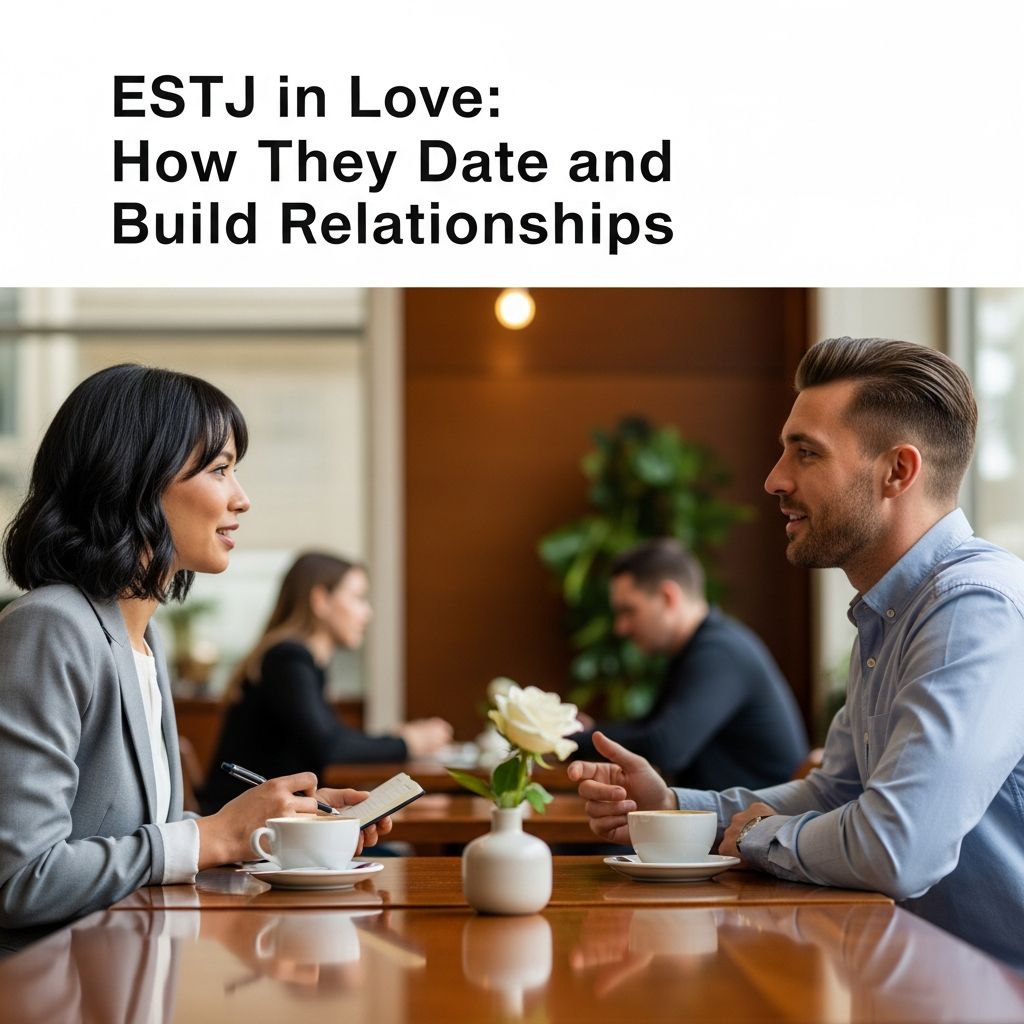
How ESTJs Approach Dating and Romance
ESTJs, often described as natural organizers and dependable leaders, bring a distinct energy to dating and romantic relationships. They are not typically the type to rush into love impulsively or treat relationships as casual experiments. Instead, ESTJs tend to view dating as a serious step toward building a stable, long-term partnership grounded in mutual responsibility and shared goals.
When an ESTJ starts dating someone, they often do so with clear intentions. They are more likely to be interested in someone who appears reliable, responsible, and aligned with their values around family, work, and tradition. They appreciate partners who are punctual, respectful of commitments, and willing to engage in practical planning—whether that’s organizing a weekend trip or discussing future career and family plans.
ESTJs are usually confident and direct in their approach. They are not shy about expressing interest, asking someone out, or clearly stating what they are looking for in a relationship. This straightforwardness can be refreshing for some, but it may feel intense or overly structured to others who prefer a more spontaneous or emotionally expressive courtship.
What ESTJs Look for in a Partner
ESTJs are drawn to partners who complement their strengths and share their core values. While every ESTJ is unique, there are several common traits they tend to value highly in a romantic relationship:
- Reliability and consistency – ESTJs want to know their partner can be counted on, whether it’s showing up on time, keeping promises, or supporting them during tough times.
- Shared values around family, work, and tradition – They often prioritize family, career success, and social expectations, and they appreciate a partner who respects and participates in these areas.
- Practicality and common sense – ESTJs admire partners who are grounded, realistic, and able to make sensible decisions rather than acting on fleeting emotions.
- Willingness to contribute – They expect relationships to be a two-way street, where both people actively participate in household responsibilities, financial planning, and social obligations.
- Respect for structure and planning – ESTJs thrive on routine and organization, so they tend to prefer partners who are comfortable with schedules, budgets, and long-term planning.
While ESTJs may not always lead with emotional vulnerability, they deeply value loyalty and commitment. They are more likely to stay in a relationship through challenges than to walk away at the first sign of difficulty, as long as they believe their partner is equally invested.
ESTJs in Long-Term Relationships
Once an ESTJ commits to a long-term relationship, they typically approach it with a strong sense of duty and responsibility. They see marriage or serious partnerships as lifelong commitments, not temporary arrangements. This mindset often translates into a strong work ethic within the relationship: they are willing to put in the effort to maintain stability, resolve conflicts, and support their partner’s goals.
In a long-term relationship, ESTJs often take on a leadership role in practical matters. They may be the ones managing the household budget, organizing family events, scheduling appointments, and making major decisions about where to live, how to raise children, and how to plan for retirement. They view these actions as expressions of love and care, even if they don’t always say it in words.
Because ESTJs are so focused on structure and efficiency, they can sometimes come across as controlling or overly critical, especially if their partner prefers more flexibility or emotional expression. They may unintentionally micromanage aspects of the relationship or expect their partner to follow their way of doing things. Learning to delegate, compromise, and respect different approaches is often a key growth area for ESTJs in long-term partnerships.
Communication Style in ESTJ Relationships
ESTJs communicate in a direct, fact-based, and solution-oriented way. They tend to value honesty and clarity over emotional nuance, which can be both a strength and a challenge in relationships.
When discussing problems, ESTJs are more likely to focus on what went wrong, what needs to change, and how to fix it. They may struggle with partners who want to talk about feelings first and solutions later. For example, if a partner is upset about a disagreement, the ESTJ may quickly jump to offering advice or pointing out what they believe is the logical solution, rather than spending time validating emotions.
This practical communication style can sometimes feel cold or dismissive to more emotionally expressive partners. However, it usually comes from a place of wanting to help, not from a lack of care. ESTJs often believe that solving the problem is the best way to make their partner feel better.
To improve communication, ESTJs can benefit from:
- Practicing active listening without immediately jumping to solutions.
- Learning to acknowledge and validate their partner’s feelings before offering advice.
- Being more intentional about expressing affection and appreciation in words, not just actions.
Love Languages and Emotional Expression
ESTJs often express love through actions rather than words. Their primary love languages tend to be:
- Acts of service – Cooking meals, handling bills, fixing things around the house, planning trips, and taking care of responsibilities.
- Quality time – Spending time together doing practical or social activities, such as attending family events, going to work functions, or planning vacations.
- Gifts – Giving practical, useful gifts that show they’ve been paying attention to their partner’s needs.
Verbal affirmations and physical affection may not come as naturally to ESTJs, but that doesn’t mean they don’t value them. Many ESTJs deeply appreciate when their partner acknowledges their efforts and expresses gratitude. They may not initiate deep emotional conversations easily, but they often respond positively when their partner creates a safe space for open and respectful dialogue.
Partners of ESTJs can help strengthen emotional connection by:
- Clearly expressing what kind of emotional support they need (e.g., more verbal reassurance, more physical affection).
- Recognizing and appreciating the ESTJ’s practical efforts as genuine expressions of love.
- Encouraging small, consistent steps toward greater emotional openness, rather than expecting sudden, dramatic changes.
Common Challenges in ESTJ Relationships
Like all personality types, ESTJs have blind spots and areas where they can grow in relationships. Some of the most common challenges include:
- Difficulty with emotional sensitivity – ESTJs may struggle to pick up on subtle emotional cues or understand why their partner needs more emotional validation.
- Tendency to be controlling – Their desire for order and efficiency can sometimes turn into micromanaging or expecting their partner to conform to their way of doing things.
- High expectations and criticism – ESTJs often hold themselves and others to high standards, which can lead to frustration or criticism when those standards aren’t met.
- Resistance to spontaneity – Their preference for planning and routine can make it hard to embrace last-minute changes or more free-spirited approaches to life.
- Conflict avoidance in emotional areas – While ESTJs are usually good at addressing practical disagreements, they may avoid or downplay deeper emotional conflicts.
These challenges are not inevitable, but they do require awareness and effort to manage. ESTJs who are willing to reflect on their behavior, listen to feedback, and adapt their approach can build very strong, lasting relationships.
How to Build a Healthy Relationship with an ESTJ
Whether you are an ESTJ or in a relationship with one, there are several strategies that can help create a healthier, more balanced partnership:
- Be clear and direct – ESTJs appreciate straightforward communication. Avoid hinting or expecting them to read between the lines; instead, clearly express your needs, boundaries, and expectations.
- Respect their need for structure – Support their efforts to plan, organize, and maintain routines, while also gently encouraging flexibility when appropriate.
- Appreciate their efforts – Regularly acknowledge the practical things they do for the relationship. A simple “Thank you for handling that” or “I really appreciate how you planned this” can go a long way.
- Encourage emotional growth – Help them feel safe expressing feelings by modeling vulnerability, asking gentle questions, and avoiding judgment when they open up.
- Find common goals – ESTJs thrive when they feel they are working toward shared objectives, whether that’s building a home, raising a family, or advancing in their careers.
ESTJ Compatibility with Other Types
While any two people can build a successful relationship with effort and understanding, some personality types tend to align more naturally with ESTJs. Compatibility often depends on shared values, communication styles, and how well partners balance each other’s strengths and weaknesses.
Types that often work well with ESTJs include:
- ISTJ – Shares a love of tradition, responsibility, and practicality; both value stability and long-term commitment.
- ESFJ – Enjoys socializing, family, and harmony; can help soften the ESTJ’s directness with warmth and emotional attunement.
- ESTP – Brings energy, spontaneity, and fun; can balance the ESTJ’s structured approach with a more adventurous spirit.
- ENTJ – Shares a drive for achievement and leadership; can create a powerful, goal-oriented partnership if both are willing to compromise.
Relationships with more emotionally sensitive or free-spirited types (such as INFPs or INTPs) can be rewarding but may require more intentional effort around communication, emotional expression, and lifestyle differences.
FAQs About ESTJs in Relationships
Are ESTJs romantic?
ESTJs are not typically the most overtly romantic type, but they can be deeply loving in their own way. They tend to show affection through practical actions—planning thoughtful dates, taking care of responsibilities, and ensuring their partner’s comfort and security—rather than grand gestures or poetic declarations.
Do ESTJs fall in love easily?
ESTJs usually do not fall in love quickly or impulsively. They tend to take their time getting to know someone, evaluating compatibility, and ensuring that the relationship aligns with their values and long-term goals. Once they commit, however, they are usually fully invested.
How do ESTJs handle breakups?
ESTJs often approach breakups with a sense of practicality and closure. They may focus on what went wrong, what they could have done differently, and how to move forward efficiently. While they may not show intense emotional reactions outwardly, they can still feel hurt or disappointed, especially if the relationship was long-term or deeply committed.
What turns an ESTJ off in a relationship?
ESTJs are often turned off by unreliability, lack of responsibility, constant drama, or partners who resist structure and planning. They may also struggle with partners who are overly emotional without seeking solutions, or who challenge their authority in a confrontational way.
How can I make an ESTJ feel loved?
To make an ESTJ feel loved, focus on appreciation, reliability, and shared effort. Thank them for their practical contributions, keep your promises, and participate actively in the relationship. They also appreciate partners who respect their leadership in practical matters while still asserting their own needs and opinions.
Are ESTJs jealous or possessive?
ESTJs are not typically jealous in a dramatic or insecure way, but they do value loyalty and clear boundaries. They may become concerned if their partner is unreliable, secretive, or frequently breaks commitments. Their focus is usually on maintaining trust and stability rather than controlling their partner’s every move.
How do ESTJs show they care?
ESTJs show they care by taking action: managing finances, planning events, solving problems, and protecting their loved ones. They may not always say “I love you” frequently, but they demonstrate love through consistency, responsibility, and long-term commitment.
References
- Myers-Briggs Type Indicator® (MBTI®) Manual — The Myers-Briggs Company. 1998. https://www.themyersbriggs.com/en-US/Products/MBTI/MBTI-Manual
- Personality Type and Romantic Relationships — CPP, Inc. (publisher of MBTI). https://www.cpp.com/pdfs/MBTI_Relationships.pdf
- Attachment Styles and Personality Types in Long-Term Relationships — Journal of Research in Personality. 2021. https://doi.org/10.1016/j.jrp.2021.104123

Medha Deb is an editor with a master's degree in Applied Linguistics from the University of Hyderabad. She believes that her qualification has helped her develop a deep understanding of language and its application in various contexts. Medha specializes in the areas of beauty, health, sports, and wellness and is committed to ensuring that the content on the website is…