
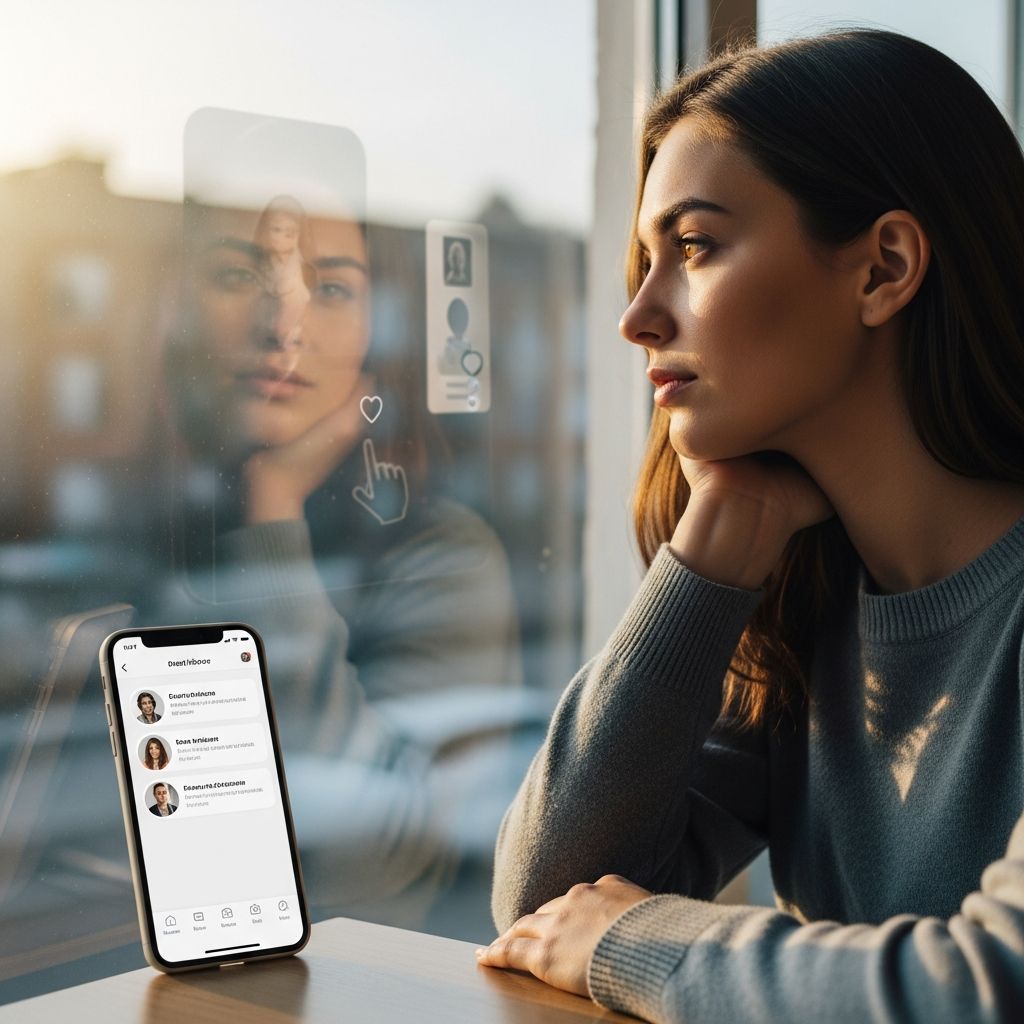
Online dating can feel like being dropped into a noisy party where everyone is talking at once. For many introverts, that sounds more draining than exciting. Yet the same traits that make you introverted—thoughtfulness, depth, and careful attention—can actually make you a wonderful partner and a quietly compelling presence online.
This guide is designed to help you approach online dating in a way that respects your energy, honors your personality, and gives you practical tools to build genuine connection without pretending to be more outgoing than you are.
Understanding Introversion in the Online Dating World
Before diving into profiles and messages, it helps to clarify what introversion really means. In personality psychology, introversion is often described as a preference for low-stimulation environments and a tendency to gain energy from solitude rather than social crowds.
Many introverts share these tendencies:
- Preferring one-on-one conversations over large group interactions
- Needing downtime after social events to recharge
- Thinking before speaking and choosing words carefully
- Enjoying depth and meaning over small talk
Online dating can match these preferences surprisingly well when used intentionally. Written communication gives you time to think, and the ability to filter potential matches allows you to focus on quality rather than quantity.
Designing an Introvert-Friendly Dating Strategy
Instead of approaching apps like a popularity contest, treat them as tools that you can use on your own terms. A simple written plan can make the whole process feel less chaotic and more manageable.
Clarify What You Want
Take a few minutes to answer questions like:
- Am I open to something casual, or am I looking for a long-term relationship?
- How much time and emotional energy can I realistically invest each week?
- Which traits in a partner feel nonnegotiable (e.g., kindness, emotional availability, similar lifestyle)?
Having this clarity makes it easier to spot promising matches and say “no” to people who are not a good fit—before you feel drained.
Manage Your Energy on Apps
Introverts often experience mental fatigue from constant social interaction, including digital conversations. To avoid burnout:
- Set a time limit for swiping or messaging (for example, 20–30 minutes at a time).
- Choose one or two apps instead of signing up for every platform.
- Schedule “offline evenings” with no dating apps to recharge.
| Without a Plan | With an Introvert-Friendly Plan |
|---|---|
| Endless swiping whenever you feel lonely or bored | Set windows for app use, like 3 evenings a week |
| Responding to every message out of guilt | Prioritizing quality conversations that feel mutual |
| Feeling pressure to meet quickly, even when anxious | Moving to a date only when you feel reasonably comfortable |
Creating a Profile That Feels True to You
Your profile is your quiet introduction. You do not have to be loud to be memorable; you simply need to be specific, honest, and consistent.
Highlight Depth Instead of Performance
Many profiles read like marketing slogans. As an introvert, you can stand out by sharing small, vivid details that reveal who you are:
- Instead of: “I like movies.”
- Try: “I rewatch thoughtful sci-fi films and pause to talk about the ideas.”
Specifics give people something real to respond to and help attract those who appreciate your style.
Use Photos that Match Your Real Life
Research on online dating suggests that clear, authentic photos contribute to more satisfying connections than heavily edited or misleading images.
- Include at least one clear headshot with natural lighting.
- Add a photo doing something you genuinely enjoy (reading in a park, cooking, hiking, making art).
- Avoid building a gallery of social scenes if that is not your normal lifestyle.
Communicate Your Introversion Positively
Rather than apologizing for being quiet, frame your traits as strengths:
- “I’m more of a one-on-one person than a party person.”
- “I love deep conversations and comfortable silences.”
- “I recharge with cozy evenings at home, and I’m looking for someone who enjoys that too.”
This invites compatible people and subtly filters out those who want a partner who is “on” all the time.
Messaging Without Draining Yourself
For many introverts, written conversation is a sweet spot: more spacious than a phone call, more intimate than just a photo. Still, open inboxes can feel overwhelming if you don’t have a simple approach.
Sending the First Message
It is easy to wait and hope someone else will make the first move, especially if you are naturally reserved. But sending thoughtful messages gives you more control over whom you interact with and often leads to better matches.
To make this easier, create a simple template you can adapt:
- Start with a friendly greeting.
- Mention something specific from their profile.
- Ask a low-pressure question.
For example:“Hi, I noticed you’re into baking bread from scratch. What recipe are you most proud of so far?”
Using Your Listening Skills Online
Introverts are often naturally good listeners. Online, this translates into carefully reading profiles and messages and responding in a way that shows you were paying attention. Dating research suggests that feeling heard is a key component of emotional intimacy and relationship satisfaction.
You can demonstrate this by:
- Quoting or referencing something they mentioned earlier.
- Asking follow-up questions that go slightly deeper.
- Balancing questions with small, relevant details about yourself so the exchange does not feel like an interview.
Keeping Conversations Manageable
To prevent chat fatigue:
- Limit how many active conversations you maintain at once.
- Give yourself permission to pause before replying; you do not have to answer instantly.
- If a conversation feels one-sided or draining, you are allowed to step back or stop responding politely.
Moving from Messages to Real-Life Meetings
For many introverts, the biggest emotional hurdle is transitioning from the safety of the app to an in-person date. Thoughtful planning can make this leap feel smaller.
Choose Low-Pressure First Dates
Environments with moderate stimulation—quiet cafés, parks, calm museums—tend to support better communication and comfort for people who are easily overstimulated.
- Suggest short activities, like a 45-minute coffee or a walk.
- Pick places where you can hear each other without shouting.
- Avoid long, high-commitment plans (like multi-hour dinners) for a first meeting.
Set Expectations Clearly
You can reduce anxiety by naming what you are comfortable with:
- “I’d love to meet for a quick coffee this weekend and see how we feel.”
- “I’m usually more on the quiet side at first, but I open up as I get comfortable.”
Simple, honest statements like these help the other person understand your style and prevent misunderstandings.
Build in Recovery Time
After social interactions, introverts often need solitude to recover emotional and cognitive resources.
- Avoid stacking multiple dates in a single day.
- Plan a calm activity for after the date—reading, music, a walk alone.
- Reflect briefly on how you felt with the person rather than only on whether they liked you.
Navigating Matches with Different Energy Levels
You may meet people who are much more extroverted, spontaneous, or socially active than you. Differences in social energy can coexist in a relationship, but they require communication.
Talk Openly About Social Needs
Research on relationships emphasizes that clear communication about personal needs helps maintain satisfaction and reduces conflict over time.
Topics worth gently discussing include:
- How often you each like to go out versus stay in
- How much alone time you need to feel centered
- What kinds of social events drain you versus energize you
Practice Saying “No” Without Guilt
Protecting your energy is essential for showing up as your best self in any relationship. You might say:
- “I’ve had a full week and don’t have the energy for a big event, but I’d love a quiet evening together tomorrow.”
- “Tonight I need some solo time to recharge; can we plan something for the weekend?”
Boundaries do not mean you care less; they allow you to stay emotionally available over the long term.
Staying Grounded: Self-Worth, Rejection, and Patience
Online dating exposes you to a lot of quick judgments, and that can be especially tough if you are sensitive or highly self-aware. Remember that algorithms and brief impressions do not define your worth.
Reframing Rejection
Psychological research shows that social rejection activates some of the same brain regions as physical pain, which helps explain why being ignored or unmatched can feel so intense.
To protect your sense of self:
- Remind yourself that a lack of response often reflects the other person’s priorities, timing, or capacity—not your value.
- View each interaction as information about what does or does not suit you.
- Acknowledge your feelings, but avoid building global stories like “I’m unlovable” from single experiences.
Celebrating Small Wins
Progress for an introvert may look different from what dating culture glorifies. Meaningful milestones might be:
- Updating your profile in a way that feels authentic
- Sending a sincere first message instead of only waiting
- Going on a low-pressure date and honoring your boundaries
Recognize these steps. Each one strengthens your confidence and makes the next step easier.
Frequently Asked Questions (FAQs)
Q: Do I have to act more outgoing to succeed at online dating?
No. It is more effective to present a realistic version of yourself so that you attract people who genuinely like your quieter style. You can stretch your comfort zone in small ways—like sending the first message—without pretending to be someone you are not.
Q: How many conversations should I keep going at once?
There is no fixed number, but many introverts find that two to four active chats feel manageable. If you notice dread when opening the app, consider gently closing some conversations that are not moving forward or do not feel mutual.
Q: How long should I chat before meeting in person?
Aim for a balance: enough time to feel basically safe and curious, but not so long that expectations become unrealistic. For some, this might be a week or two of regular messages and perhaps a brief call or video chat before meeting.
Q: What if my date thinks I am too quiet?
If you are participating, asking questions, and sharing when you are ready, your quietness is simply part of your style. If someone consistently criticizes your temperament, that is useful information that they may not be a compatible match.
Q: How do I take breaks from apps without losing momentum?
You can let active matches know that you are stepping back for a bit to focus on offline life, and that you may reply more slowly. Deleting or pausing apps for a set period—like a week or a month—can help you return with more clarity and energy.
References
- Carl G. Jung and the Theory of Introversion–Extraversion — American Psychological Association. 2014-09-01. https://www.apa.org/monitor/2014/09/jung
- Personality and Social Relationships — University of Cambridge, Department of Psychology. 2020-05-14. https://www.psychol.cam.ac.uk/research/personality-social-relationships
- Environmental Preferences and Overstimulation in Introverts and Extraverts — University of Central Florida, Office of Undergraduate Research. 2019-04-10. https://stars.library.ucf.edu/honorstheses/552
- Self-Presentation and Deception in Online Dating — Toma, Hancock, Ellison. Communication Research, SAGE Journals. 2008-02-01. https://journals.sagepub.com/doi/10.1177/0093650207313164
- Gender Differences in Initiation of Romantic Relationships — University of Kansas, Close Relationships Research. 2017-06-01. https://kuscholarworks.ku.edu/handle/1808/26118
- The Role of Perceived Partner Responsiveness in Relationship Well-Being — Reis, C.M., et al., Current Opinion in Psychology. 2017-08-01. https://doi.org/10.1016/j.copsyc.2017.02.011
- Neural correlates of social rejection — Eisenberger, Lieberman & Williams. Science. 2003-10-10. https://www.science.org/doi/10.1126/science.1089134

Medha Deb is an editor with a master's degree in Applied Linguistics from the University of Hyderabad. She believes that her qualification has helped her develop a deep understanding of language and its application in various contexts. Medha specializes in the areas of beauty, health, sports, and wellness and is committed to ensuring that the content on the website is…