
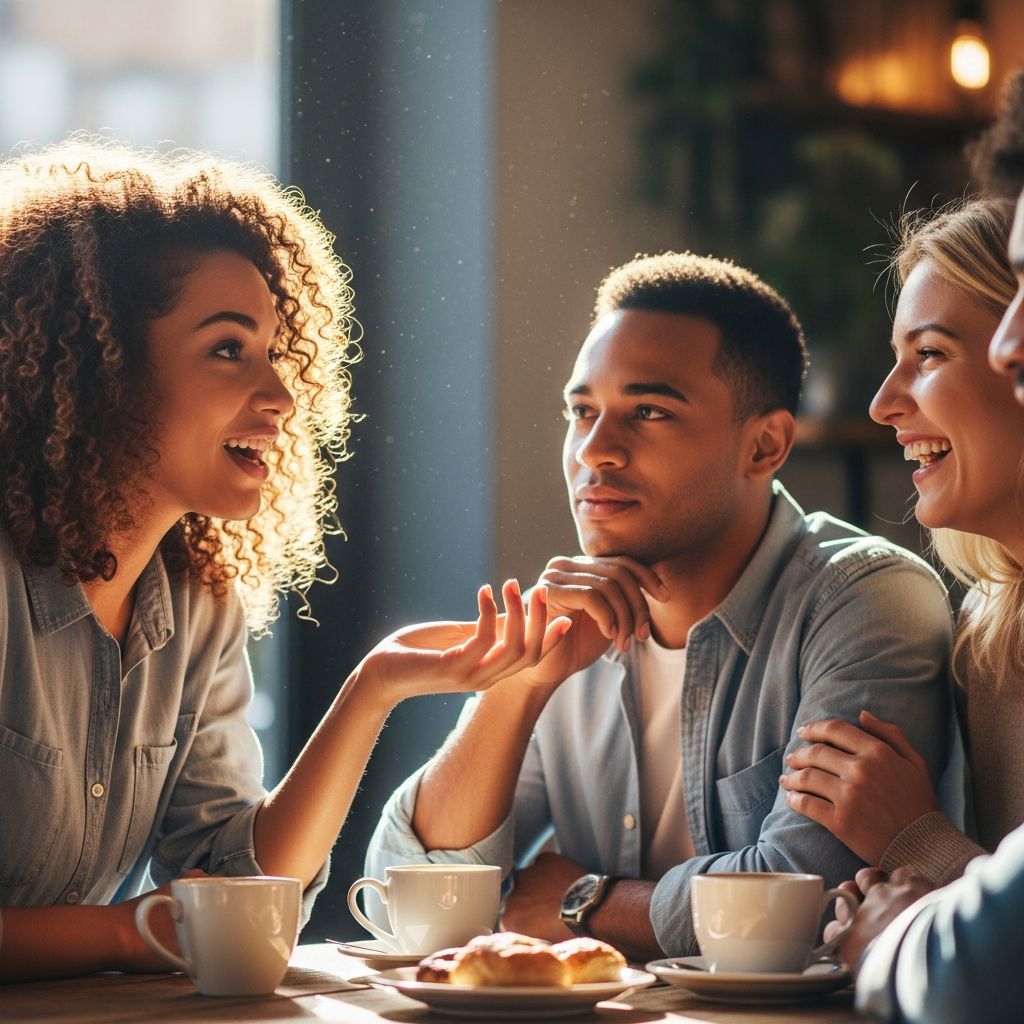
People with the ENFJ personality type, often called Protagonists, are known for being warm, socially skilled, and deeply invested in the well-being of others. Their friendships tend to be intense, purposeful, and focused on growth rather than small talk or convenience.
This article explores how ENFJs approach friendship: how they choose friends, how they show up for them, what challenges they face, and how both ENFJs and their friends can create healthier, more balanced relationships.
Understanding the ENFJ Approach to Friendship
To understand ENFJ friendships, it helps to look at their core traits:
- Extraverted: Draws energy from being around people and social engagement.
- Intuitive: Focused on ideas, potential, and long-term possibilities rather than immediate details.
- Feeling: Makes decisions based on values, empathy, and impact on people.
- Judging: Prefers structure, commitment, and clear expectations in relationships.
These preferences combine to make ENFJs highly relational. They often see friendships as a key part of their identity and life mission, not just a way to pass the time.
What ENFJs Look for in Close Friends
Although ENFJs are usually surrounded by many people, their inner circle is carefully chosen. They are drawn to friends who offer emotional depth and shared values.
Core Qualities ENFJs Value
- Shared values and ethics: ENFJs often prioritize friends who care about integrity, fairness, and compassion.
- Emotional openness: They appreciate people who are willing to talk about feelings, struggles, and aspirations, not just surface-level topics.
- Growth-oriented mindset: ENFJs tend to favor friends who want to improve themselves and the world around them.
- Reliability: Because they invest heavily in others, they gravitate toward people who show up consistently.
Friendship Compatibility Snapshot
| Friend Style | How ENFJs Respond | Potential Strength | Potential Tension |
|---|---|---|---|
| Deep, reflective, values-driven | Feels seen and energized | Mutual inspiration and emotional safety | Risk of over-intensity or emotional overload |
| Practical, here-and-now focused | May feel slightly out of sync | Balance between ideas and reality | Misunderstandings about priorities and depth |
| Independent, highly private | Respects but may feel shut out | Encourages healthy boundaries for ENFJ | ENFJ may interpret space as rejection |
How ENFJs Show Up as Friends
ENFJs often take a very active role in their friends’ lives. They do not simply keep in touch; they coordinate, encourage, and gently guide.
Signature Strengths in Friendship
- Natural encouragers: ENFJs are quick to notice others’ strengths and to offer sincere praise and motivation.
- Emotional first responders: They are often the first to reach out when someone seems down, offering listening, validation, and practical help.
- Social connectors: ENFJs frequently introduce people, host gatherings, and create networks of supportive friends.
- Reliable support: They tend to follow through on commitments and may go out of their way to help friends reach their goals.
The Invisible Work ENFJs Do
ENFJs often keep track of birthdays, important milestones, and subtle emotional shifts in their friends. Research on prosocial behavior suggests that people who are high in empathy and social responsibility are more likely to engage in such ongoing supportive behaviors. While this invisible labor can be deeply meaningful, it can also become a quiet burden if it is not reciprocated.
Inner Tensions: When Caring Turns into Overextending
Because ENFJs place relationships at the center of their lives, they are especially vulnerable to burnout and imbalance in friendships.
Common Friendship Challenges for ENFJs
- Over-giving: ENFJs may give time, energy, and emotional support far beyond what is sustainable, neglecting their own needs.
- Difficulty asking for help: They often feel more comfortable being the helper than the one who needs support, which can lead to emotional exhaustion.
- Conflict avoidance: ENFJs strongly value harmony and may avoid difficult conversations, allowing resentment to build beneath the surface.
- Taking responsibility for others’ feelings: They may blame themselves when friendships falter, even when circumstances are beyond their control.
Psychological Background: Why ENFJs Struggle to Set Limits
Personality research on extraverted, agreeable individuals shows they are more likely to engage in caretaking and to experience difficulty saying no, especially in close relationships. ENFJs often internalize the role of the “strong one” in the group, making it hard to admit when they are overwhelmed. Over time, this pattern can lead to compassion fatigue and emotional strain.
Boundaries and Balance: Skills ENFJs Benefit From
Healthy ENFJ friendships require balance: caring for others without abandoning oneself. This is where boundaries become essential.
Practical Boundary Strategies for ENFJs
- Check your motivation: Before offering help, ask, “Am I doing this from genuine care, or from fear of disappointing someone?”
- Use time limits: Agree with yourself on how much time or energy you can realistically give to a friend in crisis.
- Practice simple boundary phrases:
- “I really want to support you, and I also need to rest tonight.”
- “I can listen for about 20 minutes now, and we can follow up later.”
- Ask for reciprocity: Let trusted friends know when you need listening or encouragement, not just when they do.
Evidence from mental-health research indicates that clear, respectful boundaries are associated with lower stress and better relationship satisfaction across personality types. For ENFJs, learning to tolerate short-term discomfort in saying no can protect the long-term health of their friendships.
How Different Friends Experience the ENFJ
Friends often see ENFJs as warm, proactive, and energizing, but experiences vary depending on the other person’s style.
Positive Experiences Friends Often Report
- “They believed in me before I believed in myself.”
- “They notice when something is off and check in without being asked.”
- “They introduce me to people and create a sense of community.”
Potential Frustrations Friends May Feel
- Feeling managed: Some may experience ENFJs’ guidance as controlling or intrusive if not invited.
- Intensity overload: More reserved or independent friends can feel overwhelmed by frequent contact or deep conversations.
- Unclear needs: Because ENFJs downplay their own struggles, friends may be unsure how to support them in return.
Supporting the ENFJ in Your Life
Friends of ENFJs can make the relationship healthier and more mutual by being intentional in how they respond.
Ways to Be a Good Friend to an ENFJ
- Initiate check-ins: Don’t always wait for them to reach out; ask how they are really doing.
- Offer explicit appreciation: Acknowledge their efforts and emotional labor; ENFJs may not ask for recognition, but they value it.
- Encourage rest: Normalize them taking breaks from social obligations without guilt.
- Invite honest feedback: Let them know that disagreements will not destroy the friendship, which can reduce their fear of conflict.
Evidence from relationship science suggests that perceived appreciation and responsiveness play a major role in friendship satisfaction and emotional well-being. ENFJs, who often give so much, particularly benefit from seeing that their care has real impact.
Friendship Across Life Stages for ENFJs
ENFJ friendships frequently evolve as their roles in work, family, and community shift over time.
In Younger Years
- Likely to be involved in clubs, causes, or groups that revolve around people and ideals.
- May collect many acquaintances, then slowly refine their circle to those who share deeper values.
- Can be drawn to “fixing” or mentoring peers who are struggling, sometimes at their own expense.
Adulthood and Increased Responsibilities
- Friendship networks may become smaller but more intentional.
- ENFJs often become hubs for family and community, organizing events and providing emotional glue.
- Work in helping or people-oriented professions (such as teaching, counseling, or leadership roles) can blur lines between friend, colleague, and supporter.
Later Life
- Many ENFJs continue mentoring roles, offering wisdom and emotional presence.
- They may seek friendships that are less about doing and more about simply being together.
- Maintaining health and energy often becomes key to sustaining their preferred level of social involvement.
Actionable Tips: ENFJs Building Healthier Friendships
ENFJs can keep their natural warmth and idealism while protecting themselves from overextension by making small, consistent changes.
For ENFJs
- Schedule your own recharge: Treat rest and solitude as non-negotiable appointments, not optional extras.
- Name your needs early: Let friends know from the start that mutual care and open communication matter to you.
- Notice patterns of one-way giving: If you realize you always listen but are never listened to, consider rebalancing or redefining that friendship.
- Reframe conflict: View honest disagreement as a tool to deepen trust, not a sign that the relationship is failing.
For Friends of ENFJs
- Ask, don’t assume: Before accepting their help, ask if they truly have the capacity.
- Be transparent: Share your feelings and plans directly; ENFJs read between the lines, but they appreciate clarity.
- Share the emotional work: Offer to organize, host, or mediate sometimes so the ENFJ is not always the coordinator.
Frequently Asked Questions (FAQs)
Q: Do ENFJs need a lot of friends to be happy?
ENFJs enjoy having a wide social network, but their deepest fulfillment usually comes from a smaller number of emotionally close, values-aligned friendships. They may appear very social while privately prioritizing a handful of trusted confidants.
Q: Why do ENFJs sometimes seem controlling in friendships?
What may look like controlling behavior is often an ENFJ’s attempt to help, protect, or optimize situations for everyone involved. Without clear feedback or boundaries, their strong sense of how things “should” be can come across as over-involvement.
Q: How can ENFJs handle friends who drain their energy?
ENFJs benefit from setting limits on time, clarifying what kind of support they can realistically provide, and sometimes redirecting friends to additional resources such as counseling or support groups. Gradually adjusting expectations, rather than abruptly cutting ties, can feel more authentic to their values.
Q: Are ENFJs good at keeping long-distance friendships?
Yes. Their organized and committed nature often leads them to schedule calls, send thoughtful messages, and remember important dates, which supports long-term connection even across distance. However, they need reciprocity to avoid feeling like they are maintaining the relationship alone.
Q: How do ENFJs cope when a friendship ends?
ENFJs may initially blame themselves and feel intense sadness or guilt when a friendship dissolves. Over time, many are able to reframe the loss as a learning experience and invest their energy into healthier, more reciprocal connections.
References
- ENFJ Personality Type: The Protagonist — Simply Psychology. 2023-05-10. https://www.simplypsychology.org/enfj-personality.html
- ENFJ in Relationships — Personality Page. 2020-01-15. https://personalitypage.com/html/ENFJ-rel.html
- The Ties That Bind: Measuring the Strength of Adults’ Close Social Relationships — Holt-Lunstad J., Journal of Social and Personal Relationships. 2018-06-01. https://doi.org/10.1177/0265407518761225
- ENFJ Relationships – The Compassionate Facilitator — MBTIonline (The Myers-Briggs Company). 2022-09-20. https://www.mbtionline.com/en-US/MBTI-Types/ENFJ/Relationships
- ENFJ in Relationships — TraitLab Blog. 2021-11-03. https://blog.traitlab.com/enfj/relationships

- Integrated M.A. in Applied Linguistics, University of Hyderabad
- 5+ years in editorial, instructional, SEO, and research-based writing
Sneha is a relationships and lifestyle writer with a strong foundation in applied linguistics and certified training in relationship coaching. She brings over five years of writing experience to theskillvault, crafting thoughtful, research-driven content that empowers readers to build healthier relationships, boost emotional well-being, and embrace holistic living. Her writing and insights reflect the belief that beauty, happiness, and wellness…