
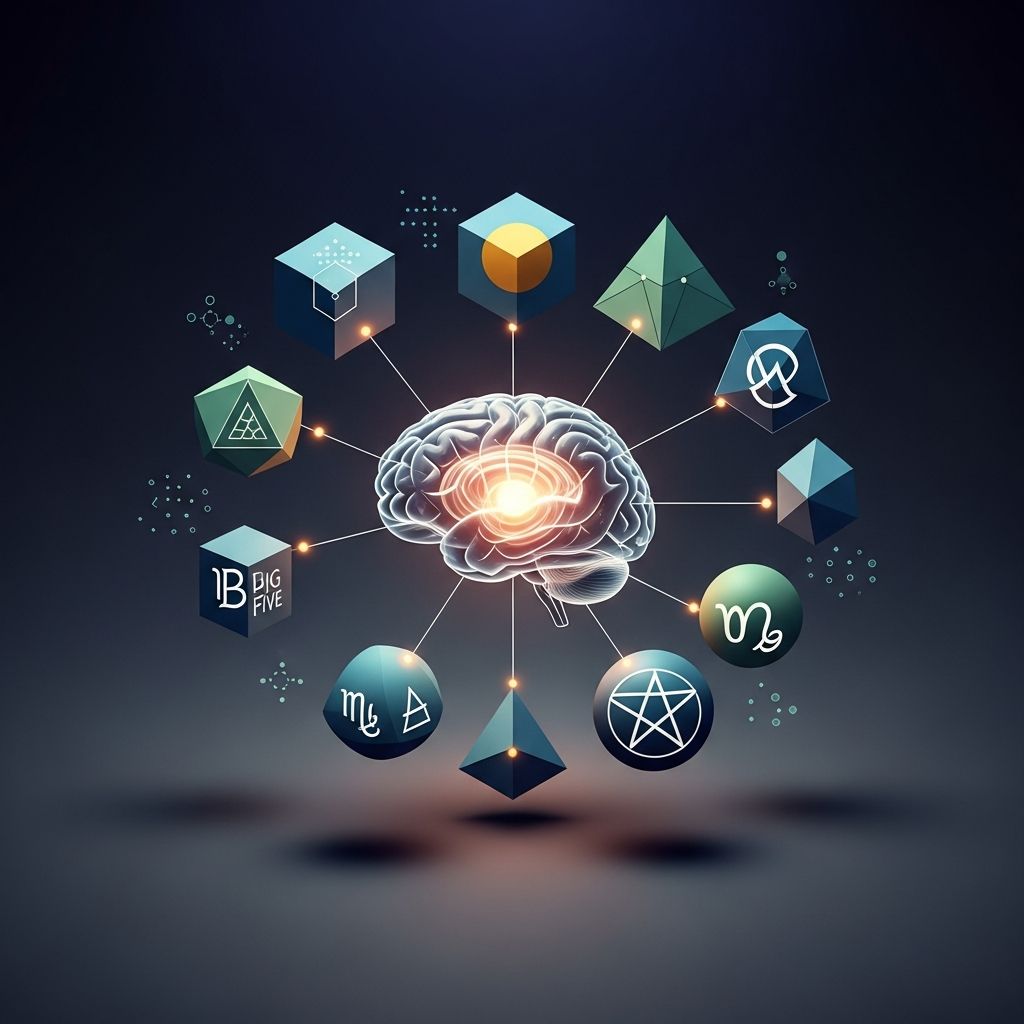
The Science of Understanding Human Personalities
Throughout history, psychologists and researchers have attempted to categorize human behavior and personality into comprehensible frameworks. These classification systems serve as valuable tools for understanding ourselves and others, helping individuals navigate their careers, relationships, and personal development. The study of personality extends beyond casual observation; it encompasses rigorous psychological models developed through decades of research and practical application. By examining these frameworks, we gain insight into the fundamental patterns that define how people think, feel, and interact with their environment.
The Four Dimensions of Psychological Preference
One of the most widely recognized approaches to personality classification divides human psychology into four fundamental dimensions. These dimensions operate on a spectrum rather than as absolute categories, with individuals falling at different points along each continuum. Understanding these dimensions provides a foundation for comprehending more complex personality models. Each dimension represents a natural preference in how people approach the world and make decisions, much like handedness where individuals typically favor one hand over the other.
Energy Direction and Social Orientation
The first dimension examines where individuals direct their psychological energy and attention. Some people gain energy from external interactions, stimulation, and social engagement with the world around them. Others find themselves energized by internal reflection, solitude, and deep concentration on ideas and concepts. This fundamental difference influences everything from career preferences to social behavior patterns. Individuals who prefer external engagement tend to be comfortable in group settings and seek varied experiences, while those oriented inward often require quiet time to recharge and may prefer depth over breadth in relationships.
Information Processing and Perception
The second dimension addresses how individuals gather and process information about the world. Some people rely heavily on concrete facts, sensory experiences, and practical details they can verify through their senses. They focus on what is happening in the present moment and trust information that has proven reliable. Other individuals naturally gravitate toward patterns, possibilities, and abstract meanings underlying surface information. They enjoy exploring “what could be” and making intuitive connections between disparate ideas. This difference profoundly affects how people approach problem-solving, learning, and decision-making processes.
Decision-Making and Values Framework
The third dimension encompasses how individuals make choices and evaluate situations. Some people rely primarily on objective logic, analyzing information systematically and applying consistent principles to reach conclusions. They tend to prioritize efficiency and truth over social harmony. Others base their decisions more heavily on personal values, impact on relationships, and consideration of how outcomes affect people involved. These individuals naturally consider the human element in decision-making and may prioritize consensus and harmony. Both approaches have merit in different contexts, and most individuals blend both to varying degrees.
Structure and Organization Preference
The fourth dimension reflects how individuals approach organization and planning. Some people prefer structured environments, clear schedules, and predetermined plans. They find comfort in closure, definitive answers, and systematic approaches to tasks. Other individuals thrive with flexibility, spontaneity, and the ability to adapt as circumstances change. They often keep options open longer and enjoy the freedom that comes with less rigid structure. Neither preference is inherently superior; each has distinct advantages in different life situations and professional contexts.
The Sixteen Personality Combinations
When the four dimensions are combined, they create sixteen distinct personality patterns. Each pattern represents a unique configuration of psychological preferences that shapes how individuals approach life challenges, career decisions, and interpersonal relationships. These combinations produce rich diversity in human behavior while still maintaining recognizable patterns that psychologists and researchers have documented extensively.
The Logical and Independent Group
Certain personality combinations emphasize analytical thinking and independent decision-making. These individuals tend to be highly objective, focusing on logical consistency and intellectual challenge. They often excel in technical fields, research, engineering, and strategic planning roles where systematic analysis drives success. These personalities value competence highly and maintain rigorous standards for themselves and others. They may appear reserved in social settings but develop deep, meaningful relationships with those who share their intellectual interests. Their strength lies in their ability to see through complexity and develop robust solutions to challenging problems.
The Practical and Responsible Group
Another combination emphasizes practical application of knowledge and responsibility toward commitments. These individuals create structured environments and tend to be highly reliable in their obligations. They excel at implementation, execution, and ensuring projects are completed thoroughly and on schedule. These personalities form the backbone of many organizations, providing stability and dependable performance. They value tradition and proven methods, preferring to work within established frameworks rather than constantly reinventing approaches. Their conscientiousness and follow-through make them invaluable team members and loyal friends.
The Creative and Insightful Group
Certain combinations blend intuition with a focus on human values and possibilities. These individuals often possess remarkable insight into human nature and motivation. They excel in roles requiring empathy, counseling, mentoring, and understanding complex human dynamics. These personalities often feel drawn to helping others develop and reach their potential. They naturally navigate social nuance and emotional subtlety, making them effective communicators and relationship builders. Their vision often extends beyond immediate circumstances to broader possibilities and long-term implications of decisions.
The Dynamic and Spontaneous Group
Another combination emphasizes action, adaptability, and living in the present moment. These individuals are often energetic, engaging, and bring enthusiasm to their endeavors. They excel at navigating changing circumstances and thinking on their feet. These personalities thrive in dynamic environments and often bring infectious energy to teams and social situations. They tend to learn best through direct experience rather than theoretical instruction. While they may struggle with long-term planning and detailed follow-through, their resourcefulness and ability to keep morale high provide significant value in crisis situations and novel challenges.
Alternative Classification Frameworks
Beyond the four-dimensional model, psychology offers other classification approaches that provide different perspectives on personality organization. These alternative frameworks sometimes emphasize different aspects of human psychology or organize information in ways that prove more intuitive for certain applications.
The Five-Dimensional Model
A comprehensive model in psychological research uses five broad dimensions to describe personality across populations. This framework measures openness to experience, conscientiousness, extraversion, agreeableness, and neuroticism or emotional stability. This approach scores individuals on continuous scales rather than placing them into discrete categories. Many psychologists consider this model more scientifically robust due to extensive validation research across diverse populations. The five-dimensional approach allows for more nuanced understanding of personality as operating on spectrums rather than as binary categories.
The Four Temperaments Model
Another approach consolidates personality patterns into four primary temperament groups, each associated with distinct behavioral tendencies and natural strengths. This model emerged from efforts to build upon earlier classification systems while maintaining simplicity and practical applicability. These temperament groups often correlate with occupational preferences, learning styles, and interpersonal patterns. This framework proves particularly useful in educational settings and career counseling where understanding broad personality clusters helps guide decisions.
Behavioral Type Models
Some classification systems focus on observable behavioral patterns rather than internal psychological processes. These models categorize individuals based on dominance patterns, influence styles, steadiness characteristics, and conscientiousness levels. These frameworks often appeal to business and organizational settings because they directly address behavioral manifestations relevant to workplace dynamics. While rooted in different theoretical foundations than psychological preference models, behavioral classifications often reach similar conclusions about personality organization.
Applications in Modern Life
Career Development and Occupational Fit
Understanding personality patterns helps individuals identify careers aligned with their natural strengths and preferences. Certain personality combinations naturally gravitate toward specific fields and excel in particular roles. Accounting, engineering, and research positions often attract individuals with strong analytical and detail-oriented preferences. Creative fields, counseling, and leadership roles frequently appeal to those with intuitive and people-focused tendencies. Organizations increasingly use personality assessments to improve hiring decisions, build balanced teams, and develop management approaches suited to individual work styles.
Relationship Dynamics and Compatibility
Personality frameworks illuminate why certain individuals naturally click while others must work harder to understand each other. Partners with complementary personality patterns often balance each other’s weaknesses and create well-rounded team dynamics. Understanding differences in communication style, decision-making approach, and organizational preference helps couples, families, and friendships navigate conflicts more effectively. Rather than viewing personality differences as obstacles, appreciation for diverse approaches strengthens relationships.
Personal Growth and Self-Awareness
Personality assessments serve as mirrors for self-reflection, helping individuals understand their motivations, strengths, and potential growth areas. Many people report that understanding their personality pattern validates their experiences and helps them stop judging themselves against incompatible standards. This self-knowledge facilitates more intentional personal development and helps individuals make life choices aligned with their authentic preferences rather than conforming to external expectations.
Scientific Considerations and Limitations
While personality classification systems provide valuable frameworks for understanding human behavior, researchers emphasize several important limitations. These models, though popular and widely used, represent simplifications of complex human psychology. Individual variation within personality patterns often exceeds differences between patterns, meaning two individuals with identical classifications may behave quite differently in specific contexts. Additionally, personality exhibits both consistency and flexibility; people demonstrate remarkable ability to adapt behavior based on situational demands while maintaining underlying preferences.
Test-retest reliability issues plague some popular assessments, with individuals receiving different classifications upon retaking tests. This inconsistency suggests that temporary mood, stress levels, and contextual factors influence results more than some models acknowledge. Environmental factors, cultural conditioning, and life experiences shape personality expression in ways that pure classification systems may not fully capture.
Integrating Multiple Perspectives
Rather than viewing different personality frameworks as competing systems, integrating multiple approaches provides more comprehensive understanding. Each model highlights different aspects of personality organization and offers distinct practical applications. Psychological preference dimensions explain intrinsic motivation and energy patterns. Behavioral models illuminate observable interaction styles. Dimensional approaches capture personality nuance more completely than categorical systems. Business, education, and psychology professionals often benefit from understanding multiple frameworks and applying them contextually.
Common Questions About Personality Assessment
Can personality change over time?
Core personality preferences tend to remain relatively stable throughout adulthood, though behavior can adapt significantly based on learning and environmental demands. Major life events, intensive experiences, and deliberate development efforts can shift personality expression while underlying preferences often persist. Research suggests personality becomes increasingly stable with age, though plasticity remains possible throughout life.
Are personality assessments scientifically valid?
Validation levels vary considerably across different personality systems. Five-dimensional models have extensive scientific research supporting their validity across diverse populations and cultures. Some popular classification systems rely more on intuitive appeal and practical utility than rigorous scientific validation. Most psychologists recommend understanding assessment limitations and avoiding over-interpretation of results as absolute definitions of personality.
Can assessment results guide major life decisions?
Personality assessments provide valuable information for career exploration, relationship insights, and self-understanding but should not determine major decisions unilaterally. These tools work best as one input among many considerations including skills, interests, values, opportunities, and circumstances. Personality patterns suggest natural inclinations but do not predict success or determine life outcomes.
How do personality assessments differ from psychological testing?
Personality assessments classify normal personality patterns and preferences for self-understanding and life planning purposes. Psychological testing conducted by licensed professionals assesses mental health, diagnoses conditions, and evaluates clinical symptoms. While personality assessments offer insights into normal functioning, they do not diagnose mental health conditions or replace professional psychological evaluation.
Why do different assessments yield different results?
Various personality systems organize information differently, emphasize different aspects of psychology, and use different assessment methodologies. One person might receive different classifications from different systems because they measure distinct dimensions or use different classification algorithms. Understanding what each system measures helps explain apparent discrepancies.
References
- Myers-Briggs Type Indicator (MBTI) – Simply Psychology — Simply Psychology. 2025. https://www.simplypsychology.org/the-myers-briggs-type-indicator.html
- What are Personality Types? — Mental and Health Awareness. 2025. https://www.mentalandhealthawareness.com/support-articles/causes-of-personality-types
- Simple List of Personality Types and Their Scientific Proof — Healthline. 2025. https://www.healthline.com/health/mental-health/list-of-personality-types
- 16.1 Personality Traits – Introduction to Psychology — Saskoer. 2025. https://www.saskoer.ca/introductiontopsychology/chapter/personality-traits/
- Personality type — Wikipedia. 2025. https://en.wikipedia.org/wiki/Personality_type
- Understanding the 4 Personality Types: A, B, C, and D — Hire Success. 2025. https://www.hiresuccess.com/help/understanding-the-4-personality-types

- Integrated M.A. in Applied Linguistics, University of Hyderabad
- 5+ years in editorial, instructional, SEO, and research-based writing
Sneha is a relationships and lifestyle writer with a strong foundation in applied linguistics and certified training in relationship coaching. She brings over five years of writing experience to theskillvault, crafting thoughtful, research-driven content that empowers readers to build healthier relationships, boost emotional well-being, and embrace holistic living. Her writing and insights reflect the belief that beauty, happiness, and wellness…