
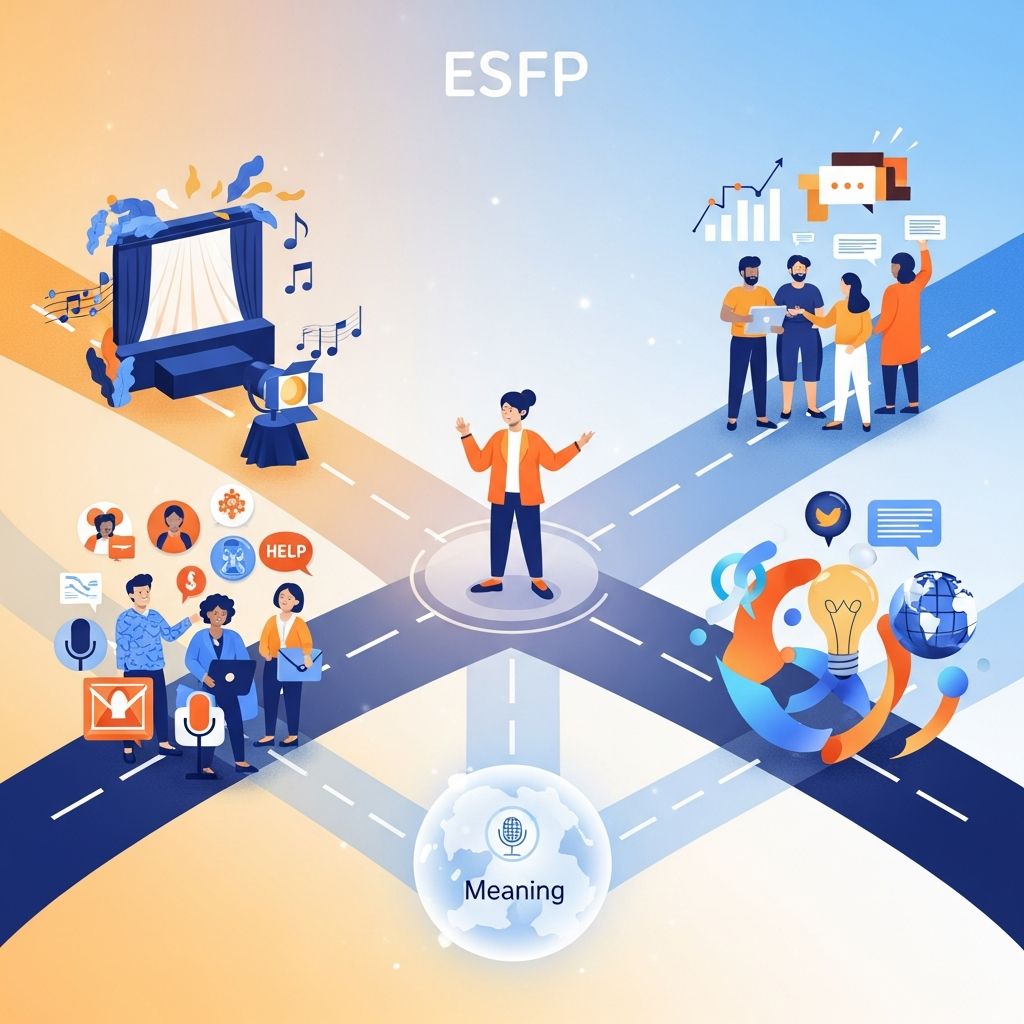
ESFPs, often called Entertainers in the MBTI framework, are energetic, people-centered personalities who thrive when work feels lively, social, and hands-on. They are typically outgoing, adaptable, and focused on real-world experiences rather than abstract theory. This article explores how ESFPs can choose and grow in careers that match their natural energy, values, and style.
Key ESFP Traits That Shape Career Choices
Understanding what drives ESFPs at work makes it easier to spot roles that feel natural and sustainable.
- People-focused: ESFPs are energized by face-to-face interaction and typically enjoy roles that involve frequent contact with others, such as customers, patients, or audiences.
- Present-oriented: They focus on what is happening now, preferring practical action over long periods of planning or analysis.
- Emotionally attuned: ESFPs often pick up on the feelings and needs of others, which can make them supportive teammates, informal counselors, or morale-boosters at work.
- Adaptable and spontaneous: They tend to be flexible and comfortable with change, enjoying environments where every day is a little different.
- Hands-on learners: ESFPs usually prefer learning by doing rather than through dense manuals or long lectures.
These natural tendencies help explain why ESFPs are drawn to careers where they can move, respond, and interact rather than sit quietly behind a screen for hours on end.
What ESFPs Need in a Work Environment
Beyond specific job titles, ESFPs tend to flourish when certain conditions are present in their day-to-day work life.
- High interaction: Opportunities to talk, collaborate, and help others directly.
- Visible impact: Clear, concrete results they can see, feel, or experience in the moment.
- Variety and movement: Tasks that vary across the day and allow them to move around rather than stay isolated at a desk.
- Relaxed structure: Some flexibility in how they organize their time, instead of rigid, minute-by-minute scheduling.
- Positive atmosphere: A culture that values humor, warmth, and practical support rather than constant criticism.
According to research on personality and job satisfaction, people are more engaged and effective when their work environment aligns with their natural preferences and values.
ESFP-Friendly Career Themes (With Example Roles)
ESFPs can succeed in many industries, but certain themes tend to fit their style especially well.
1. People-Centered Service and Hospitality
Service-oriented jobs let ESFPs use their sociability, quick reactions, and desire to make others feel good.
- Front-desk or guest relations in hotels, resorts, or events
- Restaurant or café roles that involve direct customer contact
- Travel, tourism, or experience-based services (tours, excursions, activities)
- Client-facing roles in wellness centers, gyms, or spas
These paths often offer the variety, social energy, and real-time feedback that ESFPs find highly motivating.
2. Health, Wellness, and Caring Professions
Many ESFPs feel drawn to work that improves others’ quality of life in practical, immediate ways, especially in healthcare and well-being settings.
- Nursing and allied health professions that involve hands-on patient care
- Occupational therapy or physical therapy support roles
- Healthcare assistants in hospitals, clinics, or long-term care
- Fitness coaching, group exercise instruction, or personal training
Research on healthcare careers highlights the importance of interpersonal skills and empathy, qualities that ESFPs often possess in abundance.
3. Sales, Customer Success, and Client Relations
Roles that involve building rapport, responding to immediate needs, and tailoring solutions can feel natural to ESFPs.
- Retail sales, where they can interact, demonstrate products, and create a positive atmosphere
- Account management or customer success roles that focus on relationships rather than pure numbers
- Inside sales or consultative sales where listening and problem-solving matter
Businesses frequently rely on extroverted, people-oriented staff to maintain customer loyalty, which aligns well with ESFP strengths.
4. Performance, Media, and Creative Expression
Some ESFPs enjoy expressing themselves in visible or performance-based roles, especially when they can connect emotionally with an audience.
- Acting, dance, music, or live performance
- Hosting, presenting, or on-camera roles in media
- Content creation that emphasizes personality and storytelling (e.g., video, live streaming)
- Event hosting, MC work, or community entertainment
While creative industries can be unstable, they often give ESFPs the stimulation and feedback they crave when approached with realistic expectations and support.
5. Education, Training, and Youth Work
ESFPs who enjoy guiding others may thrive when teaching practical skills or supporting people in high-energy environments.
- Early childhood or primary education roles emphasizing play and interaction
- School support staff, lunchtime supervisors, or activity coordinators
- Coaching in sports, arts, or extracurricular programs
- Recreation programs, camps, and youth outreach
Education research emphasizes how relational, responsive teachers can deeply influence student engagement, which plays to ESFP strengths in connection and spontaneity.
Career Areas That May Feel Draining for ESFPs (and How to Adapt)
No personality type is “locked out” of any career, but certain patterns can feel more tiring for ESFPs over time.
| Potential Challenge Area | Why It Can Be Hard for ESFPs | Adjustment Strategies |
|---|---|---|
| Highly solitary, desk-bound roles | Limited interaction and physical movement can feel draining and demotivating. | Seek team-based projects, regular meetings, or hybrid roles with fieldwork. |
| Deeply analytical or abstract work | Long stretches of theory and data may feel disconnected from real life. | Look for applied versions of these fields or roles that translate analysis into action. |
| Rigid, rule-heavy environments | Extreme structure can clash with ESFP flexibility and spontaneity. | Find workplaces with clear rules but some freedom in methods and scheduling. |
| Long-term planning focus | Thinking 5–10 years ahead may feel unnatural compared with reacting in the moment. | Use external tools (calendars, accountability partners) to support planning instead of relying only on willpower. |
ESFP Strengths at Work (and How to Use Them Intentionally)
Research on personality suggests that using signature strengths regularly can increase engagement and well-being at work. ESFPs have several strengths that are particularly valuable in organizations:
- Interpersonal warmth: They often help create a sense of belonging and reduce tension within teams.
- Responsiveness: ESFPs can respond quickly to changing conditions, unexpected customers, or sudden issues.
- Practical problem-solving: Instead of overthinking, they often look for immediate, workable solutions.
- Energy and enthusiasm: Their positive attitude can boost morale during intensive periods, such as peak seasons or major events.
- Observation of people and environment: ESFPs often notice subtle changes in mood, body language, or context that others miss.
Using these strengths deliberately—rather than only instinctively—can help ESFPs stand out as reliable, impactful contributors.
Common ESFP Career Pitfalls and How to Grow Past Them
Like all personalities, ESFPs face predictable challenges that show up repeatedly in work settings.
- Difficulty with long-term commitments: They may start enthusiastically but lose interest when work becomes repetitive.
• Growth move: Break long projects into short milestones and reward yourself at each step. - Avoidance of conflict and criticism: ESFPs often dislike tense conversations and may dodge feedback that could help them grow.
• Growth move: Reframe feedback as practical information that improves your impact on people you care about. - Impulsivity in job changes: When bored, they may switch roles quickly without evaluating long-term consequences.
• Growth move: Before making a big change, talk with a trusted mentor or friend who takes a longer view. - Neglecting routine tasks: Paperwork, documentation, or follow-up can feel tedious.
• Growth move: Batch routine tasks into short, timed sprints and pair them with something enjoyable (music, a change of location).
Designing a Career Path That Fits ESFP Values
Beyond job titles, ESFPs often care about how work feels and what it means in their lives.
- Value experiences over status: ESFPs may be happier in a modest role that feels alive and relational than in a prestigious title that is isolating.
- Prioritize real impact on people: Many ESFPs want to see visible improvements in others’ mood, health, or experiences.
- Allow room for personal life: Because relationships and enjoyment matter deeply, they often seek work that leaves space for friends, family, and hobbies.
- Seek growth through practice, not theory: Apprenticeships, on-the-job training, and short courses often fit better than purely academic routes.
Career development research suggests that aligning work with core values is linked to greater satisfaction and lower burnout, which is particularly important for emotionally engaged types like ESFPs.
Practical Job Search Tips for ESFPs
When exploring job options, ESFPs can benefit from using their natural social skills strategically.
- Use informational conversations: Talk to people already doing roles you find interesting; ask about the day-to-day reality, not just job titles.
- Look beyond descriptions: Job ads can sound dry; ask interviewers how much real interaction, variety, and autonomy the role actually offers.
- Show your strengths in person: Whenever possible, attend networking events, open days, or video interviews where your warmth and energy can be felt directly.
- Ask about culture: Questions about team dynamics, communication style, and flexibility will help you gauge whether the environment fits you.
- Check for growth pathways: Look for roles where you can add responsibilities over time rather than feeling stuck.
Long-Term Growth: Helping ESFPs Build Sustainable Careers
ESFPs may feel most comfortable responding to the present moment, but long-term satisfaction improves when they intentionally build a foundation for the future.
- Develop basic planning habits: Simple tools—calendars, reminders, short written goals—can be enough to support progress without feeling restrictive.
- Learn to tolerate short-term discomfort: Some tasks (like training, certification, or savings) are less exciting but open doors later.
- Cultivate feedback allies: Find supervisors or colleagues who can give honest but supportive feedback so you can grow without feeling attacked.
- Invest in transferable skills: Communication, teamwork, and problem-solving generalize across many roles and industries.
- Protect your energy: Because ESFPs give a lot emotionally, burnout is a risk; build habits of rest, boundaries, and non-work enjoyment.
Frequently Asked Questions (FAQs) About ESFP Careers
Q: Are ESFPs limited to creative or performance jobs?
A: No. While many ESFPs enjoy visible, expressive roles, they can succeed in healthcare, education, sales, customer service, and many other fields. The key is finding work that offers interaction, variety, and real-world impact rather than a specific industry.
Q: Can an ESFP be happy in an office job?
A: Yes, if the office role involves frequent collaboration, meetings, or direct client contact, and if the workplace culture is friendly and flexible. Purely solitary, screen-only work with minimal interaction is more likely to feel draining over time.
Q: How can ESFPs handle tasks they find boring, like paperwork?
A: Breaking tasks into short chunks, using timers, and pairing them with small rewards can help. Some ESFPs also benefit from doing routine tasks at a specific time each day so they become a quick habit rather than a constant source of avoidance.
Q: Do ESFPs need formal education to build a good career?
A: Not always. Many ESFPs thrive in careers built through vocational training, apprenticeships, certifications, or on-the-job learning. In fields that require degrees (such as nursing or teaching), choosing programs with practical components and group work can make study more engaging.
Q: What is the biggest career mistake ESFPs tend to make?
A: A common mistake is changing jobs impulsively when bored, without considering long-term growth or what specifically is missing. Reflecting on patterns—such as lack of interaction, little variety, or poor culture—helps ESFPs choose better fits rather than repeating the same frustrations in a new place.
References
- ESFP Personality Type: Entertainer MBTI — Simply Psychology. 2023-03-15. https://www.simplypsychology.org/esfp-personality.html
- ESFP Personality Type: Definition, Traits and Careers — Indeed Career Guide. 2022-08-30. https://www.indeed.com/career-advice/finding-a-job/esfp-personality
- 10 Characteristics of the Entertainer Personality Type (ESFP) — Calm Blog. 2022-05-10. https://www.calm.com/blog/esfp
- Strengths & Weaknesses — ESFP Personality (Entertainer) — 16Personalities. 2021-11-05. https://www.16personalities.com/esfp-strengths-and-weaknesses
- ESFP Personality (Entertainer) — 16Personalities. 2021-10-20. https://www.16personalities.com/esfp-personality
- ESFP Personality Type: Characteristics, Careers and Tips — MBTIonline (The Myers-Briggs Company). 2020-09-01. https://www.mbtionline.com/en-US/MBTI-Types/ESFP
- ESFP: MBTI Personality Profile — The Myers-Briggs Company. 2020-09-01. https://eu.themyersbriggs.com/en/tools/MBTI/MBTI-personality-Types/ESFP

Medha Deb is an editor with a master's degree in Applied Linguistics from the University of Hyderabad. She believes that her qualification has helped her develop a deep understanding of language and its application in various contexts. Medha specializes in the areas of beauty, health, sports, and wellness and is committed to ensuring that the content on the website is…