
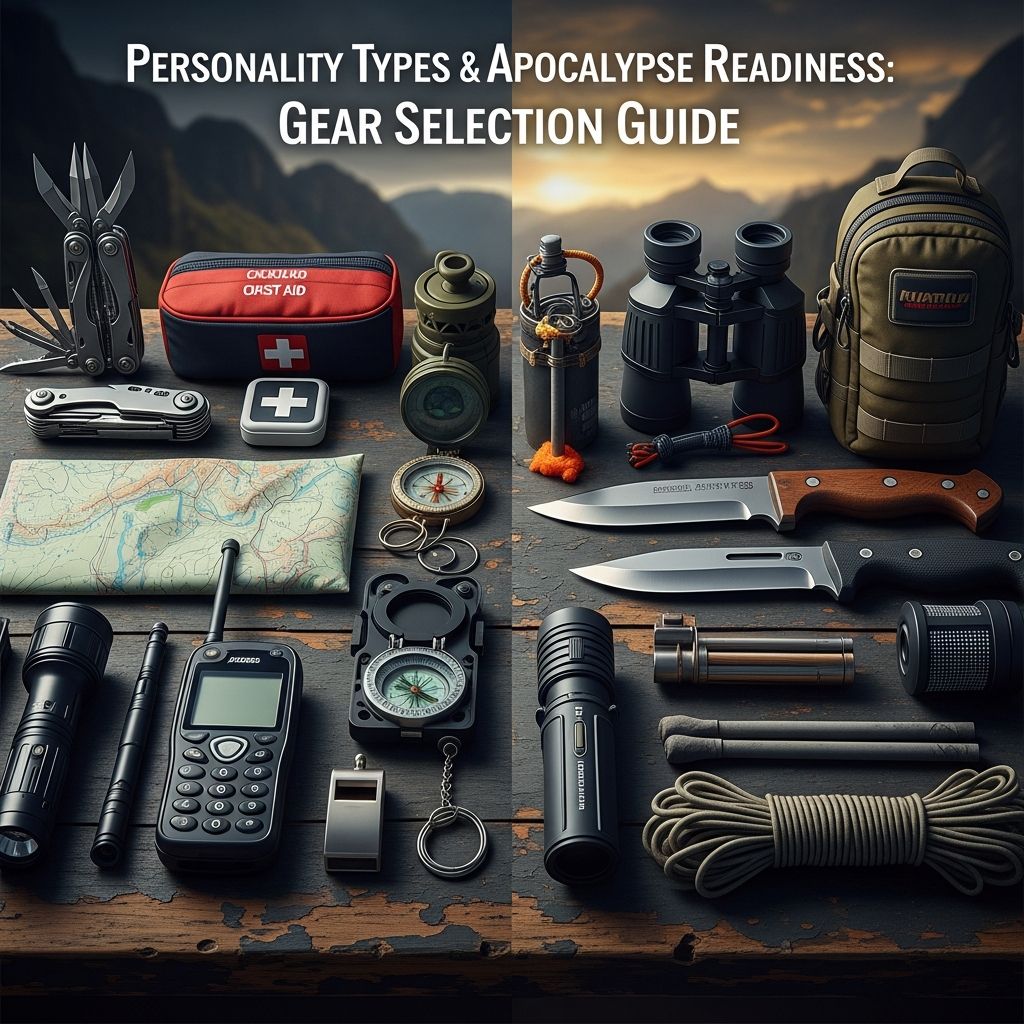
Understanding Personality-Driven Survival Approaches
When considering survival scenarios, most discussions focus on the technical aspects of gear and equipment needed to endure catastrophic situations. However, a crucial dimension often overlooked is how individual personality traits and psychological preferences directly influence what survival strategies and gear selections make the most sense for different people. Not every survivor operates with the same mindset, priorities, or decision-making processes. Understanding your personality type can provide valuable insights into which survival tools and approaches will feel most natural and effective for your specific psychological profile.
The relationship between personality and preparedness extends beyond mere preference—it shapes how individuals will actually use their equipment, maintain their supplies, and respond under pressure. Someone who thrives on logical analysis will approach their survival kit differently than someone who prioritizes emotional security and group dynamics. By recognizing these patterns, potential survivors can make more intentional choices about their apocalypse readiness strategies.
The Analytical Mind: Logic-Driven Survivors
Individuals with analytical personality types tend to approach survival preparation as a systematic problem to be solved. These personalities excel at research, data gathering, and creating detailed contingency plans. When building an apocalypse readiness kit, analytical survivors prioritize information density and efficiency.
For this personality category, the foundation of preparedness begins with comprehensive planning documents. Navigation tools like quality compasses and topographic maps appeal to logical minds because they represent concrete, measurable solutions to potential displacement scenarios. Water purification systems with documented effectiveness rates satisfy the need for evidence-based decision-making. A portable water filter with clear specifications about micron filtration and bacteria elimination rates provides the reassurance that logical thinkers require.
The analytical survivor’s kit typically includes detailed reference materials—books on wilderness medicine, plant identification, and structural engineering—because these personalities believe knowledge itself is a survival tool. A well-organized first aid kit with clearly labeled medications and detailed usage instructions aligns with their need for systematic organization. Solar chargers and backup power systems appeal to their appreciation for reliable technology when properly maintained.
Multi-tools and versatile equipment rank highly in the analytical survivor’s priority list because these items maximize functionality per unit of weight, representing optimal resource allocation. Technical survival manuals and laminated reference cards ensure critical information remains accessible without depending on batteries or digital devices.
The Action-Oriented Personality: Hands-On Preparedness
Some personality types derive confidence and security from physical capability and immediate action capacity. These individuals focus less on theoretical planning and more on tangible tools that enable direct problem-solving. For action-oriented survivors, a well-equipped tool collection becomes the foundation of apocalypse readiness.
Practical implements like crowbars, hammers, and specialized axes appeal to personalities that feel empowered by physical capability. The M48 tactical survival axe—a multi-purpose tool combining cutting, prying, and striking capabilities in a single implement—represents the kind of versatile equipment that action-oriented minds appreciate. Heavy-duty shovels for constructing defensive positions or creating shelter foundations satisfy the need to actively shape their environment rather than passively adapting to it.
Combat-ready gear and weapons systems appeal directly to action-oriented personalities. Reliable firearms, tactical machetes, and purpose-built survival blades provide the sense of control and capability these personalities crave. The philosophy isn’t necessarily about aggressive posturing but rather about possessing immediate tools for direct environmental interaction and obstacle removal.
Clothing and protective gear designed for rugged activity and durability over comfort reflects the action-oriented mindset. Reinforced boots suitable for climbing and traversing difficult terrain, heavy-duty gloves protecting hands during tool use, and body armor emphasizing functionality over aesthetics all appeal to personalities that identify with direct action and physical engagement with challenges.
The Social Connector: Community-Focused Survival
Not all personality types prioritize individual independence when facing apocalyptic scenarios. Social personality types recognize that survival success often depends on group dynamics, collaboration, and maintaining cohesive relationships with other survivors. Their gear selections and preparedness strategies reflect these interpersonal priorities.
For community-oriented survivors, communication equipment becomes essential—tools enabling coordination with family members, group members, or other survivors. Backup power systems like solar chargers serve the dual purpose of maintaining group communication devices beyond merely personal needs. First aid supplies take on expanded significance because social personalities recognize their responsibility to care for other group members, not just themselves.
Shelter equipment like tents and weatherproof coverings appeal to social survivors partly because they envision shared accommodations rather than solitary refuge. Camp stoves and food preparation equipment gain importance because these personalities anticipate shared meals and group morale-building activities. Rope, tarps, and construction materials appeal to their vision of building collaborative shelter structures rather than individual bunkers.
Group-oriented survivors often prioritize redundancy in supplies—maintaining backup resources for multiple people, not just personal consumption. Their motivation to stock extra medications, food supplies, and water purification capacity stems from imagining scenarios where they support dependents or community members alongside themselves.
The Creative Problem-Solver: Adaptive Gear Philosophy
Certain personality types thrive when facing undefined problems requiring innovative solutions. These creative thinkers view apocalypse preparation through a lens of adaptive capability rather than predetermined response plans. Their gear selections emphasize flexibility and multi-purpose functionality.
Duct tape represents the quintessential tool for creative problem-solvers—not because it has one specific function but precisely because its applications remain limited only by imagination. Similarly, basic tool sets containing hammers, wrenches, screwdrivers, and jumper cables appeal to personalities comfortable with improvisation and unconventional application of equipment.
Rather than specialized equipment for specific scenarios, creative survivors prefer general-purpose tools that can be adapted across multiple situations. A quality multitool combining pliers, blade, saw, and other implements appeals more than five single-purpose tools. Basic materials like rope, tarps, and assorted fasteners provide raw resources these personalities can reconfigure based on emerging needs.
Books on natural remedies and survival techniques appeal to creative minds because they offer frameworks for problem-solving rather than rigid protocols. The philosophy centers on understanding principles and adapting applications rather than following predetermined procedures. This personality type often views traditional survival hierarchy—food, water, shelter, security—as flexible priorities adjustable based on specific circumstances.
The Security-Conscious Mind: Risk Mitigation Strategies
Certain individuals organize their thinking around risk assessment and mitigation. These personalities thrive when systematically identifying potential dangers and implementing safeguards. For security-focused personalities, apocalypse preparation represents a logical extension of their natural inclination toward comprehensive planning and threat reduction.
Layered redundancy appeals directly to security-conscious minds. Multiple water purification methods—portable filters, purification tablets, and boiling capacity through camp stoves—ensure that single-point failures in water supply won’t create cascading problems. Dual navigation systems combining compasses with paper maps provide backup if one method becomes unavailable.
Defensive gear including body armor, tactical clothing, and secure weapon storage systems appeal to personalities that prioritize protection. The motivation isn’t necessarily aggressive but rather comprehensive threat reduction—ensuring that various potential hazards receive appropriate defensive countermeasures.
Comprehensive first aid supplies with emergency trauma capabilities, medications for chronic conditions, and detailed medical reference materials appeal to personalities that view health protection as essential risk mitigation. Insurance-like thinking—preparing for low-probability but high-impact medical emergencies—characterizes the security-conscious approach to survival preparation.
Storage solutions for weapons and valuable gear reflect the security mindset. Secure, organized systems that enable rapid access while preventing loss or theft satisfy the need for comprehensive threat management across multiple vulnerability categories.
Practical Gear Matching by Personality Profile
| Personality Profile | Primary Motivation | Essential Gear Categories | Neglected Supplies |
|---|---|---|---|
| Analytical Thinker | Information & System Optimization | Reference materials, water purification with specifications, navigation tools, medical manuals | Comfort items, redundant backup supplies |
| Action-Oriented Personality | Capability & Control | Tools, weapons, protective gear, climbing equipment, shovels | Planning documentation, detailed contingency plans |
| Social Connector | Group Dynamics & Relationships | Communication equipment, shared shelter, camp stoves, expanded supplies for dependents | Solo survival scenarios, individual security tools |
| Creative Solver | Adaptive Solutions & Flexibility | Multi-tools, duct tape, basic tool sets, rope, tarp, natural remedy books | Specialized single-purpose equipment, rigid protocols |
| Security-Conscious | Risk Mitigation & Redundancy | Backup systems, body armor, comprehensive medical supplies, secure storage, defensive tools | Lightweight minimalist approaches, single-solution equipment |
Integrating Personal Strengths into Survival Strategy
Rather than viewing personality differences as obstacles to effective preparation, survivors can leverage their natural tendencies to create more authentic and sustainable readiness approaches. An analytical personality who forces themselves to prioritize physical equipment over reference materials likely won’t maintain their preparation system effectively. Conversely, action-oriented personalities who attempt to follow complex planning protocols may abandon their preparations when reality requires improvisation.
The most effective apocalypse readiness strategy acknowledges personality strengths while intentionally addressing likely blind spots. An analytical survivor might partner with action-oriented individuals to ensure physical capability complements informational resources. Social personalities can create group preparation systems that leverage their relational strengths while addressing the interpersonal challenges of community survival.
Creative problem-solvers benefit from deliberately building redundancy into their adaptive systems because their strength—improvisation—works best when multiple resource options remain available. Security-conscious personalities benefit from accepting that their comprehensive approach, while valuable, requires regular maintenance and doesn’t eliminate all risk, freeing them from the impossible goal of eliminating every conceivable threat.
Frequently Asked Questions
Q: Which personality type makes the best survivor?
A: No single personality type guarantees survival success. Different personalities excel in different scenarios—analytical minds solve complex problems, action-oriented individuals overcome physical obstacles, social personalities maintain group cohesion, creative thinkers adapt to unexpected situations, and security-conscious individuals prevent preventable disasters. Effective survival teams typically include diverse personality types.
Q: How should I adjust my gear choices if my personality doesn’t match typical survival recommendations?
A: Start by identifying your personality profile and which gear categories naturally appeal to your thinking style. Build a foundation in those areas, then deliberately address critical gaps identified by other personality approaches. For example, if you’re creative and adaptable, ensure you include redundant water purification methods even though single-solution approaches feel more elegant.
Q: Can personality types change how effectively someone uses survival gear?
A: Absolutely. An action-oriented person will intuitively use physical tools but may struggle with navigation planning. An analytical personality will maintain detailed supply inventories but might hesitate when immediate action is required. Understanding these patterns helps with realistic self-assessment and team composition planning.
Q: Should survival groups have personality diversity?
A: Yes, personality diversity in survival groups provides complementary strengths. Analytical personalities can handle planning and resource management, action-oriented members provide physical capability and security, social personalities maintain group morale and cohesion, creative thinkers solve novel problems, and security-conscious individuals identify risks others might overlook.
Q: How do I overcome personality-based blind spots in my preparation?
A: Identify the specific gear categories your personality naturally neglects, then create checklists or accountability systems addressing those gaps. Partner with people whose personalities complement yours—they’ll naturally think about supplies you tend to overlook. Regular rotation and testing of all gear categories, not just your preferred ones, ensures balanced readiness.
References
- Zombie Survival Kit: How to Build an Apocalyptic Bug Out Bag — Vedder Holsters. 2024. https://www.vedderholsters.com/blog/zombie-survival-kit-bug-out-bag/
- 10 Survival Gear & Tools for Apocalypse — YouTube Survival Content. 2024-08-01. https://www.youtube.com/watch?v=oB7e_lygVqg
- Zombie Survival Gear Selection Guide — Reliks.com Survival Equipment. 2024. https://www.reliks.com/zombie-survival-gear/
- Build the Best Zombie Survival Kit: Stay Alive and Save Your Species — Zombie Prepared Organization. 2024. https://zombieprepared.org/
- Zombie Outbreak Get Home with Trauma Kit — Echo-Sigma Emergency Preparedness. 2024. https://echo-sigma.com/products/zombie-outbreak-get-home-with-trauma-kit-sog-special-edition

- Integrated M.A. in Applied Linguistics, University of Hyderabad
- 5+ years in editorial, instructional, SEO, and research-based writing
Sneha is a relationships and lifestyle writer with a strong foundation in applied linguistics and certified training in relationship coaching. She brings over five years of writing experience to theskillvault, crafting thoughtful, research-driven content that empowers readers to build healthier relationships, boost emotional well-being, and embrace holistic living. Her writing and insights reflect the belief that beauty, happiness, and wellness…