
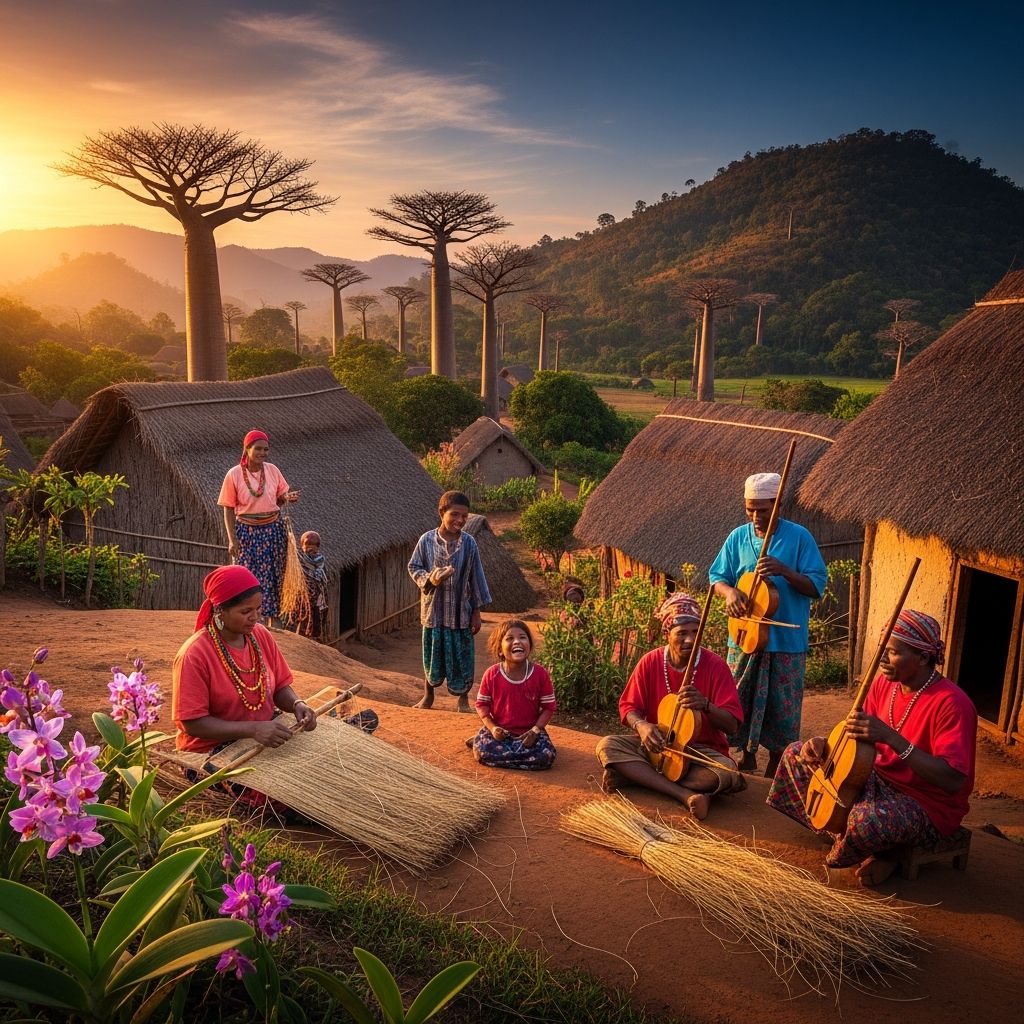
Understanding Madagascar’s Multicultural Identity
Madagascar represents one of Africa’s most culturally distinctive nations, shaped by centuries of interaction between diverse populations and geographical influences. The island’s cultural tapestry weaves together elements from Austronesian seafarers, Bantu African communities, Arab traders, Tamil merchants, and European colonizers. This convergence has created a society where no single cultural tradition dominates, but rather coexists in dynamic harmony with others. The result is a population that maintains deep-rooted ancestral practices while gradually integrating contemporary influences into their daily lives.
The island is home to 18 to 19 distinct ethnic groups, each maintaining their own subcultural identity, customs, and belief systems. Despite this fragmentation, the Malagasy language serves as a unifying thread, though numerous dialects exist across different regions. Young people increasingly embrace modern influences from urban centers, yet even in cities, traditional values remain embedded in family structures and social hierarchies. This duality—where ancient practices coexist alongside modern aspirations—defines the contemporary Malagasy experience.
The Foundation of Malagasy Society: Family and Ancestry
At the core of Malagasy culture lies an unwavering respect for family bonds and ancestral veneration. This principle pervades every aspect of social interaction, from meal etiquette to major life decisions. The concept of kinship extends beyond immediate family members to encompass an interconnected web of relatives, both living and deceased. Ancestors are not perceived as distant historical figures but as active participants in family affairs, capable of influencing the living world through benevolent guidance or stern warnings.
The Malagasy have developed a sophisticated system of social harmony known as fihavanana, which emphasizes community ties and collective well-being over individual pursuits. This framework ensures that family members support one another through life’s challenges and celebrate achievements together. Elders occupy a revered position within this hierarchy, receiving the choicest portions of food at meals and making crucial decisions affecting the family’s future. A traditional Malagasy proverb captures this sentiment perfectly: the responsibility of speaking falls upon elders while the burden of labor belongs to the young.
Sacred Rules and Social Boundaries: Understanding Fady
One of Madagascar’s most distinctive cultural elements is the concept of fady, which translates to taboo or forbidden practice. These ancient sacred rules were established by elders and spiritual practitioners centuries ago to maintain social order, educate younger generations, protect natural resources, and fulfill religious obligations. Fady are not merely superstitions but represent a formalized system of behavioral guidelines that have shaped Malagasy society for generations. Every village maintains its own set of fady, making certain actions acceptable in one location but strictly prohibited in another.
These taboos cover an astonishing range of behaviors and practices. Some fady relate to specific foods that families cannot consume, while others govern when certain activities can occur or which directions people should face while performing tasks. For instance, many communities observe fady regarding the cutting of hair or nails on particular days, the direction a house should face, or the proper positioning of beds within sleeping quarters. While certain fady practices have contributed positively to environmental conservation by protecting endangered species and threatened ecosystems, others remain controversial by modern standards, such as traditional practices surrounding the treatment of twins in some communities.
Observing fady extends beyond mere religious devotion; it reflects a fundamental worldview where humans exist in careful balance with spiritual forces and ancestral presences. Violating these rules is believed to bring misfortune upon individuals or entire families, making compliance a serious matter regardless of one’s level of formal education or urban sophistication.
Honoring the Departed: The Famadihana Ceremony
Among Madagascar’s most visually striking and culturally significant traditions stands the Famadihana, or the turning of the bones. This extraordinary ceremony occurs at intervals determined by family astrologers—typically every three, five, or seven years—and represents one of the largest family gatherings in Malagasy society, second only to weddings and major funeral rites. The practice embodies the Malagasy belief that death is not a final separation but a transition into ancestral status where the departed continue to influence and protect living family members.
The Famadihana ritual begins with the exhumation of ancestors’ remains from family tombs, which are often elaborate structures decorated with intricate paintings and carvings depicting the deceased’s life story, achievements, and unfulfilled aspirations. The skeletal remains are carefully wrapped in new silk shrouds, or lamba, that have been specially woven for the occasion. Following this preparation, family members and invited guests engage in an emotional and celebratory procession, dancing around the tomb while holding the wrapped remains. Traditional musicians provide accompaniment with drums and other instruments, creating an atmosphere that blends solemnity with festive joy.
The ceremony concludes with a grand feast featuring rice, zebu meat, vegetables, and fish, accompanied by local rum in copious quantities. This gathering serves multiple purposes simultaneously: it reaffirms family bonds, ensures that ancestors receive proper respect, allows relatives to reconnect across distances, and provides young family members with tangible links to their heritage. The Famadihana season typically occurs from June through September, when weather conditions permit the elaborate preparations and celebrations required.
Daily Customs and Life Rituals
Meals and Eating Etiquette
Malagasy dining practices reflect the cultural emphasis on respecting elders and maintaining social hierarchy. Before anyone can lift a spoon or fork to eat, the eldest person present must initiate the meal by taking their first bite. Only after this gesture can younger family members begin consuming food. This practice, strictly upheld especially in rural communities, reinforces that age confers authority and wisdom deserving deference from younger generations. The main meal typically consists of rice as the staple base, accompanied by vegetables, zebu meat or fish, and various locally-prepared side dishes that vary by region and ethnic group.
Newborn Integration Ceremonies
Malagasy culture marks several crucial moments in a child’s early life through specific rituals designed to integrate them fully into society. Immediately after birth, the father receives the umbilical cord and placenta from the midwife, with the responsibility to bury them under a flat stone at the entrance of the ancestral home. This burial symbolizes the continuation of family lineage and ensures that the child grows to be a person with a strong memory and deep connection to family roots. Modern urban families sometimes adapt this practice by burying the cord in a safer location within the house, but the underlying principle remains unchanged.
When a child reaches three months of age, a hair-cutting ceremony called ala-volo takes place. A family member recognized for having particularly beautiful hair—a person known as a tso-bolo—is invited to cut the baby’s hair and place it on a large plate or bowl. The cut hair is then mixed with honey and tuberous roots such as sweet potatoes. Family members gather to eat this mixture together, a communal act that formally welcomes the baby into the broader family and society. This ceremony transforms the infant’s status from newborn to recognized family member with social standing.
Marriage and Partnership Traditions
Before couples proceed to formal marriage ceremonies, they must participate in traditional engagement practices that establish their commitment and integrate them into each other’s families. The engagement process, particularly the vodiondry or lamb’s rump ceremony, requires the groom to formally introduce himself to the bride’s family and request her hand in marriage. During this significant occasion, he presents carefully chosen gifts to the bride’s parents and siblings, demonstrating his family’s sincerity and respect. These gifts represent more than material tokens; they symbolize the groom’s family’s willingness to form bonds with the bride’s family and their recognition of her value to the community.
Religious Beliefs and Spiritual Life
Malagasy religious practice represents a fascinating blend of Christian faith, Islamic traditions, and indigenous spiritual beliefs. Approximately 80 percent of the population identifies as Christian, either Catholic or Protestant, while smaller populations practice Islam and maintain animistic beliefs. The remainder adhere to indigenous religious systems centered on belief in Zanahary (also expressed as Zangahari or Yang Hâri in some dialects), the Creator deity that transcends specific religious boundaries. Rather than viewing these different faith systems as contradictory, many Malagasy people integrate elements from multiple traditions into their personal spirituality.
Witchcraft, astrology, and the guidance of spiritual practitioners remain influential in decision-making processes despite the prevalence of formal Christianity. Families consult astrologers to determine auspicious dates for important life events such as weddings, business ventures, or building new homes. This reliance on spiritual consultation reflects a worldview where visible and invisible forces interact constantly, and wisdom requires acknowledging both material and supernatural dimensions of existence.
Artistic Expression and Cultural Heritage
Madagascar’s artistic traditions demonstrate remarkable adaptation and resilience despite historical pressures toward cultural assimilation. Traditional music features instruments of Indonesian origin, including tube zithers and cone drums, alongside African-influenced percussion instruments and animal horns. When Western musical instruments and dance styles arrived through colonial influence, rather than abandoning traditional forms, Malagasy musicians creatively integrated these new tools into their existing musical frameworks. Contemporary Malagasy music blends Western church hymns and modern instruments with distinctive Malagasy rhythmic patterns, creating a unique sound that appeals to international audiences while maintaining cultural authenticity.
The island has produced notable musicians and ensembles that have gained international recognition, such as Tarika, who successfully introduce Malagasy music to global audiences. Beyond professional musicians, communities maintain folk music traditions through celebrations and seasonal festivals. The government actively promotes cultural expression by organizing events such as the Festival of Rice and the Festival of Trees, encouraging urban populations to maintain connections with rural heritage and agricultural traditions.
Traditional crafts including weaving and woodworking represent another avenue for cultural expression. These skilled practices pass from generation to generation, with artisans creating items that serve both functional and decorative purposes while incorporating symbols and patterns that carry cultural meaning.
Regional Diversity and Ethnic Identity
The existence of 18 to 19 distinct ethnic groups means that generalizations about Malagasy culture must acknowledge significant regional variations. Each ethnic community maintains distinct traditions, dietary preferences, architectural styles, and social customs. For example, coastal ethnic groups emphasize seafaring traditions and fishing practices, while highland groups traditionally focused on cattle herding and rice cultivation. These economic differences historically shaped different social structures and value systems that persist in modified forms today.
Local dialects of the Malagasy language reflect this ethnic diversity, though the standard Malagasy language serves as a unifying medium of communication. Urban migration and increasing intermarriage between ethnic groups gradually blur traditional boundaries, yet many people maintain strong identification with their ancestral ethnic community and actively preserve distinctive traditions.
Contemporary Cultural Expression and Modern Adaptation
Modern Madagascar demonstrates how traditional culture adapts rather than disappears amid globalization and urban development. Young people in cities increasingly adopt contemporary fashion, entertainment, and social practices influenced by global media, yet many continue observing family customs and ancestral rituals when circumstances permit. This generational approach—wheretraditional and modern coexist rather than conflict—allows cultural continuity while acknowledging changing circumstances and individual preferences.
Government policies encourage the blending of old and new cultural expressions, recognizing that cultural heritage provides important anchors for national identity while modern development offers practical benefits. Towns, churches, schools, and community organizations regularly host concerts, dances, and cultural performances that introduce younger generations to traditional arts. Urban cultural associations organized by members’ home districts help maintain connections to ancestral regions and transmit knowledge about regional customs to those born in cities.
Culinary Traditions and Food Culture
Malagasy cuisine reflects the island’s multicultural heritage, incorporating ingredients and cooking techniques from East Asian, Chinese, Indian, African, and European traditions. Rice dominates meals throughout the island, appearing at virtually every dining occasion. Seafood features prominently in coastal regions, while inland communities emphasize zebu meat as a protein source. Vegetables, spices, and local herbs create flavorful dishes that vary significantly by region and ethnic community. Local rum appears at ceremonies and celebrations, carrying cultural significance beyond its alcoholic properties.
Food preparation and sharing represent important family bonding activities and social rituals. The manner in which food is served and consumed reinforces social hierarchies and family relationships, making meals far more than nutritional necessities.
Frequently Asked Questions
What is the primary religious belief system in Madagascar?
Approximately 80 percent ofMadagascar’s population practices Christianity (Catholic or Protestant), while the remainder observe Islamic traditions or indigenous animistic beliefs that emphasize connection with ancestral spirits and natural forces.
How often does the Famadihana ceremony occur?
The frequency of Famadihana ceremonies varies by family and is determined by family astrologers, typically occurring every three, five, or seven years, depending on spiritual guidance and family circumstances.
What is fady and how does it influence daily life?
Fady refers to sacred taboos or forbidden practices that vary by village and ethnic community. These rules govern behavior regarding food consumption, daily activities, and spiritual practices, and violating them is believed to bring misfortune to individuals or families.
How is respect for elders demonstrated in Malagasy culture?
Respect manifests through dining customs where elders eat first and receive the choicest food portions, through deference in speech and decision-making, and through the principle that the young bear responsibility for labor while elders provide guidance and wisdom.
What role do ancestors play in Malagasy belief systems?
Ancestors are believed to remain actively engaged with living family members, offering protection and guidance while requiring proper respect through rituals like Famadihana ceremonies, regular acknowledgment, and adherence to family customs and fady.
References
- Madagascar – Daily Life and Social Customs — Britannica. 2025. https://www.britannica.com/place/Madagascar/Daily-life-and-social-customs
- Culture and Traditions in Madagascar — Responsible Travel. https://www.responsiblevacation.com/vacations/madagascar/travel-guide/culture-and-traditions
- The Malagasy Culture — Cactus Madagascar Tours and Holidays. https://www.cactus-madagascar.com/madagascar-overview-the-malagasy-culture/
- Culture and Heritage in Madagascar — BeingAfrican. https://beingafrican.org/madagascar/
- Malagasy Traditions – Customs and Beliefs — Pembury Tours. https://pemburytours.com/7-malagasy-beliefs/
- 10 Customs and Traditions Only Malagasy People Can Understand — AfSF. https://www.afsf.com/news/blog/tblog/10-customs-and-traditions-only-malagasy-people-can-understand/

Medha Deb is an editor with a master's degree in Applied Linguistics from the University of Hyderabad. She believes that her qualification has helped her develop a deep understanding of language and its application in various contexts. Medha specializes in the areas of beauty, health, sports, and wellness and is committed to ensuring that the content on the website is…