
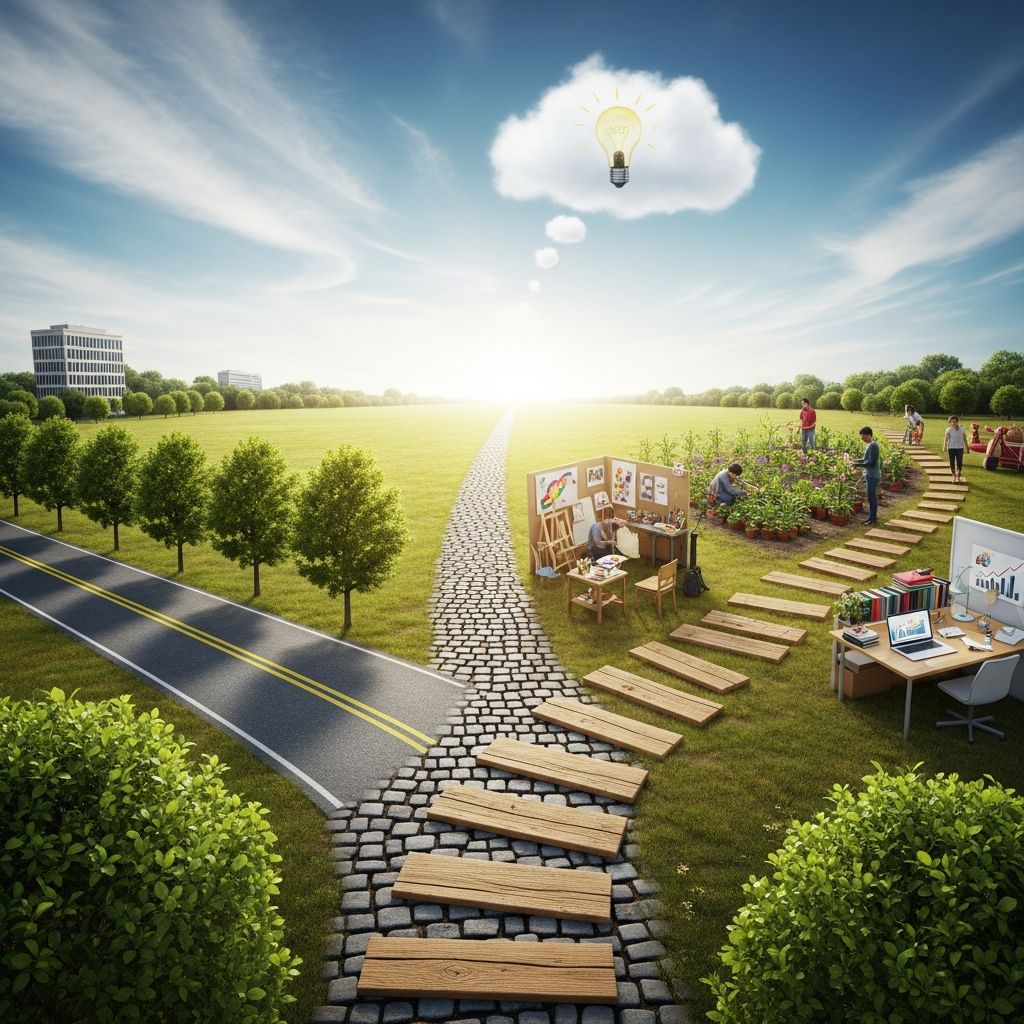
In an era where work-life boundaries are blurring and technology reshapes opportunities, relying solely on a standard workday no longer suffices for many professionals seeking deep satisfaction. This article delves into practical approaches for constructing a career that resonates personally, drawing on emerging trends like hybrid arrangements, skill enhancement, and wellbeing integration to foster long-term engagement and growth.
Embracing Flexible Work Models for Personal Alignment
Modern careers demand adaptability, with hybrid setups emerging as a cornerstone for balancing productivity and personal needs. Workplaces are increasingly designed to support fluid transitions between collaborative and individual tasks, allowing employees to tailor their environments dynamically. This shift not only boosts output but also accommodates diverse life stages, from parenting to lifelong learning.
- Hybrid by design enables zoning for varied activities, ensuring spaces adapt throughout the day.
- Polyworking allows individuals to engage in multiple roles, blending full-time positions with freelance gigs for diversified income and experiences.
- Employers prioritizing flexibility report higher retention, as workers value autonomy over rigid attendance.
Consider how ‘third spaces’ like lounges or outdoor areas facilitate spontaneous interactions, mimicking community hubs rather than sterile offices. These elements make work a chosen destination, enhancing motivation through comfort and connection.
Integrating Wellbeing into Your Professional Journey
Wellbeing has evolved from a perk to a strategic imperative, directly influencing performance and loyalty. With 85% of employees holding employers accountable for their holistic health, forward-thinking careers incorporate restorative practices seamlessly. Globally, burnout costs reach $322 billion annually due to turnover and diminished productivity, underscoring the need for proactive measures.
| Wellbeing Element | Benefits | Implementation Ideas |
|---|---|---|
| Natural Light & Quiet Zones | Reduces stress, improves focus | Biophilic design with plants and pods |
| Flexible Scheduling | Enhances work-life balance | Core hours with async options |
| Recognition Programs | Combats burnout (32% cite lack thereof) | Peer shoutouts and rewards |
By embedding these into your career strategy, you create resilience against fatigue. Leaders fostering empathy-led environments through open forums build trust, vital for sustained fulfillment.
Leveraging AI and Technology for Career Advancement
Artificial intelligence is transitioning from a novelty to an indispensable ally, with 92% of companies planning increased investments over the next three years. Rather than displacing roles, agentic AI augments human capabilities, mapping strengths for optimal team formations and automating routine tasks. In 2026, 39% of workers already note productivity gains from these tools, particularly in strategy and critical thinking.
- AI-optimized workflows free time for creative pursuits.
- Smart ecosystems adjust environments automatically for comfort.
- Immersive tech like VR bridges remote collaboration gaps.
Professionals who upskill in AI-related areas, such as data analysis, position themselves for emerging opportunities. This includes using digital twins for simulation-based planning, reducing risks in decision-making.
Prioritizing Continuous Learning and Skill-Based Growth
The rise of skill-based hiring signals a departure from credentials toward demonstrated abilities, with skills dubbed the ‘new currency’ by LinkedIn’s CEO. Facing talent shortages—74% of employers struggle to fill roles—lifelong learning becomes essential for career longevity. Reskilling in high-demand fields like cybersecurity or project management future-proofs your path.
- Identify gaps through self-assessments or AI tools.
- Pursue microlearning in dedicated zones or online platforms.
- Leverage internal mobility for diverse experiences.
Innovation studios and learning corners in progressive workplaces accelerate this, promoting psychological safety for experimentation. Age-diverse teams, spanning generations, further enrich knowledge exchange, driving superior outcomes.
Building Human-Centric Networks and Leadership
Cultivating meaningful connections transforms solitary careers into collaborative ecosystems. Community-focused designs replace cubicles with gathering spots, emphasizing purpose over presence. Human-centric leadership, marked by empathy and adaptability, is crucial for navigating multigenerational dynamics and tech integrations.
Recognition emerges as a top enhancer of culture, addressing burnout drivers effectively. Freelancing and personal branding add layers of autonomy, allowing control over work volume and type.
Navigating Challenges in a Dynamic Job Landscape
While opportunities abound, challenges like AI-driven displacements and skill gaps loom. Agentic AI may shift jobs in 2026, necessitating proactive adaptation. Robotics in logistics and supply chains demand oversight skills, blending human insight with automation.
To thrive, focus on irreplaceable human elements: creativity, ethics, and relationship-building. Structured pathways for internal growth mitigate turnover, ensuring talent retention amid flexibility demands.
Practical Steps to Redesign Your Career Today
Start by auditing your current role against personal values. Experiment with side projects or freelancing to test waters. Network in empathy-led forums and advocate for wellbeing initiatives.
- Upskill via targeted courses in AI and soft skills.
- Build a digital brand on professional platforms.
- Seek organizations with modular, tech-embedded spaces.
- Prioritize roles offering recognition and purpose.
Modular workspaces and tech-furniture support evolving needs, from posture monitoring to seamless charging. Authentic leadership zones facilitate mentorship, preserving expertise through ‘soft retirement’ options.
Frequently Asked Questions (FAQs)
Q: How can I transition to a hybrid career model?
A: Begin by negotiating flexible hours with your employer, leveraging data on productivity benefits, and upskilling in remote collaboration tools for seamless integration.
Q: What skills should I prioritize for 2026 job markets?
A: Focus on AI literacy, data analysis, critical thinking, and soft skills like empathy, as skill-based hiring dominates and automation handles routines.
Q: Is freelancing viable alongside a full-time job?
A: Yes, polyworking allows diversification; platforms enable autonomous project selection while building resilience against job insecurity.
Q: How does wellbeing impact long-term career success?
A: It reduces burnout risks, boosts retention, and enhances productivity, with employers increasingly responsible for supportive cultures.
Q: Can older workers thrive in modern workplaces?
A: Absolutely, through age-diverse teams and ‘soft retirement’ spaces that value experience via mentoring and flexible roles.
References
- 26 Workplace Design Trends and Ideas for 2026 — RI Workplace. 2026. https://riworkplace.com/26-workplace-design-trends-and-ideas-for-2026/
- 10 Future of Work Trends to Keep an Eye on in 2026 — CAKE.com. 2026. https://cake.com/blog/future-of-work-trends/
- Workplace trends for 2026 – The new labor market reality — IMD.org. 2026. https://www.imd.org/ibyimd/talent/workplace-trends-for-2026/
- Workforce Trends Report 2026 — DHR Global. 2026. https://www.dhrglobal.com/insights/workforce-trends-report-2026/
- Top Workforce Trends for 2026 — MAU.com. 2026. https://mau.com/the-top-workforce-trends-that-will-define-2026/

Medha Deb is an editor with a master's degree in Applied Linguistics from the University of Hyderabad. She believes that her qualification has helped her develop a deep understanding of language and its application in various contexts. Medha specializes in the areas of beauty, health, sports, and wellness and is committed to ensuring that the content on the website is…