
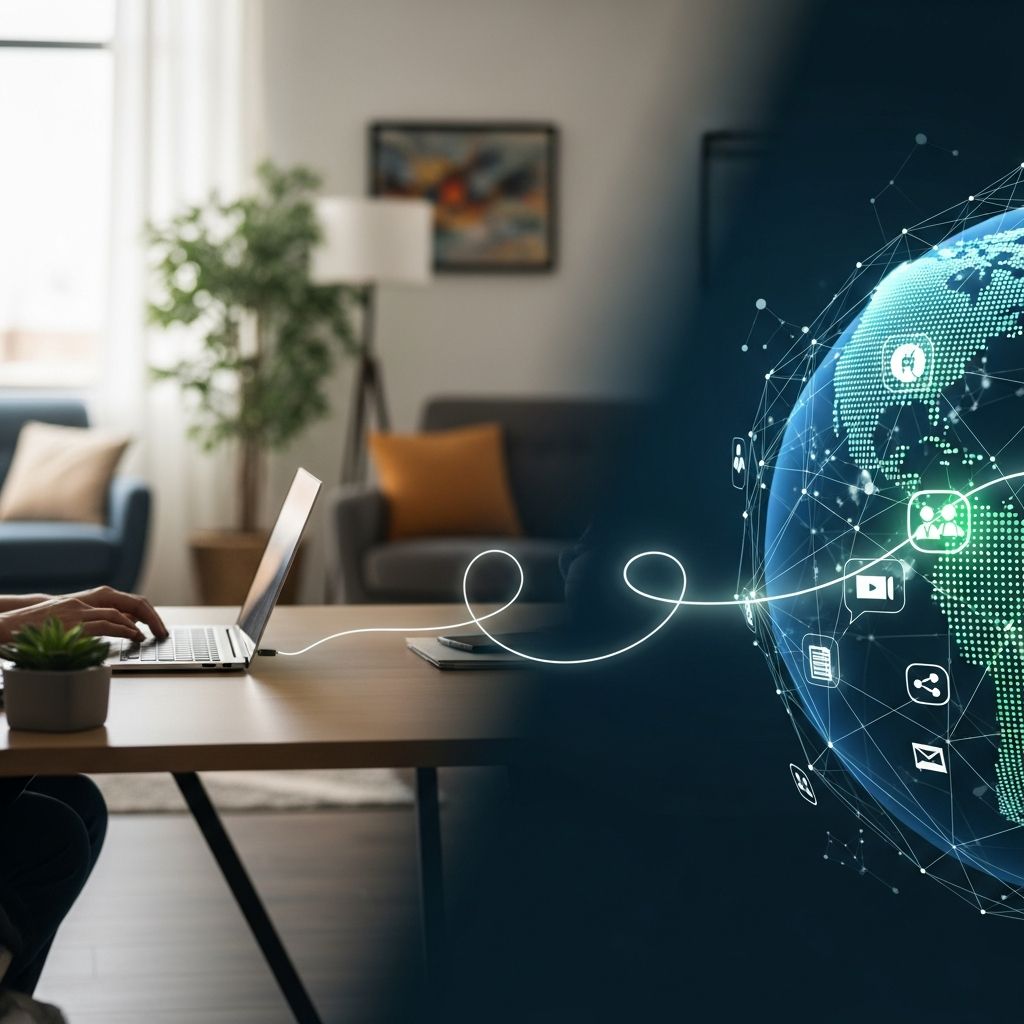
Understanding the Modern Work Environment
The landscape of work has undergone a fundamental transformation. Organizations worldwide have shifted from traditional office-centric models toward more flexible arrangements that allow employees to work from various locations. This evolution represents far more than simply changing where work happens—it reflects a reimagining of how professional life integrates with personal responsibilities and well-being.
The distributed work model has become increasingly sophisticated and structured. Rather than the ad-hoc arrangements that emerged during the initial transition to remote work, companies today are implementing thoughtful policies that balance organizational needs with employee autonomy. Understanding this evolving landscape is essential for professionals seeking to thrive in contemporary work environments.
The Shift Toward Hybrid and Distributed Models
Organizations are moving away from the extremes of either full office presence or complete remote work. Instead, hybrid arrangements—where employees divide their time between office and remote locations—have become the dominant operating model. Research indicates that employers typically expect approximately 3.2 days of in-office work per week, while employees tend to average around 2.9 days, demonstrating that hybrid work has genuinely become the organizational standard rather than an exception.
This middle ground offers distinct advantages. Employees retain flexibility to manage personal responsibilities, reduce commute stress, and maintain autonomy over their work environment. Simultaneously, organizations can facilitate in-person collaboration, strengthen team cohesion, and preserve physical infrastructure investments. The key to success in these arrangements lies in intentional design rather than defaulting to rigid mandates.
Designing Purposeful In-Office Days
Rather than requiring arbitrary office attendance, forward-thinking organizations structure in-office days around specific business needs. This might include quarterly strategy sessions, innovation sprints, cross-functional workshops, or team-building initiatives. When in-office time serves a defined purpose, employees understand its value and scheduling becomes more strategic. This approach respects employee autonomy while capturing genuine collaborative benefits that physical presence provides.
Establishing Healthy Boundaries in Remote Work
One of the most significant challenges in distributed work environments is the blurring of lines between professional and personal time. Without the natural separation provided by commuting and physical office space, remote workers often find themselves continuously available, responding to messages during evening hours and weekends.
Creating sustainable boundaries requires deliberate action and organizational support. Consider these essential practices:
- Define work hours explicitly: Establish clear start and end times for your workday, communicating these boundaries to colleagues and respecting them consistently
- Create physical separation: Designate a specific workspace that you leave at the end of your workday, even within your home
- Manage communication expectations: Normalize slower response times and establish that immediate replies should not be the default standard
- Silence notifications: Disable work notifications outside designated hours to prevent constant interruptions
- Communicate your boundaries: Explicitly share your availability patterns with your team and respect colleagues’ boundaries in return
Organizations play an equally important role in supporting boundary-setting. Leaders must model healthy work practices, avoid sending messages at all hours, and create cultural norms that respect personal time. When managers demonstrate that they maintain their own boundaries, teams feel permission to do the same.
Optimizing Your Remote Work Environment
Your physical workspace significantly impacts both productivity and well-being. A poorly designed environment can undermine even the most disciplined work practices. The opposite is equally true—a thoughtfully arranged workspace supports focus, motivation, and professional effectiveness.
Environmental optimization involves several dimensions:
- Minimize noise and distractions: If working from home proves too noisy, explore quieter alternatives such as libraries or coworking spaces that offer affordability without premium pricing
- Invest in quality technology: Reliable equipment, adequate screens, and comfortable peripherals eliminate technical frustrations that drain energy and reduce efficiency
- Ensure proper ergonomics: A supportive chair, appropriately positioned desk, and well-arranged monitors prevent physical strain that accumulates throughout your career
- Control lighting and climate: Natural light and comfortable temperature regulation support alertness and concentration
- Personalize intentionally: Adding meaningful elements creates an environment that feels professional yet personal
Some professionals find that rotating work locations—alternating between home, coworking spaces, and cafes—provides variety that maintains motivation and prevents monotony.
Managing Isolation and Building Connection
Distributed work can contribute to feelings of isolation, particularly for individuals accustomed to daily in-person interaction. This challenge extends beyond mere preference—research demonstrates that workplace isolation correlates with reduced engagement and mental health concerns.
Intentional social connection strategies combat isolation effectively:
- Schedule regular team interactions: Beyond functional meetings, create dedicated time for social connection, whether through virtual coffee breaks or occasional in-person gatherings
- Work from alternative locations strategically: Spending one or two days weekly at coffee shops, libraries, or coworking spaces provides ambient human interaction and environmental change
- Initiate informal communication: Encourage non-work conversations in team channels, celebrate milestones, and create space for personal sharing
- Build genuine relationships across the organization: Connect with peers outside your immediate team through cross-functional projects or interest-based groups
- Invest in community: Join professional associations, attend industry events, or participate in local professional groups aligned with your field
Organizations can support these efforts by creating dedicated virtual spaces for non-work conversation, facilitating regular team gatherings, and normalizing flexible in-office days that allow colleagues to spend focused time together.
Leveraging Technology Without Becoming Overwhelmed
Technology serves as the nervous system of distributed work, enabling collaboration across distances and time zones. However, the proliferation of tools can create communication fatigue and reduce the efficiency these systems promise.
Strategic technology management involves:
- Standardize communication tools: Establish clear protocols for which tools are used for specific purposes—synchronous communication for urgent matters, asynchronous for non-time-sensitive information
- Implement automation thoughtfully: Automation tools can handle repetitive tasks, freeing mental energy for high-value work, but only when configured to avoid notification overload
- Establish meeting discipline: Ruthlessly evaluate whether meetings serve genuine purposes and whether attendance is truly necessary for all participants
- Protect deep work time: Schedule dedicated focus periods when collaborative tools are disabled and interruptions are minimized
- Use asynchronous communication strategically: For many communications, asynchronous channels better respect time zones and allow thoughtful responses
AI-powered productivity tools are increasingly supporting remote workflows by automating administrative tasks, facilitating better decision-making through data insights, and enhancing collaboration. When implemented thoughtfully, these tools reduce friction and allow professionals to concentrate on substantive work.
Performance Management and Outcome-Based Assessment
Traditional management approaches based on visible presence become ineffective in distributed environments. Modern leaders in 2026 are shifting toward outcome-based performance models that evaluate results rather than hours logged.
This transition requires:
- Define clear objectives: Establish transparent expectations about deliverables, deadlines, and quality standards
- Focus on results: Measure performance through tangible outcomes rather than activity metrics or time at desk
- Develop trust-based relationships: Create psychological safety that allows employees to work autonomously while maintaining accountability
- Provide regular feedback: Ensure ongoing communication about performance, progress, and development rather than annual reviews conducted remotely
- Support professional growth: Invest in continuous learning opportunities that develop skills and maintain engagement
Organizations implementing outcome-focused management report sustained productivity even when employees have significant flexibility in when and where they work, provided they remain available for essential meetings and high-stakes in-person commitments.
Addressing Mental Health and Well-being Proactively
Employee well-being has transitioned from a peripheral concern to a central organizational priority. Distributed work introduces specific mental health considerations that require intentional strategies.
Comprehensive well-being approaches include:
- Mental health resources: Provide access to counseling services, mental health coaching, and stress management programs
- Recognition of burnout risks: Monitor for signs of overwork and create permission structures for employees to genuinely disconnect
- Flexible scheduling options: Allow employees to adjust work patterns based on personal capacity and life circumstances
- Social connection initiatives: Facilitate both formal team events and informal opportunities for colleagues to build relationships
- Wellness programs: Support physical health through fitness benefits, ergonomic resources, and education about healthy remote work practices
- Transparent communication: Keep employees informed about organizational direction and their role, reducing anxiety about uncertainty
Some progressive organizations are implementing “microshifting” approaches that allow employees to structure their days in shorter work bursts punctuated by personal activities. When managed thoughtfully, this extreme flexibility can reduce burnout and decision fatigue while maintaining productivity.
Navigating Work and Life Integration
Rather than viewing work and life as entirely separate domains requiring strict separation, modern workers increasingly seek integration—structuring their professional responsibilities around life priorities rather than entirely subordinating life to work demands. This philosophy represents a fundamental shift from previous organizational cultures.
Integration-friendly practices include:
- Flexibility for life responsibilities: Allow employees to handle personal obligations during business hours when necessary, with corresponding flexibility on work time
- Reduced commute time: The time saved by not commuting can be invested in personal health, family, or stress reduction
- Location flexibility: Enabling work from various locations allows employees to live in communities they choose rather than based on office proximity
- Time zone considerations: For global teams, avoid expecting availability across all time zones and respect reasonable working hours based on location
- Vacation policies that actually encourage rest: Enforce time off and create cultural norms where vacation time is genuinely protected
Building a Sustainable Remote Work Practice
Long-term success in distributed work environments requires moving beyond novelty to establishing sustainable practices. This means creating habits and systems that can be maintained indefinitely without leading to exhaustion or reduced effectiveness.
Sustainable practices include:
- Consistency over intensity: Moderate, consistent effort over extended periods outperforms unsustainable bursts of intensity
- Regular review and adjustment: Periodically evaluate what’s working in your remote work setup and modify approaches that aren’t serving you
- Community and belonging: Maintain connections that provide meaning and support beyond pure professional functions
- Skill development: Continuously develop capabilities relevant to distributed work environments, including digital collaboration and self-management
- Organizational alignment: Ensure your personal work preferences align with your organization’s actual culture and expectations, not stated aspirations
Frequently Asked Questions
Q: How do I know if hybrid work is actually better for my productivity?
A: Track your own productivity patterns across different work locations and schedules. Most people discover that they have an optimal mix of focused remote work time and collaborative in-office days. Discuss your findings with your manager to create an arrangement that works for your role and working style.
Q: What should I do if my organization demands full-time office return despite stating a commitment to flexibility?
A: Clarify the business justification for the policy and understand whether exceptions exist for specific roles. If the policy conflicts with your needs and no accommodation seems possible, you may need to evaluate whether the organization aligns with your work preferences and values.
Q: How can I maintain professional relationships when working remotely most of the time?
A: Be intentional about both formal and informal communication. Use scheduled in-office days to deepen relationships, initiate occasional video calls for relationship-building beyond task discussions, and participate actively in team events and informal virtual spaces.
Q: How do I prevent my remote work from expanding into all hours?
A: Establish and communicate clear boundaries, create physical separation between work and living spaces, disable work notifications outside designated hours, and evaluate whether your organization’s culture truly supports disconnecting or just claims to while expecting constant availability.
Q: What technology investments matter most for effective remote work?
A: Prioritize reliable internet connection, an ergonomic workspace, quality audio and video equipment, and collaboration tools that your team actually uses consistently. Avoid accumulating numerous tools that create fragmentation and fatigue.
Q: How should I handle different time zones on a distributed team?
A: Establish core hours when all team members overlap for real-time collaboration and asynchronous work patterns for non-urgent communication. Rotate meeting times so the burden of inconvenient scheduling doesn’t fall on the same people repeatedly.
References
- Remote Work Trends 2026: How Global Teams Are Reshaping the Future of Work — Gini Talent. 2026. https://ginitalent.com/remote-work-trends-2026-how-global-teams-are-reshaping-the-future-of-work/
- 10 Trends That Will Redefine Remote Work in 2026 — Splashtop. 2026. https://www.splashtop.com/blog/remote-work-trends-2026
- State of Remote Work 2026 — Remotive. 2026. https://remotive.com/blog/state-of-remote-work-2026/
- Remote Work in 2026: What’s Changing and What Leaders Must Know — Talent Hub Glints. 2026. https://talenthub.glints.com/en-sg/blog/remote-work-trend
- ‘Microshifting,’ an Extreme Form of Hybrid Work That Breaks the Traditional 9-to-5 — Fortune. 2026. https://fortune.com/2026/01/13/what-is-microshifting-work-life-balance-hybrid-remote/
- The Remote Work Reality Check: Balancing Flexibility with Compliance in 2026 — Expat Academy. 2026. https://www.expat-academy.com/blog/the-remote-work-reality-check-balancing-flexibility-with-compliance-in-2026
- 6 Remote Work Trends That Will Actually Matter in 2026 — Andy Sto. 2026. https://andysto.com/remote-work-trends-that-will-actually-matter-in-2026/

- Integrated M.A. in Applied Linguistics, University of Hyderabad
- 5+ years in editorial, instructional, SEO, and research-based writing
Sneha is a relationships and lifestyle writer with a strong foundation in applied linguistics and certified training in relationship coaching. She brings over five years of writing experience to theskillvault, crafting thoughtful, research-driven content that empowers readers to build healthier relationships, boost emotional well-being, and embrace holistic living. Her writing and insights reflect the belief that beauty, happiness, and wellness…