
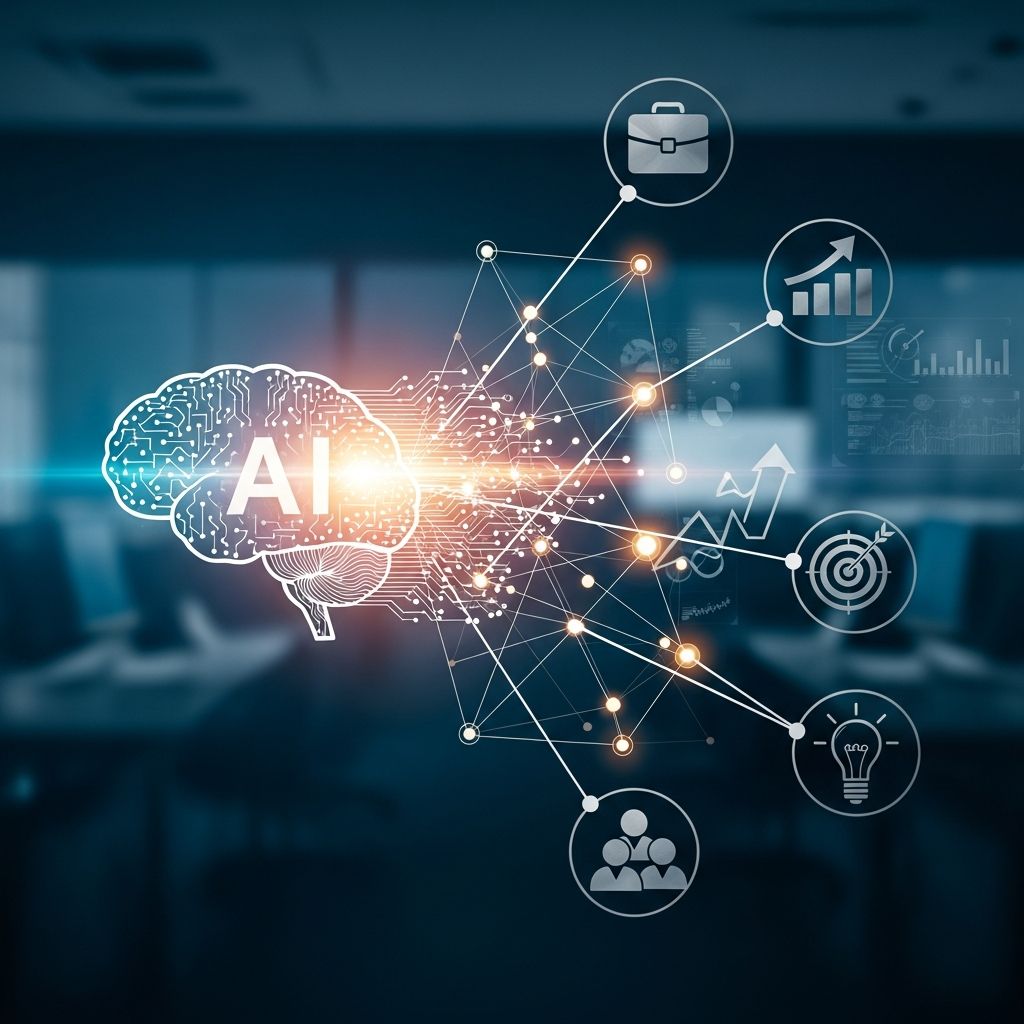
Understanding AI’s Role in Modern Career Planning
The landscape of career development has undergone a fundamental transformation as artificial intelligence becomes increasingly integrated into professional planning and workforce decision-making. Organizations and individuals alike are recognizing that traditional career guidance models no longer fully address the complexity of today’s job market. AI technologies now offer unprecedented opportunities to analyze labor market trends, assess individual competencies, and identify pathways that align with both personal aspirations and employer demands.
Career planning in the modern era requires more than intuition or generalized advice. It demands data-driven insights that can process vast amounts of employment information, skill requirements, and industry trends to provide personalized recommendations. AI systems can evaluate your existing capabilities against emerging opportunities, helping you understand where your skills fit within the broader economic landscape and what development areas warrant investment.
Assessment Tools and Skill Mapping Technologies
One of the most practical applications of AI in career planning involves comprehensive skill assessment and mapping. Rather than relying solely on self-evaluation or traditional testing methods, AI-powered assessment platforms can provide objective analysis of your competencies, strengths, and development areas. These tools examine your background, experience, and demonstrated abilities to create detailed skill inventories that reflect your current capabilities and potential growth areas.
These assessment systems work by analyzing various data points including your work history, educational background, certifications, and demonstrated competencies across projects. The AI then translates this information into a standardized skills framework that employers and career counselors understand. This translation is particularly valuable because it bridges the gap between how individuals describe their experience and how employers articulate their needs.
Key benefits of AI skill assessment include:
- Objective evaluation of capabilities compared to industry benchmarks
- Identification of skill gaps relative to target roles
- Recommendations for targeted development in high-demand competencies
- Quantifiable data for resume optimization and career positioning
- Real-time updates reflecting evolving industry skill requirements
By leveraging these technologies, professionals gain clarity on their competitive positioning within their field. Rather than wondering whether your skills align with market demands, AI assessment tools provide concrete data that can inform strategic development decisions.
Exploring Career Pathways with Data-Driven Recommendations
Career exploration has traditionally involved research, informational interviews, and sometimes trial and error. AI-powered platforms now accelerate this process by identifying career trajectories that match your profile. These systems analyze relationships between different roles, the skills required for transitions, and the typical career progressions within industries.
When you input your skills, experience level, and career interests into an AI career exploration tool, the system evaluates thousands of potential positions and identifies those where you have competitive advantages. More importantly, it maps out multiple pathways to reach different career goals, including the intermediate roles you might occupy and the skill development required for each transition.
The strength of AI-driven career exploration lies in its ability to reveal non-obvious opportunities. Many professionals follow conventional career paths without realizing that their skills are transferable to entirely different sectors or roles. AI systems can identify these lateral moves and demonstrate how your existing capabilities provide advantages in unexpected career directions.
Labor Market Intelligence and Trend Analysis
Understanding where your industry is heading is essential for making career decisions that remain relevant throughout your professional life. AI platforms continuously monitor labor market data, analyzing job postings, salary trends, employer demand, and emerging specializations across industries and geographic regions.
This real-time labor market intelligence reveals several critical insights for career planning. You can understand which skills are appreciating in value, which roles are experiencing growth or contraction, and which industries are attracting investment and talent. For instance, recent analysis shows that AI expertise commands a 56% salary premium compared to roles without AI exposure, and skills in AI-exposed positions evolve 66% faster than in traditional roles.
Information that AI systems provide about your career field:
- Current and projected demand for specific roles in your region and globally
- Salary ranges and compensation trends for positions at different career stages
- Skill requirements that employers are actively seeking
- Emerging specializations developing within your industry
- Geographic regions with strongest growth and opportunity concentration
- Typical career progression paths within your sector
By staying informed about these trends, you can make proactive career decisions rather than reactive ones. Instead of discovering you need new skills after your current role becomes obsolete, AI-powered insights help you anticipate changes and invest in development ahead of market demand.
Personalized Development Planning and Learning Recommendations
Once you understand your current position and desired career direction, the question becomes how to systematically develop the necessary capabilities. AI systems can create personalized learning pathways that recommend specific courses, certifications, projects, and experiences tailored to your goals.
These personalized plans consider multiple factors including your learning preferences, available time, current knowledge base, and the urgency with which you need specific skills. Rather than suggesting generic professional development options, AI recommends targeted learning that efficiently closes the gap between your current state and your career objectives.
The shift toward skills-based hiring means that formal credentials matter less than demonstrable capabilities. AI development planning tools recognize this reality and help you build visible evidence of your competencies through projects, certifications, and practical applications. They guide you toward micro-credentials and stackable certifications that employers recognize and value, allowing you to build credentials flexibly rather than committing to lengthy traditional degree programs.
Resume Optimization and Application Positioning
Even excellent qualifications fail to generate opportunities if employers never discover them. AI technologies now optimize how you present your background to maximize visibility and relevance. Resume analysis tools evaluate your current resume against job descriptions, employer expectations, and applicant tracking systems to identify gaps and improvement opportunities.
These optimization systems examine whether your resume effectively communicates your accomplishments, uses language that resonates with recruiters, and structures information in ways that both human reviewers and automated systems can easily process. They provide specific recommendations for strengthening bullet points, adding quantifiable results, and reframing experiences to highlight impact rather than just responsibilities.
AI resume optimization typically focuses on:
- Alignment between your skills and specific role requirements
- Incorporation of relevant keywords without sacrificing authenticity
- Clear communication of measurable accomplishments and impact
- Formatting optimization for applicant tracking system compatibility
- Strategic positioning of your most competitive advantages
Virtual Coaching and Decision Support
Career decisions often feel overwhelming because they involve multiple variables and uncertain outcomes. AI-powered virtual coaching platforms provide ongoing support and guidance as you navigate career planning and transitions. These systems can answer questions, provide perspective on decisions, and help you think through the implications of different career choices.
Virtual AI coaches offer several advantages compared to traditional career counseling. They provide immediate responses without scheduling delays, are available whenever you need them, and can maintain detailed knowledge of your situation and goals. They function as an always-available thinking partner who helps you clarify your priorities, evaluate options objectively, and make decisions aligned with your values and aspirations.
The most effective virtual coaching tools understand that career planning involves not just technical skills but also personal alignment. They help you explore what matters to you in your work, how different roles and industries align with your values, and whether potential career moves support your broader life goals. This holistic approach ensures that career development decisions enhance overall wellbeing rather than simply maximizing earning potential.
Continuous Learning and Skill Currency Management
Career planning is no longer a one-time exercise but an ongoing process of learning and adaptation. AI systems help you manage skill currency by tracking how your capabilities compare to evolving industry standards and recommending refreshers or updates as requirements change.
This continuous learning orientation reflects the reality that skills now have shorter competitive lifespans. Instead of developing expertise that sustains your entire career, professionals must continuously update and expand their capabilities. AI learning management systems make this process more efficient by identifying which skills need attention, recommending specific learning resources, and helping you integrate learning into your work rather than treating it as separate from your job.
The shift toward micro-learning and stackable credentials aligns perfectly with how AI systems guide development. Rather than pursuing single large certifications, you can systematically build capabilities through focused learning modules, each demonstrating specific competencies to employers. AI systems help you sequence these learning experiences strategically to progressively expand your capabilities.
Navigating Career Transitions with AI Support
Career changes have become increasingly common, with individuals expecting more frequent transitions between roles and even industries. AI tools specifically support these transitions by helping you understand how to leverage existing skills in new contexts and identifying the minimum additional development required for successful moves.
When considering a career transition, AI analysis can reveal which of your current skills transfer directly to target roles, which require updating or deepening, and which entirely new capabilities you need to develop. This clarity reduces the perceived risk of transitions by breaking the change into manageable learning objectives rather than treating the new field as completely foreign.
Additionally, AI systems identify transition pathways that maximize your competitive advantages. Rather than suggesting you start from entry-level in a new field, they identify roles that value your existing experience while building foundation knowledge in the new area. This strategic positioning allows you to transition without accepting a severe step backward in compensation or responsibility.
Building Competitive Advantage Through Technology Integration
The professionals who gain the greatest benefit from AI career planning tools are those who actively engage with the insights and recommendations these systems provide. Rather than passively accepting suggestions, the most successful career developers treat AI tools as partners in a strategic thinking process.
This engagement involves regularly updating your skill assessments to reflect new learning, monitoring labor market trends in your field, and iteratively refining your development plan as opportunities and circumstances change. Professionals who maintain active engagement with AI-powered career intelligence gain several competitive advantages:
- Earlier awareness of emerging opportunities in your field
- More strategic skill development aligned with market demand
- Better positioning in your professional networks and employer awareness
- Clearer demonstration of how your capabilities solve real organizational problems
- Greater agility in responding to industry changes and market disruptions
Frequently Asked Questions
Q: How accurate are AI-powered career recommendations?
A: AI career systems are most accurate when they analyze substantial, quality data about your background and current market conditions. While they provide valuable insights and identify patterns humans might miss, they work best as decision support tools that inform your judgment rather than replace it. Your personal knowledge of your values, preferences, and circumstances should always factor into career decisions.
Q: Can AI help me transition into a completely different field?
A: Yes, AI analysis can identify which of your existing skills transfer to new fields and what additional development you need. However, significant career transitions require genuine commitment to learning. AI tools help you understand the realistic path and requirements, but you must be willing to invest time in developing new expertise.
Q: How often should I update my career plan with AI systems?
A: Career planning should be an ongoing process rather than a one-time exercise. Most professionals benefit from updating their skill assessments and development plans quarterly or semi-annually, or whenever they complete significant learning or experience changes. Labor market intelligence should be monitored regularly to stay aware of evolving opportunities in your field.
Q: Are AI career tools suitable for early-career professionals?
A: Absolutely. Early-career professionals particularly benefit from AI tools because these systems help them understand skill development priorities and explore career paths they might not otherwise consider. The clearer visibility into how their early experiences build toward future opportunities helps guide project selection and learning choices.
Q: How do I choose which AI career planning tools to trust?
A: Look for tools backed by substantial labor market data, transparent about their methodologies, updated regularly with current employment information, and integrated with credible educational and professional development resources. Tools developed by established organizations with expertise in career development, education, or workforce planning tend to be more reliable than those from unknown sources.
References
- Tech Careers in 2026: AI, Cloud and Emerging Roles Driving the Future — Glocomms. 2026. https://www.glocomms.com/en-us/industry-insights/career-advice/tech-careers-in-2026-ai-cloud-and-emerging-roles-driving-the-future
- 10 Trends in Career Advising and Development for 2026 — Icad. 2026. https://www.icadlearn.com/post/10-trends-in-career-advising-and-development-for-2026
- The future of jobs: 6 decision-makers on AI and talent strategies — World Economic Forum. 2026. https://www.weforum.org/stories/2026/01/how-ai-will-affect-work-in-different-industries/
- AI Trends for 2026: Building Change Fitness and Balancing Trade-offs — Harvard Business School. 2026. https://www.library.hbs.edu/working-knowledge/ai-trends-for-2026-building-change-fitness-and-balancing-trade-offs

- Integrated M.A. in Applied Linguistics, University of Hyderabad
- 5+ years in editorial, instructional, SEO, and research-based writing
Sneha is a relationships and lifestyle writer with a strong foundation in applied linguistics and certified training in relationship coaching. She brings over five years of writing experience to theskillvault, crafting thoughtful, research-driven content that empowers readers to build healthier relationships, boost emotional well-being, and embrace holistic living. Her writing and insights reflect the belief that beauty, happiness, and wellness…