
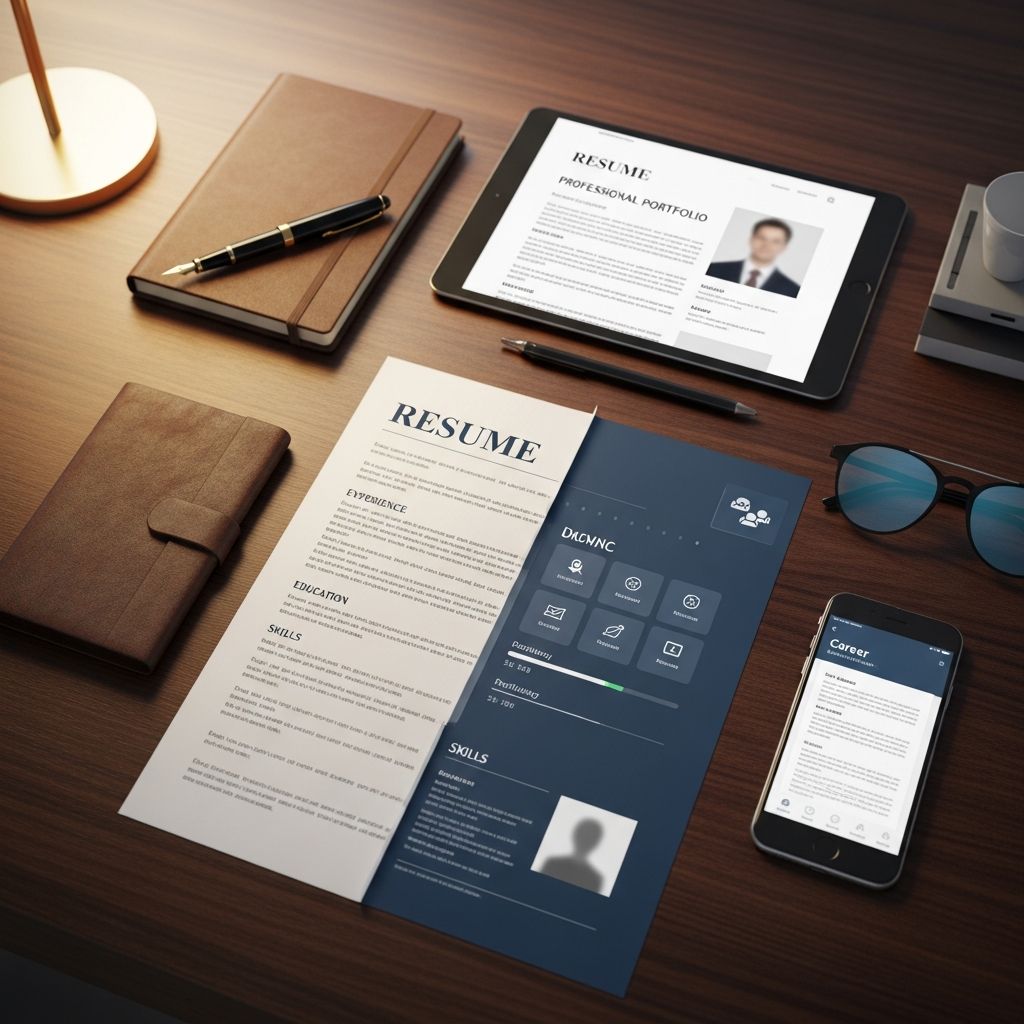
The hybrid resume, often called a combination resume, merges the best elements of skills-focused and time-based formats to create a compelling professional narrative. This approach prioritizes your strongest abilities right at the top, followed by a structured overview of your career progression, making it ideal for diverse job seekers.
Understanding the Hybrid Resume Structure
A hybrid resume begins with a concise professional summary that captures your value proposition in 3-5 sentences. This is immediately followed by a **skills matrix**—a bulleted or categorized list of 6-10 core competencies tailored to the job. Unlike purely functional resumes, it then transitions into a reverse-chronological work history where achievements under each role reinforce the skills listed earlier. Education, certifications, and additional sections round out the document, ensuring a balanced 1-2 page length.
This format shines because it addresses recruiter pain points: quick skill scanning via Applicant Tracking Systems (ATS) and a clear employment timeline that builds trust. According to career experts, hybrid resumes increase interview callbacks by up to 40% for qualified candidates in skill-heavy fields.
Key Advantages of Adopting a Hybrid Resume
- Versatile Showcase: Front-loads transferable skills, perfect for pivoting industries without losing credibility from past roles.
- ATS Compatibility: Maintains chronological elements that parse well in software, while keyword-rich skills sections boost visibility.
- Narrative Cohesion: Links accomplishments to skills, creating a story of growth rather than disjointed lists.
- Gap Minimization: Downplays employment breaks by emphasizing capabilities over dates.
- Executive Appeal: Highlights leadership and specialized expertise alongside progression for senior roles.
Professionals with non-linear paths, such as freelancers or multi-industry veterans, report higher response rates using this method, as it counters biases against unconventional histories.
Ideal Candidates for the Hybrid Approach
Not every job seeker needs a hybrid resume, but it excels in specific scenarios:
| Profile | Why It Fits | Example |
|---|---|---|
| Career Changers | Spotlights transferable skills before history reveals unrelated jobs | Marketer moving to project management |
| Recent Graduates | Amplifies internships/projects when full-time experience is limited | New engineering grad with certifications |
| Experienced Pros with Gaps | Focuses on expertise, softens sabbaticals or layoffs | Parent re-entering workforce after 2 years |
| Tech/niche Specialists | Prioritizes tools and proficiencies in fast-evolving fields | Full-stack developer with admin background |
| Generalists | Demonstrates breadth without diluting depth | Consultant with cross-functional exposure |
For those with 1-10 years of experience or targeting roles valuing both tenure and proficiency, this format outperforms traditional chronological ones. Avoid it if your career is purely linear in one field, where simplicity wins.
Step-by-Step Guide to Building Your Hybrid Resume
Craft a Targeted Summary: Open with your job title, years of experience, and top 3 strengths. Example: “Results-driven Digital Marketer with 8+ years optimizing campaigns across e-commerce and SaaS, excelling in SEO, data analytics, and team leadership.” Keep under 100 words, incorporating job description keywords.
Develop Skills Sections: Categorize into 3-4 groups like Technical, Soft, Industry-Specific. Use action-oriented bullets: “Advanced proficiency in Python, SQL, and Tableau for data visualization (20+ projects).” Quantify where possible.
Detail Employment History: List positions reverse-chronologically. For each, start with 3-5 bullets tying back to skills: “Led cross-functional teams to boost revenue 35% via A/B testing (Skill: Analytics).” Include company, title, dates, and location.
Add Supporting Sections: Place education after experience if mid-career; certifications/projects for entry-level. Include volunteer work if relevant.
Design for Readability: Use clean fonts (Arial/Calibri 10-12pt), 0.5-1 inch margins, bold headings, and consistent formatting. PDF export ensures ATS safety.
Pro Tips for Customization and Optimization
Tailor every hybrid resume: Analyze 3-5 job postings per role, mirroring 70-80% of their language in your skills and summary. This boosts ATS matches from 20% to 75%.
- Quantify impacts: “Managed $2M budget” over “Handled budgets.”
- Bridge gaps: Note “Career Break: Family Care (2022-2024)” with skill-building activities.
- Use power verbs: Orchestrated, Engineered, Amplified.
- Test scannability: Can a recruiter grasp your fit in 10 seconds?
For executives, expand with a “Key Achievements” subsection under skills, featuring metrics like “Grew user base 150% YoY.” Recent data shows tailored hybrids yield 2x more interviews for career switchers.
Common Mistakes to Sidestep
Even strong formats falter with pitfalls:
- Skill-Heavy Imbalance: Don’t make it 70% skills; recruiters want proof via experience.
- Vague Bullets: Avoid “Team player”—say “Collaborated with 15 stakeholders to deliver on-time.”
- Inconsistent Dates: Align formats (e.g., MM/YYYY) to avoid red flags.
- Overdesign: Fancy graphics kill ATS parsing.
- Generic Content: One-size-fits-all fails; customize ruthlessly.
Proofread thrice, use tools like Grammarly, and get peer feedback. A polished hybrid resume signals professionalism.
Frequently Asked Questions (FAQs)
What differentiates a hybrid resume from chronological or functional ones?
A hybrid leads with skills but includes detailed chronological history, unlike functional (skills-only, risky for ATS) or chronological (history-first, weak on transfers).
Is a hybrid resume ATS-friendly?
Yes, its structured timeline and keywords make it highly compatible, outperforming functional formats.
How long should my skills section be?
6-12 targeted bullets or categories, hyper-relevant to the job.
Can recent grads use this format?
Absolutely—highlight projects/internships under skills, then limited experience.
Does it work for senior executives?
Perfectly, by showcasing leadership skills atop a proven track record.
Real-World Success Stories
Consider Sarah, a teacher pivoting to corporate training: Her hybrid resume listed “Instructional Design” and “Adult Learning” skills first, backed by classroom achievements, landing her a role at a Fortune 500 firm. Or Mike, a laid-off sales rep with tech hobbies—front-loading CRM and coding skills secured interviews despite a 9-month gap.
These examples illustrate the format’s power: It reframes your story for the target role, turning potential weaknesses into strengths.
References
- When Do I Use a Combination Format — RUReady.ND.gov. 2023. https://secure.ruready.nd.gov/Career_Planning/Get_a_Job/Resume_Builder/When_Do_I_Use_a_Combination_Format.aspx
- Combination Resume: How-To, Examples, & Template — TealHQ. 2024-05-15. https://www.tealhq.com/post/combination-resumes
- The Best Combination Resume To Get You Hired — CVWizard. 2024. https://www.cvwizard.com/en/articles/combination-resume
- Unveiling the Power of the Combination / Hybrid Resume Format — Career Impressions. 2023-08-10. https://careerimpressions.ca/unveiling-the-power-of-the-combination-hybrid-resume-format/
- Combination Resume Format: What It Is and When to Use It — Careerflow.ai. 2024-11-02. https://www.careerflow.ai/resume-format/combination
- Combination Resume: Definition & Tips — Jobseeker. 2024. https://www.jobseeker.com/en/resume/articles/combination-resume
- Combination Resume Guide [w/ Templates & Examples] — Novoresume. 2024-06-20. https://novoresume.com/career-blog/combination-resume

- Integrated M.A. in Applied Linguistics, University of Hyderabad
- 5+ years in editorial, instructional, SEO, and research-based writing
Sneha is a relationships and lifestyle writer with a strong foundation in applied linguistics and certified training in relationship coaching. She brings over five years of writing experience to theskillvault, crafting thoughtful, research-driven content that empowers readers to build healthier relationships, boost emotional well-being, and embrace holistic living. Her writing and insights reflect the belief that beauty, happiness, and wellness…