
Understanding Workplace Safety in Your Current Role
Your safety at work is not merely a benefit—it is a fundamental right protected by law across Canada. Whether you work in a bustling office, an industrial facility, or a remote location, understanding how to evaluate your job safety is crucial for protecting your physical health, mental wellbeing, and long-term career success. Many employees remain unaware of the comprehensive legal frameworks designed to protect them or fail to recognize warning signs that their work environment may pose risks.
Evaluating your job safety involves a multi-faceted approach that combines awareness of physical hazards, understanding your legal protections, recognizing organizational culture around safety, and knowing your rights when concerns arise. This guide provides you with the knowledge and tools necessary to conduct a thorough assessment of your workplace and take meaningful action when safety concerns emerge.
Recognizing Physical Hazards and Environmental Risks
The foundation of workplace safety evaluation begins with identifying potential physical hazards present in your work environment. Physical hazards are tangible dangers that can cause immediate injury or long-term health complications. These range from obvious risks like machinery without proper guards to less apparent dangers such as inadequate lighting, poor ergonomics, or repetitive strain conditions.
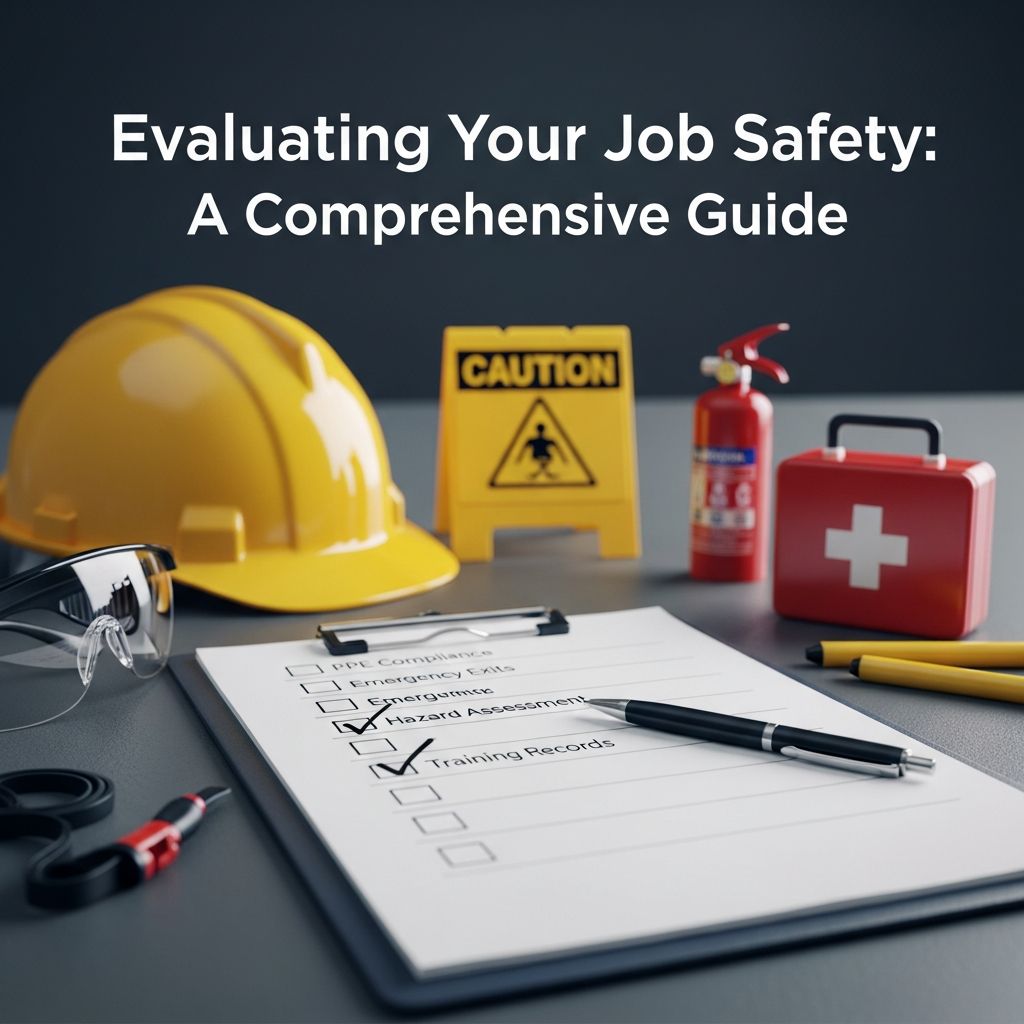
Start by conducting a systematic walkthrough of your workspace. Examine the condition of floors, stairs, and walkways for trip hazards or damage. Check whether emergency exits are clearly marked and accessible, and verify that fire extinguishers and first aid kits are readily available. If your role involves working with equipment, assess whether machinery has appropriate safety guards, emergency stop mechanisms, and warning labels. Look for signs of chemical exposure, including proper storage of hazardous materials, adequate ventilation systems, and availability of safety data sheets.
Environmental factors also play a significant role in workplace safety. Consider temperature control—excessive heat or cold can impair judgment and increase accident risk. Assess noise levels, which, if consistently high, can lead to hearing damage and communication difficulties. Evaluate lighting conditions, as poor visibility increases accident rates and causes eye strain. Additionally, examine whether your workstation is ergonomically designed to prevent musculoskeletal disorders, which are among the most common workplace injuries.
Evaluating Organizational Safety Culture and Practices
Beyond physical hazards, the safety culture within your organization significantly impacts your actual and perceived safety at work. Safety culture refers to the collective attitudes, beliefs, and practices regarding workplace safety throughout the company. A strong safety culture means that management prioritizes employee protection, invests in safety infrastructure, and encourages workers to report concerns without fear of retaliation.
To evaluate your organization’s safety culture, observe how management responds to safety concerns. Do supervisors take reported hazards seriously, or are they dismissed? Is there a formal process for reporting safety issues, and are these reports acted upon promptly? Check whether your employer conducts regular safety training, maintains current certification records, and provides appropriate personal protective equipment. Look for evidence of ongoing risk assessments and safety committees that include worker representation.
Additionally, assess the communication practices around safety. Does your employer regularly share safety statistics, incident reports, or lessons learned from past accidents? Do workers feel comfortable discussing safety concerns with management without fear of negative consequences? Organizations with healthy safety cultures typically demonstrate transparency about hazards and near-miss incidents, using these as learning opportunities rather than occasions for blame.
Understanding Your Legal Rights and Protections
Canadian workplace safety is governed by comprehensive legislation designed to protect workers. Under federal jurisdiction, the Canada Labour Code establishes baseline protections, while each province and territory has its own Occupational Health and Safety Act tailored to local conditions and industries. Understanding these legal frameworks empowers you to advocate effectively for your safety.
The legal foundation of worker protection rests on several key principles. First, employers have a fundamental duty to provide a workplace free from known hazards and to take reasonable precautions to prevent injuries and illnesses. This is not optional—it is a legal obligation enforced through government agencies. Second, the concept of the Internal Responsibility System establishes that workplace safety is a shared responsibility involving workers, supervisors, managers, and executives, each with specific duties.
As an employee, you possess important rights under Canadian occupational health and safety laws:
- The Right to Know: You must be informed of all known or foreseeable hazards in your workplace. Your employer is required to provide information, instructions, training, and supervision necessary to protect your health. This includes access to Material Safety Data Sheets for hazardous substances and information about emergency procedures.
- The Right to Participate: You have the right to participate in health and safety activities, including serving on safety committees or providing input on workplace safety decisions. This participation ensures that worker perspectives inform safety planning.
- The Right to Refuse Unsafe Work: If you have reasonable cause to believe that your workplace presents a danger to you or others, you can refuse to perform the work without fear of discipline, provided you follow proper procedures. This right is designed to prevent workers from being coerced into dangerous situations.
Alongside these rights come corresponding responsibilities. You are expected to use all safety equipment and clothing provided, follow safety procedures, cooperate with safety initiatives, and report hazards or incidents to your employer promptly.
Examining Hazard Prevention and Management Systems
Organizations committed to safety typically implement formal hazard prevention programs that identify, assess, and control workplace risks. To evaluate whether your employer has adequate systems in place, look for evidence of systematic hazard management.
An effective hazard prevention program should include regular workplace inspections—ideally conducted monthly by health and safety representatives or committees. These inspections document existing and potential hazards. When hazards are identified, there should be a documented process for addressing them, with clear timelines and assignment of responsibility. Employers should maintain records of these inspections and corrective actions taken.
Ask whether your workplace conducts risk assessments for different job roles and work areas. Risk assessments should evaluate the likelihood of incidents occurring and the potential severity of consequences, then determine appropriate control measures. The most effective controls follow a hierarchy: eliminate the hazard entirely, substitute it with something less dangerous, use engineering controls to isolate the hazard, implement administrative procedures to limit exposure, and provide personal protective equipment as a last resort.
Additionally, examine how your employer manages specific high-risk areas. If your workplace involves machinery, are there maintenance schedules? If chemicals are handled, is there a chemical management system? If heights are involved, are fall protection systems in place? The specificity and formality of these systems indicate how seriously your employer takes hazard control.
Assessing Training and Competency Requirements
Proper training is essential for safe work performance. When evaluating your job safety, examine whether you have received adequate training for your specific role and any new tasks assigned to you.
Your training should cover general workplace safety orientation, including emergency procedures, evacuation routes, and location of safety equipment. You should receive role-specific training addressing the unique hazards associated with your job duties. This might include equipment operation, hazardous material handling, safe lifting techniques, or customer interaction safety. Any new technology, equipment, or process should trigger retraining before you are expected to use it independently.
Quality training should be documented, with records maintained of what was taught, when, and to whom. Ideally, training includes hands-on demonstration followed by supervised practice before independent work. Poor training—such as brief verbal instructions without documentation or failure to train on new equipment—is a red flag indicating inadequate safety commitment.
Consider also whether your employer provides specialized training for vulnerable populations. Young workers, pregnant or nursing employees, and workers with disabilities may require adapted training or additional protections. The absence of such considerations may indicate systemic gaps in safety thinking.
Analyzing Incident Response and Investigation Procedures
How an organization responds when accidents or near-misses occur reveals much about its true safety commitment. An organization genuinely dedicated to safety treats incidents as learning opportunities rather than embarrassments to minimize.
When evaluating incident response, ask whether your workplace has a formal reporting process and whether workers feel safe using it without fear of retaliation. Are all incidents, including minor ones and near-misses, recorded and investigated? Or does your workplace culture discourage reporting to keep injury statistics low?
Effective incident investigation should determine root causes—the underlying factors that allowed the incident to occur—rather than simply assigning blame to individual workers. The investigation should lead to recommendations for preventing similar incidents in the future. These recommendations should be tracked to ensure they are actually implemented.
Additionally, employers are legally required to report serious incidents to government authorities. If you become aware of a serious injury or fatality, verify that your employer has filed required reports and implemented corrective actions. Failure to report indicates legal non-compliance and suggests inadequate safety oversight.
Evaluating Mental Health and Psychological Safety
Workplace safety extends beyond physical hazards to include psychological safety and mental wellbeing. Your job safety assessment should examine whether your workplace is free from harassment, discrimination, and psychologically harmful conditions.
Under Canadian human rights legislation, workers are protected from harassment and discrimination based on protected grounds including race, gender, religion, disability, age, and sexual orientation. Additionally, workplace violence and harassment have become priority concerns, with legislation like Bill C-65 requiring employers to take active measures to prevent and address these issues.
Evaluate whether your workplace has clear policies against harassment and discrimination, with accessible reporting mechanisms that protect reporter confidentiality. Assess whether management responds appropriately to complaints, whether training addresses these issues, and whether disciplinary consequences are applied consistently. The presence of respectful communication, inclusive decision-making, and support for employee wellbeing all contribute to psychological safety.
Also consider workload and pace expectations. While reasonable job demands are normal, excessive workload, unrealistic deadlines, and inadequate staffing create stress that impairs both physical safety (as fatigue increases accident risk) and mental health.
Identifying Additional Risk Factors Specific to Your Industry
Different industries present unique safety challenges requiring specialized attention. Depending on your sector, you should be alert to industry-specific risks:
Construction and Skilled Trades: Fall protection, equipment operation, excavation safety, and traffic management are critical concerns. Verify that fall arrest systems are inspected regularly and that workers receive competency-based training before operating equipment.
Healthcare: Bloodborne pathogen exposure, patient handling injuries, needle stick incidents, and infectious disease transmission present unique hazards. Check that appropriate personal protective equipment, engineering controls, and vaccination protocols are in place.
Manufacturing and Processing: Machinery guarding, chemical handling, temperature extremes, and repetitive strain are common concerns. Verify that machinery has appropriate guards and that workers are trained in lockout/tagout procedures for maintenance work.
Office and Administrative Work: While often perceived as low-risk, office environments present ergonomic hazards, inadequate ventilation, and psychosocial stressors. Evaluate whether workstations are ergonomically designed and whether mental health support is available.
Transportation and Delivery: Driving safety, vehicle maintenance, traffic exposure, and customer interaction risks are relevant. Check whether vehicle maintenance is current and whether drivers receive safety training.
Taking Action When Safety Concerns Exist
Once you have thoroughly evaluated your job safety and identified concerns, knowing how to take effective action is crucial. Begin by documenting hazards you have identified, including dates, times, locations, and specific details about what makes them hazardous.
Most workplace safety issues can be resolved through direct communication with your supervisor or safety representative. Clearly and specifically describe the hazard and explain why you believe it poses a risk. Focus on the hazard itself rather than personal criticism. Provide reasonable suggestions for control measures when possible.
If direct communication does not resolve the issue, escalate to higher management or your workplace health and safety committee. Most organizations have formal processes for raising safety concerns. If your workplace is unionized, your union representative can provide support and advocacy.
In situations where you believe your workplace presents a serious and imminent danger, you have the right to refuse unsafe work, as protected by Canadian labour law. To exercise this right properly, you must follow established procedures, which typically involve notifying your supervisor, documenting your concern, and cooperating with investigations or inspections.
If internal processes fail to resolve serious safety concerns, you can file complaints with your provincial or territorial occupational health and safety regulatory body or, in federally regulated industries, with Labour Program inspectors. These agencies can conduct independent investigations and issue orders requiring employers to address hazards.
Creating a Personal Safety Action Plan
After evaluating your job safety comprehensively, develop a personalized action plan. Prioritize concerns based on severity—hazards that could cause serious injury should be addressed before minor discomforts. For each concern, identify the specific action you will take, who you will communicate with, and your timeline.
Document all communications and responses regarding safety concerns. Keep copies of emails, incident reports, and notes from meetings. This documentation protects you if you later need to escalate concerns or file complaints.
Stay informed about workplace safety standards and regulations relevant to your industry and province. Organizations like the Canadian Centre for Occupational Health and Safety provide free resources and guidance. Regular review of your workplace assessment helps you track whether improvements are being made and whether new hazards have emerged.
Frequently Asked Questions About Job Safety Evaluation
Q: What should I do if I notice a hazard but am unsure if it is actually dangerous?
A: Trust your instincts and report it. Your employer is responsible for investigating your concerns and determining whether a legitimate hazard exists. It is better to report something that turns out to be safe than to ignore a potential risk.
Q: Can I be punished for using my right to refuse unsafe work?
A: No. Canadian labour law explicitly prohibits retaliation against workers who exercise their right to refuse unsafe work, provided they follow proper procedures. Retaliation is illegal and can result in significant penalties for employers.
Q: How often should workplace safety inspections occur?
A: At minimum, health and safety committees or representatives must conduct inspections monthly. Many workplaces with higher-risk operations conduct more frequent inspections or continuous monitoring.
Q: What is the difference between a hazard and a risk?
A: A hazard is something with the potential to cause harm—for example, a wet floor is a hazard. Risk is the likelihood and severity of injury occurring from exposure to that hazard. Slippery floors in a warehouse where workers are running presents higher risk than in a stationary office environment.
Q: Am I responsible for my own safety at work?
A: While you have responsibilities to follow safety procedures and report hazards, your employer bears the primary legal responsibility for providing a safe workplace. Safety is a shared responsibility, but the employer cannot shift their fundamental duty to protect workers onto employees.
Q: Where can I find specific occupational health and safety regulations for my province?
A: Each province and territory maintains online resources describing applicable regulations. These are typically found on provincial government websites or dedicated occupational health and safety agency sites. The Canadian Centre for Occupational Health and Safety also provides provincial regulatory information.
References
- Workplace Safety Standards in Canada: What You Need to Know — Global People Strategist. Accessed 2026-01-18. https://globalpeoplestrategist.com/workplace-safety-standards-in-canada-what-you-need-to-know/
- Understanding Canada Occupational Health and Safety Regulations — Medcor. Accessed 2026-01-18. https://medcor.com/en-ca/construction-safety/occupational-health-and-safety-regulations/
- Occupational Health and Safety in Federally Regulated Workplaces — Government of Canada, Employment and Social Development Canada. Accessed 2026-01-18. https://www.canada.ca/en/employment-social-development/services/health-safety/workplace-safety.html
- Canada Occupational Health and Safety Regulations (SOR/86-304) — Government of Canada, Department of Justice. Accessed 2026-01-18. https://laws-lois.justice.gc.ca/eng/regulations/sor-86-304/index.html
- Canadian Centre for Occupational Health and Safety — CCOHS. Accessed 2026-01-18. https://www.ccohs.ca

- Integrated M.A. in Applied Linguistics, University of Hyderabad
- 5+ years in editorial, instructional, SEO, and research-based writing
Sneha is a relationships and lifestyle writer with a strong foundation in applied linguistics and certified training in relationship coaching. She brings over five years of writing experience to theskillvault, crafting thoughtful, research-driven content that empowers readers to build healthier relationships, boost emotional well-being, and embrace holistic living. Her writing and insights reflect the belief that beauty, happiness, and wellness…