
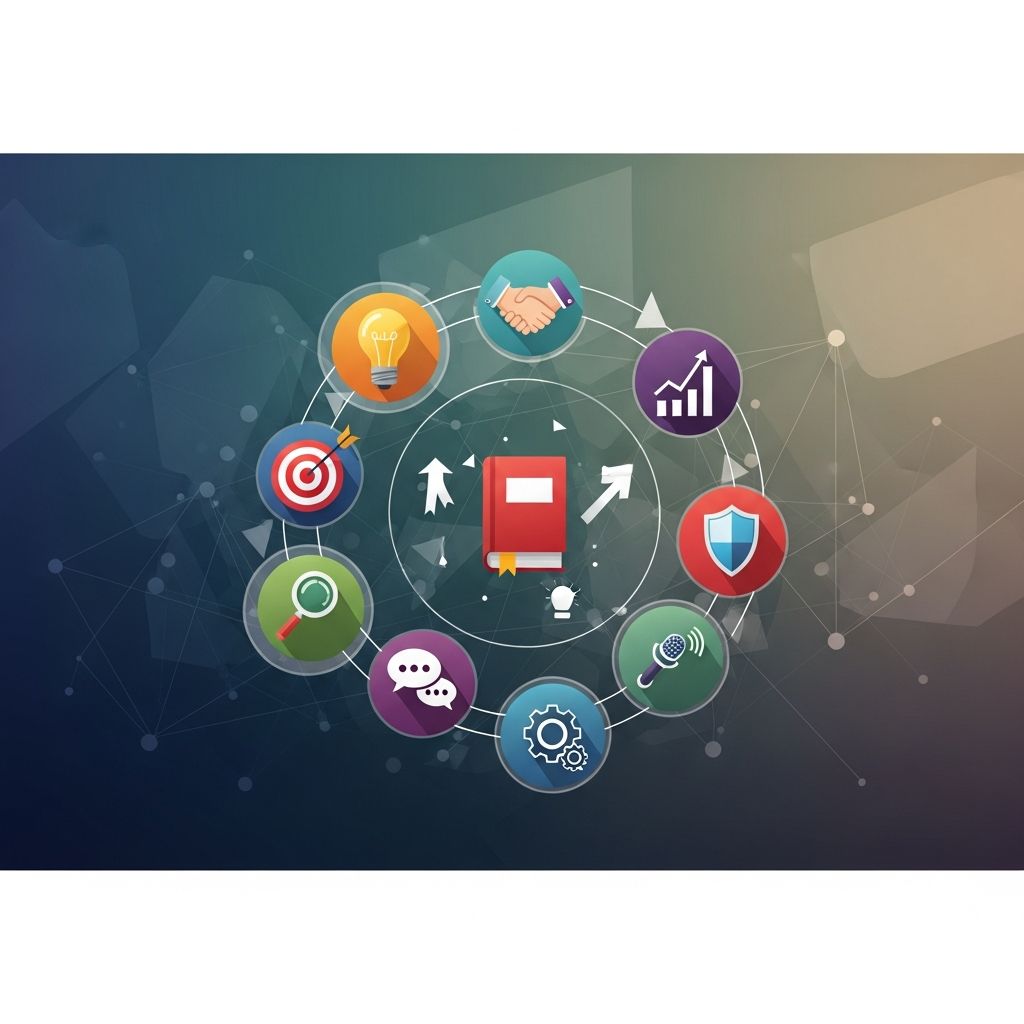
In today’s rapidly evolving job market, success hinges on a versatile set of competencies that go beyond technical know-how. These skills enable professionals to navigate uncertainty, collaborate effectively, and drive innovation. Drawing from global workforce trends, this article outlines nine pivotal abilities that employers prioritize, offering actionable strategies to cultivate them for sustained career progression.
Building Strong Communication Foundations
Effective communication is the cornerstone of professional interactions, allowing individuals to convey ideas clearly, persuade stakeholders, and foster relationships. It involves not just speaking but active listening and adapting messages to diverse audiences. Professionals who excel here accelerate decision-making and build trust across teams.
- Enhance clarity: Use concise language to cut through complexity, ensuring messages resonate without ambiguity.
- Practice active listening: Focus on understanding others’ perspectives to improve feedback loops and collaboration.
- Tailor approaches: Adjust tone and detail based on whether addressing peers, executives, or clients.
For instance, in high-stakes meetings, summarizing key points reinforces understanding and positions you as a reliable communicator.
Harnessing Digital Proficiency in Everyday Work
Digital literacy empowers professionals to leverage tools like data analytics software, cloud platforms, and AI interfaces efficiently. As workplaces digitize, those adept at these technologies boost productivity and open doors to advanced roles. Staying updated through continuous training is essential in this fast-paced domain.
| Digital Tool | Key Application | Benefit |
|---|---|---|
| Excel/Data Analysis | Trend identification | Informed decision-making |
| AI Prompting | Task automation | Increased efficiency |
| Cybersecurity Basics | Data protection | Risk mitigation |
Mastering these tools not only streamlines workflows but also demonstrates initiative in a tech-driven economy.
Cultivating Adaptability for Uncertain Times
Adaptability involves pivoting seamlessly amid change, such as shifting priorities or new technologies. It acts as a professional buffer, turning disruptions into growth opportunities. Agile workers maintain performance under ambiguity, a trait highly valued by forward-thinking organizations.
- Embrace flexibility by viewing changes as chances to innovate.
- Develop resilience through scenario planning and quick learning.
- Build confidence in handling incomplete information.
Those who adapt proactively often lead transitions, earning recognition for their poise.
Developing Creative Problem-Solving Abilities
Creative problem-solving combines analytical rigor with innovative thinking to tackle challenges unconventionally. It requires breaking down issues, generating novel ideas, and evaluating outcomes systematically. This skill drives breakthroughs in stagnant processes.
Consider a supply chain crisis: Instead of waiting, a creative solver reallocates resources creatively, minimizing downtime and costs, much like real-world cases where such approaches led to promotions.
Fostering Team Collaboration and Leadership
Teamwork amplifies individual efforts through shared goals, empathy, and conflict navigation. Effective collaborators distribute tasks, celebrate contributions, and resolve disputes constructively, creating high-performing groups. Leadership emerges naturally from this foundation.
- Promote inclusivity by valuing diverse viewpoints.
- Use empathy to strengthen interpersonal bonds.
- Facilitate open dialogues to transform conflicts into solutions.
Embracing Continuous Learning Mindsets
Lifelong learning ensures relevance by pursuing knowledge through courses, webinars, and self-study. It fuels adaptability and innovation, positioning individuals ahead of industry curves. Employers seek proactive learners who upskill independently.
Strategies include setting weekly learning goals and applying new insights immediately to reinforce retention.
Sharpening Critical Thinking and Analysis
Critical thinking entails objective evaluation of information, identifying biases, and drawing evidence-based conclusions. It’s indispensable for strategic roles, enabling sound judgments in complex scenarios.
| Component | Description | Workplace Impact |
|---|---|---|
| Question Assumptions | Challenge status quo | Innovation sparks |
| Evaluate Evidence | Use data logically | Better decisions |
| Consider Alternatives | Explore options | Risk reduction |
Integrating Emotional Intelligence Daily
Emotional intelligence (EI) encompasses self-awareness, self-regulation, motivation, empathy, and social skills. High EI professionals manage emotions effectively, build rapport, and lead with compassion, enhancing team dynamics and personal resilience.
Daily practices like reflective journaling boost self-awareness, while empathy exercises improve relational outcomes.
Prioritizing Entrepreneurial Initiative
Entrepreneurial skills involve spotting opportunities, taking calculated risks, and executing ideas independently. This proactive stance differentiates top performers, fostering innovation even in corporate settings.
- Identify gaps in current processes.
- Prototype solutions swiftly.
- Measure results and iterate.
Synthesizing Skills for Holistic Growth
These nine skills—communication, digital proficiency, adaptability, creative problem-solving, teamwork, continuous learning, critical thinking, emotional intelligence, and entrepreneurial initiative—interconnect to form a robust professional profile. Integrating them yields exponential results, from promotions to leadership roles.
Start by assessing your strengths via self-audits or feedback, then target two skills quarterly with deliberate practice. Track progress through journals or mentors to ensure steady advancement.
Frequently Asked Questions (FAQs)
How can I improve my digital skills quickly?
Enroll in free online platforms for targeted courses on tools like AI and data analysis, practicing daily on real tasks to build proficiency fast.
Why is adaptability crucial in 2026?
With rapid tech shifts and economic changes, adaptable professionals thrive by pivoting effectively, as highlighted in future jobs reports.
What’s the best way to develop teamwork?
Participate in group projects, seek diverse collaborations, and practice active listening to enhance synergy and resolve issues amicably.
Can emotional intelligence be learned?
Yes, through mindfulness, feedback-seeking, and empathy training, yielding measurable improvements in professional relationships.
How do I stay committed to lifelong learning?
Set micro-goals, subscribe to industry updates, and join learning communities to maintain momentum amid busy schedules.
References
- 5 Essential Skills for Career Growth in 2025 — Deliberate Directions. 2025. https://deliberatedirections.com/essential-skills-career-growth/
- Future-Proof Your Career: Top Vocational Skills for 2026 and Beyond — LARE Institute. 2025. https://lareinstitute.com/future-proof-your-career-top-vocational-skills-for-2026-and-beyond/
- Future-Proof Your Career: Most In-Demand Skills for 2026 — City University of Seattle. 2025. https://www.cityu.edu/blog/most-in-demand-skills-career/
- 18 High-Income Skills to Learn in 2026 — Coursera. 2025-10-01. https://www.coursera.org/articles/high-income-skills
- 10 Emerging Skills for Professionals — Harvard Professional Development. 2025. https://professional.dce.harvard.edu/blog/10-emerging-skills-for-professionals/

Medha Deb is an editor with a master's degree in Applied Linguistics from the University of Hyderabad. She believes that her qualification has helped her develop a deep understanding of language and its application in various contexts. Medha specializes in the areas of beauty, health, sports, and wellness and is committed to ensuring that the content on the website is…