
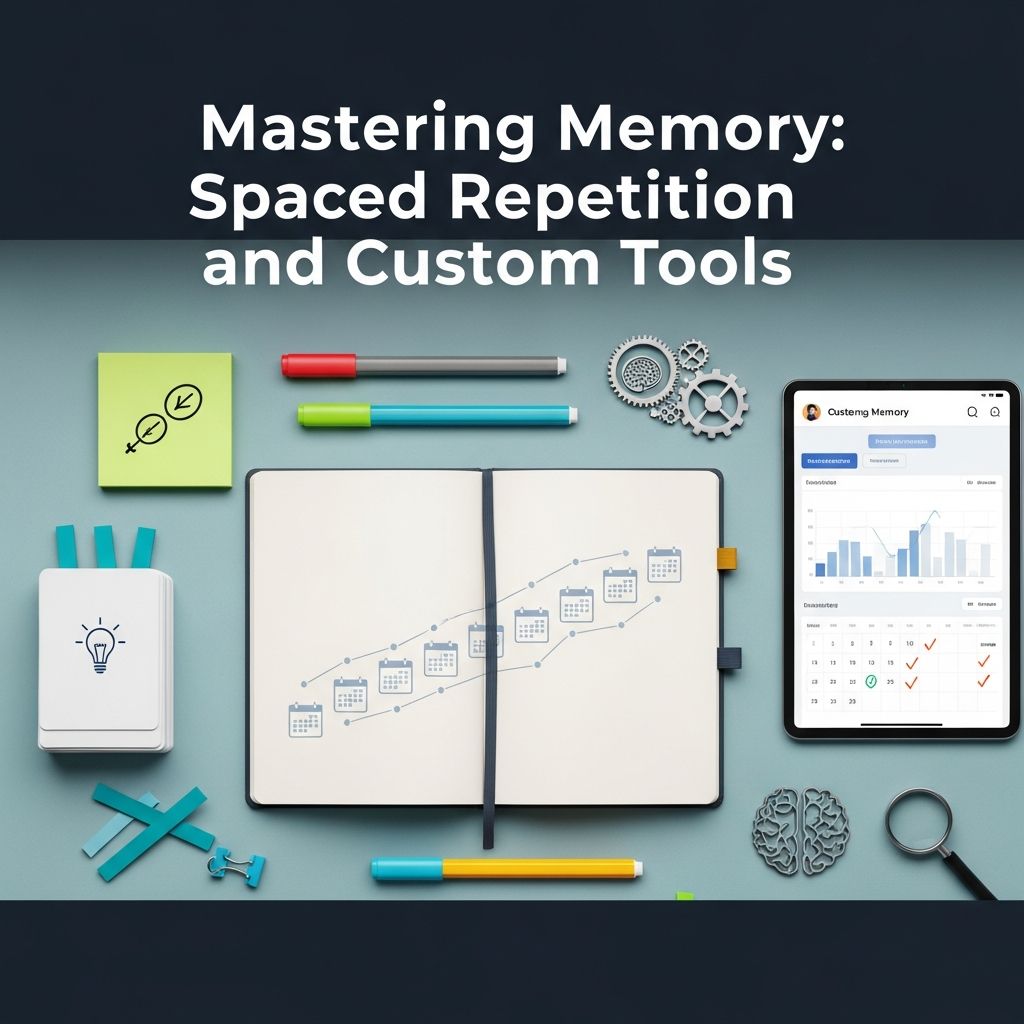
Spaced repetition revolutionizes how we learn by scheduling reviews at expanding intervals to embed knowledge deeply into long-term memory. This evidence-based method counters the natural forgetting process, making it ideal for students, professionals, and lifelong learners seeking efficient retention.
The Science Behind Effective Learning
Human memory follows a predictable decline known as the forgetting curve, where up to 50% of new information is lost within an hour without reinforcement. Pioneered by psychologist Hermann Ebbinghaus in the late 19th century, this curve illustrates rapid initial forgetting that slows over time. Spaced repetition interrupts this decay by timing reviews just before forgetting occurs, effectively flattening the curve and strengthening neural pathways.
Research demonstrates that spaced practice outperforms massed cramming. Learners retain nearly 95% of key concepts with daily spaced reviews, compared to sharp drops in single-session study. This spacing effect arises because spaced encounters force deeper cognitive processing, enhancing recall accuracy even for complex tasks like math problem-solving. Animal studies, such as those with fruit flies associating odors with shocks, confirm the universality of this phenomenon across species.
Core Principles of Spaced Repetition
At its heart, spaced repetition prioritizes active recall—actively retrieving information rather than passive rereading. Flashcards are a staple, with new or difficult items reviewed frequently and mastered ones at longer intervals. Algorithms adjust spacing dynamically: correct recalls extend intervals (e.g., from 1 day to 1 week), while errors reset to shorter gaps.
- Optimal Intervals: Initial reviews daily, then every 3-5 days, weekly, bi-weekly, and monthly as proficiency grows.
- Expanding Retrieval: Each success doubles the interval, deepening long-term encoding through increasing retrieval difficulty.
- Feedback Integration: Immediate correction after errors boosts subsequent accuracy.
Unlike uniform schedules, adaptive systems like those in SuperMemo tailor intervals per item, optimizing efficiency. This personalization accounts for individual differences in recall ease.
Practical Implementation Strategies
Start with simple flashcards divided into boxes or digital decks based on mastery levels, inspired by the Leitner system. Box 1 gets daily review; successful cards advance to Box 2 (every 2 days), up to Box 5 (monthly). Digital apps automate this, but manual tracking builds understanding.
| Mastery Level | Review Frequency | Example Items |
|---|---|---|
| Low (New/Difficult) | Daily | Complex formulas, rare vocabulary |
| Medium | Every 3 days | Basic definitions, processes |
| High (Mastered) | Monthly | Core facts, well-known concepts |
For neurodivergent learners or high-stakes fields like compliance training, spaced repetition ensures durable retention of procedures and guidelines. Integrate it with problem-solving: space math practice to improve application over rote memorization.
Building Your Personalized Study Tracker
Create a custom spreadsheet to manage spaced reviews without relying on apps. Columns track: Item (question/term), Answer, Next Review Date, Ease Rating (1-5), and Interval Multiplier. Formulas automate due dates: if ease ≥4, multiply prior interval by 2.5; else, reset to 1 day.
- Setup Columns: A: Item, B: Answer (hidden), C: Last Reviewed, D: Days Until Next, E: Next Due (=C+D), F: Ease (manual input post-review).
- Automation: Use IF formulas: If F≥4, D=Previous D*2; if 3, *1.5; else 1. Sort by E for daily tasks.
- Daily Routine: Filter due items, quiz via active recall, update ease, recalculate.
This system scales for hundreds of items, fostering discipline and insight into personal forgetting patterns. Export to Google Sheets for mobile access and sharing.
Advanced Techniques for Maximum Retention
Combine spaced repetition with multimedia: vary flashcard formats (images, audio) to combat habituation. For procedural knowledge, interleave topics—mix math and history reviews—to enhance transfer. Track metrics like retention rate (correct recalls/total) to refine intervals; aim for 80-90% success to balance challenge and consolidation.
Incorporate rest: spacing allows consolidation during sleep, when memories stabilize. For teams or classrooms, schedule group reviews at expanding intervals to embed safety protocols or skills.
Overcoming Common Obstacles
Procrastination hits when decks grow; counter by limiting new items to 20/day and prioritizing high-yield topics. Inconsistent reviews? Set phone reminders tied to due dates. Overwhelm from errors? View them as data—short intervals rebuild confidence without frustration.
Long-term adherence requires gamification: streak counters or progress visualizations motivate. Adapt for subjects beyond facts, like languages (via sentence cloze) or music theory (note identification).
Real-World Applications Across Disciplines
Medical students use it for anatomy flashcards, retaining 2x more than crammers. Language learners hit fluency faster with vocabulary spaced daily-to-weekly. Professionals master certifications via compliance modules reviewed at work-appropriate intervals. Even hobbies benefit: musicians space chord progressions for muscle memory.
Frequently Asked Questions
What is the ideal spacing interval for beginners?
Start with 1-day gaps for new material, expanding to 3-7 days on success. Adjust based on ease ratings for personalization.
Do I need software, or can I do this manually?
Manual spreadsheets work excellently for control and insight; apps like Anki suit automation seekers.
How does spaced repetition help with math or skills?
It excels beyond facts, improving problem-solving via spaced practice and feedback, as shown in controlled studies.
What’s the role of active recall in this method?
Active recall strengthens pathways more than passive review, making spaced repetition far superior for retention.
Can spaced repetition prevent burnout?
Yes, short, focused sessions replace marathons, reducing fatigue while boosting efficiency.
Transform Your Learning Journey Today
Implement spaced repetition with a custom tracker to turn fleeting knowledge into lasting expertise. Consistent application yields compounding returns, freeing mental space for creativity and application.
References
- Spaced Repetition: Your Definitive Guide for 2025 — SafetyCulture Training. 2025. https://training.safetyculture.com/blog/how-spaced-repetition-works/
- Spaced repetition — Wikipedia (drawing from peer-reviewed sources like Vance & Farr, 2007). Accessed 2026. https://en.wikipedia.org/wiki/Spaced_repetition
- Spaced Repetition Method: Boost Memory For Neurodivergent — Life Skills Advocate. Accessed 2026. https://lifeskillsadvocate.com/blog/spaced-repetition-method/
- Spaced Interval Repetition Technique — University of Illinois Division of Research Safety. Accessed 2026. https://dres.illinois.edu/education/study-skills-and-learning-strategies-resources/spaced-interval-repetition-technique/
- Spaced repetition (article) — Khan Academy. Accessed 2026. https://www.khanacademy.org/science/learn-to-learn/x141050afa14cfed3:learn-to-learn/x141050afa14cfed3:spaced-repetition/a/l2l-spaced-repetition

Medha Deb is an editor with a master's degree in Applied Linguistics from the University of Hyderabad. She believes that her qualification has helped her develop a deep understanding of language and its application in various contexts. Medha specializes in the areas of beauty, health, sports, and wellness and is committed to ensuring that the content on the website is…