
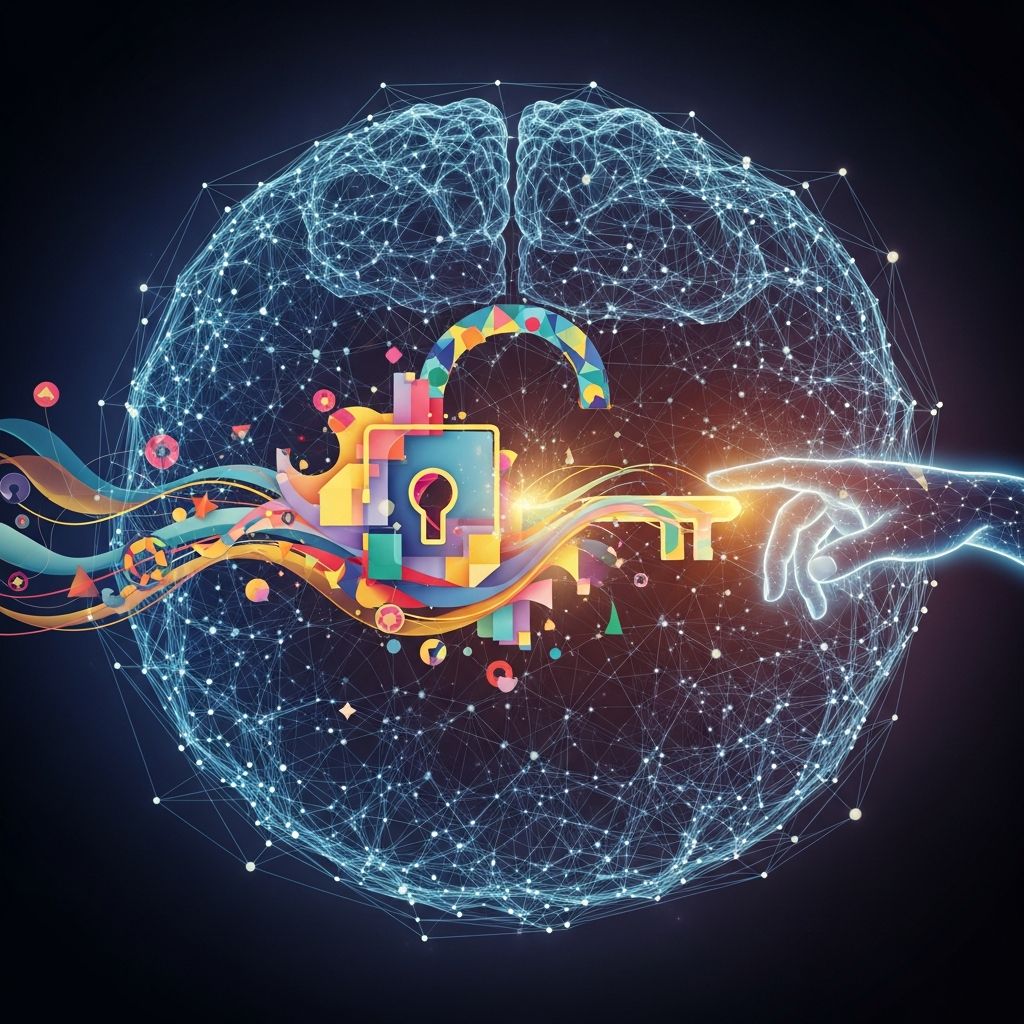
The relationship between creativity and intuition forms a fundamental connection in human innovation and personal growth. When individuals develop their intuitive capabilities alongside their creative faculties, they gain access to deeper wells of inspiration and problem-solving ability. This comprehensive guide explores evidence-based approaches to cultivating both dimensions of your creative self, enabling you to tap into your full potential and navigate the complex landscape of modern creative work.
Understanding the Intersection of Intuition and Creativity
Intuition and creativity are not separate domains but rather interconnected aspects of human cognition that work synergistically. Intuition functions as an internal compass during the creative process, guiding decisions when rational analysis reaches its limits. This inner guidance system becomes particularly valuable when facing uncertainty, helping creators determine which creative direction to pursue and when a concept has reached completion.
The creative journey rarely follows a linear path. Instead, it involves experimentation, revision, and continuous exploration. Intuitive insights help navigate these winding passages, providing direction and purpose when the way forward is unclear. By developing your intuitive faculties, you strengthen your ability to make confident creative choices without becoming paralyzed by self-doubt or fear of failure.
The Three Pillars of Creative Development
Research and expert insights have identified fundamental principles that underpin creative growth. These pillars work together to create an ecosystem where creativity can flourish and intuitive awareness can deepen.
Awareness and Mindful Observation
The foundation of creative development begins with heightened awareness. Moving from reactive engagement with the world to conscious observation opens new possibilities for creative insight. Mindfulness practices train the mind to shift from automatic responses to deliberate, observant states where creative potential emerges naturally.
When you practice mindfulness and meditation, you create mental space for deeper processing. These practices calm mental chatter and allow your consciousness to settle into a receptive state. This quieted mind becomes more attuned to subtle intuitive signals that might otherwise be drowned out by constant mental activity.
Awakening Your Inner Creative Voice
Creative awakening involves removing barriers that prevent authentic expression. Many individuals suppress their creative impulses due to fear of judgment, perfectionism, or past failures. Awakening requires courage to experiment without predetermined outcomes and to embrace the messy, non-linear nature of creation.
This awakening phase involves trusting your instincts enough to take creative risks. When you validate your intuitive insights, you affirm your creative capabilities and develop greater resilience when facing creative challenges. The process strengthens your confidence in your creative judgment, making you more willing to explore unconventional approaches and solutions.
Activation Through Deliberate Practice
Awareness and awakening must translate into action through consistent, purposeful practice. Activation means engaging in activities that stretch your creative muscles and deepen your intuitive awareness. Without regular practice, creative capacity stagnates.
Building Your Foundation: Essential Daily Practices
Sustainable creative growth depends on establishing daily habits that reinforce both intuitive and creative development. These foundational practices create the conditions necessary for innovation to emerge.
Meditation and Reflection
Meditation stands as one of the most powerful tools for nurturing creativity and heightening intuitive awareness. Regular meditation practice calms mental activity, allowing endless thoughts to settle and creating space for mental refreshment. This quieted state makes you more receptive to intuitive insights and more open to creative possibilities around you.
Beyond simple relaxation, meditation trains your mind to observe thoughts and ideas without judgment. This observational capacity directly translates to creative work, where you learn to play with ideas, explore possibilities, and remain open to unexpected directions. Experienced practitioners emphasize that creative insight often arises through letting go rather than forcing solutions.
Prioritizing Restorative Sleep
Quality sleep functions as essential infrastructure for creative performance. During sleep, your brain processes experiences, consolidates learning, and makes novel connections between seemingly unrelated concepts. This neurological activity directly supports creative breakthrough and intuitive clarity.
When well-rested, your mind functions at full capacity, making you sharper and more receptive to creative opportunities throughout your waking hours. Sleep deprivation, by contrast, diminishes both cognitive flexibility and intuitive sensitivity. Protecting your sleep becomes a creative priority, not a luxury.
Movement and Physical Practice
Yoga and regular exercise provide complementary benefits for creative development. Yoga practice centers your physical, mental, and spiritual dimensions while clearing mental clutter. The mindful movement inherent in yoga gradually improves intuitive awareness and creative clarity.
Physical activity more broadly stimulates neural pathways and increases circulation to the brain, enhancing cognitive function. Movement breaks the static patterns of desk work and allows creative insights to surface during periods of gentle physical exertion.
Environmental and Experiential Factors
Nature Immersion
Spending time in natural environments provides profound benefits for creative development. Whether through leisurely walks, hiking, or simply sitting outdoors, nature exposure offers limitless benefits for both creativity and intuitive awareness. Natural settings reduce mental fatigue, restore attention, and provide the brain with restorative experiences.
Nature also offers complexity and patterns that stimulate creative thinking. The organic forms, colors, and rhythms in natural environments activate different neural pathways than built environments, supporting lateral thinking and novel idea generation.
Creating Space for Unstructured Exploration
Not all creative activity needs to serve a predetermined purpose. Taking time to experiment with creative materials without a master plan or specific outcome allows authentic creative expression to emerge. This free exploration, unconstrained by goals or deadlines, often yields surprising discoveries about your creative capabilities.
Expert creators emphasize the importance of avoiding constant busyness and protecting mental space for unstructured thinking. When your schedule contains margins rather than being packed solid, your mind gains room to make unexpected connections and entertaining novel ideas.
Structured Techniques for Creative Enhancement
Imagination Exercises
Daily creative challenges strengthen your imaginative capacity and intuitive flexibility. A simple yet effective approach involves selecting random elements—a word and a creative medium, for instance—and creating something using those constraints. This exercise develops creative fluency and strengthens your ability to generate ideas on demand.
Such challenges train your brain to make unexpected connections and overcome initial resistance to unfamiliar creative tasks. Over time, this daily practice expands your creative range and builds confidence in your ability to respond creatively to any prompt or situation.
Mind Mapping and Visual Organization
When overwhelmed by a project or caught in repetitive thinking patterns, mind mapping provides an effective escape route. This visual technique organizes thoughts spatially, revealing connections and possibilities that linear writing might obscure. The visual representation encourages lateral thinking and breaks mental loops that constrain creativity.
Breaking Routine Patterns
Comfort breeds cognitive stagnation. When routines become too familiar, your brain stops searching for novel solutions. Deliberately introducing variation into your daily schedule stimulates fresh neural connections and opens your mind to new possibilities.
This variation might involve changing your walking route, working in different locations, or shifting the order of daily activities. These seemingly small changes expose your brain to novel stimuli and challenge it to engage more actively with your environment.
The Learning and Exposure Foundation
Reading as Creative Fuel
Daily reading exposes you to the ideas, perspectives, and creative approaches of others, bringing them into your consciousness where they interact with your own thoughts. This cross-pollination of ideas creates the conditions for novel creative synthesis. Reading simultaneously expands your knowledge base and provides raw material from which intuitive insights emerge.
The breadth of your experiences and knowledge directly determines the richness from which intuition can draw. Exposure to diverse domains, disciplines, and perspectives enriches the foundation upon which your creative and intuitive abilities operate.
Hobbies and Passion-Driven Activities
Engaging in hobbies purely for enjoyment, without attachment to outcomes or goals, serves creative development in subtle but significant ways. These activities cultivate the ability to remain present in the moment, which simultaneously boosts awareness and facilitates creative idea flow.
Activities pursued for intrinsic satisfaction rather than external validation typically produce greater engagement and deeper learning. This quality of attention and genuine interest strengthens both creative capability and intuitive sensitivity.
The Synergy of Intuition and Rational Analysis
While intuition serves as a powerful creative tool, it reaches its full potential when integrated with rational thinking. Creativity thrives at the intersection where intuitive insights meet critical analysis. This partnership allows raw intuitive ideas to be refined, tested, and developed into fully realized innovations.
Rather than choosing between trusting your instincts and thinking analytically, effective creators employ both capacities in sequence. Intuitive exploration generates possibilities; rational analysis refines and develops them. This integrated approach produces more nuanced, practical, and powerful creative outcomes.
Cultivating Genuine Creative Confidence
One significant benefit of developing your intuitive capabilities is enhanced creative confidence. Trusting your inner guidance mitigates the fear and self-doubt that often accompany creative work. When you validate your intuitive insights, you affirm your creative capabilities and develop more resilience.
This confidence enables healthy risk-taking and fosters openness to experimentation and inevitable failures. Both risk-taking and intelligent failure are fundamental to meaningful creative growth. As you accumulate experience and successfully navigate creative challenges, your reliance on intuition becomes more pronounced and reliable.
Personalization and Individual Creative Paths
While these strategies provide a comprehensive framework, authentic creative development requires personalization. Different individuals find different practices most resonant and effective. Some may gravitate toward meditation and nature immersion, while others might emphasize collaborative work and intellectual engagement.
The key lies in identifying which approaches energize you most fully and consistently applying them. When you pursue activities and practices that genuinely light you up inside, they naturally sustain your engagement and produce lasting transformation. This personal attunement ensures that your creative development reflects your authentic interests and strengths rather than following a generic formula.
Building Sustainable Creative Habits
Lasting creative development depends on consistency rather than intensity. Small daily practices sustained over months and years produce profound transformation. Rather than attempting dramatic overhauls, identify one or two practices that resonate with you and commit to daily engagement.
As these practices become established habits, their cumulative effects compound. Your intuitive sensitivity sharpens, your creative confidence grows, and your ability to navigate uncertainty improves. Over time, what initially required conscious effort becomes integrated into your natural way of engaging with creative work and life itself.
Frequently Asked Questions (FAQs)
Q: How long does it take to develop stronger intuitive awareness?
A: Development timelines vary based on consistency and individual factors. Many practitioners report noticeable improvements in intuitive sensitivity within 4-8 weeks of daily meditation practice. However, significant deepening typically unfolds over months and years of consistent engagement.
Q: Can intuition be developed if I’m naturally analytical?
A: Absolutely. Analytical thinkers often benefit significantly from intuitive development since these capacities complement each other. Your analytical foundation actually provides excellent preparation for integrating intuitive insights effectively.
Q: What’s the relationship between intuition and creativity?
A: Intuition serves as a guide through the creative process, helping you make decisions when rational analysis is insufficient. They work synergistically, with intuition generating possibilities and creative thinking developing and refining those possibilities.
Q: Which practice should I start with if I’m new to creative development?
A: Begin with whichever practice appeals most strongly to you. Meditation, nature immersion, or daily reading are excellent entry points. Starting with genuinely appealing activities ensures greater consistency and sustainability.
Q: How do I know if my intuitive insights are reliable?
A: Combine intuitive insights with rational analysis and testing. Over time, you’ll develop a sense of which intuitive signals prove most accurate and reliable. Experience and reflection strengthen your ability to distinguish genuine intuitive guidance from wishful thinking.
References
- 10 Ways to Nurture Your Creativity And Boost Your Intuitive Awareness — Lifehack. https://www.lifehack.org/articles/productivity/10-ways-nurture-your-creativity-and-boost-your-intuitive-awareness.html
- Your Intuition and Your Creativity — Spotlight Advisory Group. https://www.spotlightadvisorygroup.com/blog/your-intuition-and-your-creativity
- From Instinct to Intuition: Creativity as Operating System — IE Center for Health and Well-being. https://www.ie.edu/center-for-health-and-well-being/blog/from-instinct-to-intuition-creativity-as-operating-system/
- Fostering Creativity: Mental Techniques to Encourage Innovative Thinking — The Mental Game. https://thementalgame.me/blog/fostering-creativity-mental-techniques-to-encourage-innovative-thinking
- How to Develop Intuition: 5 Training Exercises — Positive Psychology. https://positivepsychology.com/intuition-training/
- How To Nurture Your Creativity — MiiCreative. https://www.miicreative.com/blogs/painting/how-to-nurture-your-creativity

Medha Deb is an editor with a master's degree in Applied Linguistics from the University of Hyderabad. She believes that her qualification has helped her develop a deep understanding of language and its application in various contexts. Medha specializes in the areas of beauty, health, sports, and wellness and is committed to ensuring that the content on the website is…