
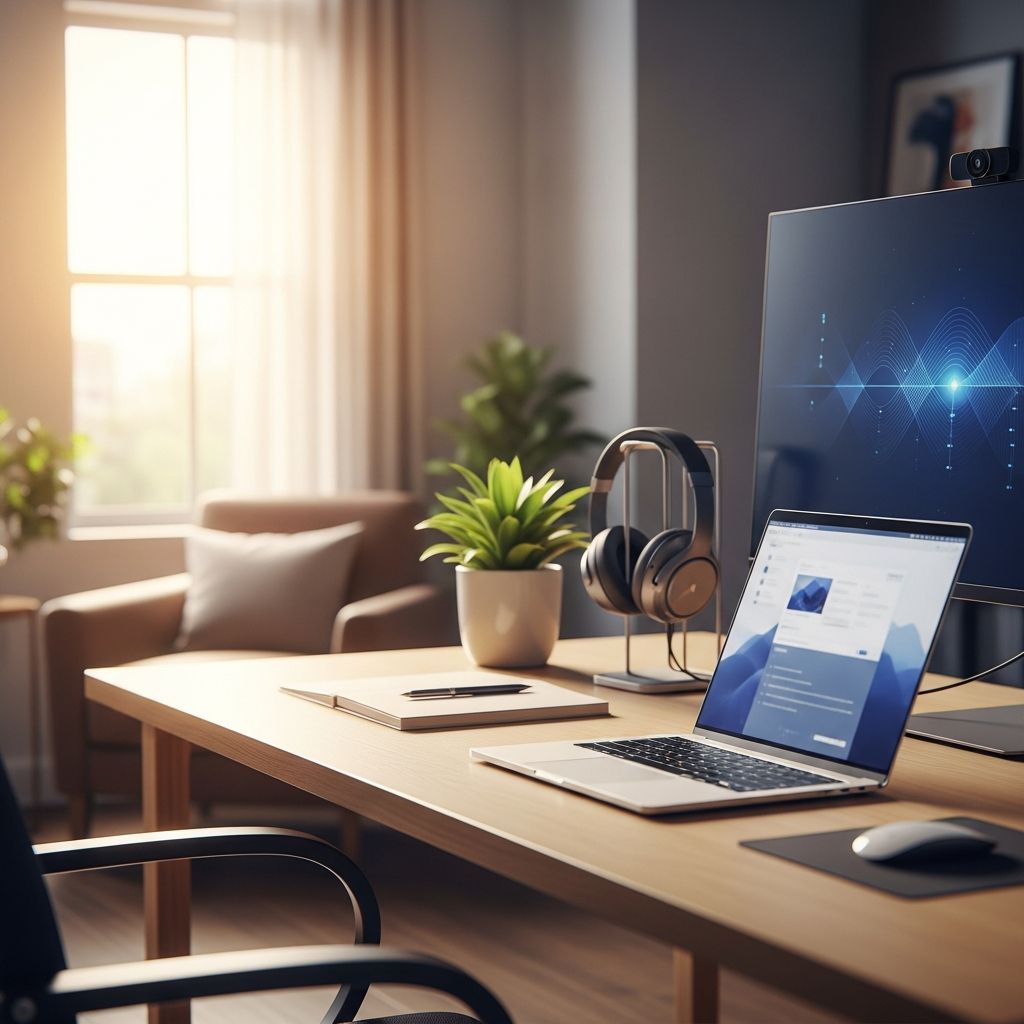
Remote work has evolved into a cornerstone of modern professional life, offering unparalleled flexibility but demanding disciplined approaches to maintain high output. In 2026, with hybrid models dominating and AI tools reshaping workflows, professionals must adopt targeted strategies to thrive regardless of location. This guide explores practical methods to enhance focus, streamline tasks, and foster well-being, drawing on emerging trends and proven techniques.
Building Your Ideal Remote Workspace
A dedicated workspace is foundational for remote success, creating a psychological divide between professional duties and personal time. Unlike ad-hoc setups on couches or kitchen tables, a purpose-built area signals to your brain that it’s time to work, boosting concentration and reducing distractions.
Start by selecting a quiet corner with natural light and ergonomic furniture. Invest in an adjustable desk and chair to prevent strain during long sessions. Lighting matters—position your screen to avoid glare and use soft lamps for evening work. Noise-cancelling headphones can block household sounds, while plants add a calming element.
- Ergonomic chair with lumbar support for posture health.
- Dual monitors to multitask efficiently without neck strain.
- White noise machine or apps for consistent background ambiance.
- Standing desk converter for alternating positions and energy boosts.
Personalize minimally to avoid clutter, but include motivational items like a vision board. This setup not only improves output but enhances video call professionalism, projecting competence to colleagues.
Harnessing Time Blocking for Unrivaled Focus
Time blocking transforms chaotic schedules into structured powerhouses. Assign specific blocks for deep work, meetings, and breaks, treating them as unbreakable appointments. This method counters the myth of multitasking, which fragments attention and lowers efficiency.
Begin your day with a 30-minute planning ritual: review priorities, estimate durations, and slot them into your calendar. For instance, reserve mornings for high-cognitive tasks when willpower peaks, followed by administrative duties. Buffer 10-15 minutes between blocks for transitions, overruns, or quick stretches.
| Time Block | Activity Type | Duration | Purpose |
|---|---|---|---|
| 8-10 AM | Deep Focus (e.g., writing, coding) | 2 hours | Peak creativity |
| 10:15-11 AM | Emails & Quick Tasks | 45 min | Clear inbox backlog |
| 11-12 PM | Meetings/Calls | 1 hour | Collaboration |
| 1-3 PM | Creative Projects | 2 hours | Afternoon momentum |
| 3:15-4 PM | Review & Plan | 45 min | Daily wrap-up |
Tools like Google Calendar or Notion enforce these blocks with color-coding. Weekly reviews refine the system, adapting to energy levels and feedback.
Integrating AI Tools to Supercharge Workflows
By 2026, AI-powered platforms are indispensable for remote productivity, automating mundane tasks and amplifying human strengths. From transcription services to predictive analytics, these tools handle repetition, freeing minds for innovation.
Adopt AI for email summarization, meeting notes, and task prioritization. Platforms like advanced virtual assistants scan communications, flag urgencies, and suggest responses. In creative fields, AI generates drafts or brainstorms ideas, accelerating output without replacing judgment.
For teams, AI fosters asynchronous collaboration: auto-generated updates sync progress across time zones. However, select tools judiciously—prioritize those with strong data privacy to safeguard sensitive info. Pair with human oversight for nuanced decisions, ensuring AI enhances rather than overwhelms.
Mastering the Art of Task Batching and Quick Wins
Batching groups similar activities to minimize context-switching costs, which can consume up to 40% of productive time. Categorize tasks—emails, calls, reports—and tackle them in dedicated bursts.
Implement the Two-Minute Rule: if a task takes under two minutes, do it immediately. Otherwise, batch it. Schedule ‘quick win’ windows post-lunch for these, building momentum. For larger batches, alternate sedentary and active ones, like desk work followed by walking calls.
- Communication batch: 9 AM, 1 PM, 4 PM checks only.
- Admin batch: Invoicing, filing in one 30-minute slot.
- Content batch: All writing or editing together.
Use status indicators in Slack or Teams (‘Focus Mode’) to deter interruptions. Tier channels by urgency: #urgent for crises, #general for routine.
Outcome-Focused Performance in Distributed Teams
Shift from hours-logged to results-delivered metrics, aligning with remote realities. Clear KPIs—project milestones, client satisfaction—drive accountability without micromanagement.
Managers should set transparent goals via OKRs, reviewed bi-weekly. Tools track deliverables, not activity. This builds trust, vital for virtual cohesion. Foster mentoring across locations, ensuring remote workers access promotions and training equally.
Prioritizing Movement, Wellness, and Boundaries
Sedentary remote life risks burnout; counter with scheduled movement. After 50-minute focus sessions, take 5-10 minute walks or stretches. End days with shutdown rituals: log off, review wins, disconnect.
Mental health demands non-negotiable attention—micro-breaks for meditation, weekly no-meeting days for recharge. Hybrid trends emphasize well-being, with companies offering wellness stipends.
Batch movement: post-deep work, handle calls ambulatory-style. Sustainability grows, with eco-practices like virtual meetings reducing travel emissions.
Advanced Communication Strategies for Global Teams
Effective remote collaboration hinges on structured async and sync channels. Use video for rapport, threaded discussions for clarity. Time-zone clustering minimizes async friction, enabling real-time synergy.
Set norms: response SLAs, meeting agendas shared 24 hours prior. AI aids with real-time translation and sentiment analysis in chats. Regular virtual water-coolers build culture, combating isolation.
Frequently Asked Questions (FAQs)
Q: How can I maintain work-life balance remotely?
A: Establish firm boundaries with dedicated workspaces, shutdown rituals, and no after-hours checks. Schedule breaks and hobbies as non-negotiable.
Q: What AI tools are best for remote productivity in 2026?
A: Look for platforms offering task automation, meeting transcription, and analytics. Prioritize secure, integrable options researched for your workflow.
Q: How do I manage a remote team effectively?
A: Focus on outcomes, clear communication, trust-building, and equal opportunities. Use mentoring and cross-location support systems.
Q: Is hybrid work here to stay?
A: Yes, as the default model, blending flexibility with occasional hubs for collaboration and well-being.
Q: How often should I review my productivity system?
A: Weekly for batches and blocks, monthly for overall tweaks to sustain gains.
Embracing 2026 Remote Trends for Long-Term Success
Mid-term relocations (1-3 months) normalize, favoring time-zone aligned hubs over nomadism. Continuous upskilling via micro-learning keeps skills sharp. Decentralized offices and sustainability practices round out the landscape.
Integrate these holistically: workspace + blocking + AI + batching + wellness = resilient productivity. Track progress quarterly, iterating based on results. Remote work isn’t just viable—it’s a competitive edge when mastered.
References
- 8 Essential Remote Work Productivity Tips for 2026 — Nearshore Business Solutions. 2026. https://nearshorebusinesssolutions.com/news/remote-work-productivity-tips/
- 10 Trends That Will Redefine Remote Work in 2026 — Splashtop. 2026. https://www.splashtop.com/blog/remote-work-trends-2026
- What’s the future of remote work? Here’s what researchers say — Binghamton University. 2023-10-10. https://www.binghamton.edu/news/story/6004/remote-work-best-practices-business-new-research
- 7 Essential Strategies to Support Your Remote Workforce — Elcom. 2026. https://www.elcom.com.au/resources/blog/7-essential-strategies-to-support-your-remote-workforce
- 6 Remote Work Trends That Will Actually Matter in 2026 — Andy Sto. 2026. https://andysto.com/remote-work-trends-that-will-actually-matter-in-2026/

Medha Deb is an editor with a master's degree in Applied Linguistics from the University of Hyderabad. She believes that her qualification has helped her develop a deep understanding of language and its application in various contexts. Medha specializes in the areas of beauty, health, sports, and wellness and is committed to ensuring that the content on the website is…