
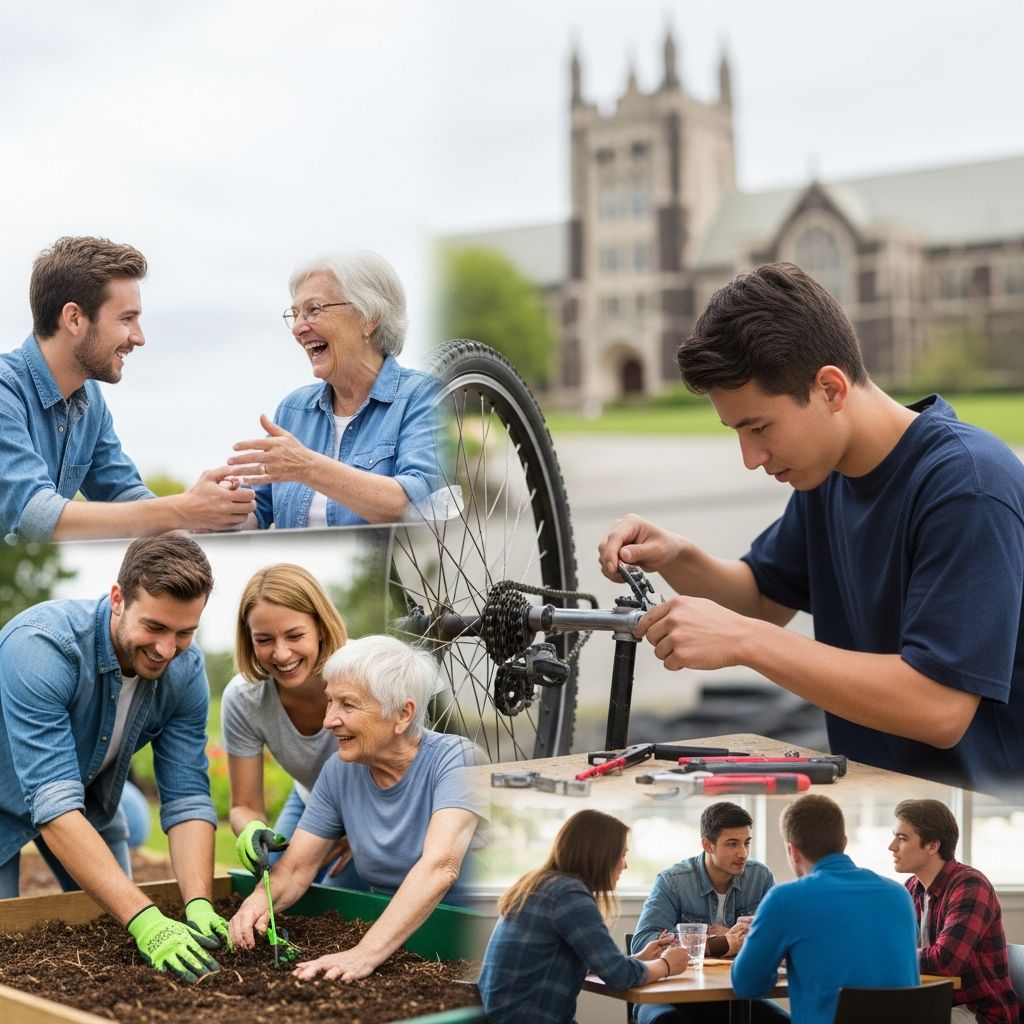
College serves as a transformative period in many people’s lives, offering structured education, professional networking, and the development of technical skills. Yet despite the rigorous coursework and intellectual challenges, institutions of higher learning often fall short in preparing students for the deeper, more nuanced aspects of adult life. While professors guide you through complex theories and academic disciplines, the most impactful lessons frequently emerge from lived experience, interpersonal connections, and personal challenges encountered outside lecture halls and libraries.
The gap between academic preparation and real-world readiness reveals an important truth: some of life’s most valuable education cannot be graded, standardized, or taught through conventional instruction. These lessons require direct experience, reflection, and often, a degree of failure and adaptation. Understanding these formative experiences helps college students and recent graduates navigate their transitions more thoughtfully and develop resilience that will serve them throughout their careers and personal lives.
The Art of Honest Self-Examination
One of the most neglected lessons in formal education is the practice of genuine self-awareness. While psychology courses may discuss the concept abstractly, true self-knowledge emerges only through personal confrontation with your own insecurities, limitations, and patterns of behavior. College provides the unique environment where this discovery can happen—often through uncomfortable moments when you’re forced to acknowledge who you actually are, separate from parental expectations or childhood identities.
Self-awareness functions as the foundation for personal growth and emotional resilience. When you develop the capacity to examine your vulnerabilities without defensiveness, you gain the ability to address them constructively. This involves recognizing when you respond defensively in conversations, identifying patterns in relationships that don’t serve you, and understanding how your fears influence your decision-making. Many college students discover these truths not in seminars on emotional development, but through failed friendships, romantic relationships that didn’t work out, or challenges in group projects that forced them to confront their own interpersonal weaknesses.
The process of looking your insecurities in the face—truly examining them rather than pushing them aside—requires courage. It means acknowledging that you might be wrong, that you sometimes act in ways contrary to your values, or that you carry fears about your adequacy. This honest reckoning, while uncomfortable, becomes the catalyst for meaningful change and the development of authentic confidence rather than superficial bravado.
Initiative and Agency: Taking the First Step
Academic environments often create a false impression that success follows naturally from preparation and waiting for the right moment. In reality, the world rarely announces when you’re ready or presents perfectly timed opportunities. The lesson that action precedes success, not the reverse, is one that students must learn through experience rather than instruction. Many young adults leave college expecting that their degree will open doors automatically, only to discover that career advancement requires proactive effort, networking, and willingness to pursue opportunities independently.
Time functions as a non-renewable resource, yet many students and recent graduates waste years waiting—for the perfect job posting, for others to validate their ideas, or for life circumstances to align perfectly. This passive approach almost always leads to stagnation. In contrast, those who understand that taking imperfect action generates momentum find that success builds upon initial efforts, even when those early attempts are clumsy or incomplete.
The relationship between action and accomplishment teaches a critical distinction: you cannot think your way to success without execution. Writing a resume means nothing without submitting applications. Understanding marketing principles doesn’t build a business. Recognizing what needs to change in your life doesn’t create that change. Only by taking concrete steps—whether starting a side project, reaching out to mentors, or pursuing opportunities that excite you—do you create the conditions for success. College graduates who internalize this lesson early tend to advance more rapidly in their careers than peers who continue waiting for external validation or permission to pursue their goals.
Navigating Friendships and Relational Investment
Few aspects of college are discussed in classroom settings, yet friendships profoundly shape the overall college experience and extend far into adult life. The reality of sustaining meaningful relationships differs drastically from the romantic notion of friendships depicted in media or imagined during high school. Building and maintaining quality friendships requires deliberate effort, vulnerability, and an understanding that not every connection will endure.
College exposes students to a wider diversity of personalities and backgrounds than most have previously experienced. This diversity creates both opportunity and challenge. Genuine friendships develop when people invest time in understanding each other’s perspectives, listening without judgment, and supporting one another through difficulties. However, the college environment also creates transience—people graduate at different times, move to different locations, and pursue different life paths.
Learning to distinguish between friendships worth investing in and those that serve a temporary purpose represents important maturity. Some friendships are meant to be brief but meaningful; others develop slowly and become lifelong connections. The key lies in recognizing which people genuinely enhance your life and deserve your energy and which relationships operate primarily out of convenience or habit. This discernment prevents spreading yourself too thin and allows you to cultivate deeper bonds with those who truly reciprocate care and support.
Additionally, college teaches that you don’t need to be friends with everyone. The pressure to maintain broad social networks can lead to superficial connections that drain energy without providing genuine connection. Learning to be selective with your social investment—to say no to people and events that don’t align with your values—becomes increasingly important for psychological well-being and authentic relationships.
The Power of Perspective-Taking and Empathy
While coursework may teach about different cultures, historical periods, or philosophical frameworks, the development of genuine empathy requires exposure to diverse lived experiences. Empathy isn’t simply intellectual understanding; it’s the capacity to recognize that every person around you carries a complex inner life as rich and significant as your own. This recognition fundamentally shifts how you interact with others and how you navigate the world.
College, as a melting pot of backgrounds and perspectives, offers natural opportunities to encounter worldviews dramatically different from your own. Conversations with roommates from different regions, classmates with different family structures, and friends navigating different challenges all contribute to expanding your understanding of human experience. When you genuinely listen to someone’s story—understanding what shaped their values, what challenges they’ve overcome, what fears motivate them—you develop the capacity to interact with the world less through judgment and more through compassion.
This expanded perspective prevents automatic assumptions about people based on surface characteristics. Instead of categorizing individuals according to stereotypes, you recognize the uniqueness of their journey. This skill proves invaluable not only in personal relationships but in professional settings, leadership roles, and civic participation. Open-mindedness becomes the gateway to empathy, and empathy becomes the foundation for more effective communication and collaboration.
Expectations, Reality, and Emotional Maturity
Another critical lesson seldom addressed in curricula involves the management of expectations and the cultivation of realistic perspective. College students often arrive with idealized visions of what college will be, what they’ll accomplish, or who they’ll become. When reality diverges from these mental projections—which it inevitably does—disappointment can be profound.
Emotional maturity involves accepting people and circumstances for what they are rather than what you hoped they would be. This doesn’t mean settling for poor treatment or abandoning standards; rather, it means seeing clearly rather than through the lens of wishful thinking. When you can acknowledge that your best friend has flaws, that your chosen university has limitations, or that a desired outcome may not materialize, you can respond to actual circumstances rather than to your mental constructs.
This capacity for realistic appraisal protects your well-being by reducing the gap between expectation and reality. When you expect perfection from people or situations, you guarantee constant disappointment. When you accept imperfection while maintaining standards and boundaries, you can appreciate what exists while working toward improvement where possible. This mindset prevents the paralysis and bitterness that often accompany unmet expectations.
Independence and the Courage to Fail
Perhaps no environment forces independence quite like college. Away from parental oversight and childhood support systems for the first time, students must learn to manage their own schedules, solve problems independently, and take responsibility for their choices. This independence, while sometimes uncomfortable, becomes transformative when embraced fully.
Integral to independence is the willingness to fail. Many students arrive at college having rarely experienced significant failure—they’ve been successful students within familiar systems. College introduces challenges that don’t yield to previous strategies. Courses prove harder than expected. Social interactions don’t go as planned. Assumptions about career paths shift. These failures, while painful, teach lessons that success cannot. Failure reveals your resilience, clarifies your actual abilities versus your self-image, and forces you to develop new strategies and skills.
The students who develop the most from college experiences are typically those who view failure not as a permanent condition or character flaw, but as information and opportunity. This perspective shift—from shame about failure to curiosity about what it reveals—accelerates growth exponentially. Additionally, experiencing failure in college, where the stakes are relatively contained, builds confidence that you can survive setbacks and recover.
Adaptability in an Uncertain World
College curricula typically emphasize mastering specific bodies of knowledge. Yet one of the most valuable lessons college teaches (often inadvertently) involves the capacity to adapt to changing circumstances. Whether navigating unexpected course changes, adjusting to roommate conflicts, or modifying career plans when initial ideas don’t pan out, college requires constant adjustment.
This adaptability—the flexibility to change course when new information emerges or circumstances shift—becomes increasingly valuable in a world characterized by uncertainty and rapid change. Students who develop comfort with change rather than resistance to it position themselves to thrive in careers and lives characterized by disruption. The ability to view change as opportunity rather than threat fundamentally shapes resilience and long-term success.
Essential Life Lessons Summary
- Self-awareness: Honest examination of your vulnerabilities and patterns
- Initiative: Taking action rather than waiting for perfect conditions
- Relational skill: Investing thoughtfully in meaningful connections
- Empathy: Understanding diverse perspectives and lived experiences
- Realistic expectations: Accepting circumstances while maintaining standards
- Resilience through failure: Learning from setbacks and difficulties
- Adaptability: Embracing change as opportunity for growth
Frequently Asked Questions
Q: Can these lessons be learned through formal classes?
A: While some aspects might be discussed theoretically, these lessons fundamentally require lived experience. Classroom instruction can provide frameworks for understanding, but genuine learning occurs through personal application and reflection on real situations.
Q: What if I’m struggling with one of these areas?
A: Recognizing struggle in any of these areas is actually the first step toward growth. Consider seeking mentorship from older peers, utilizing campus counseling services, or simply giving yourself grace as you navigate these challenges. Most people struggle with multiple areas simultaneously.
Q: How do I apply these lessons after college?
A: These lessons become increasingly applicable after college as you navigate careers, adult relationships, and independent living. The key is maintaining intentional reflection on your experiences and viewing challenges as opportunities for continued learning and development.
Q: Are these lessons universal?
A: While the general themes are widely applicable, the specific ways these lessons manifest vary significantly based on individual circumstances, cultural backgrounds, and personal challenges. Your college experience will highlight certain lessons more prominently than others.
Conclusion
College’s true value extends far beyond degree attainment and credential acquisition. The environment provides a unique crucible for developing emotional maturity, relational competence, and resilience. The lessons learned outside classrooms—through failed attempts, difficult conversations, navigating relationships, and facing challenges—ultimately shape who you become more than any curriculum could. Recognizing this reality allows you to approach your college experience more intentionally, viewing each challenge as an opportunity to develop capabilities that will serve you throughout your life. The education that matters most is the one you give yourself through conscious engagement with your experience.
References
- 5 Big Lessons Learned Outside the Classroom — CollegeXpress. Accessed January 2026. https://www.collegexpress.com/articles-and-advice/student-life/blog/5-college-lessons-learned-outside-classroom/
- 7 Life Lessons You Learn In College — Rasmussen University. Accessed January 2026. https://www.rasmussen.edu/student-experience/college-life/ten-life-lessons-you-learn-in-college/
- Life Lessons: Brought to You By College — University of Wyoming. Accessed January 2026. https://www.uwyo.edu/blog/becoming-a-student/life-lessons.html
- 6 Life Lessons From Non-Academic Experiences in College — Psychology Today. March 2023. https://www.psychologytoday.com/us/blog/understanding-hypnosis/202304/6-life-lessons-from-non-academic-experiences-in-college
- Life Lessons Learned from a Higher Education — College Savings Organization. Accessed January 2026. https://www.collegesavings.org/life-lessons-learned-from-a-higher-education

Medha Deb is an editor with a master's degree in Applied Linguistics from the University of Hyderabad. She believes that her qualification has helped her develop a deep understanding of language and its application in various contexts. Medha specializes in the areas of beauty, health, sports, and wellness and is committed to ensuring that the content on the website is…