
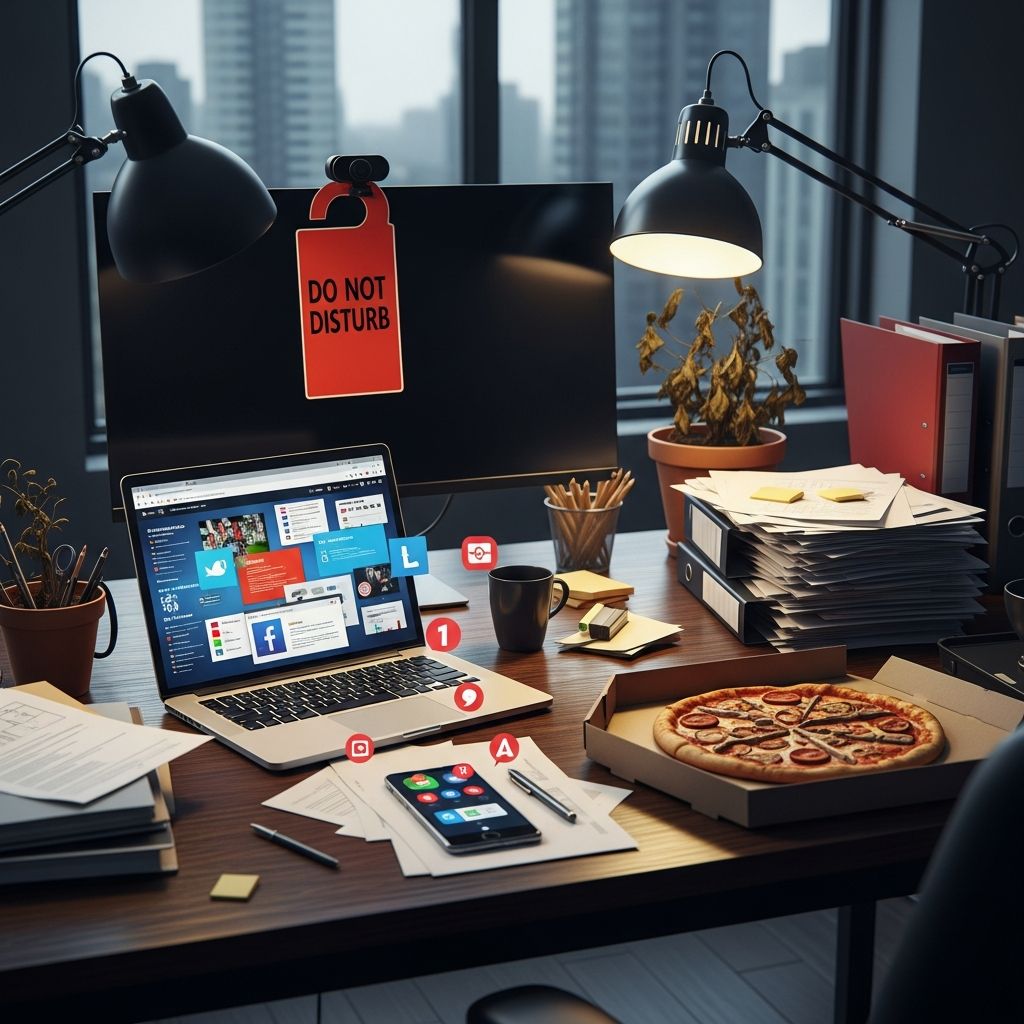
Productivity in modern workplaces faces constant threats from multiple directions. Research demonstrates that approximately 70% of employees encounter significant distractions during their workday, leading to substantial losses in output and engagement. Understanding what creates these productivity obstacles is the first step toward building a more focused work environment. Organizations that address these challenges systematically can help their teams achieve deeper concentration and meaningful results.
Understanding the Modern Productivity Challenge
The contemporary office environment presents a unique paradox: we have more tools than ever to accomplish work, yet we find ourselves more distracted than previous generations. The proliferation of communication channels, notification systems, and competing demands creates a fractured attention landscape. When employees struggle to maintain focus, the consequences extend beyond individual frustration—they manifest as missed deadlines, reduced quality output, and diminished organizational performance.
Identifying specific productivity impediments allows managers and team members to develop targeted interventions. Rather than accepting constant disruption as inevitable, workplaces can implement structural and behavioral changes that support sustained concentration and meaningful work.
Interruptions from Colleagues as the Primary Distraction
Among all workplace disruptions, unplanned interruptions from coworkers emerge as the leading productivity threat. These interruptions take multiple forms: unexpected questions requiring immediate responses, impromptu visits to desks, sudden requests for assistance, and urgent tasks that cannot wait. The challenge lies not merely in the interruption itself but in the cognitive cost of context-switching.
When an employee is interrupted mid-task, they cannot simply resume where they left off. The brain requires time to re-establish focus and recall the mental context of the previous work. Research indicates that context switching resulting from constant interruptions can reduce a worker’s productivity by as much as 40 percent. This represents not just a minor efficiency loss but a fundamental compromise of output quality.
Organizations addressing this issue implement strategies such as designated focus hours when interruptions are minimized, clear communication protocols about what constitutes an urgent matter, and alternative channels for non-urgent questions. Some teams adopt a “do not disturb” signal system or establish specific times when colleagues can request assistance.
Acoustic Environment and Noise Pollution
Office noise consistently ranks among the most significant environmental barriers to concentration. This category encompasses far more than simply loud music or shouting colleagues. Typical office acoustic disruptions include nearby conversations, telephone ringing, keyboard typing, printer operations, and general ambient chatter characteristic of open-plan layouts.
In open-office configurations, the absence of physical barriers means sound travels freely, creating what researchers describe as competing attention demands. When the brain attempts to filter out irrelevant auditory information, it consumes cognitive resources that could otherwise support productive work. Employees engaged in complex problem-solving or creative tasks face particular difficulty maintaining concentration in noisy environments.
The research is clear: loud talking emerges as the most problematic noise source, followed by loud typing and other mechanical sounds. Beyond the immediate distraction, sustained exposure to background noise increases stress levels and contributes to cognitive fatigue over the course of a workday.
Practical solutions include providing noise-cancelling headphones, creating designated quiet zones for concentrated work, scheduling collaborative activities during specific times, and considering architectural modifications like sound-dampening panels or strategic furniture placement to create acoustic barriers in open spaces.
The Meeting Burden and Calendar Overload
Meetings have emerged as a major productivity barrier that many organizations have failed to address despite mounting evidence of their negative impact. Recent research from 2024 indicates that meetings are ineffective 72% of the time, yet they consume enormous quantities of employee time and cognitive energy.
The consequences are stark: 78% of employees report difficulty completing their assigned work when meetings dominate their calendars, while 80% believe they would be substantially more productive with fewer meetings. Beyond time theft, meetings create a cumulative psychological burden—a majority of workers report feeling mentally drained on meeting-heavy days.
The problem intensifies when meetings lack clear purpose, include unnecessary participants, or run longer than necessary. Poorly structured meetings represent an especially egregious form of productivity sabotage because they combine interruption, time consumption, and cognitive overload simultaneously.
Organizations can combat excessive meetings through systematic review of meeting practices, establishing clear decision-making criteria for when meetings are genuinely necessary, setting strict time limits, using agendas to keep discussions focused, and exploring asynchronous communication alternatives such as recorded updates or written summaries that respect employees’ deep work time.
Digital Notifications and the Constant Connection Paradox
Technology intended to improve communication has become a primary source of workplace distraction. Notifications from email systems, instant messaging platforms, social media, calendar applications, and smartphone alerts create constant micro-interruptions throughout the workday.
The problem manifests through what researchers term “telepressure”—an inflated sense of urgency surrounding the need to respond immediately to messages. One in four workers report experiencing pressure to answer instant messages instantaneously, even when engaged in higher-priority tasks. This psychological pressure drives compulsive checking behaviors that fragment attention.
The research demonstrates that workers waste up to 2.5 hours daily on smartphone-related activities, while one in three workers experience distraction every 15 minutes from digital notifications. This “digital noise” creates stress and substantially damages productivity without employees necessarily recognizing the cumulative impact.
Addressing this requires both systemic and individual approaches. Organizations can establish communication norms that distinguish between truly urgent matters and routine messages, implement notification schedules that permit focus periods without constant alerts, and create clear expectations that immediate responses are not required for most communications. Individuals benefit from disabling non-essential notifications, establishing designated times for checking messages, and treating focused work periods as protected calendar time.
Social Media and Cyberloafing Behaviors
Beyond work-related digital distractions, personal use of social media and internet browsing represents a significant voluntary distraction source. The internet’s infinite content library makes it remarkably easy for employees to drift from work tasks into entertainment or social media consumption.
This phenomenon, sometimes termed “cyberloafing,” differs from involuntary interruptions in that employees exercise some choice in the distraction. However, the ease with which digital devices enable context-switching makes this a persistent challenge. An employee might begin checking email and find themselves browsing social media within minutes.
Creating accountability through clear workplace policies regarding personal internet use, establishing visible expectations about appropriate device usage, and using software tools that limit access to time-wasting sites during work hours can help. However, perhaps more importantly, addressing the underlying reasons employees seek escape through digital distractions—such as task tedium, lack of autonomy, or insufficient challenge—creates lasting solutions.
Environmental Factors: Temperature, Lighting, and Air Quality
Physical office conditions significantly impact cognitive function and concentration, yet remain frequently overlooked in productivity discussions. Temperature extremes—whether too cold or excessively warm—create discomfort that diverts attention from work. Inadequate or excessive lighting causes eye strain, headaches, and fatigue that undermine sustained focus.
Research indicates that nearly a quarter of workers report losing at least one hour weekly due to poor productivity climate factors, including suboptimal lighting, air quality issues, and equipment problems. Poor lighting conditions force eyes to compensate by straining, while inadequate air quality creates cognitive sluggishness.
Organizations serious about supporting productivity should conduct workplace assessments addressing environmental conditions. This includes ensuring natural or high-quality artificial lighting that reduces eye strain, maintaining comfortable temperature ranges with individual control options where possible, improving ventilation to support cognitive function, and providing ergonomic furniture and equipment that permits comfortable extended work periods.
Workplace Clutter and Disorganization
The principle that external organization supports internal clarity applies directly to office productivity. Physical clutter—whether papers scattered across desks, overflowing storage areas, or disorganized digital files—creates multiple productivity drains simultaneously.
Neuroscience research from Princeton University demonstrates that physical clutter in the surrounding environment competes for attention, reducing performance and increasing stress levels. When employees face cluttered desks, their brains must continuously filter out visual distractions while simultaneously trying to focus on current tasks. This constant cognitive filtering creates mental fatigue.
Beyond the cognitive burden, clutter creates practical inefficiencies: employees waste time searching for necessary documents and tools, lose track of incomplete tasks, and experience heightened frustration when they cannot quickly locate needed items. Disorganized digital files compound this problem, with employees navigating chaotic folder structures and search functions to locate information.
Creating organizational systems that support both physical and digital workspace organization pays productivity dividends. This includes establishing clear filing systems, maintaining minimal desk surfaces for active work only, implementing regular organization maintenance routines, and developing digital file management standards that the entire team follows.
Technology Failures and System Inefficiency
While technology should streamline work processes, outdated, slow, or inadequately configured systems create significant productivity friction. Employees working with legacy software, slow computers, unstable internet connections, or incompatible tools experience constant frustration that disrupts focus and workflow.
Research demonstrates that poor IT infrastructure contributes to an average of 22 minutes of lost productivity daily per employee—accumulating to approximately one complete workday monthly per person. System crashes, lengthy load times, and software that frequently freezes create not just time loss but psychological disruption as employees lose momentum and focus.
Additionally, poorly implemented new technologies create their own productivity drain. Research from Harvard Business Review identifies what researchers call “AI workslop”—poorly executed artificial intelligence implementations—as adding nearly two hours of work daily to employees’ tasks while reducing their ability to maintain focus.
Organizations should regularly audit their technology infrastructure, prioritizing upgrades that eliminate persistent friction points, ensuring software compatibility, maintaining reliable connectivity, and implementing new technologies only when thoroughly tested and properly integrated into workflows. The investment in reliable technology pays dividends through substantially improved productivity.
Multitasking as Perceived Productivity
Despite its cultural valorization as a mark of capability, multitasking actively undermines productivity and work quality. Attempting to juggle multiple tasks simultaneously creates several negative effects: increased error rates, lower-quality output, disrupted workflow from constant task-switching, and accelerated mental fatigue.
The brain cannot truly focus on multiple complex tasks simultaneously; instead, it rapidly switches attention between tasks. Each switch carries cognitive cost, fragmenting concentration and preventing the deep focus necessary for sophisticated problem-solving or creative work. Over extended periods, this constant context-switching creates stress as the brain struggles to maintain multiple task contexts.
Promoting single-task focus through designated project time, limiting the number of concurrent projects per employee, and establishing norms that expect completion of important work before task-switching helps overcome this productivity killer.
Personal and Interpersonal Factors
Beyond environmental and technological factors, personal and interpersonal issues create significant productivity disruption. Personal concerns—financial worries, relationship difficulties, health issues—naturally occupy mental resources that would otherwise support work focus. Office interpersonal conflicts, unclear role expectations, or problematic team dynamics similarly undermine concentration.
While organizations cannot eliminate personal challenges employees face, creating supportive workplace cultures, providing access to employee assistance resources, addressing conflicts promptly, and maintaining clear communication about roles and expectations helps mitigate these impacts.
Strategic Approaches to Reclaiming Productivity
Addressing productivity barriers requires systematic approaches rather than isolated interventions. The most effective organizations implement comprehensive strategies spanning multiple dimensions:
- Establishing clear communication norms that distinguish urgent from routine matters and reduce expectation of immediate responses
- Creating protected focus time when interruptions are minimized and meetings are prohibited
- Auditing and eliminating unnecessary meetings while improving the structure and purpose of remaining meetings
- Providing environmental controls including noise management tools, lighting adjustments, and climate control options
- Implementing technology investments that eliminate friction and frustration
- Establishing workspace organization standards and maintenance routines
- Developing notification management strategies that permit uninterrupted focus periods
- Promoting single-task focus as a valued practice rather than multitasking
Measuring and Monitoring Productivity Improvement
Organizations serious about addressing productivity barriers should establish measurement systems that track improvement. This includes employee surveys about distraction levels and focus time quality, monitoring of actual output metrics before and after interventions, and tracking of subjective well-being related to work experience.
When employees report increased ability to maintain focus, complete important work, and experience reduced stress, the underlying productivity interventions are working. Conversely, when measurement shows minimal improvement despite efforts, organizations should reassess which barriers represent the most significant constraints in their specific context.
Frequently Asked Questions
Q: What is the most significant distraction in typical offices?
A: Research consistently identifies interruptions from colleagues as the leading distraction, though office noise ranks as the second-most disruptive factor. The impact varies somewhat by individual job type and office configuration.
Q: How much time do meetings actually consume from productive work?
A: Recent studies show that 72% of meetings are considered ineffective, and most employees report that meetings prevent them from completing assigned work. Many workers estimate they would be substantially more productive with fewer or shorter meetings.
Q: Can noise-cancelling headphones effectively address office noise problems?
A: Noise-cancelling headphones provide significant relief for individuals and can be part of a comprehensive solution, but they represent a personal adaptation rather than addressing the systemic problem. Combined with other strategies like quiet zones and scheduling adjustments, they are most effective.
Q: What impact do digital notifications have on actual productivity?
A: Studies show that context switching from digital interruptions can reduce productivity by up to 40%, and workers experience distraction from digital notifications approximately every 15 minutes on average, substantially impacting daily output.
Q: How can organizations reduce meeting burden without eliminating necessary collaboration?
A: Organizations can establish clear criteria for when meetings are necessary, use asynchronous communication alternatives like recorded updates or written summaries, set strict time limits and agendas, and regularly audit whether meetings could achieve their purpose through other means.
References
- Office distractions: A study uncovers main focus thieves — DeskTime. 2024. https://desktime.com/blog/top-distraction-at-work
- The Big 3 Office Distractions That Kill Employee Productivity — BambooHR. 2024. https://www.bamboohr.com/blog/workplace-distractions-infographic
- 5 Office Distractions in the Workplace and How to Manage Them — HubStaff. 2024. https://hubstaff.com/blog/office-distractions/
- 8 Office Distractions in the Workplace and How to Minimize Them — ActivTrak. 2024. https://www.activtrak.com/blog/distractions-in-the-workplace/
- 10 Biggest Work Distractions & How To Manage Them — ThinkTanks.io. 2024. https://thinktanks.io/blogs/futuredesign/work-distractions
- Top Office Distractions at Workplace & How to Prevent Them — CurrentWare. 2024. https://www.currentware.com/blog/help-staff-be-productive-in-the-workplace-by-fighting-these-distractions/
- Is a ‘poor productivity climate’ killing your efficiency? Most workers say returning to the office is making us a lot less productive — TechRadar Pro. 2024. https://www.techradar.com/pro/most-workers-say-returning-to-the-office-is-making-us-a-lot-less-productive

- Integrated M.A. in Applied Linguistics, University of Hyderabad
- 5+ years in editorial, instructional, SEO, and research-based writing
Sneha is a relationships and lifestyle writer with a strong foundation in applied linguistics and certified training in relationship coaching. She brings over five years of writing experience to theskillvault, crafting thoughtful, research-driven content that empowers readers to build healthier relationships, boost emotional well-being, and embrace holistic living. Her writing and insights reflect the belief that beauty, happiness, and wellness…